


Filterheks
In the specialized field of industrial liquid-solid separation, the term "filterheks"—often referred to in English-speaking markets as a filter witch or flexible spiral filter—represents a critical component for high-efficiency filtration. Primarily constructed from high-grade stainless steel, these components are engineered to provide a robust, flexible, and self-cleaning filtration medium. For engineers and procurement specialists, understanding the technical nuances of a filterheks is essential for optimizing process flow, particularly in industries where traditional rigid mesh filters may fall short due to clogging or mechanical constraints.
As a professional manufacturer, Kaifil specializes in the production of precision-engineered stainless steel filtration solutions. Whether for brewing, chemical processing, or hydraulic applications, the selection of the right filterheks configuration can significantly impact the total cost of ownership and the quality of the final filtrate. This guide explores the engineering principles, material considerations, and application-specific selection criteria for industrial-grade filterheks components.
The Engineering Principles of Filterheks Design
A filterheks is fundamentally a flexible, stainless steel spiral or spring-like structure. Unlike standard wire mesh filters that rely on a static weave, the filterheks utilizes the controlled spacing between its coils to define its filtration accuracy. This design offers several mechanical advantages in an industrial setting.
Spiral Geometry and Pore Size
The filtration rating of a filterheks is determined by the pitch of the spiral and the diameter of the wire used. In precision manufacturing, the gap between each coil is held to tight tolerances to ensure consistent particle retention. Because the structure is inherently flexible, it can be bent or coiled to fit into various vessel shapes, such as mash tuns, kettles, or chemical reactors, without losing its structural integrity. This flexibility also allows for a degree of "self-cleaning" during operation; as fluid pressure fluctuates or as the component is physically moved, the minute vibrations help dislodge accumulated particles from the filter surface.
Structural Integrity and Pressure Resistance
Industrial filterheks components must withstand significant differential pressures. High-quality stainless steel (typically AISI 304 or 316L) provides the necessary tensile strength to prevent the coils from over-expanding or collapsing under vacuum or high-pressure flow. Engineers must calculate the "crush strength" of the spiral, especially in high-viscosity applications where the pressure drop across the filter medium can escalate quickly.
Material Selection: 304 vs. 316L Stainless Steel
Material compatibility is a primary concern for any filtration project. For the production of a filterheks, the choice of alloy determines the component's lifespan and its resistance to chemical degradation.
1. AISI 304 Stainless Steel: This is the standard choice for many food and beverage applications. It offers excellent corrosion resistance to most oxidizing acids and is highly durable. In brewing applications—where the filterheks is frequently used for lautering and hop separation—304 provides a cost-effective solution that meets food-grade requirements.
2. AISI 316L Stainless Steel: For more demanding environments, such as pharmaceutical manufacturing or chemical processing involving chlorides and high temperatures, 316L is preferred. The addition of molybdenum enhances its resistance to pitting and crevice corrosion. 316L is also easier to weld and maintain in environments requiring rigorous Clean-in-Place (CIP) protocols.
When evaluating a filterheks for a specific application, engineers should consult the Main Page of the manufacturer to verify material certifications and ensure the alloy matches the chemical profile of the process fluid.
Industrial Applications and Performance Expectations
While the filterheks gained popularity in the brewing industry for its ability to prevent "stuck mashes," its industrial utility extends far beyond the brewhouse. Its unique combination of surface area and flow dynamics makes it suitable for various liquid-solid separation tasks.
Brewing and Food Processing
In the brewing sector, the filterheks acts as a manifold at the bottom of a vessel. Its large surface area allows for a high flow rate of wort while effectively straining out grain husks and hop pellets. Unlike a perforated false bottom, which can become clogged with fine particles (flour), the spiral design of the filterheks allows for a more uniform flow distribution. This reduces the risk of channeling and improves extraction efficiency.
Chemical and Pharmaceutical Filtration
In chemical reactors, a filterheks can be used as a pre-filter or as a support structure for finer filter media. Its ability to withstand thermal expansion without cracking makes it ideal for processes involving rapid temperature shifts. Furthermore, the smooth surface of the stainless steel wire minimizes bacterial adhesion, which is a critical requirement in pharmaceutical grade filtration.
Water Treatment and Intake Systems
For industrial water intake, a large-scale filterheks can serve as a robust screen to prevent debris from entering pump systems. The flexibility of the component allows it to be installed in curved piping or irregular sumps where rigid cylindrical filters cannot be accommodated.
Selection Criteria: Micron Rating and Flow Rates
Selecting the correct filterheks involves more than just choosing a length. Technical professionals must analyze several performance metrics to ensure the component meets the system's operational requirements.
Calculating Effective Filtration Area (EFA)
The flow capacity of a filterheks is directly proportional to its Effective Filtration Area. Because the filter is a spiral, the EFA is calculated based on the cumulative gap area between the coils. A common mistake in procurement is undersizing the filter, which leads to excessive fluid velocity through the gaps. High velocity can cause "particle bypass," where contaminants are forced through the filter medium due to sheer pressure.
Micron Rating vs. Permeability
The "micron rating" of a filterheks is generally coarser than that of a sintered metal fiber or a fine wire mesh. It is typically used for primary filtration or as a coarse strainer (ranging from 100 to 500 microns). However, its high permeability—the ease with which fluid passes through the medium—makes it superior for high-volume processes where a low pressure drop (Delta P) is required. If finer filtration is needed, the filterheks can serve as a structural core for a secondary mesh overlay.
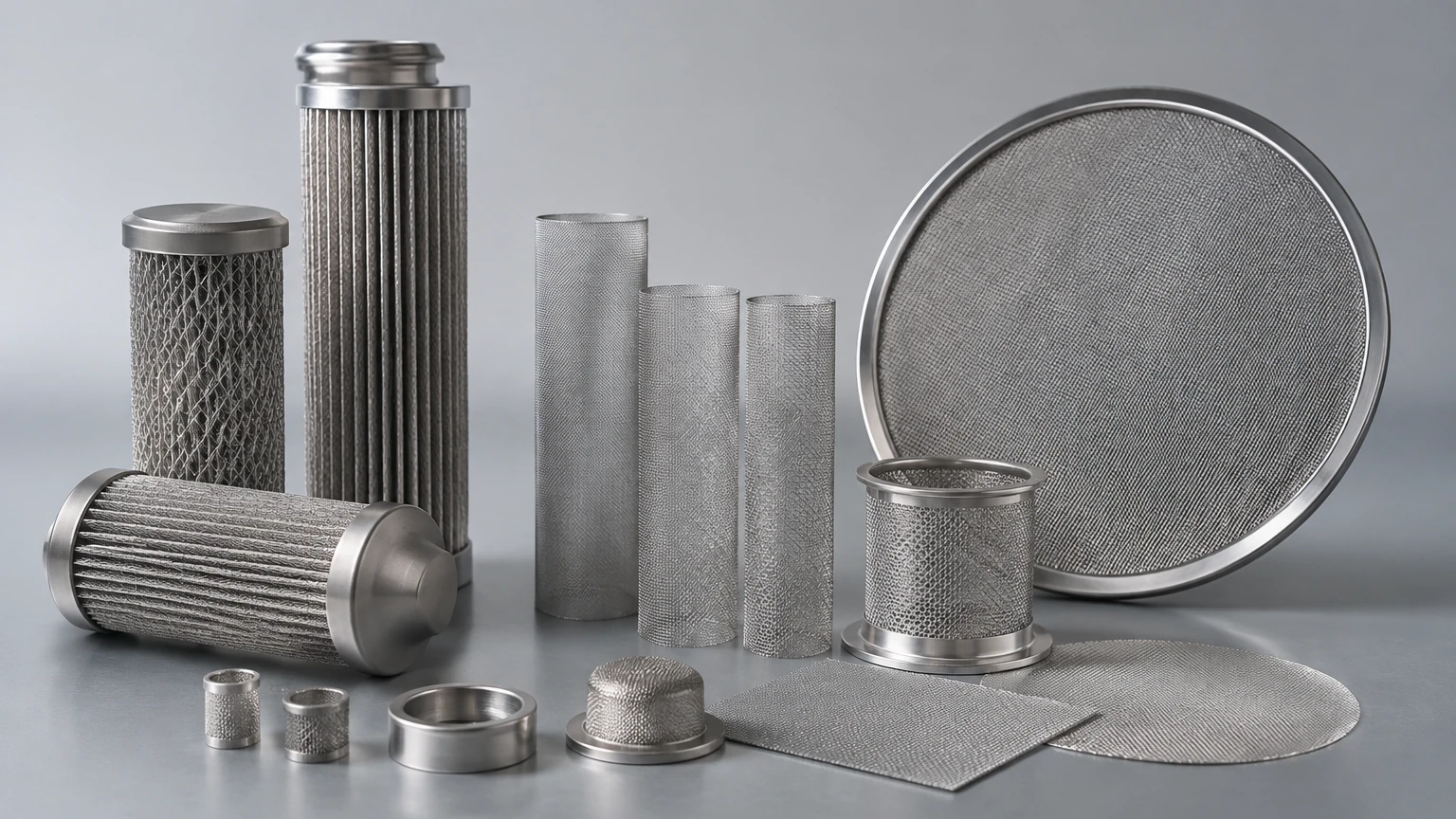
Customization and OEM Considerations
Standard off-the-shelf filtration components rarely meet the exact needs of complex industrial systems. Customization is often necessary to integrate a filterheks into existing infrastructure. As an experienced manufacturer, Kaifil provides extensive OEM capabilities to tailor these components to specific engineering drawings.
Connection Types and Fittings
The ends of a filterheks must be securely attached to the process piping. Common options include:
* NPT/BSP Threaded Fittings: For easy installation and removal in standard plumbing systems.
* Tri-Clamp (Sanitary) Fittings: Essential for food, beverage, and pharmaceutical applications to ensure a leak-proof, hygienic seal.
* Welded End Caps: Used when the filterheks is intended as a permanent internal component of a pressure vessel.
Dimensions and Geometry
Custom lengths and diameters are critical for optimizing the filtration manifold. A longer filterheks provides more surface area but may require internal support structures (such as a perforated core) to prevent sagging in horizontal installations. Manufacturers can also adjust the wire gauge to increase the mechanical strength of the spiral for high-viscosity fluids.
Maintenance, Cleaning, and Replacement Cycles
To maintain optimal performance, a filterheks requires a structured maintenance regimen. Stainless steel is highly durable, but it is not immune to fouling or mechanical wear over time.
Cleaning-in-Place (CIP) Protocols
One of the primary advantages of a stainless steel filterheks is its compatibility with CIP systems. It can withstand high-temperature caustic washes and acid rinses used to remove organic buildup and mineral scales. For stubborn blockages, ultrasonic cleaning is highly effective, as the sound waves can penetrate the spiral gaps to dislodge trapped particulates.
Monitoring Pressure Drop
Engineers should monitor the pressure differential across the filterheks. A steady increase in Delta P indicates that the filter is reaching its loading capacity. If the pressure drop does not return to baseline after a cleaning cycle, it may indicate permanent fouling or mechanical deformation of the coils, signaling that a replacement is necessary.
Total Cost of Ownership (TCO)
While the initial cost of a custom stainless steel filterheks may be higher than plastic or disposable alternatives, the TCO is significantly lower. The durability of 304/316L steel, combined with the ability to clean and reuse the component hundreds of times, provides a superior return on investment. Furthermore, the reduction in downtime associated with "stuck" processes or frequent filter changes contributes to overall operational efficiency.
Conclusion: Making an Informed Purchasing Decision
The filterheks is a versatile and highly effective tool in the industrial filtration toolkit. By leveraging the mechanical advantages of a flexible stainless steel spiral, engineers can achieve reliable liquid-solid separation in even the most challenging environments. When sourcing these components, it is vital to partner with a manufacturer that understands the technical requirements of your specific industry.
Critical factors to confirm before procurement include:
* The specific alloy grade (304 vs. 316L) required for chemical compatibility.
* The exact dimensions and connection types needed for seamless integration.
* The anticipated flow rates and maximum allowable pressure drop.
For technical teams looking to optimize their filtration processes with high-quality, customized components, reviewing professional product options is the first step toward achieving long-term performance. To learn more about our manufacturing capabilities and to view our full range of stainless steel filtration solutions, please visit our Main Page. By focusing on precision engineering and quality materials, Kaifil ensures that every filterheks produced meets the rigorous standards of modern industrial applications.
