


Filtering Flask
In the landscape of industrial R&D, chemical processing, and pharmaceutical development, the filtering flask—also known as a Büchner flask or vacuum flask—serves as a fundamental component for solid-liquid separation. While it is often associated with laboratory-scale operations, the engineering principles governing its use are identical to those found in large-scale industrial filtration systems. Understanding the technical specifications, material limitations, and operational requirements of a filtering flask is essential for engineers and procurement teams who are tasked with scaling processes from the benchtop to full-scale production.
As a manufacturer of precision filtration solutions, Kaifil recognizes that the selection of filtration hardware begins with a deep understanding of the fluid dynamics and pressure differentials involved in vacuum-assisted separation. This guide explores the technical nuances of the filtering flask and how its performance characteristics inform the design of industrial stainless steel filtration systems.
The Engineering Principles of Vacuum Filtration
At its core, a filtering flask is designed to facilitate vacuum filtration, a process that utilizes a pressure differential to drive liquid through a filter medium. Unlike gravity filtration, which relies solely on the hydrostatic pressure of the liquid column, vacuum filtration creates a lower pressure environment within the flask, effectively "pulling" the filtrate through the media.
This method is governed by Darcy’s Law, which describes the flow of a fluid through a porous medium. By increasing the pressure drop ($ΔP$) across the filter, the flow rate (flux) is significantly enhanced. In an industrial context, this principle is scaled up using vacuum pumps and heavy-duty pressure vessels. For the filtering flask, the structural integrity of the vessel is paramount, as it must withstand the external atmospheric pressure without imploding.
Structural Design and Material Specifications
A filtering flask is distinguished from a standard Erlenmeyer flask by its heavy-walled construction and a side-arm (tubulature) located near the neck. These design features are critical for safety and functional performance.
Wall Thickness and Pressure Resistance
The walls of a filtering flask are significantly thicker than those of standard laboratory glassware. This thickness is necessary to resist the compressive stress exerted by atmospheric pressure when the internal environment is evacuated. Engineers must ensure that the flask is rated for the specific vacuum levels required by the application. Most high-quality flasks are manufactured from borosilicate glass 3.3, which offers a low coefficient of thermal expansion and high resistance to chemical attack.
The Side-Arm (Tubulature)
The side-arm is a short glass tube extending from the neck of the flask. It serves as the connection point for vacuum tubing. In more advanced setups, this arm may be threaded or equipped with a serrated hose barb to ensure a leak-proof seal. A secure connection is vital to maintaining a consistent vacuum level and preventing the ingress of contaminants.
Thermal and Chemical Compatibility
In B2B environments, such as pharmaceutical manufacturing or chemical synthesis, the filtering flask often encounters aggressive solvents and high-temperature reagents. Borosilicate glass is the industry standard due to its ability to withstand temperatures up to 500°C (for short durations) and its near-universal resistance to acids, salt solutions, and organic solvents. However, for applications involving hydrofluoric acid or strong alkalis at elevated temperatures, alternative materials or specialized coatings may be required.
Components of a Complete Vacuum Filtration Setup
A filtering flask does not operate in isolation. It is part of an integrated system where each component must be compatible with the others to ensure process efficiency.
1. The Filter Funnel: Typically a Büchner funnel (ceramic, plastic, or stainless steel) or a Hirsch funnel for smaller volumes. The funnel holds the filter media.
2. The Seal: A rubber bung or a G3/G4 glass joint provides an airtight seal between the funnel and the flask neck.
3. The Filter Media: This can range from standard cellulose filter paper to precision-engineered stainless steel wire mesh. The choice of media determines the filtration accuracy and the retention of solids.
4. The Vacuum Source: Usually a diaphragm pump, water aspirator, or a centralized house vacuum system. The pump must be sized to handle the required flow rate and ultimate vacuum pressure.
5. The Vacuum Trap: A secondary flask placed between the filtering flask and the vacuum pump to prevent liquid from entering and damaging the pump.
Transitioning from Lab-Scale Flasks to Industrial Filtration
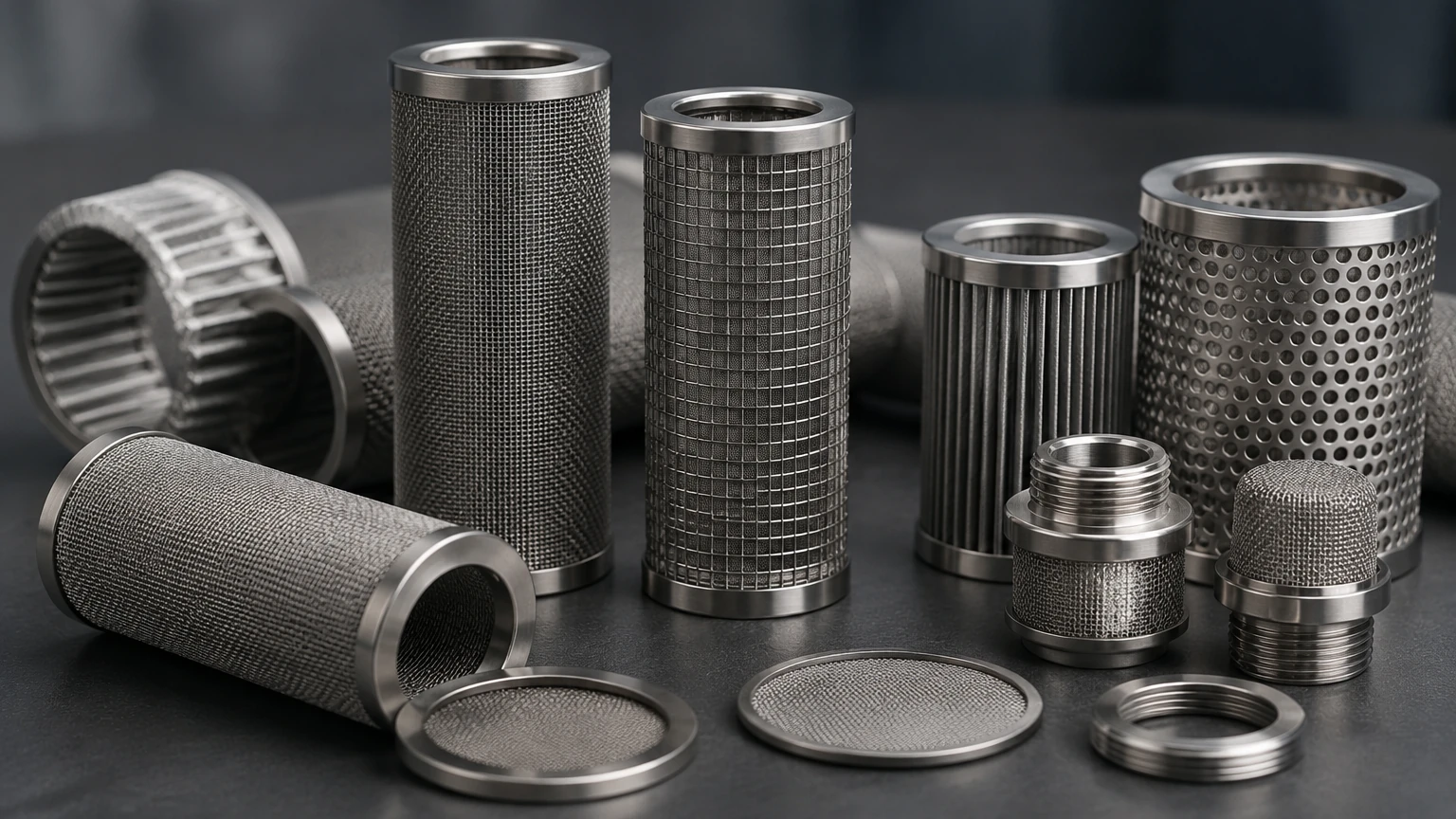
For many organizations, the filtering flask is the tool used for proof-of-concept and pilot-scale testing. However, as production volumes increase, glass vessels become impractical due to their fragility and limited volume capacity. This is where the transition to industrial stainless steel filtration occurs.
Industrial systems replace the glass filtering flask with stainless steel filter housings and pressurized vessels. These systems utilize the same vacuum or pressure-driven principles but offer significantly higher durability and throughput. For engineers looking to scale these processes, visiting the Main Page provides access to industrial-grade stainless steel filtration components designed for high-volume throughput.
Advantages of Stainless Steel Systems
* Durability: Unlike glass, stainless steel components are resistant to mechanical impact and can operate under much higher pressure differentials.
* Customization: Industrial housings can be fitted with custom-designed stainless steel filter cartridges, providing precise control over filtration accuracy (down to micron or sub-micron levels).
* Cleanability: Stainless steel systems are often designed for CIP (Clean-in-Place) or SIP (Steam-in-Place) protocols, which are essential in the food, beverage, and pharmaceutical industries.
* Scalability: While a filtering flask might handle 1 to 10 liters, industrial systems can process thousands of liters per hour using multi-cartridge housings.
Selection Criteria for Professional Purchasing Teams
When specifying a filtering flask or the subsequent industrial filtration system, procurement teams should evaluate the following criteria to ensure long-term ROI and process safety:
1. Filtration Accuracy and Particle Retention
What is the particle size distribution of the solids being removed? The choice of filter media—whether it is a disposable paper or a reusable stainless steel wire mesh—must align with the required purity levels of the filtrate or the value of the recovered solids.
2. Chemical Compatibility
Confirm that all wetted parts (the flask, the seals, and the filter media) are resistant to the process fluid. For highly corrosive environments, 316L stainless steel or specialized fluoropolymers are often preferred over standard glass or 304 stainless steel.
3. Vacuum and Pressure Ratings
Ensure the equipment is rated for the maximum vacuum level the pump can achieve. In industrial settings, vessels must often comply with ASME or PED pressure vessel codes to ensure operator safety.
4. Total Cost of Ownership (TCO)
While glass filtering flasks have a lower initial cost, they are prone to breakage. In a B2B production environment, the cost of downtime caused by a broken flask often exceeds the investment in a durable stainless steel filtration assembly. Reusable stainless steel filters also eliminate the recurring cost and waste associated with disposable filter paper.
Safety Protocols and Maintenance
Operating a vacuum system, even at the flask level, carries inherent risks. Implosion is the primary safety concern with glass filtering flasks. An implosion occurs when the external atmospheric pressure overcomes the structural strength of the glass, usually due to a pre-existing scratch, chip, or stress point.
Best Practices for Safety:
* Visual Inspection: Always inspect the flask for "star cracks" or deep scratches before applying a vacuum.
* Shielding: Use a plastic safety coating on the glass or operate the flask behind a transparent safety shield.
* Gradual Vacuum Application: Avoid sudden changes in pressure; increase the vacuum gradually to allow the system to stabilize.
For industrial stainless steel systems, maintenance focuses on the integrity of gaskets and the cleanliness of the filter media. Stainless steel wire mesh filters should be regularly inspected for blinding (clogging) and cleaned using ultrasonic baths or backwashing techniques to maintain optimal flow rates.
Custom OEM Filtration Solutions
In many specialized industrial applications, a standard filtering flask or off-the-shelf filter housing is insufficient. Customization is often required to meet specific spatial constraints, flow requirements, or filtration accuracies. Kaifil specializes in providing OEM filtration solutions that bridge the gap between laboratory requirements and industrial performance.
By manufacturing custom stainless steel filter cartridges and precision wire mesh components, we enable engineers to design filtration systems that are perfectly tailored to their specific process fluids. Whether you are refining a chemical process or developing a new pharmaceutical product, the transition from a laboratory filtering flask to a robust industrial system requires a partner with deep technical expertise in metal filtration media.
Conclusion
The filtering flask remains an indispensable tool for the initial stages of solid-liquid separation. By understanding its engineering foundations—pressure differentials, material science, and structural limits—engineers can better prepare for the eventual scale-up of their processes. As the requirements for volume and durability grow, the principles learned at the flask level serve as the blueprint for implementing advanced industrial filtration technologies. For those ready to explore high-performance, customized filtration components, the Main Page offers a comprehensive overview of the solutions available to support demanding industrial applications.
