


Filtest
In the landscape of industrial manufacturing, the precision of filtration systems is not merely a matter of operational preference but a critical requirement for process integrity, equipment longevity, and product quality. The term "filtest"—referring to the comprehensive evaluation and testing of filtration performance—encompasses the rigorous methodologies used to verify that a filter component meets the specific engineering demands of its application. For engineers and procurement specialists, understanding the nuances of filtest protocols is essential when selecting stainless steel wire mesh filters, cartridges, and precision metal components.
Whether the application involves chemical processing, hydraulic systems, or high-purity pharmaceutical production, the performance of a filter must be quantifiable. Relying on nominal ratings is often insufficient in demanding industrial environments. Instead, a data-driven approach to filtration testing ensures that the selected media can withstand differential pressures, resist chemical degradation, and maintain the required filtration accuracy over its intended service life.
Understanding Filtest: The Foundation of Industrial Filtration Performance
Filtration testing, or filtest, is the process of validating the physical and functional characteristics of a filter medium. In the context of stainless steel filtration solutions, this involves assessing how the material reacts under specific flow rates, temperatures, and contaminant loads. Unlike disposable polymer filters, stainless steel components are often chosen for their durability and cleanability, making the initial testing phase even more critical to ensure a high return on investment.
For technical professionals, the filtest process provides the empirical evidence needed to justify material selection. For instance, in the food and beverage industry, a filter must not only meet a specific micron rating but also comply with sanitary standards and resist the corrosive effects of Clean-in-Place (CIP) chemicals. By performing a thorough filtest, engineers can confirm that the 304 or 316L stainless steel mesh maintains its structural integrity without shedding fibers or bypassing particles. To explore the range of materials and configurations available for these demanding roles, technical teams often refer to the Main Page of specialist manufacturers to align test parameters with available production capabilities.
Key Evaluation Criteria in Filtration Testing
When conducting a filtest, several key metrics serve as the primary indicators of a filter’s performance. Understanding these criteria allows engineers to move beyond marketing claims and focus on technical realities.
Filtration Efficiency and the Beta Ratio
One of the most accurate measures of a filter’s performance is its efficiency, often expressed through the Beta Ratio (β). This ratio compares the number of particles of a given size in the upstream fluid to the number of particles in the downstream fluid. A higher Beta Ratio indicates a more efficient filter. For example, a Beta Ratio of 1000 means that for every 1000 particles entering the filter, only one passes through. During a filtest, establishing the absolute rating versus the nominal rating is vital for applications where even trace contamination can lead to system failure.
Bubble Point Testing
The bubble point test is a common non-destructive filtest method used to determine the maximum pore size of a filter element. It relies on the principle that liquid is held in the pores of the filter by surface tension and capillary forces. The minimum pressure required to force air through the largest pore is an indicator of the filter's integrity and pore size consistency. This is particularly important for custom-welded stainless steel cartridges where the seam integrity must be absolute.
Permeability and Differential Pressure ($ΔP$)
Every filter introduces a degree of resistance to the flow of fluid. The pressure drop, or differential pressure, across the filter medium is a critical factor in system design. A filtest measures the clean pressure drop at various flow rates to ensure the system’s pumps can handle the load without excessive energy consumption. Furthermore, testing helps predict the "terminal pressure drop"—the point at which the filter is sufficiently loaded with contaminants that it must be cleaned or replaced.
Structural Integrity and Material Compatibility
Industrial filtration often occurs in environments that are hostile to standard materials. A comprehensive filtest must therefore account for the mechanical and chemical stresses the filter will encounter. Stainless steel is favored in these scenarios due to its inherent strength, but the specific grade and weave type must be validated.
1. Corrosion Resistance: In chemical processing, the filter media is often exposed to acids, bases, or saline solutions. Testing ensures that the chromium oxide layer of the stainless steel remains intact, preventing localized pitting or stress corrosion cracking.
2. Thermal Stability: Many industrial processes operate at elevated temperatures that would melt or deform synthetic filters. A filtest at operating temperature confirms that the metal mesh does not lose its tension or undergo pore migration due to thermal expansion.
3. Mechanical Fatigue: In hydraulic applications, filters are subjected to pressure pulses and flow fluctuations. Testing the fatigue resistance of the wire mesh and the strength of the support cores ensures the filter will not collapse or rupture under sudden pressure spikes.
Customization and OEM Engineering Considerations
In many B2B scenarios, a standard off-the-shelf filter is inadequate. Customization is often required to fit existing housing dimensions or to meet unique flow characteristics. The filtest phase for a custom component is an iterative process between the engineer and the manufacturer.
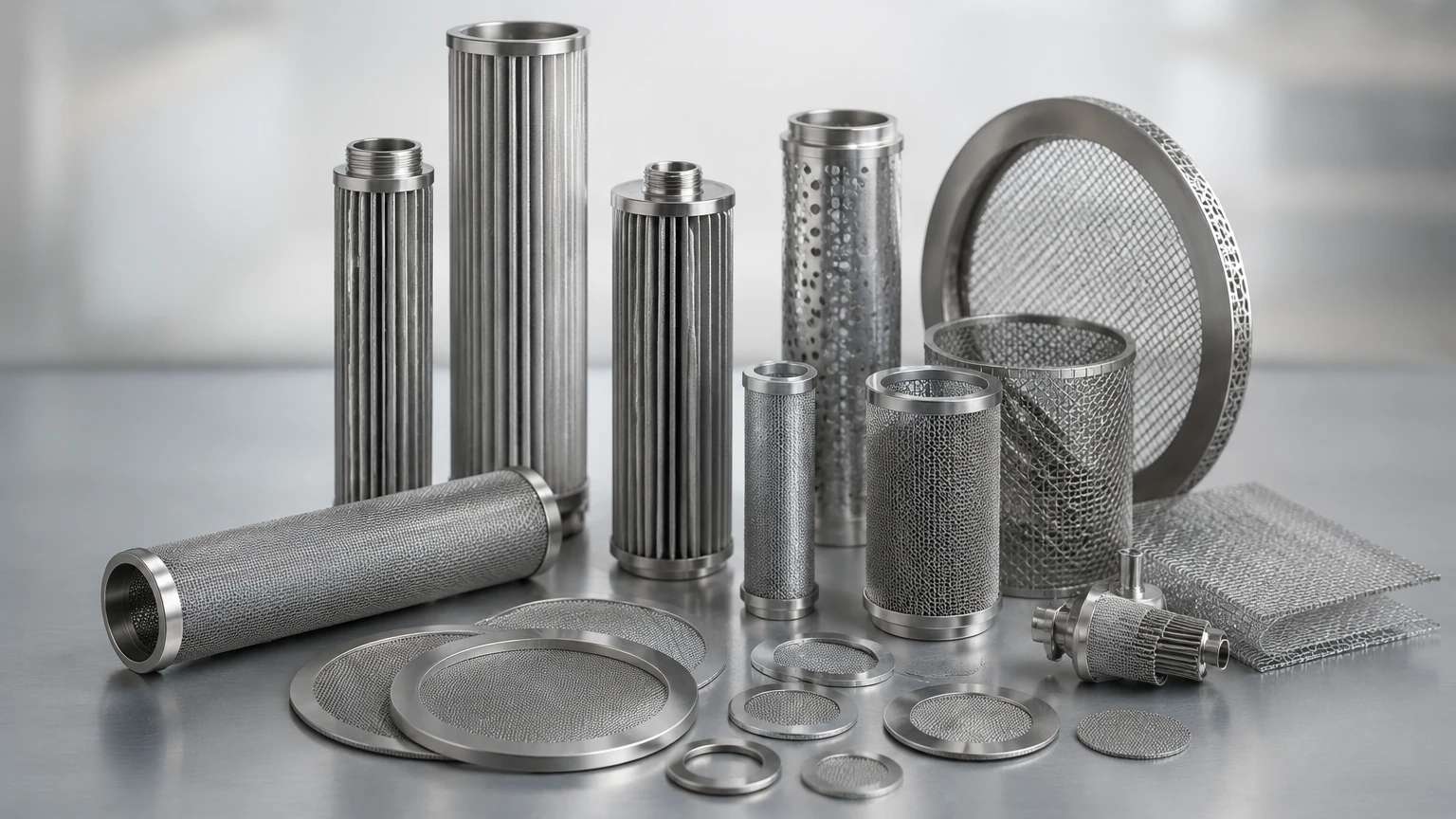
When developing an OEM filtration solution, the filtest data informs the design of the pleat geometry, the choice of support layers, and the selection of end-cap bonding methods (such as TIG welding or plasma welding). By analyzing test results from prototypes, manufacturers like Kaifil can optimize the balance between filtration area and structural rigidity. This ensures that the final product not only fits the hardware but also meets the specific performance benchmarks of the original equipment.
Engineers looking to initiate a custom project should review the manufacturing tolerances and alloy options on the manufacturer's Main Page to ensure the proposed filtest parameters are achievable within current production technology.
Analyzing the Total Cost of Ownership (TCO)
From a procurement perspective, the results of a filtest have a direct impact on the Total Cost of Ownership. While stainless steel filters have a higher initial acquisition cost compared to disposable alternatives, their long-term value is realized through durability and reusability.
* Cleaning Cycles: A filtest can help determine the effectiveness of various cleaning methods, such as ultrasonic cleaning, backflushing, or chemical steeping. If a filter can be successfully regenerated 50 times without loss of efficiency, the cost per filtration cycle drops significantly.
* Downstream Protection: The cost of a filter is negligible compared to the cost of the equipment it protects. In high-pressure hydraulic systems, a failed filter can lead to catastrophic pump or valve damage. Filtest data provides the assurance that the filter will act as a reliable barrier against wear-generating particles.
* Energy Consumption: By selecting a filter with an optimized pressure drop profile (validated through testing), facilities can reduce the energy required to maintain flow rates, leading to lower operational utility costs over time.
Common Risks and Pitfalls in Filtration Selection
Without a rigorous filtest approach, several risks can compromise industrial operations. One of the most common issues is "media migration," where parts of the filter itself break off and contaminate the downstream fluid. This is more common in low-quality fibrous filters but can occur in poorly manufactured wire mesh if the wire diameters and weave types are not correctly specified for high-velocity flows.
Another risk is "unloading," where collected contaminants are forced through the filter media due to pressure surges. A dynamic filtest, which simulates real-world flow fluctuations, is necessary to identify if a filter is prone to unloading. Furthermore, purchasing teams must be wary of "equivalent" filters that claim the same micron rating but lack the documented test data to prove performance under identical conditions. Always insist on seeing the filtest reports or certificates of conformance before transitioning to a new supplier.
Practical Steps for Engineering and Purchasing Teams
To ensure the successful implementation of a filtration solution, technical teams should follow a structured approach to evaluation and procurement:
1. Define the Fluid Profile: Document the fluid type, viscosity, operating temperature, and chemical composition. This forms the basis of the material compatibility filtest.
2. Specify Contaminant Characteristics: Identify the nature of the solids being removed (e.g., hard particles, deformable gels, or organic matter) and the required cleanliness level (ISO 4406 or similar standards).
3. Request Technical Documentation: Before placing an order, request detailed specifications and test results for the specific media. The Main Page of a reputable manufacturer will typically provide a gateway to these technical resources and contact points for engineering support.
4. Conduct Pilot Testing: For critical processes, it is advisable to run a small-scale filtest using a sample of the actual process fluid. This provides the most accurate prediction of how the filter will perform in a full-scale production environment.
5. Establish Maintenance Protocols: Use the filtest data to set clear guidelines for when a filter should be cleaned or replaced based on differential pressure readings.
By prioritizing factual performance data and engineering-led selection, B2B buyers can ensure that their filtration systems provide the reliability and efficiency required for modern industrial applications. The investment in thorough filtest procedures pays dividends in the form of reduced downtime, higher product purity, and optimized operational costs.
