


Filtración De Gases
In industrial manufacturing and chemical processing, the precision of gas filtration is a critical factor in maintaining equipment longevity, ensuring product purity, and complying with environmental safety standards. Known as filtración de gases, this process involves the removal of solid particulates, aerosols, and moisture from gas streams such as compressed air, steam, nitrogen, and corrosive process gases. For engineers and procurement specialists, selecting the right filtration medium is not merely a matter of finding a barrier; it is about balancing flow dynamics, thermal stability, and chemical resistance to achieve an optimized total cost of ownership.
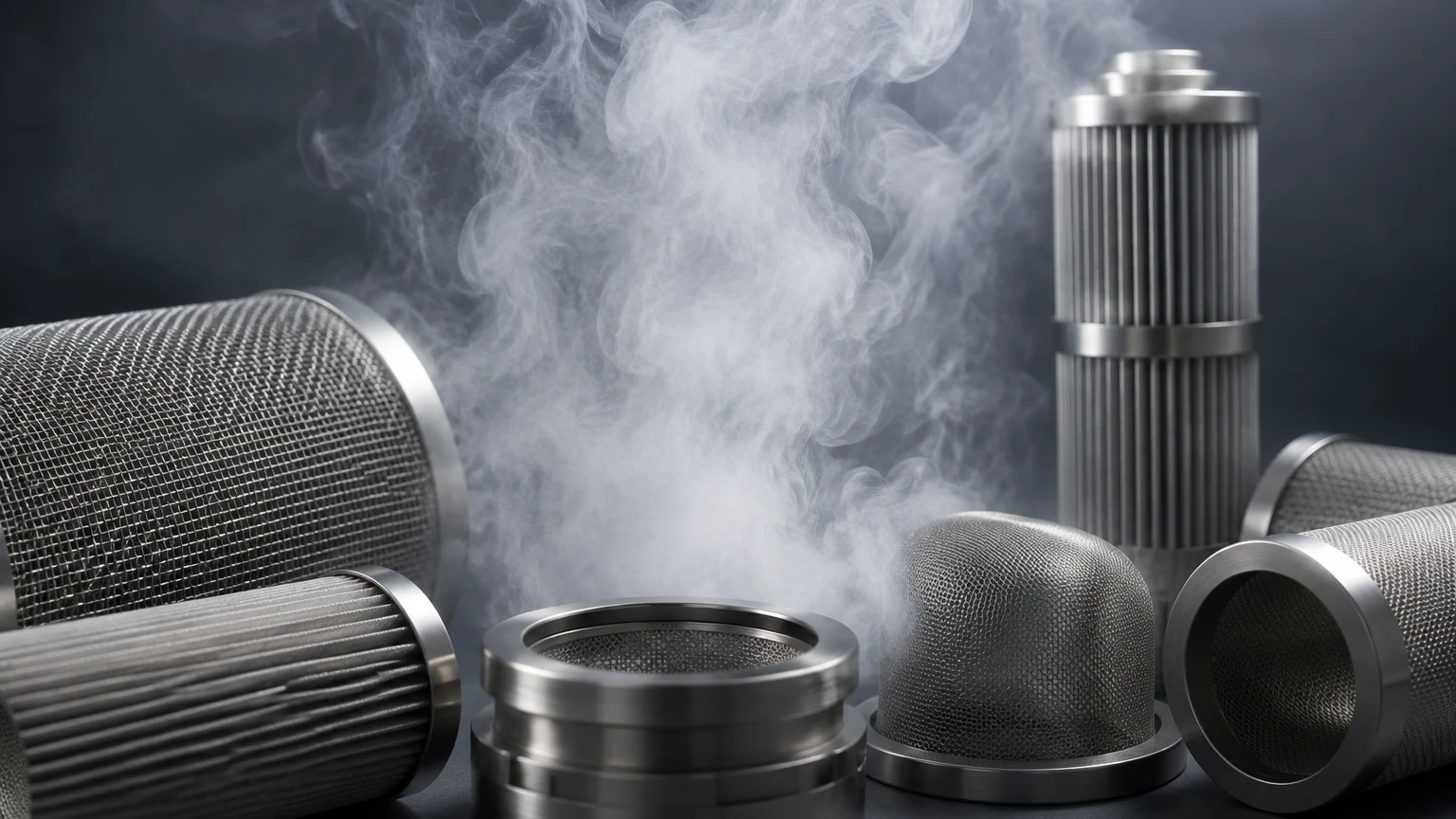
Stainless steel filtration solutions have emerged as the industry standard for demanding gas applications. Unlike polymer-based or fiberglass filters, which may degrade under high temperatures or chemical exposure, stainless steel components provide the structural integrity required for high-pressure environments. As a professional manufacturer, Kaifil specializes in custom stainless steel filtration solutions designed to meet these rigorous industrial requirements, offering a range of wire mesh and sintered metal components that ensure reliable performance in the most challenging conditions.
The Engineering Principles of Industrial Gas Filtration
Understanding the mechanics of filtración de gases requires a deep dive into how particles interact with a filter medium within a gaseous state. Unlike liquid filtration, where particles are primarily trapped through mechanical sieving, gas filtration relies on a combination of physical phenomena that vary depending on particle size and gas velocity.
Interception and Impaction
For larger particles (typically those above 1 micron), interception occurs when a particle follows a gas streamline and comes into contact with a filter fiber or wire. If the particle's inertia is high enough, it will deviate from the streamline and strike the filter media, a process known as inertial impaction. This is particularly prevalent in high-velocity gas streams where the momentum of the contaminant overcomes the fluid's flow path.
Diffusion (Brownian Motion)
For sub-micron particles, gas molecules constantly collide with the particulates, causing them to move erratically. This Brownian motion increases the likelihood that the particles will hit the filter surface and become trapped. This is why high-quality stainless steel filters can often achieve high efficiency even for particles significantly smaller than the physical pore size of the mesh.
Electrostatic Attraction
In some specialized applications, electrostatic forces can play a role in attracting particles to the filter surface. However, in heavy industrial gas filtration, mechanical interception and diffusion remain the primary drivers of efficiency. Engineering a filter for these processes requires a precise understanding of the gas's viscosity, temperature, and flow rate to ensure that the media density is sufficient to capture contaminants without causing an excessive pressure drop.
Material Selection: Why Stainless Steel is Superior
When evaluating materials for filtración de gases, engineers must consider the operating environment. Industrial gases are often processed at extreme temperatures or may contain corrosive elements like sulfur or chlorides. Stainless steel, particularly grades 304 and 316L, offers several advantages that make it the preferred choice for B2B applications.
1. Thermal Stability: Many gas filtration processes, such as steam filtration or exhaust gas treatment, operate at temperatures exceeding 200°C. Synthetic filters would melt or lose structural integrity, whereas stainless steel can maintain its pore structure and mechanical strength at temperatures up to 500°C or higher, depending on the alloy.
2. Corrosion Resistance: In chemical processing, gas streams may be highly acidic or alkaline. SS316L, with its molybdenum content, provides superior resistance to pitting and crevice corrosion, ensuring that the filter does not become a source of contamination itself through material degradation.
3. Mechanical Strength: Gas streams can be subject to sudden pressure surges or high differential pressures. The inherent rigidity of stainless steel wire mesh and sintered structures prevents the media from deforming or "unloading" trapped contaminants back into the downstream flow.
Kaifil’s manufacturing process focuses on utilizing high-grade materials to create durable filter cartridges and components. By selecting the appropriate mesh weave and wire diameter, we can tailor the mechanical properties of the filter to withstand specific industrial stresses.
Key Evaluation Criteria for Gas Filter Selection
For an engineering team, the selection of a filter for filtración de gases involves more than just picking a micron rating. Several interconnected variables must be analyzed to ensure the system operates efficiently.
Micron Rating: Absolute vs. Nominal
In gas filtration, the distinction between absolute and nominal ratings is vital. A nominal rating refers to a filter's ability to retain a majority of particles of a certain size, whereas an absolute rating indicates the size of the largest particle that can pass through the media under specific conditions. For critical applications like pharmaceutical venting or food-grade CO2 filtration, absolute-rated stainless steel mesh is often required to guarantee purity.
Pressure Drop ($ΔP$)
Every filter introduces resistance to the gas flow, resulting in a pressure drop. A high initial $ΔP$ means the system's compressors or blowers must work harder, increasing energy costs. Engineers must look for filters that provide the required filtration efficiency with the largest possible open area. Pleated stainless steel designs are frequently used to increase the surface area, thereby reducing the velocity of the gas through the media and lowering the pressure drop.
Dirt Holding Capacity
The dirt holding capacity determines the service life of the filter before it requires cleaning or replacement. In gas streams with high particulate loads, a multi-layered or depth-filtration approach using sintered metal fibers can provide a higher capacity than a single layer of wire mesh. This reduces the frequency of maintenance shutdowns and improves overall process uptime.
Customization and OEM Solutions in Gas Filtration
No two industrial gas systems are identical. Factors such as piping configurations, flow volumes, and specific contaminant profiles necessitate customized filtration solutions. This is where the expertise of a manufacturer like Kaifil becomes invaluable.
Customization in filtración de gases can involve:
* Custom Dimensions: Tailoring the length, diameter, and end-cap configurations of filter cartridges to fit existing housings without the need for expensive system modifications.
* Specialized Weaves: Utilizing Dutch weaves, twilled weaves, or five-heddle weaves to achieve specific filtration accuracies and flow characteristics.
* Reinforcement Layers: Adding internal or external support cores and shrouds to handle high-pressure differentials or backwashing cycles.
By working closely with global customers, Kaifil develops high-performance filter products that meet specific application requirements. Whether it is a unique hydraulic gas vent or a large-scale chemical reactor filter, our engineering team focuses on material selection and filtration accuracy to deliver dependable components. To explore the full range of our manufacturing capabilities, you can visit the Main Page for detailed product specifications and application support.
Maintenance, Cleaning, and Replacement Cycles
One of the primary economic benefits of stainless steel filters in filtración de gases is their cleanability. Unlike disposable cartridges, stainless steel filters can be restored to near-original performance through various cleaning methods, significantly reducing the long-term cost of ownership.
Cleaning Techniques
* Backwashing: For systems where the filter remains in place, a reverse flow of clean gas or liquid can dislodge accumulated particles from the surface of the mesh.
* Ultrasonic Cleaning: This is the most effective method for deep-cleaning sintered or complex mesh structures. High-frequency sound waves create cavitation bubbles that remove fine particulates from within the pores.
* Chemical Cleaning: Soaking the filter in compatible solvents or acids can remove organic deposits or scale that mechanical cleaning might miss.
Determining Replacement Cycles
While stainless steel filters are durable, they are not infinite. Engineers should monitor the pressure drop across the filter. Once the "clean" pressure drop after a maintenance cycle begins to rise significantly compared to the original baseline, it indicates that the media is becoming permanently fouled or that the pore structure has been compromised. Establishing a clear monitoring protocol ensures that filters are cleaned or replaced before they reach a critical failure point, protecting downstream equipment like turbines, sensors, and valves.
Common Risks and Mitigation in Gas Filtration Systems
Implementing a filtración de gases strategy without proper technical oversight can lead to several operational risks. One common issue is "media migration," where fragments of the filter material break off and enter the gas stream. This is why high-quality welding and sintering processes are essential; they ensure that the wires of the mesh are fused securely.
Another risk is bypass, where gas leaks around the filter seals rather than passing through the media. This is often caused by poor end-cap design or incorrect gasket material selection. In high-temperature gas applications, gaskets must be made of materials like PTFE or Viton that can withstand the thermal load without degrading. Kaifil addresses these risks by maintaining strict quality control over the entire production process, from material sourcing to the final pressure testing of the components.
Conclusion: Making Informed Purchasing Decisions
For B2B professionals, the goal of investing in filtración de gases technology is to achieve a balance between performance, reliability, and cost. By choosing stainless steel solutions, companies gain a robust filtration barrier capable of withstanding the harshest industrial environments while offering the flexibility of customization and the sustainability of cleanable media.
When preparing to purchase or design a new filtration system, engineers should confirm the following data points with their manufacturer:
* The exact chemical composition of the gas stream.
* Maximum and normal operating temperatures and pressures.
* The specific type and size of contaminants to be removed.
* Desired flow rates and allowable pressure drop limits.
Kaifil provides the technical expertise and manufacturing precision needed to transform these requirements into high-performance filtration hardware. With a focus on durability and precise filtration performance, we support industries ranging from food and beverage to pharmaceutical and chemical processing, ensuring that every gas stream is purified to the highest standard.
