


Filtration Cartridge
In the landscape of industrial processing, the filtration cartridge stands as a critical component for ensuring fluid purity, protecting downstream equipment, and maintaining the integrity of the final product. Unlike consumer-grade filters, an industrial filtration cartridge must withstand rigorous operating conditions, including high pressure, extreme temperatures, and exposure to corrosive chemicals. For engineers and procurement professionals, selecting the right cartridge is not merely a matter of finding a fit, but a complex engineering decision that balances filtration efficiency, structural integrity, and long-term operational costs.
Industrial filtration solutions have evolved significantly, moving from simple disposable media to sophisticated, high-performance metal components. As a professional manufacturer, Kaifil specializes in custom stainless steel filtration solutions that address the specific needs of demanding sectors such as chemical processing, food and beverage, and pharmaceuticals. Understanding the technical nuances of these components is essential for optimizing system performance and achieving a lower total cost of ownership.
Understanding Industrial Filtration Cartridge Design
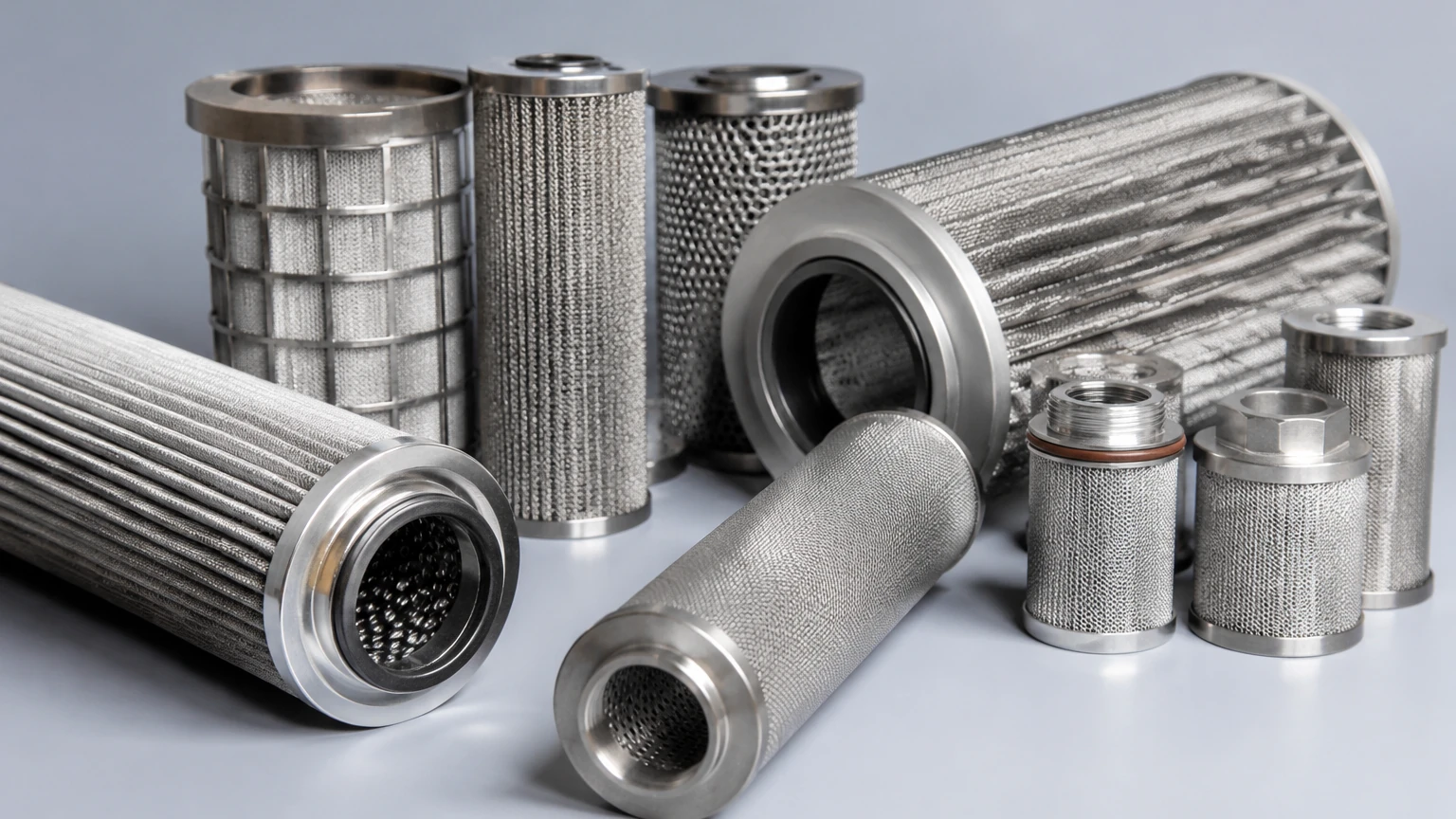
The architecture of a filtration cartridge determines its performance characteristics. In industrial applications, the design is typically categorized by the physical structure of the filter media and the method of construction. The most common designs for stainless steel cartridges include cylindrical, pleated, and sintered structures.
Cylindrical Mesh Cartridges
Cylindrical cartridges are often constructed from single or multiple layers of stainless steel wire mesh. These are ideal for coarse filtration and as protective strainers. Their simple geometry makes them easy to clean and highly durable against mechanical stress. However, their surface area is limited to the circumference of the cylinder, which may result in higher face velocities and faster clogging in high-solids applications.
Pleated Metal Cartridges
To overcome the surface area limitations of cylindrical designs, pleated filtration cartridges are utilized. By folding the stainless steel wire mesh or fiber felt, the effective filtration area can be increased by three to ten times. This increased area leads to a lower pressure drop across the media, higher dirt-holding capacity, and longer service intervals. Pleated designs are particularly effective in high-flow systems where space for the filter housing is limited.
Sintered Metal Cartridges
Sintering is a process where multiple layers of wire mesh or metal fibers are bonded together through heat and pressure without the use of binders. This creates a porous metal structure with exceptional mechanical strength and precise pore size distribution. Sintered filtration cartridges are the preferred choice for high-pressure applications and environments where media migration—the shedding of filter fibers into the process stream—must be strictly avoided.
Material Engineering and Chemical Compatibility
The choice of material is the most significant factor in determining the lifespan and reliability of a filtration cartridge. While polymer-based cartridges are common in light-duty applications, industrial processes often require the robustness of stainless steel.
Stainless Steel 304 and 316L
Stainless steel 304 is a standard grade suitable for many water treatment and general industrial applications. However, for more aggressive environments, Stainless Steel 316L is the industry standard. The addition of molybdenum in 316L provides superior resistance to pitting and crevice corrosion, especially in chloride-rich environments. The "L" denotes low carbon content, which is vital for maintaining corrosion resistance after welding—a common step in the manufacturing of custom filtration components.
Specialized Alloys
In extreme cases involving highly acidic or alkaline fluids, or temperatures exceeding 500°C, specialized alloys such as Monel, Inconel, or Hastelloy may be required. These materials ensure that the filtration cartridge does not degrade or react with the process fluid, which could lead to contamination or catastrophic failure of the filtration system. Engineers must carefully review the chemical compatibility charts and process parameters before finalizing material specifications.
Key Performance Metrics for Engineers
When evaluating a filtration cartridge, several technical metrics must be scrutinized to ensure the component meets the application's requirements. These metrics provide a quantitative basis for comparing different filtration solutions.
Micron Rating: Absolute vs. Nominal
A common point of confusion in filtration is the difference between nominal and absolute micron ratings. A nominal rating refers to the ability of the filter to retain a certain percentage (often 60% to 90%) of particles of a specific size. An absolute rating, however, implies that 99.9% or more of particles at that size are retained. For critical applications like pharmaceutical sterile filtration or fine chemical processing, absolute-rated stainless steel cartridges are mandatory to ensure process consistency.
Differential Pressure (ΔP)
Differential pressure is the difference in pressure between the upstream and downstream sides of the filter. As the filtration cartridge captures contaminants, the ΔP increases. Engineers must design systems that can handle the initial (clean) pressure drop and establish a clear limit for the terminal (dirty) pressure drop, at which point the cartridge must be cleaned or replaced. A high initial pressure drop often indicates that the filter is undersized or that the media density is too high for the required flow rate.
Flow Rate and Permeability
The permeability of the filter media dictates how much fluid can pass through the cartridge at a given pressure. Factors influencing flow rate include the viscosity of the fluid, the effective filtration area, and the pore size. In high-viscosity applications, such as the filtration of resins or heavy oils, larger surface areas (pleated designs) are often necessary to maintain an efficient flow rate without exceeding the structural limits of the cartridge.
Applications Across Demanding Industries
Filtration cartridges are utilized across a broad spectrum of industries, each with its own set of regulatory and performance standards. Customization is often required to meet these specific demands.
Chemical and Petrochemical Processing
In the chemical industry, filtration cartridges are used to remove catalysts, protect high-pressure pumps, and ensure the purity of intermediate products. The ability of stainless steel to withstand aggressive solvents and high temperatures makes it indispensable here. For more information on how these components integrate into broader systems, you can visit the Main Page of our technical resource center.
Food and Beverage Industry
Filtration in the food and beverage sector requires materials that are FDA-compliant and easy to sanitize. Stainless steel cartridges are used for steam filtration, carbonation, and the removal of yeast or bacteria in brewing and bottling. The smooth surface finish of metal filters prevents the accumulation of organic matter, reducing the risk of microbial growth.
Pharmaceutical and Biotechnology
Precision is paramount in pharmaceutical manufacturing. Sintered metal fiber cartridges are often used for gas sparging, vent filtration, and the recovery of expensive active pharmaceutical ingredients (APIs). These cartridges must be capable of withstanding repeated sterilization cycles, such as Autoclave or Steam-in-Place (SIP) procedures, without losing their filtration integrity.
Hydraulic and Lubrication Systems
In hydraulic systems, even microscopic particles can cause significant wear on valves and actuators. High-pressure filtration cartridges are installed to maintain fluid cleanliness levels according to ISO 4406 standards. Metal mesh filters are particularly valued here for their ability to handle high-pressure pulses and provide reliable protection for sensitive components.
Customization and OEM Solutions
Standard off-the-shelf filtration cartridges often fail to meet the unique constraints of specialized industrial equipment. This is where OEM and customized filtration solutions become essential. Customization can involve several aspects of the cartridge design:
* End Cap Configurations: Cartridges can be manufactured with various end cap styles, such as Double Open End (DOE), 222/Flat, 226/Fin, or threaded connections (NPT/BSP), to ensure a secure and leak-proof fit in existing housings.
* Dimensional Adjustments: Length, outer diameter, and inner diameter can be tailored to fit specific vessel geometries.
* Reinforcement: In high-pressure or backwashing applications, internal support cores or external protective cages are added to prevent the media from collapsing or bursting.
* Surface Treatments: Processes like electropolishing can be applied to improve corrosion resistance and cleanability, particularly for sanitary applications.
Kaifil’s manufacturing expertise allows for the development of these bespoke components, ensuring that the filtration cartridge is perfectly aligned with the mechanical and chemical requirements of the application.
Maintenance, Cleaning, and Replacement Cycles
One of the primary advantages of a stainless steel filtration cartridge over disposable alternatives is its cleanability. While polymer filters must be discarded once they reach their terminal pressure drop, metal filters can often be restored to near-original performance levels through various cleaning methods.
Cleaning Techniques
1. Backwashing: Reversing the flow of fluid through the cartridge to dislodge particles from the surface. This is effective for surface-type filtration like plain wire mesh.
2. Ultrasonic Cleaning: Using high-frequency sound waves in a cleaning solvent to remove deeply embedded particles from sintered media or complex pleats.
3. Chemical Cleaning: Soaking the cartridge in acids, alkalis, or solvents to dissolve specific contaminants, such as scale or organic polymers.
4. Burn-off/Pyrolysis: Heating the cartridge in a controlled environment to carbonize organic contaminants, followed by ultrasonic cleaning to remove the ash.
Determining Replacement Cycles
Despite their durability, metal cartridges are not infinite. Repeated cleaning cycles can eventually lead to mechanical fatigue or permanent blinding of the pores. Engineers should monitor the "recovered" pressure drop after each cleaning. If the pressure drop after cleaning is significantly higher than the original clean pressure drop, it indicates that the cartridge is reaching the end of its functional life and should be replaced to avoid excessive energy consumption and reduced flow.
Evaluating Total Cost of Ownership (TCO)
When purchasing a filtration cartridge, the initial purchase price is often a misleading indicator of value. A B2B procurement strategy should focus on the Total Cost of Ownership (TCO). While a stainless steel cartridge has a higher upfront cost than a disposable plastic one, the TCO is often lower due to several factors:
* Reduced Waste: Reusable filters significantly reduce the volume of waste generated, which is a growing concern for industrial sustainability and disposal costs.
* Lower Downtime: Longer service intervals and the ability to clean components on-site or in batches reduce the frequency of system shutdowns.
* Equipment Protection: High-quality metal filters provide more reliable protection for expensive downstream equipment, preventing costly repairs and production losses.
* Process Stability: The structural rigidity of metal cartridges ensures consistent filtration performance even under fluctuating pressure conditions, leading to higher product quality.
For engineers and purchasing teams, the decision to invest in high-quality filtration cartridges is an investment in the reliability and efficiency of the entire production line. By understanding the technical requirements and working with a specialized manufacturer, companies can ensure they receive filtration solutions that are not only durable but also precisely engineered for their specific industrial challenges.
