


Filtration in Wastewater Treatment
Filtration in wastewater treatment is a critical process designed to remove suspended solids, organic matter, and specific contaminants from industrial and municipal effluent. In an era of increasing environmental regulation and water scarcity, the efficiency of filtration systems directly impacts a facility's ability to meet discharge standards or facilitate water reuse. For engineers and procurement professionals, selecting the correct filtration media and housing is not merely a matter of compliance; it is a strategic decision that affects operational uptime, equipment longevity, and the total cost of ownership.
Industrial wastewater often contains a complex mixture of debris, varying from abrasive grit to gelatinous organic compounds. Effective management of these streams requires robust mechanical barriers that can withstand harsh chemical environments and high-pressure differentials. Stainless steel filtration solutions have emerged as the industry standard for demanding applications where polymer-based or disposable media fail to provide the necessary durability and precision.
The Fundamentals of Filtration in Wastewater Treatment
At its core, filtration in wastewater treatment serves as a mechanical separation barrier. It is typically categorized into different stages based on the particle size being targeted and the position within the treatment train.
Primary and Secondary Filtration
In the early stages of treatment, filtration is used to protect downstream equipment such as pumps, membranes, and biological reactors. Coarse filters and strainers remove large debris that could cause mechanical blockages or abrasive wear. As the water moves into secondary and tertiary stages, the focus shifts to removing finer suspended solids (TSS) that biological treatment or primary settling may have missed.
Tertiary Treatment and Polishing
Tertiary filtration is the final "polishing" step before water is discharged into the environment or recycled for industrial use. This stage often requires high-precision stainless steel mesh or sintered metal cartridges capable of achieving specific micron ratings. By ensuring the removal of fine particulates, these filters protect sensitive components like reverse osmosis (RO) membranes and UV disinfection systems from fouling and shadowing.
Material Selection: The Advantages of Stainless Steel
When specifying components for filtration in wastewater treatment, material science plays a pivotal role. While plastic or sand filters are common in low-demand scenarios, industrial wastewater often requires the physical properties of stainless steel, specifically Grade 304 or 316L.
Corrosion and Chemical Resistance
Industrial effluent frequently contains corrosive agents, including acids, alkalis, and chlorides. Stainless steel 316L, enriched with molybdenum, provides superior resistance to pitting and crevice corrosion, making it ideal for chemical processing and pharmaceutical wastewater. Unlike polymer filters, stainless steel does not degrade or leach chemicals when exposed to aggressive solvents or fluctuating pH levels.
Thermal Stability and Structural Integrity
Many industrial processes discharge wastewater at elevated temperatures. Stainless steel filters maintain their structural integrity and filtration accuracy at temperatures that would cause plastic media to soften or deform. This thermal stability ensures that the pore size remains consistent, preventing "breakthrough" where contaminants bypass the filter due to media expansion.
Sustainability through Reusability
One of the most significant advantages of metal filtration is cleanability. Stainless steel wire mesh and sintered cartridges can be backwashed, ultrasonically cleaned, or chemically treated to restore their original flow characteristics. This eliminates the recurring cost and environmental impact of disposing of single-use filter bags or cartridges.
Key Engineering Parameters for Filter Specification
To optimize filtration in wastewater treatment, engineers must evaluate several technical parameters. Selecting a filter based solely on price often leads to premature failure or insufficient water quality.
Micron Rating and Filtration Efficiency
The micron rating defines the size of particles the filter is intended to capture. It is essential to distinguish between nominal and absolute ratings. A nominal rating indicates the ability to trap a percentage of particles, while an absolute rating (often achieved through precision-woven wire mesh) ensures that no particle larger than the specified size can pass through. In wastewater polishing, an absolute rating is often required to protect downstream assets.
Flow Rate and Flux
The volume of water passing through the filter per unit of time (flow rate) must be balanced against the filter's surface area. High flux rates in undersized filters lead to rapid pressure buildup and frequent cleaning cycles. By calculating the optimal surface area, engineers can ensure a stable process with minimal intervention.
Differential Pressure (Delta P)
Differential pressure is the difference between the pressure at the filter inlet and the outlet. As the filter captures solids, Delta P increases. Engineering a system with a low initial clean pressure drop allows for a longer "on-stream" time before cleaning is required. Stainless steel cartridges are designed to withstand high collapse pressures, providing a safety margin during unexpected process upsets or heavy loading events.
Addressing Common Challenges in Industrial Wastewater
Filtration in wastewater treatment is rarely a straightforward process due to the variability of the influent. Understanding and mitigating common risks is essential for maintaining system performance.
Managing Biofouling and Scaling
In wastewater with high organic content, biofilms can grow on the filter surface, leading to rapid clogging. Similarly, mineral scaling can occur in hard water applications. Stainless steel surfaces can be treated or electropolished to reduce the adhesion of these substances. Furthermore, the ability to use aggressive chemical cleaners on metal mesh allows for more effective removal of bio-growth compared to delicate synthetic fibers.
Handling High Solids Loading
When the concentration of suspended solids is high, surface filtration can lead to the rapid formation of a "filter cake." While this cake can sometimes improve filtration efficiency, it eventually restricts flow. For these applications, pleated stainless steel designs are often preferred because they provide significantly more surface area within the same footprint, extending the time between backwash cycles.
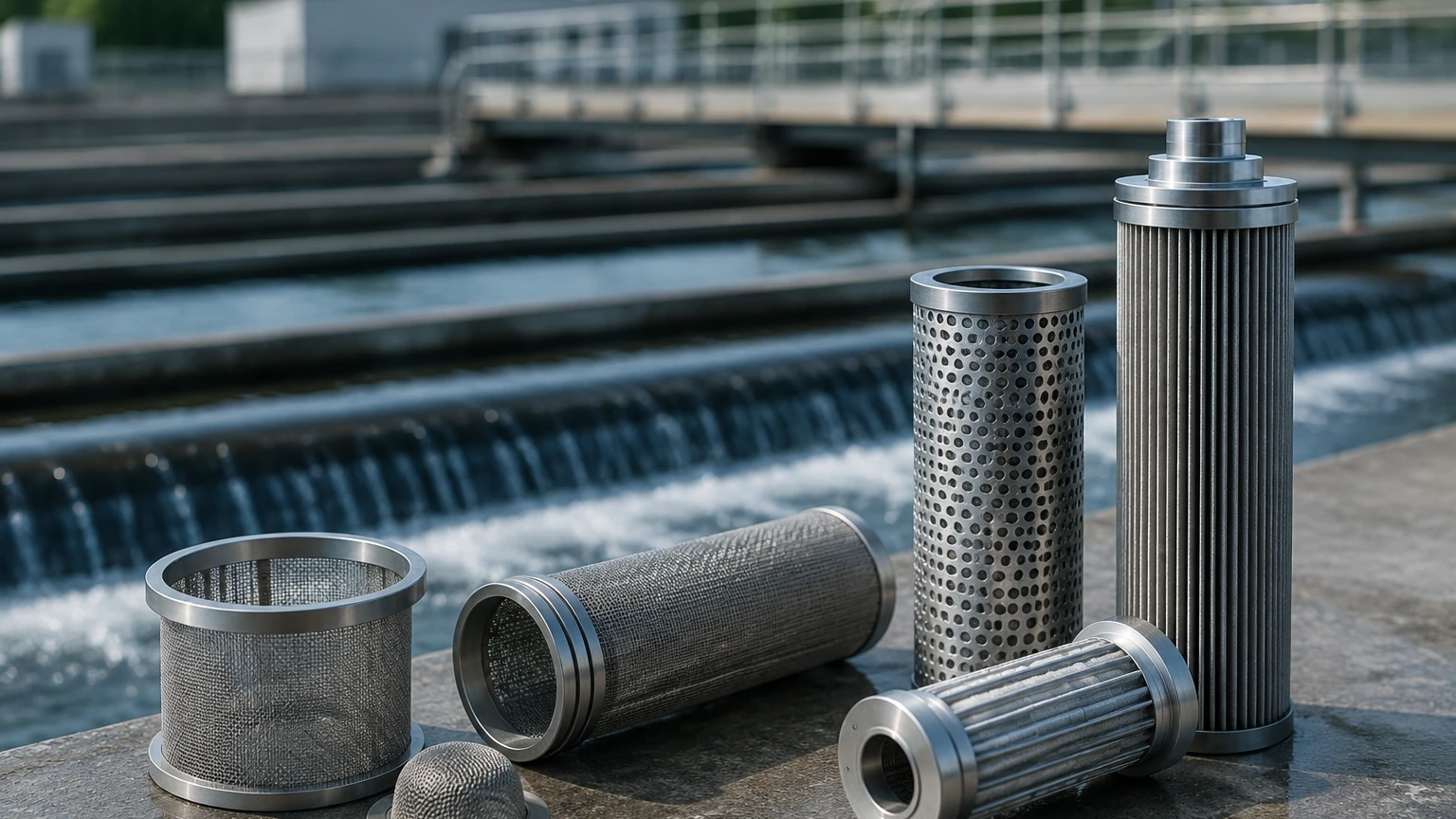
Customization and the Role of OEM Manufacturing
Standard off-the-shelf filters rarely meet the specific needs of complex industrial wastewater streams. Customization is often necessary to integrate filtration components into existing infrastructure or to meet unique process requirements.
Professional manufacturers like Kaifil specialize in developing tailored solutions, ranging from specific mesh weaves to custom-dimensioned cartridges. Whether the application requires a reinforced core for high-pressure hydraulic return lines or a specific flange fitting for a chemical reactor, custom engineering ensures that the filter performs reliably under actual operating conditions. For more information on tailored filtration components and engineering support, professionals can visit the Main Page to explore available configurations and material options.
OEM capabilities allow for the production of filtration components that align exactly with the original equipment's specifications, ensuring seamless replacement and maintaining the integrity of the overall treatment system. This level of precision is vital for industries such as food and beverage, where sanitary standards must be met alongside filtration efficiency.
Evaluating Total Cost of Ownership (TCO)
In a B2B procurement context, the initial purchase price of a filter is only one component of the total cost. When evaluating filtration in wastewater treatment, a TCO analysis should include:
1. Replacement Frequency: How often must the media be replaced? Stainless steel's multi-year lifespan contrasts sharply with the weekly or monthly replacement of disposables.
2. Labor Costs: The time required for maintenance personnel to change out filters. Permanent metal filters often utilize automated backwash systems, significantly reducing manual labor.
3. Disposal Costs: Many industrial filters, once used, are classified as hazardous waste. Reducing the volume of discarded media lowers disposal fees and simplifies environmental reporting.
4. Energy Consumption: A filter that operates with a lower average differential pressure requires less pumping energy, leading to long-term utility savings.
By investing in high-quality, durable filtration components, facilities can achieve a lower TCO despite a higher initial capital expenditure.
Conclusion
Effective filtration in wastewater treatment is a cornerstone of modern industrial operations. It ensures regulatory compliance, protects expensive downstream machinery, and supports the transition toward sustainable water management. By focusing on technical specifications such as material grade, micron precision, and structural durability, engineers can implement filtration systems that provide reliable performance in even the most challenging environments. Choosing the right partner for stainless steel filtration components is essential for achieving these goals, ensuring that every stage of the wastewater process is optimized for efficiency and longevity.
