


Filtration in Water Treatment
Industrial water treatment processes demand high-performance solutions to ensure the removal of contaminants, the protection of downstream equipment, and the consistency of end-product quality. Filtration in water treatment is not a one-size-fits-all process; it requires a deep understanding of fluid dynamics, material science, and the specific chemical properties of the water being treated. For engineers and procurement specialists, selecting the right filtration media is a critical decision that impacts operational uptime, maintenance costs, and the overall efficiency of the system.
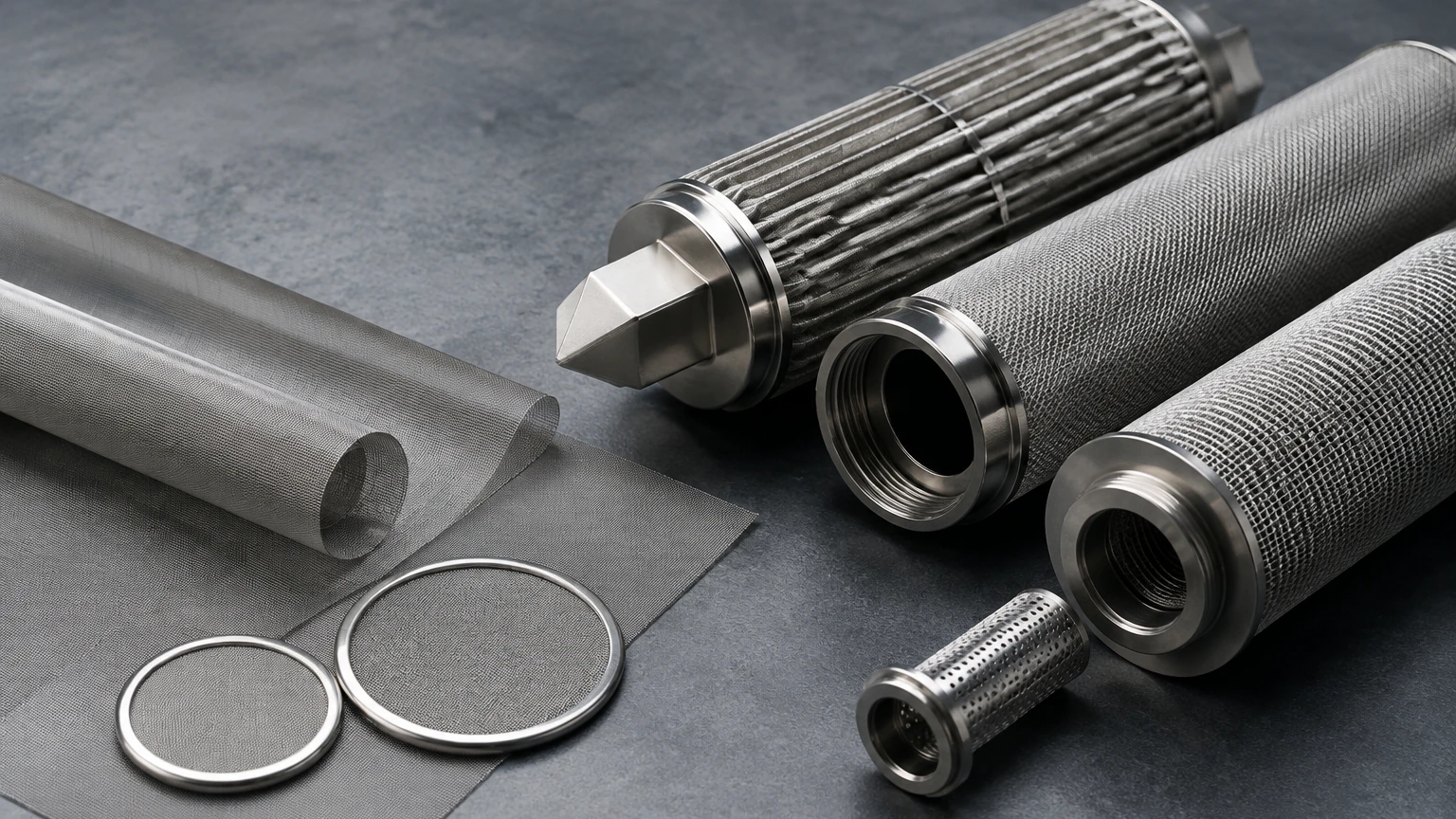
Stainless steel filtration components have become the standard for demanding industrial water applications. Unlike polymer-based filters, metal filters offer superior structural integrity, thermal resistance, and the ability to be cleaned and reused multiple times. This article examines the technical nuances of filtration in water treatment, focusing on the engineering considerations that define high-performance filtration systems.
Material Selection: The Advantages of Stainless Steel
In the context of filtration in water treatment, the choice of material is the first line of defense against system failure. Industrial water often contains corrosive elements, varying pH levels, and abrasive particulates that can degrade lesser materials. Stainless steel, specifically grades 304 and 316L, is preferred for its exceptional resistance to oxidation and corrosion.
Grade 304 stainless steel is suitable for many standard water treatment applications where cost-effectiveness is balanced with durability. However, for environments involving high chloride concentrations or aggressive chemical additives, 316L stainless steel is the engineering choice. The addition of molybdenum in 316L provides enhanced resistance to pitting and crevice corrosion, which is essential in desalination plants, chemical processing facilities, and brackish water treatment.
Beyond corrosion resistance, stainless steel offers mechanical strength that polymer filters cannot match. In high-pressure hydraulic systems or applications subject to pressure surges (water hammer), stainless steel filter cartridges maintain their pore structure and prevent bypass, ensuring that filtration accuracy remains constant throughout the service cycle.
Structural Variations in Metal Filtration Media
Effective filtration in water treatment relies on the specific geometry and construction of the filter media. Different industrial applications require different structural approaches to balance flow rate with particle retention.
Woven Wire Mesh Filters
Woven wire mesh is a versatile medium used for surface filtration. By precisely controlling the wire diameter and the weaving pattern (such as plain weave, twill weave, or dutch weave), manufacturers can create filters with specific micron ratings. In water treatment, woven mesh is often used for pre-filtration and the removal of suspended solids. Its primary advantage is the ease of cleaning; particulates are trapped on the surface, making backwashing highly effective.
Sintered Metal Filters
For applications requiring extreme durability and fine filtration, sintered metal media are utilized. This process involves bonding multiple layers of wire mesh or metal fibers through heat and pressure without the use of binders. The result is a porous metal structure that offers high mechanical strength and precise pore size distribution. Sintered filters are ideal for high-temperature water treatment and applications where the filter must withstand frequent high-pressure cleaning cycles.
Wedge Wire Screens
Wedge wire is characterized by its V-shaped profile wires. This design is particularly effective in filtration in water treatment because the narrow opening at the surface widens inwardly, reducing the risk of clogging (blinding). Wedge wire is commonly used in intake screens, resin traps, and large-scale industrial strainers where high flow rates and low maintenance are required.
Engineering Parameters for Filter Specification
When specifying components for filtration in water treatment, engineers must evaluate several technical parameters to ensure the filter performs as intended under operational loads.
Micron Rating: Absolute vs. Nominal
A common point of confusion in filter selection is the distinction between nominal and absolute micron ratings. A nominal rating refers to a filter's ability to retain a major percentage of particles of a certain size (e.g., 90% of 10-micron particles). An absolute rating, however, indicates that 99.9% or more of particles at that size will be captured. For critical water treatment processes, such as pharmaceutical grade water or food-grade ingredient water, absolute-rated stainless steel cartridges are necessary to guarantee purity.
Differential Pressure (ΔP)
Differential pressure is the difference in pressure between the upstream and downstream sides of the filter. As the filter captures contaminants, ΔP increases. Engineers must design systems that can handle the maximum allowable ΔP before the filter requires cleaning or replacement. Stainless steel filters are advantageous here because they can withstand much higher differential pressures than synthetic media before structural deformation occurs.
Flow Velocity and Flux Rates
The flux rate—the volume of water passing through a unit area of filter media—must be optimized. If the flux rate is too high, it can force particles through the media or cause premature clogging. Conversely, a flux rate that is too low requires larger, more expensive filter housings. Balancing these factors requires precise calculation of the effective filtration area, often leading engineers to choose pleated filter designs to maximize surface area within a compact footprint.
Application-Specific Challenges in Water Treatment
Filtration in water treatment must account for the unique challenges of different industrial sectors. Each environment introduces variables that can affect filter longevity and performance.
Chemical Processing and Petrochemicals
In these industries, water is often used for cooling or as a solvent. The water may contain hydrocarbons, acids, or bases. Filtration systems must be chemically compatible with these substances. Stainless steel's inert nature makes it the ideal choice for preventing chemical reactions that could contaminate the process stream or weaken the filter structure.
Food and Beverage Production
Sanitary standards are paramount in food and beverage water treatment. Filters must be designed with "clean-in-place" (CIP) capabilities. Stainless steel filters with smooth surface finishes (often achieved through electropolishing) prevent bacterial growth and allow for thorough sterilization using steam or chemical agents.
Cooling Tower and Boiler Feed Water
Scale and sediment are the primary enemies of cooling towers and boilers. Filtration in water treatment for these systems focuses on removing fine particulates that could cause scaling on heat exchanger surfaces. High-efficiency wire mesh filters help maintain heat transfer efficiency and reduce the need for chemical descaling agents.
Maintenance, Cleaning, and Lifecycle Considerations
One of the most significant advantages of using stainless steel for filtration in water treatment is the reduction in the total cost of ownership (TCO). While the initial investment in a stainless steel cartridge may be higher than a disposable plastic filter, the long-term savings are substantial.
Cleaning Methodologies
Stainless steel filters can be restored to near-original performance through various cleaning methods:
* Backwashing: Reversing the flow of water to dislodge surface contaminants.
* Ultrasonic Cleaning: Using high-frequency sound waves in a cleaning solvent to remove deeply embedded particles from sintered media.
* Chemical Cleaning: Using mild acids or bases to dissolve organic or mineral deposits.
* Burn-off/Thermal Cleaning: For non-water applications where organic binders are present, though less common in standard water treatment.
Replacement Cycles
The lifespan of a metal filter is typically measured in years rather than weeks or months. By monitoring differential pressure, operators can establish a predictable maintenance schedule. A well-maintained stainless steel filter can last through hundreds of cleaning cycles, significantly reducing the waste stream and the labor costs associated with frequent filter changes.
Strategic Procurement and Customization
For many industrial facilities, standard off-the-shelf filters do not meet the specific requirements of their unique water chemistry or system geometry. This is where customization becomes essential. Working with a specialized manufacturer allows for the engineering of bespoke filtration solutions that fit existing housings while optimizing performance.
Customization options include:
* Custom End Fittings: Ensuring compatibility with various housing brands and connection types (NPT, Flange, DOE, etc.).
* Reinforced Cores: For applications with extremely high pressure or frequent hydraulic shocks.
* Variable Layering: Combining different mesh counts in a single sintered element to provide graduated filtration (depth filtration) in a metal format.
When evaluating a partner for these components, it is vital to review their technical capabilities and manufacturing precision. For more information on specialized metal filtration components and to Review product options and application support, visiting the Main Page of a dedicated manufacturer can provide the necessary technical specifications and OEM capabilities required for complex projects.
Conclusion
Filtration in water treatment is a foundational element of industrial operational excellence. By moving beyond disposable solutions and investing in precision-engineered stainless steel filtration components, companies can achieve higher purity levels, protect expensive downstream equipment, and move toward more sustainable, low-waste operations. Understanding the engineering principles of micron ratings, material compatibility, and structural design is the key to selecting a filtration system that delivers reliable performance in the most demanding water treatment environments.
