


Filtration Procedure to Remove Waste
In industrial manufacturing and processing, the management of waste streams is a critical operational requirement. Whether the objective is to protect downstream equipment, recover valuable materials, or ensure compliance with environmental discharge regulations, a systematic filtration procedure to remove waste is essential. For engineers and technical professionals, selecting the appropriate filtration technology involves a deep understanding of fluid dynamics, material compatibility, and the physical characteristics of the contaminants being targeted.
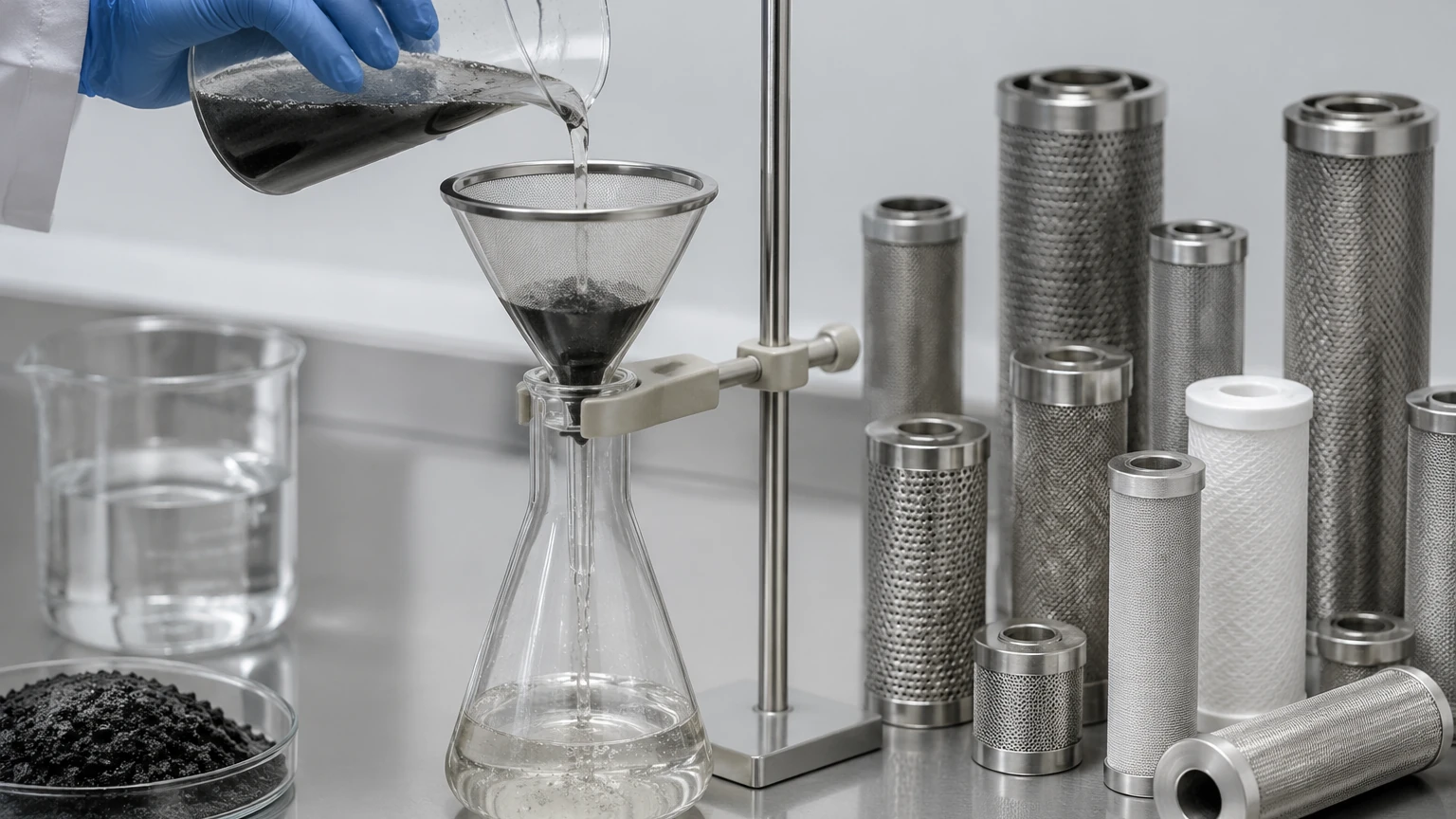
Industrial filtration is not a one-size-fits-all process. It requires a calculated approach to media selection, housing design, and operational protocols. By employing high-performance stainless steel filtration solutions, facilities can achieve higher levels of precision and durability compared to traditional disposable media. This article examines the technical frameworks and engineering considerations necessary to implement an effective filtration procedure to remove waste in demanding industrial environments.
Fundamentals of the Filtration Procedure to Remove Waste
The primary goal of any filtration procedure to remove waste is the separation of solids from a liquid or gaseous carrier. This separation is typically achieved through mechanical straining, where the filter medium acts as a barrier to particles larger than its pore size. In industrial contexts, waste can range from coarse debris and metal shavings to microscopic chemical precipitates and biological sludge.
Surface vs. Depth Filtration
When designing a procedure, engineers must choose between surface and depth filtration. Surface filtration, often utilizing stainless steel wire mesh, captures particles on the upstream side of the media. This method is ideal for waste removal where the particle size distribution is relatively uniform and the filter needs to be cleaned and reused. Depth filtration, conversely, uses a thicker medium to trap particles throughout its structure. While effective for high-solids loading, depth filters are often disposable, whereas surface filters made of metal provide a permanent, cleanable solution for long-term waste management.
Particle Characterization
Before a procedure can be finalized, the waste must be characterized. This includes analyzing the particle size distribution (PSD), particle shape, and concentration. For instance, needle-like particles may require a different mesh weave than spherical particles to prevent "blinding" or "pegging" of the filter surface. Understanding the micron rating—both absolute and nominal—is the first step in ensuring the filtration procedure effectively removes the targeted waste without causing excessive pressure drops.
Engineering Considerations for Filter Selection
Selecting the right hardware for a waste removal procedure requires balancing several engineering variables. The efficiency of the system depends on how well the filter media handles the specific stresses of the application.
Material Compatibility and Durability
In chemical processing or wastewater treatment, the waste stream may be corrosive or operate at elevated temperatures. Stainless steel (specifically grades 304, 316, and 316L) is the industry standard for these applications due to its oxidation resistance and structural integrity. Unlike polymer-based filters, stainless steel components can withstand high differential pressures and thermal shocks, making them a reliable choice for a permanent Main Page infrastructure.
Flow Rate and Pressure Drop
The relationship between flow rate and pressure drop (Delta P) is a critical performance metric. As waste accumulates on the filter media, the resistance to flow increases. An engineered filtration procedure must account for the "clean" pressure drop and define the maximum allowable pressure drop before cleaning or replacement is required. Over-sizing the filter area can reduce the frequency of maintenance cycles, thereby lowering the total cost of ownership.
Micron Rating and Efficiency
For precision waste removal, the absolute micron rating is paramount. This rating indicates the diameter of the largest hard spherical particle that will pass through the filter under specified test conditions. In pharmaceutical or high-purity chemical applications, even trace amounts of waste can compromise the final product, necessitating the use of high-precision metal filter cartridges that offer consistent pore sizes.
Technical Implementation of the Filtration Procedure
Implementing a filtration procedure to remove waste involves a sequence of technical steps designed to optimize separation efficiency and equipment lifespan.
Step 1: Pre-Filtration and Scalping
In many industrial waste streams, a multi-stage approach is most efficient. Pre-filtration, or "scalping," involves using a coarse wire mesh to remove large debris. This protects the finer, more expensive secondary filters from premature clogging and mechanical damage. By removing the bulk of the waste early in the procedure, the overall system reliability is significantly improved.
Step 2: Primary Filtration
The primary stage is where the specific waste removal targets are met. Depending on the application, this may involve stainless steel pleated filter cartridges, which provide a large surface area in a compact footprint, or cylindrical wire mesh filters. The choice of weave—such as plain, twill, or dutch weave—determines the flow characteristics and the rigidity of the filter element.
Step 3: Monitoring and Automation
Modern industrial filtration systems often incorporate differential pressure sensors to monitor the accumulation of waste. When the pressure drop reaches a predetermined set point, the system may trigger an automated backwash cycle or alert operators that manual cleaning is necessary. This data-driven approach ensures that the filtration procedure to remove waste remains within its optimal performance envelope.
Cleaning and Maintenance of Permanent Filter Media
One of the primary advantages of using stainless steel components in a waste removal procedure is their ability to be cleaned and reused. This eliminates the recurring costs and environmental impact associated with disposable filters.
Backwashing and Back-pulsing
Backwashing involves reversing the flow of the fluid through the filter media to dislodge accumulated waste from the surface. This is particularly effective for surface filtration media like wedge wire or coarse mesh. For finer particles, back-pulsing with high-pressure air or steam may be required to clear the pores effectively.
Ultrasonic Cleaning and Chemical Soaking
In cases where the waste is particularly adhesive or has deeply embedded itself in the mesh, ultrasonic cleaning is an effective secondary maintenance procedure. By using high-frequency sound waves in a specialized cleaning solution, even microscopic contaminants can be removed without damaging the precision-engineered structure of the stainless steel. Chemical soaking may also be employed to dissolve organic or mineral scale that mechanical cleaning cannot reach.
Evaluating Replacement Cycles
While stainless steel filters are highly durable, they are not infinite. Regular inspection for mechanical fatigue, wire displacement, or corrosion is necessary. A well-documented filtration procedure should include specific inspection intervals and criteria for decommissioning a filter element to prevent catastrophic failure and downstream contamination.
Total Cost of Ownership in Waste Filtration
When evaluating a filtration procedure to remove waste, purchasing teams must look beyond the initial capital expenditure (CAPEX). The total cost of ownership (TCO) includes maintenance labor, cleaning costs, downtime, and the cost of waste disposal.
* Disposable Media: Low initial cost but high recurring operational expenditure (OPEX). Costs include constant replacement parts, labor for frequent changes, and the environmental cost of disposing of contaminated filter elements.
* Permanent Stainless Steel Media: Higher initial CAPEX but significantly lower OPEX. The durability of metal filters means fewer replacements, and their cleanability reduces the volume of solid waste generated by the filtration process itself.
By investing in high-quality, customized filtration components, engineers can design a waste removal system that is both economically and operationally sustainable.
Customization and Application-Specific Design
Standard filtration components may not always meet the unique demands of specific waste streams. Customization is often required to optimize the filtration procedure to remove waste. This includes tailoring the dimensions, end-cap configurations, and mesh specifications to fit existing housings or to meet unique flow requirements.
At Kaifil, the focus is on providing these precision-engineered solutions. Whether the application requires a specialized filter for high-viscosity hydraulic fluids or a corrosion-resistant cartridge for chemical waste, the engineering of the component is central to the success of the filtration procedure. Technical teams should confirm the following before finalizing a filter design:
1. Chemical Environment: Does the waste stream contain acids, bases, or chlorides that require 316L stainless steel or specialized alloys?
2. Pressure Requirements: What is the maximum operating pressure and the anticipated surge pressure?
3. Filtration Accuracy: What is the specific micron size that must be captured to meet process goals?
4. Interface Compatibility: Does the filter element require specific gaskets (e.g., EPDM, Viton, PTFE) to ensure a leak-proof seal within the housing?
Conclusion
A rigorous filtration procedure to remove waste is a cornerstone of efficient industrial operations. By understanding the mechanical principles of separation and the material advantages of stainless steel, engineers can implement systems that offer high precision, durability, and cost-effectiveness. The transition from disposable to permanent, cleanable filtration media represents a significant step toward optimized process control and reduced environmental impact. For those looking to refine their filtration capabilities, selecting a partner with deep manufacturing expertise and a commitment to quality is essential for achieving long-term performance goals.
