


Filtration Skid
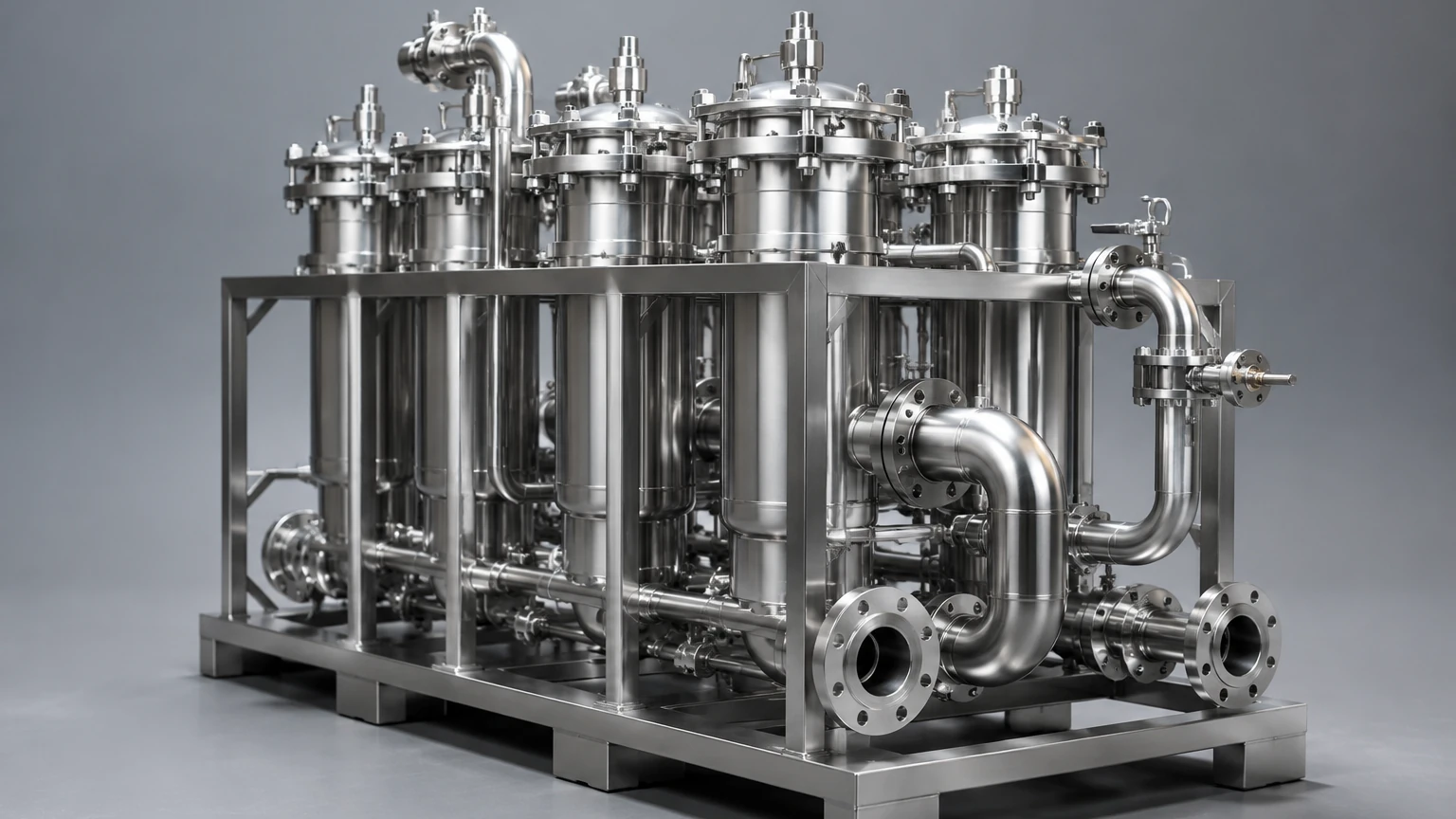
In modern industrial processing, the efficiency of a liquid or gas separation system often depends on how well individual components are integrated into a cohesive unit. A filtration skid represents this integration, serving as a self-contained, modular system designed to remove contaminants from process fluids. These systems are engineered to house all necessary components—including filter vessels, pumps, piping, valves, and instrumentation—on a single structural frame. For engineers and procurement teams, understanding the technical nuances of a filtration skid is essential for optimizing process uptime and ensuring product purity.
A filtration skid is more than just a housing for a filter; it is a complete process solution. By centralizing the filtration process, facilities can reduce installation time, minimize the physical footprint of equipment, and ensure that the filtration media operates within its designed hydraulic parameters. Whether utilized in chemical processing, water treatment, or the pharmaceutical industry, the performance of the skid is fundamentally tied to the quality of its internal filtration elements and the precision of its engineering.
Understanding the Architecture of a Filtration Skid
The design of a filtration skid is dictated by the specific requirements of the application, yet most industrial-grade systems share a core architecture. The foundation is a heavy-duty structural frame, typically fabricated from carbon steel or stainless steel, which provides the necessary support for high-pressure components and prevents vibration-induced fatigue in the piping.
At the heart of the skid are the filter housings. Depending on the required flow rate and particulate load, these may be single-vessel units or multi-round housings capable of holding dozens of filter cartridges. In continuous processes, a duplex configuration is often employed. A duplex filtration skid allows one side of the system to remain operational while the other is isolated for maintenance or filter replacement, ensuring zero downtime.
Beyond the housings, the skid includes the fluid handling infrastructure. This encompasses the inlet and outlet manifolds, bypass valves for emergency routing, and pressure gauges located upstream and downstream of the filter. Advanced skids may also incorporate automated control systems with Programmable Logic Controllers (PLCs) that monitor differential pressure and trigger backwashing cycles or alert operators when a filter change-out is required.
Critical Technical Parameters for Skid Selection
When evaluating a filtration skid for a specific industrial application, engineers must look beyond the physical dimensions and focus on the hydraulic and mechanical specifications. The following parameters are critical to ensuring the system meets performance expectations:
Flow Rate and Flux
The system must be sized to handle the maximum expected flow rate without exceeding the recommended flux (flow per unit of surface area) for the filter media. Excessive flux can lead to premature clogging, structural failure of the filter element, and decreased filtration efficiency. A well-designed skid balances the pump capacity with the total surface area of the stainless steel filter cartridges or mesh elements.
Micron Rating and Efficiency
Filtration accuracy is defined by the micron rating. It is important to distinguish between nominal ratings (an approximation of the smallest particle retained) and absolute ratings (a guaranteed retention level, often 99.9% or higher). In critical applications like pharmaceutical manufacturing or fine chemical processing, absolute-rated stainless steel wire mesh or sintered metal elements are preferred for their consistent performance under varying pressures.
Design Pressure and Temperature
Industrial filtration often occurs under extreme conditions. A filtration skid must be rated for the maximum operating pressure of the system, including potential pressure spikes. Furthermore, the materials used for seals, gaskets, and the filter media itself must be compatible with the process temperature. Stainless steel components are particularly valued in these scenarios for their ability to maintain structural integrity at high temperatures where polymer-based filters would fail.
Material Engineering: Why Stainless Steel Dominates Skid Design
The choice of material for the internal filtration components is perhaps the most significant factor in the longevity and reliability of a filtration skid. While plastic or disposable filters may be suitable for light-duty applications, industrial-scale skids frequently utilize stainless steel (typically Grade 304 or 316L).
Stainless steel provides several engineering advantages:
1. Chemical Compatibility: It is resistant to a wide range of corrosive agents, making it ideal for chemical processing and water treatment where pH levels may fluctuate.
2. Mechanical Strength: Stainless steel filter elements can withstand high differential pressures (ΔP) without collapsing. This is crucial during late-cycle operation when the filter is heavily loaded with contaminants.
3. Cleanability and Reusability: Unlike disposable depth filters, stainless steel wire mesh and sintered metal cartridges can often be cleaned via backpulsing, ultrasonic cleaning, or chemical soaking. This reduces the total cost of ownership by extending the service life of the media.
4. Hygiene: In the food and beverage and pharmaceutical sectors, the non-porous surface of stainless steel prevents bacterial growth and allows for effective Clean-in-Place (CIP) procedures.
Addressing Common Operational Risks in Filtration Systems
Even a high-quality filtration skid can encounter operational challenges if not managed correctly. Engineers should be aware of several common risks that can impact system performance:
Differential Pressure Management
As a filter captures contaminants, the resistance to flow increases, leading to a rise in differential pressure. If the ΔP exceeds the manufacturer's recommended limit, there is a risk of "breakthrough," where particles are forced through the media, or mechanical failure of the filter element. Monitoring ΔP is the primary method for determining when a filter requires cleaning or replacement.
Bypass and Seal Integrity
If the filter element is not seated correctly within the housing, or if the seals (O-rings) fail, fluid will bypass the filtration media entirely. This results in downstream contamination. High-performance skids utilize precision-machined seats and high-quality elastomers to ensure a positive seal even under fluctuating thermal conditions.
Air Entrainment and Cavitation
In systems where the filtration skid is located on the suction side of a pump, air can become trapped in the housing. This can lead to oxidation of the process fluid or cavitation in the pump. Including manual or automatic air vent valves at the highest point of the filter housing is a standard engineering practice to mitigate this risk.
Customization and OEM Integration for Specific Industrial Needs
No two industrial processes are identical, which is why customization is a hallmark of effective filtration skid design. OEM manufacturers work closely with engineers to tailor the skid to the specific footprint and performance requirements of a facility.
Customization options often include:
* Multi-Stage Filtration: Incorporating a coarse pre-filter followed by a fine polishing filter on the same skid to protect expensive downstream elements.
* Specialized Coatings: For highly aggressive environments, stainless steel components may be treated with specialized coatings or electropolished to enhance corrosion resistance and reduce particle adhesion.
* Instrumentation Integration: Adding flow meters, turbidity sensors, or conductivity probes to provide real-time data on the quality of the filtrate.
By selecting a manufacturer with deep expertise in custom stainless steel filtration solutions, companies can ensure that their filtration skid is optimized for their specific particulate profile and fluid dynamics.
Total Cost of Ownership (TCO) in Filtration Skid Procurement
When purchasing a filtration skid, the initial capital expenditure (CAPEX) is only one part of the financial equation. The Total Cost of Ownership (TCO) includes operational expenses (OPEX) such as energy consumption, maintenance labor, and the cost of replacement filter elements.
A skid that utilizes high-quality, cleanable stainless steel filters may have a higher upfront cost than one using disposable cartridges. However, the reduction in waste disposal costs, lower frequency of replacement, and decreased downtime often result in a much lower TCO over the life of the equipment. Furthermore, a well-engineered skid with low internal pressure drop reduces the load on pumps, leading to significant energy savings over time.
Technical Verification Checklist for Engineers
Before finalizing a procurement decision for a filtration skid, technical teams should confirm several key pieces of information with the manufacturer:
* Media Validation: Request data on the micron rating and beta ratio of the filter elements under actual operating conditions.
* Material Certification: Ensure that all wetted parts have Mill Test Reports (MTRs) to verify material grade and traceability.
* Seal Compatibility: Confirm that the O-ring and gasket materials are compatible with the process fluid and cleaning chemicals.
* Maintenance Clearance: Verify that the skid layout provides enough overhead and lateral space for operators to safely remove and replace filter elements.
* Compliance: Ensure the system meets relevant industry standards, such as ASME Section VIII for pressure vessels or FDA/3A for sanitary applications.
Conclusion
A filtration skid is a vital component in maintaining the integrity of industrial processes. By integrating high-performance stainless steel filtration elements with robust mechanical design, these systems provide a reliable and efficient solution for fluid separation. For organizations looking to optimize their filtration performance, focusing on material quality, hydraulic precision, and long-term maintainability is the key to success. To explore specific filtration components and engineering support for your next project, you can Review product options and application support to find the right solution for your technical requirements.
