


Filtri Acqua Autopulenti
In industrial water treatment and process engineering, maintaining continuous flow while ensuring the removal of suspended solids is a critical operational requirement. Manual filtration systems, while effective for low-load applications, often lead to significant downtime, increased labor costs, and inconsistent pressure levels during cleaning cycles. This is where filtri acqua autopulenti (self-cleaning water filters) provide a transformative solution. By integrating automated cleaning mechanisms, these systems ensure that the filtration process remains uninterrupted, protecting downstream equipment and maintaining process efficiency.
For engineers and procurement professionals, selecting the right self-cleaning system requires a deep understanding of the mechanical principles, material compatibility, and the specific demands of the industrial environment. Whether the application involves cooling water, process fluids, or wastewater recovery, the choice of filter element and cleaning technology determines the long-term reliability of the system.
The Role of Self-Cleaning Filtration in Industrial Water Management
Industrial water systems are often susceptible to contamination from sand, scale, organic matter, and other debris. If left unfiltered, these particles can cause catastrophic failure in heat exchangers, nozzle clogging in spray systems, and premature wear on pumps and valves. Traditional basket strainers or cartridge filters require the process to be halted or bypassed for manual element cleaning or replacement.
Filtri acqua autopulenti eliminate these bottlenecks. These systems are designed to detect a rise in differential pressure—the difference in pressure between the inlet and the outlet—which indicates that the filter screen is becoming loaded with contaminants. Once a specific threshold is reached, or after a pre-set time interval, the cleaning cycle is triggered automatically without stopping the main flow. This capability is essential for 24/7 manufacturing environments where even a few minutes of downtime can result in significant financial loss.
Mechanical Principles: How Filtri Acqua Autopulenti Operate
There are several mechanical approaches to self-cleaning, each suited to different types of contaminants and flow conditions. Understanding these mechanisms is the first step in technical selection.
1. Backwash Systems
Backwashing is one of the most common methods for cleaning mesh-based filters. When the cleaning cycle begins, a portion of the filtered fluid (or an external clean fluid source) is diverted to flow in the reverse direction through the filter element. This reverse flow dislodges the particles trapped on the surface of the mesh and flushes them out through a dedicated drain valve. This method is highly effective for removing non-sticky, granular particles.
2. Suction Scanner Technology
Suction scanning is a more targeted form of backwashing. Instead of reversing the flow through the entire filter, a rotating internal scanner moves across the surface of the screen. A small amount of fluid is drawn into the scanner nozzles due to the pressure differential between the filter interior and the atmospheric pressure at the drain. This creates a high-velocity suction effect that localizedly cleans the mesh, ensuring thorough removal of debris with minimal water waste.
3. Mechanical Scraper Systems
For fluids containing sticky or high-viscosity contaminants—such as oils, fats, or biological films—mechanical scraping is often preferred. A physical blade or brush moves across the filter surface, physically dislodging the cake and pushing it toward a collection area at the bottom of the housing. This method is particularly robust in food processing and heavy industrial wastewater applications.
Material Engineering: The Importance of Stainless Steel Mesh
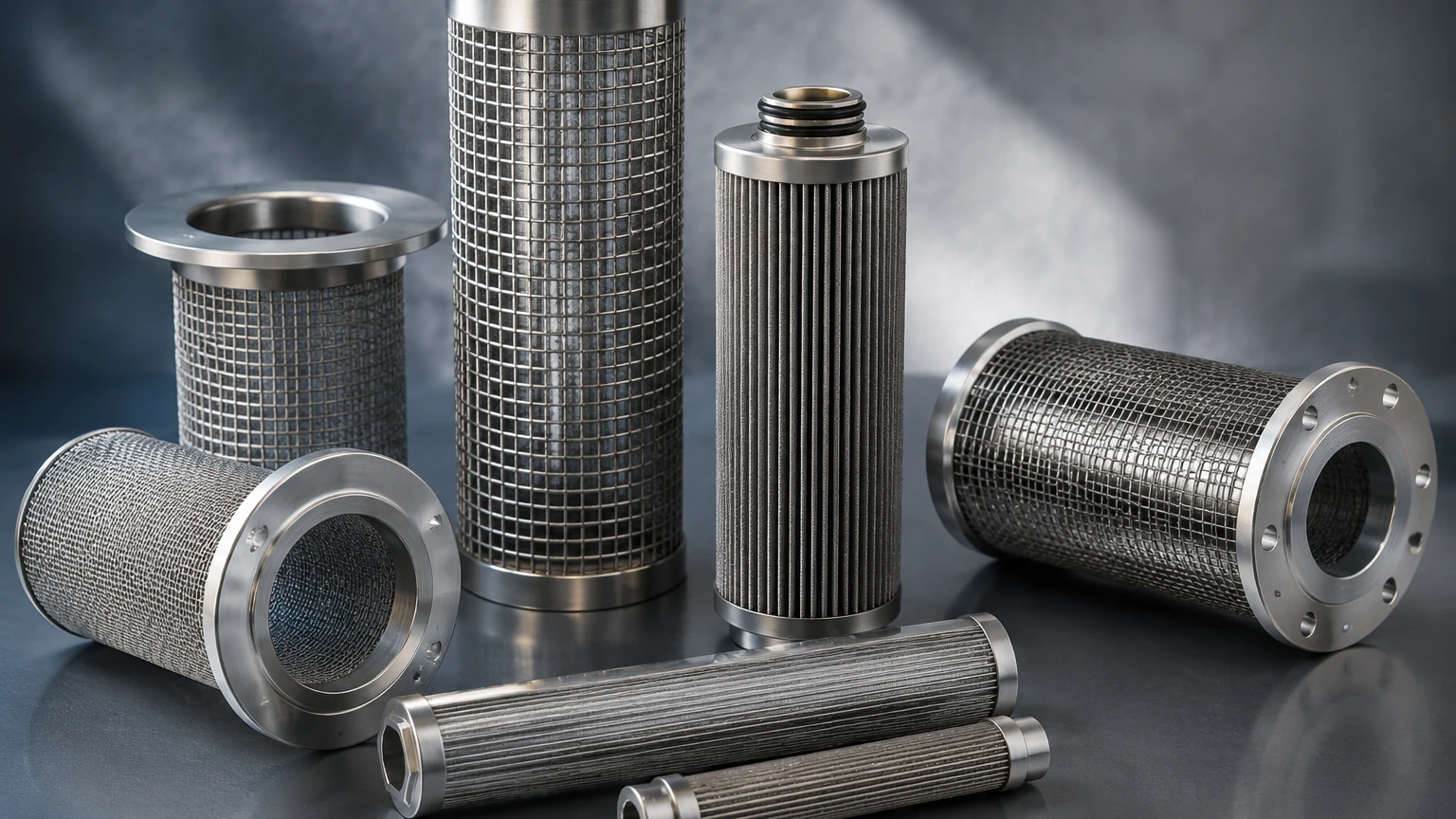
The heart of any self-cleaning filter is the filter element itself. In industrial settings, stainless steel is the gold standard for these components due to its structural integrity and resistance to corrosion. As a specialist in custom filtration, Kaifil emphasizes the use of high-grade alloys to match the chemical profile of the water being treated.
* Grade 304 Stainless Steel: Suitable for general industrial water applications where corrosion risks are moderate.
* Grade 316L Stainless Steel: Essential for applications involving brackish water, seawater, or chemicals. The addition of molybdenum provides superior resistance to pitting and crevice corrosion.
* Duplex and Super Duplex: Reserved for the most aggressive environments, such as offshore oil and gas or highly acidic chemical processing.
The structure of the mesh also matters. While simple woven wire mesh is common, many filtri acqua autopulenti utilize wedge wire or multi-layered sintered mesh for improved mechanical strength. Sintered mesh, in particular, offers the advantage of permanent pore geometry, ensuring that the filtration rating remains constant even under high-pressure cleaning cycles. You can explore a wide range of these specialized components on our Main Page.
Technical Selection Criteria for Engineers
When specifying filtri acqua autopulenti, engineers must look beyond the initial price tag and focus on technical parameters that ensure compatibility with the existing infrastructure.
Filtration Rating (Micron Rating)
The micron rating defines the size of the smallest particle the filter is designed to trap. Selecting a rating that is too fine can lead to excessive cleaning cycles and premature wear, while a rating that is too coarse may fail to protect downstream equipment. Common industrial ranges for self-cleaning systems fall between 10 and 500 microns.
Flow Rate and Pressure Drop
The filter must be sized to handle the maximum peak flow of the system without creating an excessive pressure drop. A high initial pressure drop across a clean filter reduces the available energy for the rest of the process and triggers the cleaning cycle too frequently.
Waste Ratio
Every cleaning cycle involves a "blowdown" or flush where a small amount of water is expelled with the contaminants. In water-scarce regions or applications involving expensive treated water, minimizing this waste ratio is a priority. Suction scanners typically offer the lowest waste-to-process-water ratio.
Automation and Control
Modern systems are equipped with PLC-based controllers that allow for fine-tuning of the cleaning triggers. Integration with the facility’s SCADA (Supervisory Control and Data Acquisition) system allows for remote monitoring of filter health and performance trends.
Comparing Backwash and Scraper Cleaning Mechanisms
Choosing between backwash and scraper mechanisms often depends on the nature of the solids.
| Feature | Backwash / Suction Scanner | Mechanical Scraper |
| :— | :— | :— |
| Best For | Sand, scale, granular debris | Bio-films, oils, sticky solids |
| Water Loss | Low to Moderate | Very Low |
| Maintenance | Low (few moving parts) | Moderate (wear on blades/brushes) |
| Pressure Requirement | Requires minimum inlet pressure | Can operate at very low pressures |
For most municipal and industrial water cooling applications, the suction scanner or backwash system is the industry standard due to its efficiency and low maintenance requirements. However, in the pulp and paper or food industry, the scraper system is often the only viable way to handle fibrous or adhesive materials.
Applications Across High-Demand Industries
Filtri acqua autopulenti are utilized across a diverse spectrum of industries, each with specific challenges that these systems are uniquely equipped to solve.
Power Generation and Cooling Towers
Cooling towers are essentially large air scrubbers that collect dust and debris from the atmosphere. This debris settles in the cooling water and can foul heat exchangers. Self-cleaning filters installed on the side-stream or full-flow loop ensure that the water remains clear, maintaining thermal efficiency and reducing chemical treatment costs.
Chemical and Petrochemical Processing
In these industries, water is often used for reactor cooling or as a process medium. The presence of corrosive elements requires filters made from high-grade stainless steel. The automated nature of these filters also improves safety by reducing the need for operators to come into contact with potentially hazardous fluids during manual cleaning.
Food and Beverage
Water used for bottle washing, equipment cleaning, or as an ingredient must be free of particulate matter. Self-cleaning filters provide a hygienic solution that meets strict regulatory standards while supporting high-speed production lines.
Irrigation and Agriculture
Large-scale irrigation systems often draw water from rivers or ponds. Filtri acqua autopulenti are essential here to protect emitters and sprinklers from clogging with organic matter and silt, ensuring uniform water distribution across crops.
Optimizing Total Cost of Ownership (TCO)
While the initial capital expenditure (CAPEX) for an automated self-cleaning filter is higher than for a manual strainer, the Total Cost of Ownership (TCO) is significantly lower over the equipment's lifespan. The primary drivers of this cost reduction include:
1. Labor Savings: Eliminating the need for manual intervention for cleaning or element replacement.
2. Extended Component Life: By providing superior protection to pumps, seals, and heat exchangers, the frequency of expensive repairs elsewhere in the system is reduced.
3. Energy Efficiency: Maintaining a clean filter screen ensures the system operates at the lowest possible pressure drop, reducing the energy consumption of the pumps.
4. Reduced Water Waste: Precision cleaning cycles ensure that only the necessary amount of water is used for flushing.
Specifying Custom Filtration Solutions
No two industrial water systems are identical. Factors such as installation space, existing pipe configurations, and specific contaminant loads often necessitate a customized approach. At Kaifil, we specialize in designing and manufacturing stainless steel filter elements that form the core of high-performance self-cleaning systems.
When working with a manufacturer, it is important to provide detailed water analysis reports and flow data. This allows for the engineering of a filter that not only meets the current demand but also provides a margin of safety for future process expansions. From the selection of the specific wire mesh weave to the design of the housing, every detail contributes to the longevity and effectiveness of the filtration solution.
In conclusion, filtri acqua autopulenti represent a critical investment for any facility looking to modernize its water management strategy. By automating the removal of solids and utilizing high-durability materials like stainless steel, these systems provide the reliability and efficiency required in today’s competitive industrial landscape. For more information on high-precision metal filtration components and custom OEM solutions, visit our Main Page to consult with our engineering team.
