


Horizontal Gas Filter Separator
In industrial gas processing, the removal of solid particulates and liquid entrainments is a critical requirement for protecting downstream equipment and ensuring process integrity. A horizontal gas filter separator is a specialized pressure vessel designed to perform this dual-phase separation with high efficiency. Unlike standard scrubbers or simple dry filters, these units utilize a multi-stage approach to handle varying loads of liquids and solids simultaneously. For engineers and procurement teams, understanding the mechanical design, filtration media selection, and operational parameters of these systems is essential for maintaining system reliability in chemical, pharmaceutical, and power generation applications.
The Role of Horizontal Gas Filter Separators in Industrial Processes
Gas streams in industrial environments rarely consist of pure gas. They often carry "black powder" (iron sulfides and oxides), compressor lube oil, water, and various chemical contaminants. If left unmanaged, these contaminants lead to catastrophic failures in high-speed centrifugal compressors, erosion of turbine blades, and fouling of catalyst beds.
The horizontal gas filter separator is preferred in many installations due to its ability to handle high liquid-to-gas ratios and its ease of maintenance. Because the vessel is oriented horizontally, the internal filter elements are typically easier to access and replace than in vertical configurations, especially in large-diameter systems. Furthermore, the horizontal design allows for a larger liquid collection area, which is vital when the gas stream contains significant slugs of liquid or when the process involves fluctuating flow rates.
Multi-Stage Separation Principles
The effectiveness of a horizontal gas filter separator relies on a sequential separation process. This ensures that large contaminants are removed before they can clog the fine filtration media, thereby extending the service life of the internal components.
Stage 1: Gravity and Inertial Separation
Upon entering the vessel, the gas stream undergoes a sudden reduction in velocity and a change in direction. This is often facilitated by an inlet baffle or a centrifugal vane. Larger liquid droplets and heavy solid particles lose their kinetic energy and drop into the primary sump area due to gravity. This "knockout" stage is crucial for preventing the filter elements from becoming overwhelmed by bulk liquids.
Stage 2: Coalescing and Fine Filtration
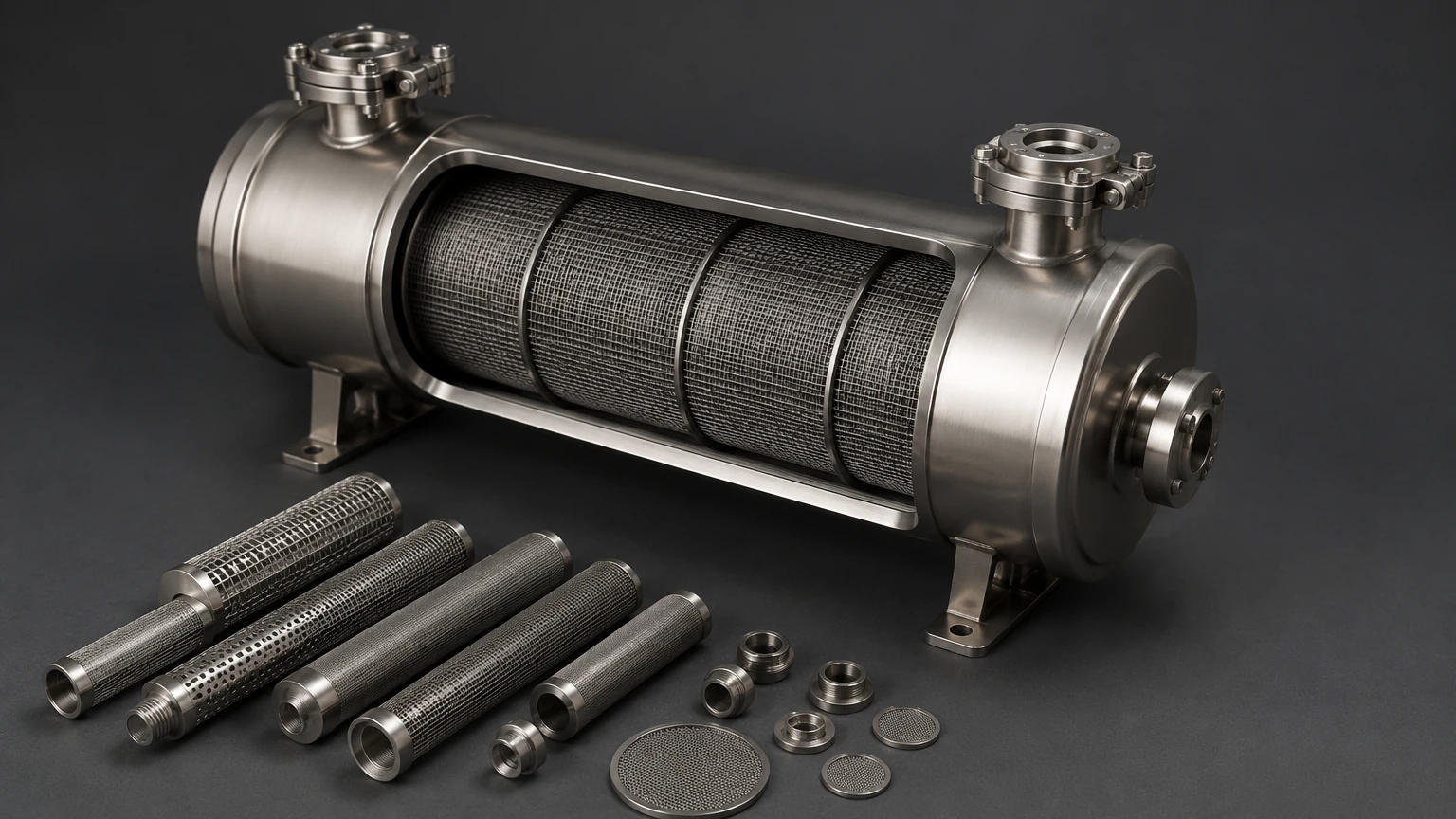
The gas then passes through the filter/coalescer elements. This is the core of the system where precision engineering is required. As the gas flows through the media—often constructed from multi-layered stainless steel wire mesh or pleated metal fibers—fine solid particles are trapped. Simultaneously, sub-micron liquid aerosols collide with the fibers and coalesce into larger droplets. These droplets then migrate through the media and eventually fall into a secondary collection chamber.
Stage 3: Mist Extraction
The final stage involves a mist extractor, such as a vane pack or a wire mesh demister. This component captures any remaining liquid droplets that may have been re-entrained in the gas stream after passing through the filter elements. The result is a high-purity gas stream ready for downstream consumption or further processing.
Engineering the Internal Filtration Media
The performance of a horizontal gas filter separator is fundamentally limited by the quality and specification of its internal filter elements. At Kaifil, we specialize in manufacturing the stainless steel components that provide the necessary durability and precision for these demanding environments. When selecting elements for a separator, several technical factors must be considered:
1. Material Compatibility: Stainless steel 304 and 316L are the industry standards due to their resistance to corrosion and high-temperature stability. In highly sour gas environments or applications involving aggressive chemicals, specialized alloys or Duplex steels may be required to prevent stress corrosion cracking.
2. Filtration Accuracy: Elements are rated by their micron size. In gas filtration, it is common to require 99.9% removal of particles 0.3 to 1 micron in size. Achieving this requires a sophisticated layering of sintered mesh or pleated media to maximize surface area while maintaining a manageable pressure drop.
3. Structural Integrity: Filter elements must withstand significant differential pressure ($ΔP$). If a system experiences a sudden surge or if the elements become heavily fouled, the structural core must prevent collapse. High-quality elements utilize perforated inner cores and outer cages to ensure mechanical stability under pressure.
For detailed specifications on the types of stainless steel cartridges and mesh components available for these systems, technical professionals can refer to our Main Page to review product options and application support.
Selection Criteria for Industrial Applications
Specifying a horizontal gas filter separator requires a comprehensive analysis of the process conditions. Engineers should confirm the following data points before finalizing a design:
* Gas Flow Rates: Both the standard (SCFM) and actual (ACFM) flow rates must be calculated. The actual flow rate, which accounts for operating pressure and temperature, determines the vessel diameter and the number of filter elements required to keep gas velocity within optimal ranges.
* Contaminant Profile: Is the contamination primarily solid, liquid, or a mixture? If the gas contains high concentrations of fine solids, a pleated element with a large surface area is preferable. If the primary concern is liquid aerosols, a depth-style coalescing element is more effective.
* Turn-down Ratio: Industrial processes rarely operate at 100% capacity at all times. A well-designed separator must maintain high efficiency even when flow rates drop to 20% or 30% of the design capacity. Horizontal separators are generally robust in this regard, but the mist extractor and coalescer stages must be sized to prevent "weeping" or bypass at low velocities.
* Operating Pressure and Temperature: These factors dictate the ASME pressure vessel rating and the selection of gasket and seal materials. High-temperature applications may preclude the use of certain synthetic fibers, making all-metal stainless steel elements the only viable option.
Operational Risks and Mitigation
Despite their robust design, horizontal gas filter separators are subject to several operational risks that can compromise performance. Identifying these early is key to maintaining a safe and efficient plant.
Differential Pressure Management
The most common issue is excessive differential pressure. As the filter elements capture solids, the resistance to flow increases. If the $ΔP$ exceeds the manufacturer's recommended limit (typically 10-15 psi for change-out), the risk of element rupture or gas bypass increases. Automated monitoring systems should be in place to trigger alarms when these thresholds are approached.
Liquid Re-entrainment
If the liquid level in the sump is not managed correctly, or if the gas velocity is too high, liquid can be "stripped" off the surface of the collected fluid and carried downstream. This is often caused by a failure in the liquid level control system or an undersized vessel. Regular calibration of level sensors and dump valves is a critical maintenance task.
Corrosion and Erosion
In high-velocity gas streams containing abrasive solids, the internal surfaces of the separator and the leading edges of the filter elements can suffer from erosion. Utilizing hardened materials or sacrificial impingement plates can mitigate this damage. Furthermore, if the gas contains moisture and $CO_2$ or $H_2S$, internal corrosion can thin the vessel walls over time, requiring periodic ultrasonic thickness testing.
Maintenance and Lifecycle Considerations
A primary advantage of the horizontal gas filter separator is the ease of maintenance. Most designs feature a quick-opening closure on one end, allowing maintenance crews to slide the filter elements out for inspection or replacement without needing to disconnect the main piping.
When using stainless steel wire mesh filters, there is often the possibility of cleaning and reusing the elements, depending on the nature of the contaminants. For example, in applications where the solids are non-adhesive, ultrasonic cleaning or back-flushing can restore the element's original differential pressure. However, for coalescing elements that have been saturated with heavy oils or resins, replacement is typically the more reliable option to ensure 100% efficiency is maintained.
Total cost of ownership (TCO) should be the guiding metric for procurement. While high-quality stainless steel elements may have a higher initial purchase price than disposable fiberglass alternatives, their durability, cleanability, and superior protection of downstream assets often result in a lower TCO over the life of the facility.
Conclusion
The horizontal gas filter separator is a cornerstone of modern industrial gas treatment. By combining gravity separation with advanced mechanical filtration, these units provide the high-purity gas required for sensitive industrial equipment. Success in implementing these systems depends on a rigorous engineering approach to element selection, vessel sizing, and proactive maintenance.
For engineers seeking to optimize their filtration performance, selecting the right internal components is the first step. By focusing on material quality and precise micron ratings, facilities can significantly reduce downtime and improve process efficiency. For more information on custom filtration solutions and engineering support, please visit our Main Page.
