


Filtro Coalescedor
In industrial fluid processing, the separation of liquid aerosols and fine droplets from gas or liquid streams is a critical requirement for protecting downstream equipment and ensuring product purity. A filtro coalescedor (coalescing filter) serves as a specialized mechanical separator designed to merge small droplets into larger ones that can be easily removed by gravity. Unlike standard particulate filters that simply trap solid contaminants, a coalescer must manage the complex dynamics of phase separation, surface tension, and fluid velocity.
For engineers and procurement teams, understanding the technical nuances of coalescing technology is essential for optimizing system performance. Whether the application involves removing oil mist from compressed air or separating water from fuel, the choice of filter media and structural design directly impacts the total cost of ownership and operational uptime.
The Fundamental Principles of Coalescence
The operation of a filtro coalescedor relies on three primary physical mechanisms that occur within the filter media. These mechanisms work in tandem to capture sub-micron droplets and facilitate their growth into macroscopic volumes.
1. Direct Interception: This occurs when a droplet follows a fluid streamline and comes into contact with a fiber in the filter media. If the distance between the streamline and the fiber is less than the radius of the droplet, the droplet is captured. This is generally effective for larger droplets.
2. Inertial Impaction: As the fluid stream navigates the tortuous path of the filter media, heavier droplets possess enough inertia to resist following the sudden changes in flow direction. These droplets strike the fibers and adhere to them. This mechanism is most effective at higher velocities and for medium-sized droplets.
3. Brownian Diffusion: For extremely small droplets (typically less than 0.1 microns), random molecular collisions cause the droplets to move erratically across the streamlines. This increased movement increases the probability of the droplet contacting a fiber. This is the primary capture mechanism for the smallest aerosols.
Once captured, these tiny droplets move along the fibers and accumulate at the intersections of the media. As they merge, they form larger drops. Eventually, these drops become heavy enough that the force of gravity (or the drag of the fluid flow) pushes them toward the outer surface of the filter element or into a dedicated drainage zone, where they can be collected and discharged.
Engineering Considerations for Media Selection
Selecting the right media for a filtro coalescedor requires a balance between filtration efficiency and pressure drop. In industrial environments, stainless steel wire mesh and specialized metal fibers are often preferred due to their durability and chemical resistance.
Stainless Steel vs. Synthetic Media
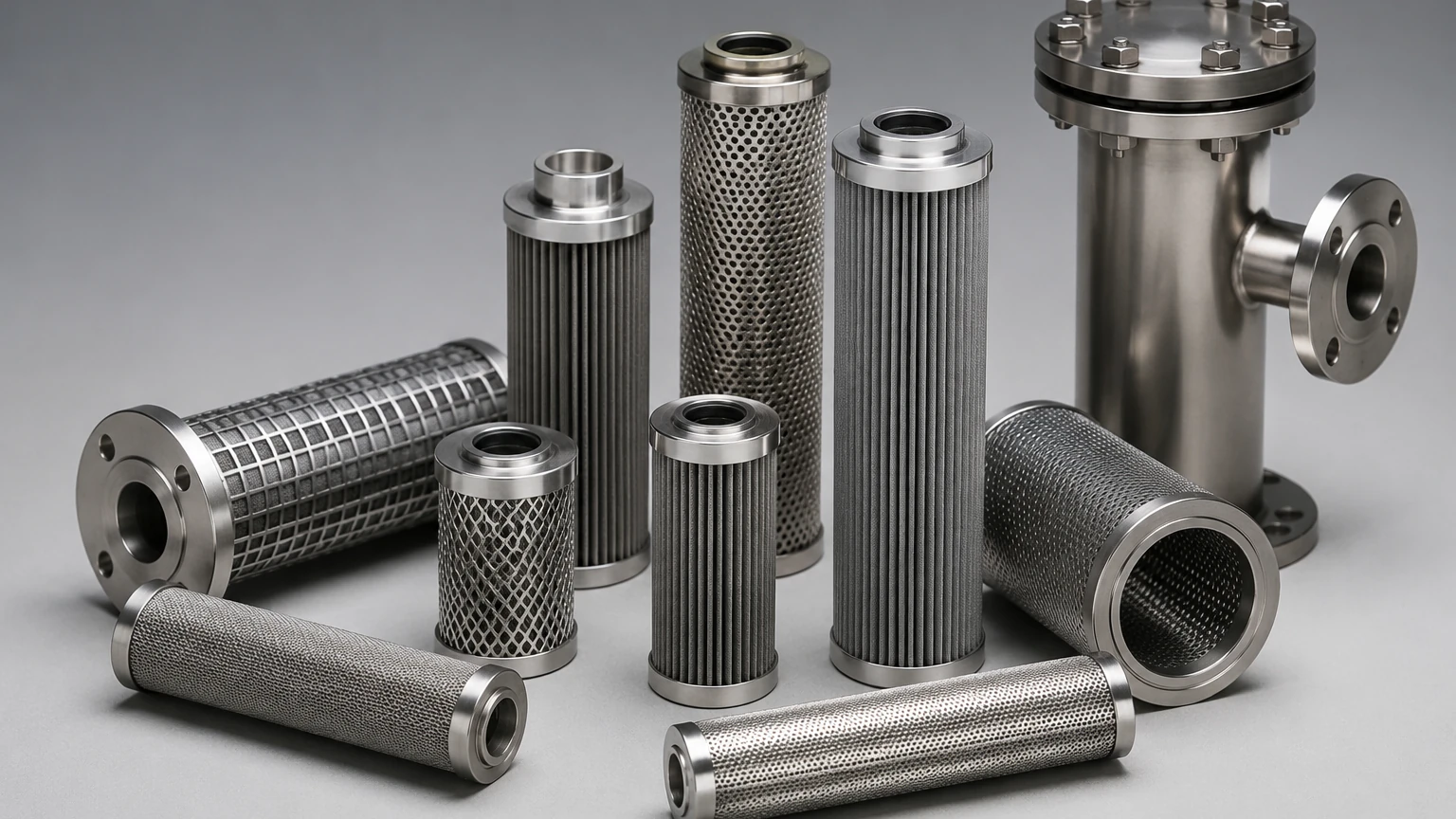
While glass fiber or synthetic polymers are common in light-duty applications, industrial processes involving high temperatures, aggressive chemicals, or high pressures demand more robust materials. Kaifil specializes in custom stainless steel filtration solutions that utilize precision wire mesh and sintered metal fibers. Stainless steel elements offer several advantages:
* Structural Integrity: Metal media can withstand high differential pressures without collapsing or shedding fibers into the downstream flow.
* Thermal Stability: Stainless steel coalescers remain effective in high-heat environments where synthetic binders might degrade.
* Cleanability: Depending on the specific design and the nature of the contaminants, some metal coalescing elements can be cleaned and reused, reducing long-term waste and replacement costs.
Surface Tension and Wettability
The efficiency of a filtro coalescedor is also influenced by the "wettability" of the media. For effective coalescence, the media should ideally be "lyophobic" (repelling the liquid to be separated) to encourage the liquid to form beads and move toward the drainage layer. Engineering the surface properties of the stainless steel mesh can significantly enhance the separation of oil from water or water from hydrocarbons.
Performance Metrics and Evaluation Criteria
When evaluating a filtro coalescedor, technical professionals must look beyond simple micron ratings. Because coalescers deal with liquid phases, their performance is dynamic and depends on the saturation level of the media.
Filtration Efficiency (DOP Testing)
Efficiency is often measured using the Dioctyl Phthalate (DOP) test or similar aerosol challenges. A high-quality coalescer should achieve 99.9% to 99.99% efficiency for droplets in the 0.3 to 0.6-micron range. It is important to confirm whether the efficiency rating is based on "dry" or "saturated" conditions, as a saturated filter will typically exhibit a higher pressure drop.
Pressure Drop (Delta P)
Pressure drop is the energy cost of filtration. An initial "dry" pressure drop is useful for reference, but the "wet" or "saturated" pressure drop is the more critical metric for system design. If the Delta P is too high, it indicates that the filter is undersized for the flow rate or that the media density is too high for the application’s viscosity. Engineers should aim for a design that maintains a stable operating pressure drop throughout the service life of the element.
Flow Velocity and Sizing
Coalescence is highly sensitive to velocity. If the fluid moves too quickly through the media (high face velocity), the captured droplets may be "re-entrained" or blown off the back of the filter before they can drain. Conversely, if the velocity is too low, the inertial impaction mechanism is weakened. Proper sizing of the filtro coalescedor housing and element is paramount to ensure the fluid stays within the optimal velocity window.
Industrial Applications of Coalescing Technology
The versatility of the filtro coalescedor makes it a staple in various heavy industries. Each application presents unique challenges regarding fluid chemistry and environmental conditions.
Compressed Air Systems
In pneumatic systems, oil from the compressor and water vapor from the intake air can damage sensitive valves and contaminate finished products. Coalescing filters are used to remove these liquid aerosols, often placed after a general-purpose particulate filter to extend the coalescer's life.
Oil and Gas Processing
In natural gas streams, liquid hydrocarbons and water must be removed to prevent hydrate formation and protect compressors. Metal-based coalescers are frequently used here due to the high pressures and the presence of corrosive elements like H2S.
Chemical and Pharmaceutical Production
Precision is non-negotiable in chemical synthesis. Coalescers ensure that solvent streams are free of moisture or that vent gases do not carry hazardous liquid aerosols into the atmosphere. Stainless steel 316L is the standard for these applications to ensure sanitary compliance and corrosion resistance.
Hydraulic and Lubrication Systems
Water is a major contaminant in hydraulic oil, leading to oxidation and component wear. A liquid-liquid filtro coalescedor can separate emulsified or free water from the oil, maintaining the lubricating properties of the fluid and extending the life of the machinery.
Maintenance, Replacement, and Total Cost of Ownership
While a filtro coalescedor is designed to handle liquids, it will eventually trap solid particles that cannot be drained. This leads to a gradual increase in differential pressure. For engineers, the total cost of ownership (TCO) is not just the purchase price of the element, but the sum of energy costs (due to pressure drop), downtime for replacement, and disposal costs.
Monitoring Differential Pressure
Installing differential pressure gauges is the most effective way to monitor the health of a coalescer. A sudden spike in Delta P usually indicates a surge in solid contaminants, while a gradual rise is expected as the filter reaches the end of its functional life.
Customization for Longevity
Standard off-the-shelf filters often fail prematurely because they are not optimized for the specific fluid characteristics of a process. Customizing the wire diameter, weave pattern, and layering of a stainless steel coalescer can significantly extend service intervals. By matching the media to the specific droplet size distribution and viscosity of the stream, Kaifil helps manufacturers achieve more predictable maintenance schedules.
Selecting a Partner for Coalescing Solutions
Choosing a filtro coalescedor is an engineering decision that requires a deep understanding of fluid mechanics and material science. A manufacturer that provides transparent technical data and customization options is essential for high-stakes industrial applications.
Kaifil provides a wide range of stainless steel filtration components designed for the most demanding environments. From material selection and filtration accuracy to customized designs and production, the focus remains on delivering dependable filtration components that meet specific application requirements. To explore specialized options for your system, you can Review product options and application support and consult with engineering teams who understand the complexities of precision metal filtration.
In conclusion, the filtro coalescedor is more than just a consumable; it is a critical component of process integrity. By focusing on high-quality materials like stainless steel and adhering to rigorous engineering standards for sizing and efficiency, industrial operators can ensure long-term reliability and superior separation performance.
