


Filtro Industriale
In the landscape of modern manufacturing, the term "filtro industriale" encompasses a vast array of technical solutions designed to ensure process purity, protect sensitive equipment, and maintain environmental compliance. For engineers and procurement specialists, selecting the correct industrial filtration component is not merely a matter of finding a part that fits a housing; it is a critical engineering decision that impacts the efficiency, safety, and longevity of the entire production line. Industrial filters, particularly those constructed from high-grade stainless steel and specialized alloys, serve as the primary defense against contaminants in liquids and gases across sectors ranging from petrochemical processing to pharmaceutical manufacturing.
At its core, a filtro industriale must balance three competing factors: filtration efficiency (the ability to remove particles of a specific size), permeability (the resistance to flow, often measured as pressure drop), and dirt-holding capacity (the volume of contaminants the filter can retain before requiring cleaning or replacement). Understanding these dynamics is essential for optimizing system performance and minimizing the total cost of ownership.
The Role of Material Science in Industrial Filtration
The performance of a filtro industriale is fundamentally dictated by the materials used in its construction. While polymer-based filters are common in low-temperature, non-corrosive applications, industrial environments often demand the robustness of metal. Stainless steel is the industry standard for high-performance filtration due to its mechanical strength, thermal stability, and chemical resistance.
Stainless Steel 304 vs. 316L
Grade 304 stainless steel is widely used for general industrial applications where basic corrosion resistance is required. However, in environments involving chlorides or high acidity—such as marine applications or chemical processing—Grade 316L is preferred. The addition of molybdenum in 316L significantly enhances its resistance to pitting and crevice corrosion. For extreme environments involving highly aggressive chemicals or temperatures exceeding 500°C, manufacturers like Kaifil may employ super-alloys such as Hastelloy or Monel to ensure the structural integrity of the filter element.
Structural Integrity and Pressure Resistance
Unlike disposable fabric or paper filters, a metal filtro industriale can withstand high differential pressures without collapsing or bypassing. This is particularly vital in hydraulic systems and high-pressure gas lines where sudden surges are common. The mechanical strength of stainless steel wire mesh or sintered metal allows for the design of filters that maintain their pore geometry even under significant mechanical stress, ensuring consistent filtration accuracy over the component's entire service life.
Technical Specifications: Understanding Micron Ratings and Flow Dynamics
When evaluating a filtro industriale, technical professionals must look beyond simple dimensions. The filtration rating is perhaps the most misunderstood specification in the industry. It is typically categorized into two types: nominal and absolute.
1. Nominal Filtration Rating: This represents an approximate value, indicating that the filter can retain a major percentage (usually 60% to 90%) of particles of a specific micron size. Nominal filters are often used for pre-filtration stages where the goal is to reduce the overall particle load rather than achieve sterile or ultra-pure results.
2. Absolute Filtration Rating: This refers to the diameter of the largest hard spherical particle that will pass through the filter under specified test conditions. For critical applications in the pharmaceutical or food and beverage industries, an absolute rating is mandatory to guarantee that no contaminants above a certain size enter the final product.
Pressure Drop (Delta P)
The pressure drop across a filter is the difference between the upstream and downstream pressure. A high initial pressure drop suggests that the filter media is too restrictive for the required flow rate, which can lead to increased energy consumption by pumps and compressors. Engineers must calculate the "Clean Pressure Drop" and establish a "Terminal Pressure Drop"—the point at which the filter is considered fouled and must be cleaned or replaced. Proper sizing of the filtro industriale is essential to ensure that the effective filtration area is sufficient to keep the velocity through the media within acceptable limits.
Types of Metal Filtration Media
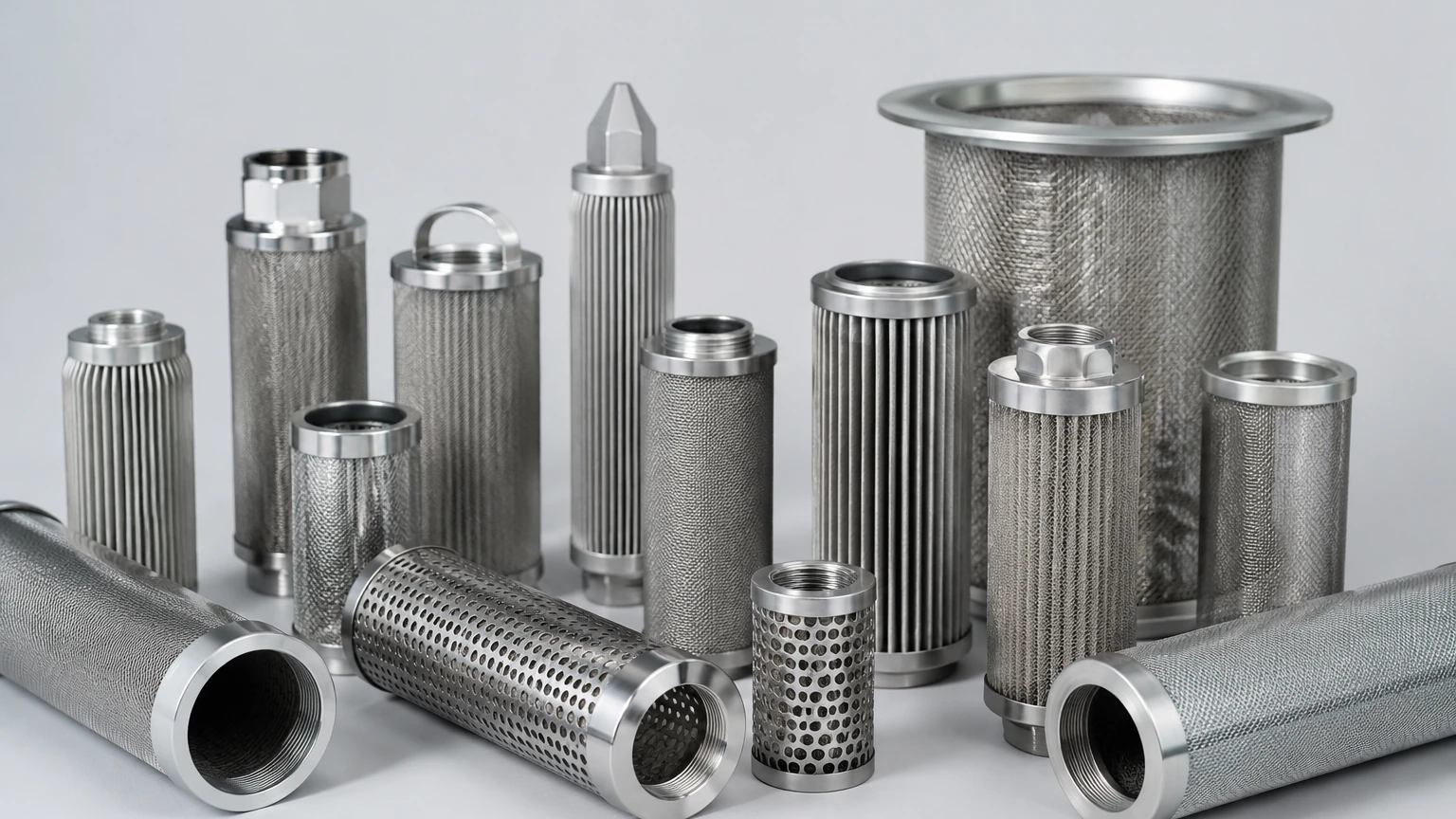
The internal structure of a filtro industriale determines its application suitability. There are several primary types of metal media used in industrial settings:
Woven Wire Mesh
Stainless steel wire mesh is one of the most versatile media. It can be woven in various patterns, such as plain weave, twilled weave, or Dutch weave. Dutch weaves, characterized by having more wires in one direction than the other, provide a tortuous path for particles, offering high strength and fine filtration levels. These are commonly used in polymer melt filtration and oil and gas applications.
Sintered Metal Mesh
Sintering is a process where multiple layers of wire mesh are bonded together using heat and pressure without the use of binders. This creates a monolithic structure that is incredibly strong and easy to clean. Sintered mesh is ideal for applications requiring high-pressure resistance and repeated backwashing, such as in catalyst recovery or steam filtration.
Pleated Filter Cartridges
To increase the effective surface area without increasing the overall footprint of the filter, the media can be pleated. A pleated stainless steel cartridge can offer several times the surface area of a cylindrical filter, significantly extending the time between cleaning cycles and reducing the pressure drop. This design is prevalent in hydraulic systems and high-flow liquid processing. For detailed technical specifications on these designs, engineers can visit the Main Page to review product options and application support.
Application-Specific Engineering Considerations
A filtro industriale must be tailored to the specific demands of its operating environment. Different industries prioritize different performance characteristics:
* Chemical Processing: Here, chemical compatibility is the priority. The filter must resist degradation from solvents, acids, and bases. Sintered metal powders or multi-layer mesh are often used to provide the necessary surface area while maintaining a compact form factor.
* Food and Beverage: Filtration in this sector requires sanitary designs. Filters must be constructed with smooth surfaces to prevent bacterial growth and must be capable of withstanding Clean-in-Place (CIP) procedures, which often involve high-temperature steam and caustic cleaning agents.
* Hydraulic Systems: These filters focus on protecting precision valves and pumps from wear-inducing particles. The ability to handle high-viscosity fluids and rapid pressure fluctuations is paramount.
* Water Treatment: In industrial water treatment, filters are often used to remove suspended solids before membrane filtration (like Reverse Osmosis). Durability and the ability to handle large volumes of water with minimal maintenance are the key drivers for selection.
Maintenance, Cleaning, and Total Cost of Ownership
One of the primary advantages of a stainless steel filtro industriale over disposable alternatives is its cleanability. While the initial investment in a metal filter is higher, the long-term savings are substantial when considering the costs of replacement filters, disposal of contaminated waste, and system downtime.
Cleaning Methodologies
Depending on the contaminant, several cleaning methods can be employed to restore the filter’s performance:
* Backwashing: Reversing the flow of the fluid to dislodge particles from the surface of the media. This is often automated in continuous process systems.
* Ultrasonic Cleaning: Using high-frequency sound waves in a cleaning solvent to create cavitation bubbles that dislodge fine particles from deep within the mesh or sintered pores.
* Chemical Cleaning: Using specific solvents or acids to dissolve accumulated organic or inorganic deposits.
* Burn-off/Pyrolysis: For filters used in plastic extrusion or polymer processing, high temperatures are used to burn off residual resins, leaving the metal media clean.
Evaluating the Replacement Cycle
Even the most durable metal filter has a finite lifespan. Over time, repeated cleaning and mechanical stress can lead to "media migration" or structural fatigue. Engineers should monitor the time it takes for the filter to reach its terminal pressure drop after each cleaning cycle. If the intervals between cleanings become significantly shorter, it indicates that the pores are becoming permanently blinded, and the element should be replaced to maintain process efficiency.
Sourcing and Customization: The OEM Advantage
For many industrial applications, off-the-shelf filtration products are insufficient. Customization is often required to meet specific flow rates, housing dimensions, or connection types (such as NPT, BSP, or Flanged). Partnering with a manufacturer like Kaifil allows for the development of bespoke filtration solutions that are optimized for a specific machine or process.
When sourcing a filtro industriale, technical teams should confirm the following with their supplier:
1. Material Certification: Ensure the stainless steel grade is verified and meets the required standards (e.g., ASTM or ISO).
2. Filtration Accuracy Validation: Request test data or bubble point test results to confirm the micron rating.
3. Mechanical Drawings: Verify that the custom dimensions and tolerances align with existing housings to prevent bypass leakage.
4. Application Compatibility: Discuss the operating temperature, chemical composition of the fluid, and expected contaminant load to ensure the chosen media is appropriate.
By focusing on these technical parameters and choosing high-quality, durable components, industrial operators can achieve a more reliable and cost-effective filtration process. Whether the goal is to protect a high-pressure pump or ensure the purity of a chemical catalyst, the right filtro industriale is a cornerstone of industrial excellence. For further information on custom filtration components and engineering support, please refer to the Main Page for comprehensive technical resources.
