


Steel Supplier for Industrial Filter Manufacturers
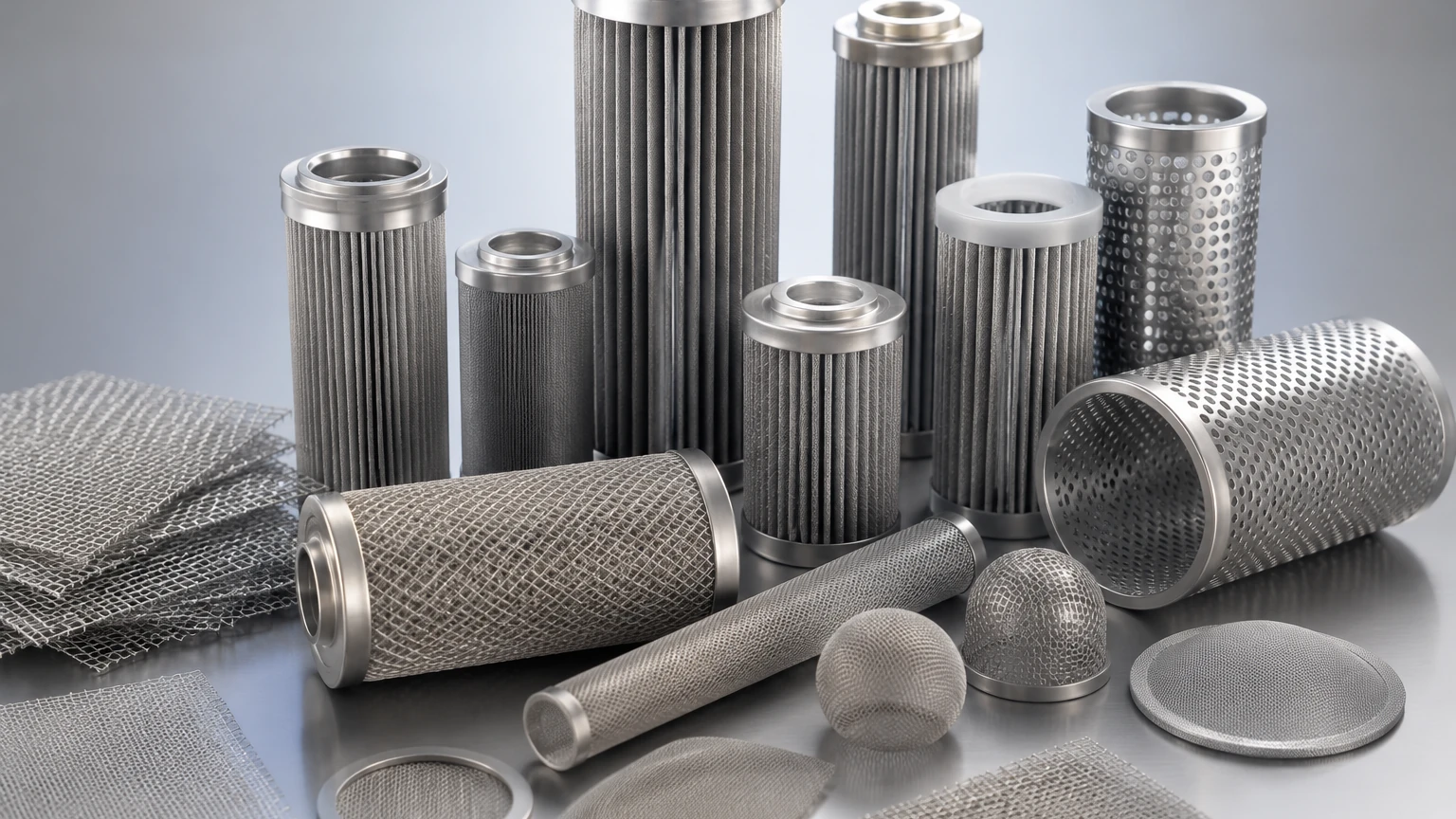
In the realm of industrial filtration, the integrity of the raw material is the primary determinant of the final product's performance, durability, and safety. For an industrial filter manufacturer, the relationship with a steel supplier is not merely a transactional procurement process; it is a critical engineering partnership. Whether producing wire mesh filters, sintered metal cartridges, or precision perforated strainers, the metallurgical properties of the steel used directly impact the filter’s ability to withstand corrosive environments, high-pressure differentials, and extreme temperatures.
Selecting a competent steel supplier for industrial filter manufacturers requires a deep understanding of metallurgy, manufacturing tolerances, and the specific demands of end-use applications in sectors such as chemical processing, pharmaceuticals, and food and beverage. This guide examines the technical criteria, material considerations, and quality benchmarks that define a high-quality supply chain for industrial filtration components.
The Critical Role of Material Integrity in Industrial Filtration
Industrial filters are often the last line of defense in protecting sensitive downstream equipment or ensuring the purity of a final product. If the raw steel used in the manufacturing process contains impurities or fails to meet specified alloy compositions, the consequences can be catastrophic. Structural failure, premature corrosion, or bypass due to material fatigue can lead to significant operational downtime and safety hazards.
When evaluating a steel supplier for industrial filter manufacturers, engineers must prioritize material consistency. In the production of stainless steel wire mesh, for instance, even minor variations in wire diameter or tensile strength can lead to uneven weaving. This results in inconsistent pore sizes, which compromises the micron rating and filtration efficiency of the finished component. A reliable supplier ensures that every batch of steel—whether it is wire, plate, or tubing—meets the exact mechanical and chemical specifications required for precision fabrication.
For those seeking comprehensive filtration solutions that leverage high-grade materials, visiting the Main Page of a specialized manufacturer like Kaifil provides insight into how these raw materials are transformed into engineered filtration systems.
Key Material Grades and Their Application Environments
The choice of steel grade is dictated by the chemical compatibility and thermal requirements of the application. A specialized steel supplier for industrial filter manufacturers must offer a range of alloys, each suited for specific industrial challenges.
Austenitic Stainless Steels (304 and 316L)
Stainless steel 304 is the standard for general-purpose industrial filtration, offering good corrosion resistance and excellent formability. However, for more demanding environments, 316L is the industry benchmark. The addition of molybdenum in 316L enhances resistance to pitting and crevice corrosion in chloride-rich environments. The "L" denotes low carbon content, which is essential for filters that require extensive welding, as it prevents sensitized zones that are prone to intergranular corrosion.
High-Performance Alloys
In applications involving highly aggressive chemicals or extreme temperatures, standard stainless steels may prove insufficient. Suppliers catering to the high-end filtration market often provide specialty alloys:
* 904L: A non-stabilized austenitic stainless steel with high copper content, offering superior resistance to strong reducing acids like sulfuric acid.
* Duplex Stainless Steels: These provide higher tensile strength and superior resistance to stress corrosion cracking compared to the 300-series steels, making them ideal for high-pressure hydraulic filters.
* Hastelloy and Inconel: Nickel-based superalloys used in the most extreme chemical processing and aerospace applications where thermal stability and oxidation resistance are paramount.
Technical Specifications for Filter-Grade Steel
Procurement teams and engineers must look beyond the basic grade designation. A steel supplier for industrial filter manufacturers should be able to provide detailed technical data sheets that cover several critical parameters.
Wire Diameter and Tolerance
For wire mesh filters, the precision of the wire drawing process is vital. Tolerances must be kept within microns to ensure that the mesh count and aperture size remain uniform across the entire roll. Inconsistent wire diameter leads to "streaking" in the mesh, which creates weak points and irregular flow patterns.
Surface Finish and Cleanliness
In pharmaceutical and food-grade applications, the surface finish of the steel is a regulatory requirement. The steel must be free of pits, scratches, and inclusions where bacteria could proliferate. Suppliers should offer materials that are compatible with electropolishing and other advanced finishing techniques to achieve the required Ra (Roughness Average) values.
Mechanical Properties
Filters subjected to high-pressure pulses, such as those in hydraulic systems or pulse-jet cleaning cycles, require steel with specific tensile strength and elongation properties. If the steel is too brittle, it will crack under cyclic loading; if it is too soft, it may deform, altering the filtration geometry and reducing efficiency.
Evaluating a Steel Supplier for Industrial Filter Manufacturers
To ensure a stable and high-quality supply chain, manufacturers must implement a rigorous evaluation process for their steel suppliers. This goes beyond checking prices and lead times; it involves auditing the supplier’s quality management systems and technical capabilities.
Certifications and Traceability
Every shipment of steel should be accompanied by a Material Test Report (MTR) or a Mill Test Certificate (MTC). These documents provide the chemical analysis and physical testing results for the specific heat of steel delivered. Full traceability is non-negotiable in industries like aerospace and medical manufacturing, where every component must be linked back to its raw material origin.
Quality Control Processes
Does the supplier perform independent ultrasonic testing, eddy current testing, or X-ray fluorescence (XRF) analysis to verify alloy composition? A proactive steel supplier for industrial filter manufacturers will have internal labs to verify that the material meets the ordered standards before it reaches the manufacturer’s floor.
Supply Chain Stability
Industrial filtration projects often have long lifecycles. A supplier must demonstrate financial stability and a robust logistics network to ensure that materials are available when needed. Fluctuations in the nickel or molybdenum markets can impact pricing and availability; a sophisticated supplier offers hedging strategies or long-term agreements to mitigate these risks for the manufacturer.
Common Risks in Raw Material Procurement
Working with an unverified or low-tier steel supplier introduces several risks that can undermine the reputation of an industrial filter manufacturer. Understanding these risks allows engineers to build better safeguards into their procurement process.
1. Material Substitution: The most common risk is the delivery of a lower-grade material that mimics the appearance of the specified alloy. For example, substituting 201 stainless steel for 304. While they look similar, 201 has significantly lower corrosion resistance and will fail prematurely in most industrial environments.
2. Internal Defects: Voids, inclusions, or seams within the steel wire or plate may not be visible to the naked eye but will cause the filter to fail under pressure. These defects act as stress concentrators, leading to rapid crack propagation.
3. Inconsistent Annealing: If the steel is not properly annealed, it may have internal stresses that cause warping during the machining or welding stages of filter production. This leads to dimensional inaccuracies and assembly difficulties.
By partnering with a manufacturer like Kaifil, who manages these complexities through rigorous material selection and advanced manufacturing, industrial clients can bypass the risks associated with raw material procurement. You can Review product options and application support to see how high-quality steel is integrated into finished filtration components.
Customization and Engineering Collaboration
The most effective steel supplier for industrial filter manufacturers acts as an extension of the manufacturer’s engineering team. Customization is often required to meet the unique needs of a specific filtration application.
For instance, a manufacturer might require a specific temper in the steel wire to facilitate a complex pleated design, or a custom-width coil to minimize scrap during the stamping of filter end caps. A supplier willing to provide custom slitting, specialized heat treatments, or proprietary alloy modifications provides a significant competitive advantage. This level of collaboration ensures that the raw material is optimized for the specific manufacturing processes used by the filter producer, such as TIG welding, laser cutting, or sintering.
Total Cost of Ownership vs. Initial Purchase Price
In B2B procurement, there is often pressure to reduce the initial cost of raw materials. However, for industrial filter manufacturers, the "cheap" steel option often results in a higher total cost of ownership (TCO). Poor quality steel increases scrap rates, causes tool wear, and leads to expensive warranty claims or field failures.
A premium steel supplier for industrial filter manufacturers helps reduce TCO by providing materials that are easier to process and more reliable in the field. When the steel is consistent, the manufacturing process becomes more predictable, allowing for higher throughput and lower labor costs per unit. Furthermore, the longevity of a filter made from high-quality steel enhances the brand reputation of the manufacturer, leading to long-term customer loyalty and repeat business.
Conclusion: Building a Foundation for Filtration Excellence
The selection of a steel supplier is a foundational decision for any industrial filter manufacturer. It influences every subsequent stage of production, from the ease of fabrication to the ultimate reliability of the filter in a high-stakes industrial environment. By focusing on material purity, technical precision, and transparent certification, manufacturers can ensure their products meet the rigorous standards required by modern industry.
For engineers and purchasing teams, the goal is to find a partner who understands that a filter is only as good as the steel it is built from. Manufacturers like Kaifil exemplify this approach by combining metallurgical expertise with advanced production capabilities to deliver filtration solutions that stand up to the most demanding challenges. Whether you are designing a new system or optimizing an existing process, the quality of your steel supply will always be the baseline for your success.
Download Steel Supplier for Industrial Filter Manufacturers as a PDF
