


Filtropresse
In the landscape of industrial liquid-solid separation, the filtropresse (filter press) remains one of the most versatile and efficient pieces of equipment for dewatering and clarifying processes. Utilized across a broad spectrum of industries—from chemical processing and pharmaceuticals to food and beverage production—the filtropresse operates on the principle of pressure filtration to separate solids from liquids. For engineers and procurement professionals, understanding the technical nuances of these systems, particularly the role of high-performance filtration media like stainless steel wire mesh, is essential for optimizing operational efficiency and ensuring product purity.
As a specialized manufacturer of stainless steel filtration solutions, Kaifil provides the precision components necessary to enhance the performance of industrial separation systems. By integrating advanced materials and custom engineering, these components address the rigorous demands of modern industrial environments where durability and filtration accuracy are paramount.
The Fundamental Mechanics of the Filtropresse
A filtropresse is a batch-operation machine that uses pressure to force a slurry through a filter medium, trapping solids within internal chambers while allowing the clarified liquid (filtrate) to pass through. The process is generally divided into four distinct phases: filling, filtration, cake formation, and discharge.
During the filling phase, the slurry is pumped into the chambers formed between the filter plates. As the pressure increases, the liquid is forced through the filter cloth or wire mesh. The solids begin to accumulate on the surface of the medium, forming what is known as a "filter cake." This cake itself eventually acts as a secondary filtration layer, often increasing the clarity of the filtrate as the cycle progresses. Once the chambers are full and the flow of filtrate slows significantly, the pressure is released, the plates are separated, and the solid cake is discharged.
Engineering a filtropresse system requires a deep understanding of the slurry’s characteristics, including particle size distribution, viscosity, and chemical compatibility. The choice of filtration media is the most critical factor in determining the cycle time and the moisture content of the final cake.
Types of Filter Press Configurations
While the basic principle remains the same, the design of a filtropresse can vary based on the specific application requirements. The three most common configurations used in industrial settings include:
1. Plate and Frame Filter Presses
This is the most traditional design, consisting of alternating solid plates and hollow frames. The filter medium is placed between the plate and the frame. While simple and versatile, these systems often require more manual labor for cake discharge and are increasingly being replaced by more automated designs in high-volume industries.
2. Recessed Chamber Filter Presses
In this design, the plates are manufactured with a concave recess on both sides. When two plates are pressed together, they form a chamber. This eliminates the need for separate frames, reducing the number of sealing surfaces and minimizing the risk of leakage. Recessed chamber presses are highly durable and suitable for high-pressure applications.
3. Membrane Filter Presses
Membrane presses include a flexible diaphragm on the plate surface. After the initial filtration cycle, the membrane is inflated with air or water to physically squeeze the filter cake. This secondary compression significantly reduces the moisture content of the cake and shortens the overall cycle time, making it an excellent choice for applications where cake dryness is a priority.
The Role of Stainless Steel in High-Performance Filtration
In many demanding B2B applications, traditional textile filter cloths are insufficient due to extreme temperatures, corrosive chemicals, or the need for precise mechanical strength. This is where stainless steel wire mesh and precision metal components become indispensable. Kaifil specializes in manufacturing these high-end components to meet the stringent requirements of the Main Page of industrial filtration technology.
Material Selection: 304 vs. 316L vs. 904L
The choice of alloy is critical when designing components for a filtropresse.
- Grade 304: Suitable for general industrial use where basic corrosion resistance is required.
- Grade 316L: The industry standard for chemical and pharmaceutical applications, offering superior resistance to chlorides and organic acids.
- Grade 904L and Special Alloys: Used in highly aggressive environments, such as sulfuric acid processing, where standard grades would fail prematurely.
Advantages of Stainless Steel Media
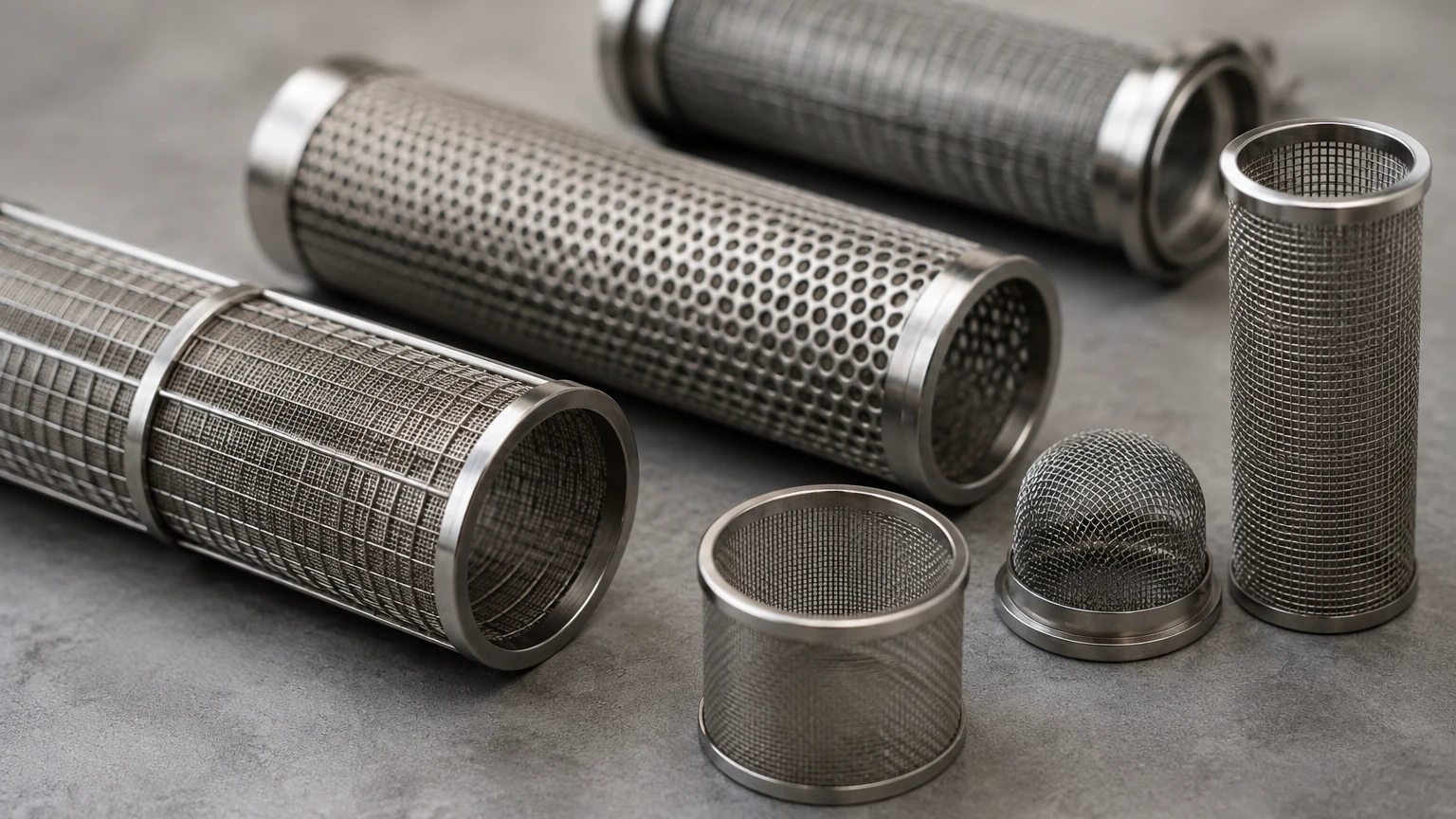
Unlike synthetic fabrics, stainless steel wire mesh offers exceptional dimensional stability. It does not stretch or deform under high pressure, ensuring consistent filtration accuracy across thousands of cycles. Furthermore, stainless steel is non-shedding, which is a vital requirement in pharmaceutical and food-grade processes where contamination from fiber migration must be avoided.
Engineering Considerations for Optimal Performance
When selecting or upgrading a filtropresse system, engineers must evaluate several technical parameters to ensure the equipment meets the desired performance benchmarks.
Filtration Accuracy and Micron Ratings
The micron rating of the filter medium determines the smallest particle size that will be retained. In a filtropresse, the goal is often to balance high flow rates with high retention. Using multi-layered sintered wire mesh can provide a precise pore size while maintaining the mechanical strength needed to withstand the closing pressure of the press plates.
Pressure Drop and Flow Dynamics
A common challenge in pressure filtration is the "pressure drop" (delta P). As the filter cake grows, the resistance to flow increases. Selecting a filter medium with a high open-area percentage can help maintain higher flow rates for longer periods, thereby increasing the total throughput of the system. Engineers must calculate the optimal feed pressure to maximize solids recovery without blinding the filter medium.
Cake Release and Cleaning
The ease with which the filter cake detaches from the medium is crucial for minimizing downtime. Stainless steel surfaces can be precision-engineered or coated to enhance cake release properties. Additionally, metal filters are compatible with aggressive Clean-in-Place (CIP) protocols, including high-temperature steam sterilization and chemical washes that would degrade synthetic materials.
Applications in Demanding Industrial Sectors
The versatility of the filtropresse, combined with the durability of stainless steel components, allows for its use in some of the world’s most challenging processing environments.
Chemical and Petrochemical Processing
In the chemical industry, the filtropresse is used to recover catalysts, separate pigments, and treat hazardous waste streams. The ability of stainless steel to resist corrosion from solvents and acids makes it the preferred material for these applications. High-performance metal filters ensure that even sub-micron particles are captured, protecting downstream equipment and ensuring product consistency.
Food and Beverage Production
Hygiene is the primary concern in food and beverage applications, such as the clarification of juices, oils, and syrups. Stainless steel components are naturally resistant to bacterial growth and are easy to sanitize. The use of a filtropresse in this sector often involves the removal of fine particulates to achieve a high degree of clarity and shelf stability.
Pharmaceutical and Biotechnology
In the production of active pharmaceutical ingredients (APIs), filtration must be precise and repeatable. Stainless steel wire mesh filters provide the necessary sterility and chemical inertness. Because these processes often involve high-value products, the reliability of the filtropresse components is essential to prevent batch loss.
Maintenance and Total Cost of Ownership (TCO)
While the initial investment in a filtropresse equipped with stainless steel components may be higher than one using synthetic media, the Total Cost of Ownership is often lower. Synthetic cloths require frequent replacement due to tearing, blinding, or chemical degradation. In contrast, stainless steel filters are designed for long-term service.
Routine Inspection and Maintenance
To maintain peak performance, operators should regularly inspect the sealing surfaces of the plates and the integrity of the filter media. For stainless steel mesh, this includes checking for signs of mechanical abrasion or localized corrosion (pitting). Proper tensioning and alignment of the plates are also necessary to prevent bypass, where slurry leaks around the filter medium rather than passing through it.
Customization and OEM Solutions
Every industrial process has unique requirements. Kaifil works closely with engineers to develop customized filtration solutions that integrate seamlessly into existing filtropresse systems. Whether it is a specific mesh weave for a unique particle shape or a custom-sized filter cartridge for specialized housing, OEM capabilities allow for the optimization of the filtration process at a granular level.
Conclusion: Selecting the Right Filtration Partner
The efficiency of a filtropresse is only as good as the media it employs. For B2B buyers and engineers, the transition to high-durability stainless steel components represents a strategic move toward more reliable and cost-effective operations. By focusing on material science, precision engineering, and application-specific designs, it is possible to achieve superior separation results even in the most taxing industrial conditions.
For those looking to explore specialized stainless steel filtration options or seeking technical guidance on component selection, reviewing the available product configurations is the first step toward optimization. For more information on custom manufacturing and industrial filtration support, visit the Kaifil Main Page to connect with engineering experts who can assist in tailoring a solution to your specific operational needs.
