


Filtros Autolimpiantes Industriales
In modern industrial processing, the efficiency of a production line is often dictated by its ability to maintain continuous operation without frequent manual intervention. Traditional filtration systems, such as bag filters or standard cartridge housings, require periodic shutdowns for cleaning or replacement of the filter media. For high-volume applications or processes involving hazardous materials, these interruptions represent significant labor costs and potential safety risks. This is why many engineering teams are transitioning to filtros autolimpiantes industriales (industrial self-cleaning filters). These systems are designed to remove suspended solids from liquids automatically, ensuring a constant flow and maintaining a stable pressure differential without stopping the process.
As a specialized manufacturer, Kaifil understands that the effectiveness of a self-cleaning system depends heavily on the precision of its internal components. Whether using mechanical scraping or back-flushing mechanisms, the quality of the stainless steel filter element determines the system's longevity and filtration accuracy. For more information on specific component designs, you can visit our Main Page.
Core Mechanisms of Industrial Self-Cleaning Filters
To select the right filtration solution, engineers must first understand the two primary methods used in industrial self-cleaning systems: mechanical cleaning and back-flushing. Each method is suited to different fluid characteristics and particle types.
Mechanical Scraping Systems
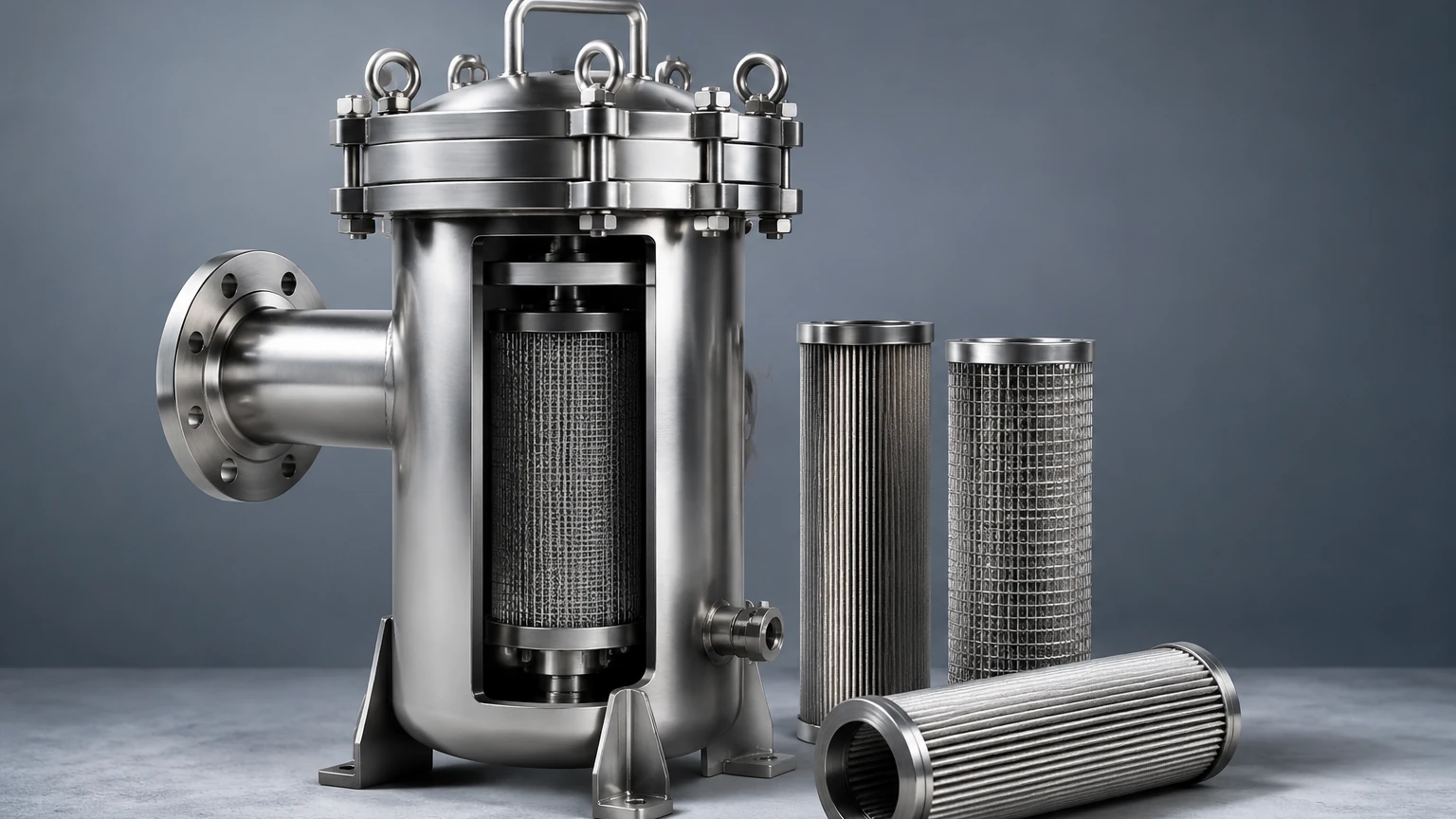
Mechanical cleaning systems utilize a scraper or brush that moves across the surface of the filter element. This is particularly effective for fluids with high viscosity or sticky contaminants, such as resins, paints, or food products like chocolate and syrups. As the solids accumulate on the internal surface of the stainless steel screen, a motor-driven scraper clears the debris, pushing it toward a collection chamber at the bottom of the housing. This process occurs while the fluid continues to flow through the filter, preventing any drop in system pressure.
Back-Flushing (Backwash) Systems
Back-flushing systems are typically used for low-viscosity fluids like water or light chemicals. When the pressure differential (the difference between the inlet and outlet pressure) reaches a pre-set threshold, a valve opens to reverse a portion of the filtered fluid back through a section of the filter media. This high-velocity reverse flow dislodges particles trapped in the mesh or wedge wire. Modern filtros autolimpiantes industriales often use a rotating suction scanner to clean small sections of the screen at a time, which minimizes the amount of flush water required and ensures the main flow is never interrupted.
The Importance of High-Grade Stainless Steel Components
The heart of any self-cleaning filter is the filter element itself. Because these systems are designed for automation and long-term durability, the materials used must withstand constant mechanical stress and potentially corrosive environments. Kaifil specializes in manufacturing these high-precision components using advanced stainless steel alloys.
304 vs. 316L Stainless Steel
For most general industrial applications, Grade 304 stainless steel provides excellent durability and resistance to oxidation. However, in environments involving chlorides, high temperatures, or acidic chemicals—common in the pharmaceutical and chemical processing sectors—Grade 316L is the industry standard. The addition of molybdenum in 316L enhances its resistance to pitting and crevice corrosion, ensuring that the filter element maintains its structural integrity over years of continuous cleaning cycles.
Wedge Wire vs. Sintered Mesh
The choice of filter media architecture is equally critical. Wedge wire (V-wire) screens are often preferred for filtros autolimpiantes industriales because of their non-clogging surface. The V-shaped profile of the wire ensures that any particle that passes the top edge will continue through the opening, preventing "blinding" or permanent entrapment of solids. For finer filtration requirements (below 50 microns), multi-layer sintered wire mesh provides the necessary mechanical strength and precise pore distribution required for high-pressure applications.
Technical Selection Criteria for Engineers
Specifying a self-cleaning filter requires a deep dive into the process parameters. Engineers should evaluate the following factors to ensure the chosen system meets the application's demands:
1. Micron Rating and Particle Distribution: It is not enough to know the desired micron rating; one must also understand the nature of the solids. Are they hard and abrasive, or soft and deformable? Hard particles are easily managed by wedge wire, while soft, organic matter may require specific scraper tensions to prevent extrusion through the mesh.
2. Flow Rate and Velocity: The system must be sized to handle peak flow rates without creating excessive velocity through the filter media. High velocity can force contaminants through the screen or cause premature wear on the cleaning mechanism.
3. Operating Pressure and Temperature: Industrial filters must be rated for the maximum possible system pressure, including potential surges. Temperature is also a factor, as it affects fluid viscosity and the thermal expansion of the internal mechanical parts.
4. Solids Loading: The concentration of solids (ppm or mg/L) determines how frequently the cleaning cycle will trigger. If the solids loading is extremely high, the system may spend too much time in the cleaning phase, leading to excessive waste or wear.
Industry-Specific Applications and Challenges
Filtros autolimpiantes industriales are utilized across a wide range of sectors, each with its own set of technical challenges.
Chemical and Petrochemical Processing
In these environments, filtration systems must often handle aggressive solvents and high-temperature fluids. The primary goal is often the protection of downstream equipment like heat exchangers and spray nozzles. A self-cleaning system reduces the need for operators to open the filter housing, thereby minimizing exposure to hazardous chemicals.
Food and Beverage Production
Sanitary design is paramount in this sector. Filters must be designed with smooth internal surfaces and no "dead zones" where bacteria can grow. Stainless steel components must meet specific surface roughness standards (Ra values) and be compatible with Clean-in-Place (CIP) procedures. Self-cleaning filters are commonly used for filtering juice, milk, oils, and liquid sweeteners.
Water Treatment and Cooling Systems
Large-scale cooling towers and intake water systems deal with high flow rates and unpredictable solids loading. Self-cleaning filters protect the system from sand, algae, and scale. By automating the cleaning process, facilities can significantly reduce water waste compared to traditional sand filters or manual strainers.
Evaluating Total Cost of Ownership (TCO) and ROI
While the initial capital expenditure (CAPEX) for filtros autolimpiantes industriales is higher than for manual bag or cartridge filters, the Total Cost of Ownership is often significantly lower. When calculating the Return on Investment (ROI), engineers should consider the following:
* Labor Savings: Eliminating the need for manual filter changes reduces man-hours and allows maintenance teams to focus on more critical tasks.
* Reduced Consumable Costs: There are no bags or cartridges to purchase, store, or dispose of. In processes with high solids loading, the savings on consumables alone can pay for the self-cleaning system within 12 to 18 months.
* Increased Uptime: Continuous filtration means no production stops. For a high-output factory, even an hour of saved downtime per week can translate into substantial annual revenue gains.
* Environmental Impact: By reducing the waste generated from spent filter media and optimizing the flush volume, companies can improve their sustainability metrics.
Customization and Engineering Collaboration
No two industrial processes are identical. Off-the-shelf filtration solutions often fall short when dealing with unique fluid dynamics or space constraints. This is where custom manufacturing becomes essential. At Kaifil, we work closely with engineering teams to develop bespoke stainless steel filtration components that integrate seamlessly into their existing filtros autolimpiantes industriales.
From adjusting the slot width of a wedge wire screen to designing a reinforced sintered mesh for high-pressure back-flushing, customization ensures that the filter performs at peak efficiency. Our expertise in material science and precision manufacturing allows us to provide solutions that are not only durable but also optimized for the specific particle types found in your process. For a closer look at our manufacturing capabilities and the range of materials we offer, please visit our Main Page.
In conclusion, the shift toward automated, self-cleaning filtration is a strategic move for any industrial facility looking to optimize efficiency and reduce operational costs. By focusing on high-quality stainless steel components and understanding the mechanical requirements of the application, engineers can implement a filtration solution that provides reliable service for years to come.
