


Filtros Coalescentes
In industrial fluid dynamics, the separation of liquid aerosols and sub-micron droplets from gas or air streams is a critical requirement for protecting downstream equipment and ensuring process integrity. This process is primarily handled by filtros coalescentes (coalescing filters). Unlike standard particulate filters that trap solid contaminants on the surface or within the depth of the media, coalescing filters are engineered to merge small liquid droplets into larger ones, which can then be drained away by gravity.
For engineers and procurement professionals, understanding the mechanical principles, material constraints, and structural requirements of these filters is essential. Kaifil, as a manufacturer of precision stainless steel filtration components, provides the structural integrity and custom media support necessary for high-performance coalescing systems. For a comprehensive overview of our manufacturing capabilities and specialized filtration products, you may visit our Main Page.
Understanding the Principles of Coalescence in Industrial Filtration
The operation of filtros coalescentes relies on three distinct physical mechanisms: direct impaction, interception, and diffusion (Brownian motion). The effectiveness of a coalescing element is determined by its ability to utilize these mechanisms to capture liquid aerosols, typically ranging from 0.01 to 1 micron in size.
1. Direct Impaction
This mechanism applies to larger droplets, generally those greater than 1 micron. As the gas stream carries these droplets toward the filter media, their inertia prevents them from following the gas flow lines around the fibers. Instead, they strike the fibers directly and attach to them.
2. Interception
Interception occurs when a droplet follows a gas streamline but comes close enough to a fiber to touch it. This is a function of the droplet's radius and the proximity of the fibers within the media matrix. It is most effective for mid-sized particles.
3. Diffusion (Brownian Motion)
For extremely small droplets (below 0.1 microns), the random movement caused by collisions with gas molecules—known as Brownian motion—increases the likelihood that the droplets will come into contact with the filter fibers. This is a critical phase in high-efficiency coalescing, ensuring that even the finest mists are captured.
Once captured, these droplets migrate along the fibers to the intersections of the media, where they merge into larger drops. These larger drops eventually move to the outer surface of the filter element (in an inside-to-out flow configuration) and gravitate toward the bottom of the housing for drainage.
Material Selection and the Role of Stainless Steel Components
While the primary coalescing media often consists of borosilicate glass fibers or specialized synthetic polymers, the structural components that house and support this media are vital to the filter's longevity and performance. In demanding industrial environments—such as chemical processing, offshore oil and gas, or high-temperature steam applications—stainless steel is the preferred material for the internal support cores, end caps, and outer cages.
Corrosion Resistance
Industrial gases often contain corrosive elements, such as hydrogen sulfide or acidic vapors. Using 304 or 316L stainless steel for the structural elements of filtros coalescentes ensures that the filter does not degrade or introduce metallic contaminants into the process stream.
Structural Integrity under Pressure
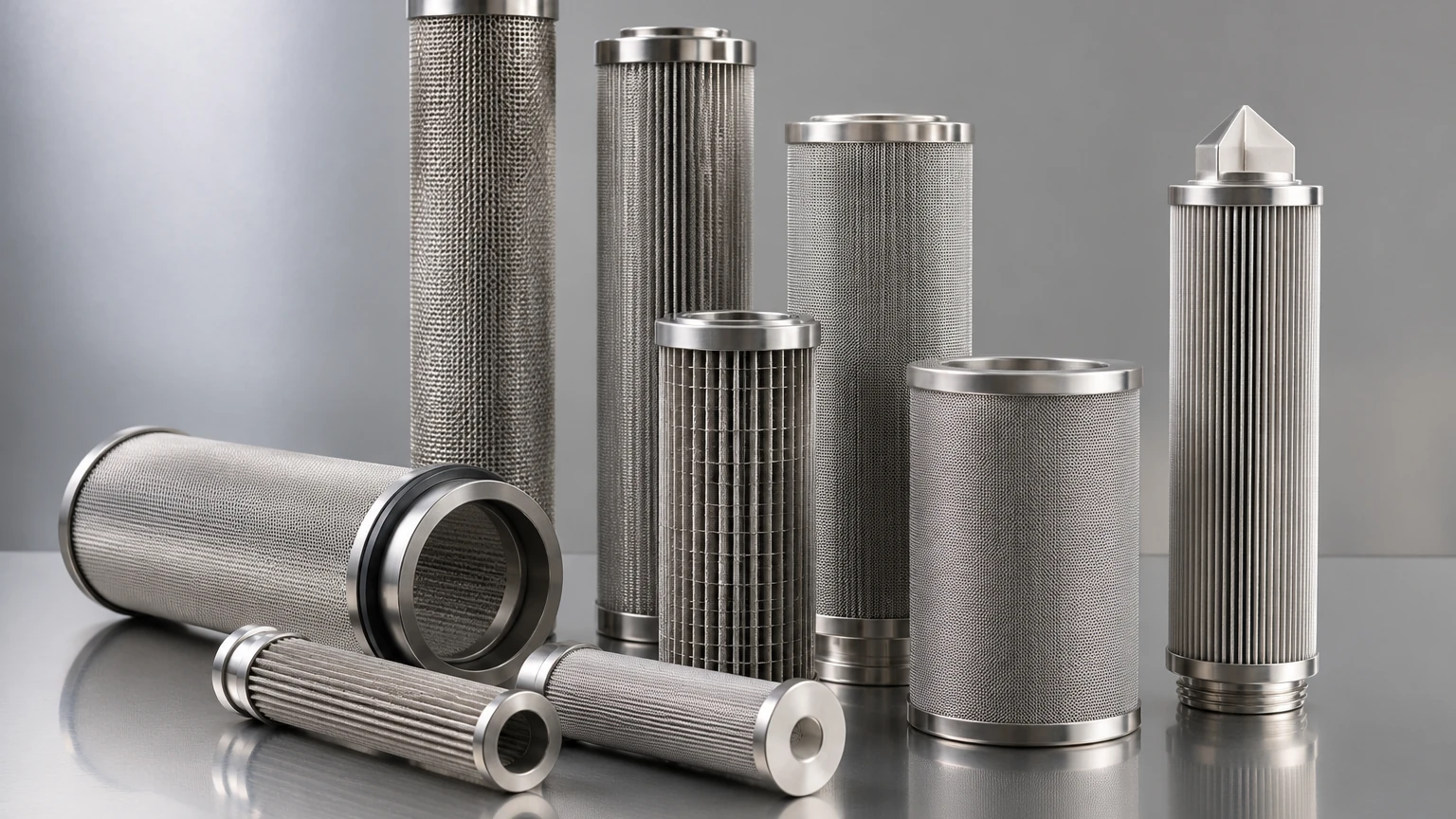
Coalescing filters often operate in high-pressure systems, such as compressed air lines or natural gas pipelines. The internal support core must withstand significant differential pressures without collapsing. Kaifil specializes in manufacturing perforated or expanded metal cores that provide maximum open area for flow while maintaining the rigidity required to support the media under fluctuating loads.
Temperature Stability
In applications involving hot gas filtration, synthetic components may soften or fail. Stainless steel components maintain their mechanical properties at much higher temperatures, allowing the coalescing system to operate reliably in thermal environments that would compromise standard industrial filters.
Technical Specifications and Performance Evaluation
When evaluating filtros coalescentes, engineers must look beyond simple micron ratings. The performance of these filters is defined by several key metrics that impact both the quality of the output and the efficiency of the system.
Filtration Efficiency and Oil Carryover
Efficiency is typically measured by the amount of liquid (usually oil or water) that remains in the gas stream after passing through the filter. This is often expressed in parts per million (ppm) or milligrams per cubic meter (mg/m³). High-efficiency coalescers can achieve oil carryover levels as low as 0.01 ppm.
Saturated Pressure Drop
Unlike particulate filters, which see a steady increase in pressure drop as they clog, coalescing filters reach a "saturated" state. This is the point where the rate of liquid capture equals the rate of liquid drainage. Engineers must account for this saturated pressure drop when sizing compressors and blowers to ensure the system remains energy-efficient.
Flow Direction
It is a fundamental engineering rule that filtros coalescentes operate with an inside-to-out flow pattern. This allows the coalesced liquid to accumulate on the outer surface of the element and drain into the housing's sump. Reversing this flow will significantly reduce efficiency and lead to liquid re-entrainment in the gas stream.
Engineering Considerations for System Integration
Integrating a coalescing filter into an industrial process requires careful planning regarding placement and protection. A common mistake in system design is placing a coalescer in a position where it is overwhelmed by bulk liquids or large solids.
Pre-filtration Requirements
To extend the life of high-efficiency filtros coalescentes, it is standard practice to install a particulate pre-filter or a bulk separator upstream. This removes larger solid particles and liquid slugs that could otherwise blind the fine coalescing media or cause premature saturation. For information on the types of pre-filters available, engineers can consult our Main Page.
Velocity and Sizing
If the gas velocity through the filter media is too high, it can strip coalesced droplets from the outer surface of the element, a phenomenon known as re-entrainment. Sizing the filter housing and element to maintain an optimal face velocity is critical for achieving the specified oil carryover levels.
Drainage Systems
An effective coalescing system is only as good as its drainage mechanism. Manual drains, timed solenoid valves, or zero-loss float drains must be selected based on the volume of liquid being removed and the need for energy conservation. If the sump is not drained regularly, the liquid level will rise until it reaches the filter element, causing immediate re-entrainment.
Maintenance, Service Life, and Total Cost of Ownership
While the initial purchase price is a factor, the total cost of ownership (TCO) for filtros coalescentes is primarily driven by energy costs associated with pressure drop and the frequency of element replacement.
Monitoring Differential Pressure
Engineers should install differential pressure gauges across the filter housing. A sudden increase in pressure drop usually indicates that the pre-filtration has failed and the coalescing media is being blinded by solid particulates. Conversely, a drop in differential pressure could indicate a ruptured media or a failed seal.
Replacement Cycles
Most manufacturers recommend replacing coalescing elements every 6 to 12 months, or when the differential pressure reaches a specific threshold (e.g., 0.35 to 0.5 bar). Even if the pressure drop remains low, the media can degrade over time due to chemical exposure or mechanical stress, leading to a decrease in separation efficiency.
Integrity of Seals
The seals (O-rings or gaskets) at the end caps of the filter element are critical. Any bypass at the seal allows contaminated gas to reach the downstream equipment. When replacing elements, it is essential to inspect the housing's sealing surfaces and use compatible elastomer materials (such as Viton, EPDM, or Nitrile) based on the chemical composition of the fluids involved.
Custom OEM Solutions for Complex Filtration Challenges
Many industrial applications require filtration solutions that cannot be met by off-the-shelf products. This is particularly true in sectors like pharmaceutical manufacturing or specialized chemical processing, where housing dimensions, material certifications (such as FDA or 3-A), and filtration accuracy must be precisely controlled.
Kaifil provides comprehensive OEM support for the development of custom filtros coalescentes components. Our engineering team works with clients to design stainless steel support structures that optimize flow distribution and enhance the mechanical durability of the coalescing media. Whether you require a unique size for a proprietary housing or a high-strength core for high-pressure natural gas filtration, our manufacturing facility is equipped to deliver precision-engineered components.
By focusing on the technical nuances of material compatibility and structural design, we help our partners achieve more reliable and cost-effective filtration performance. To explore how our engineering expertise can support your specific project requirements, please visit our Main Page.
In conclusion, the selection and implementation of filtros coalescentes are vital for the protection of industrial systems. By understanding the underlying physics of coalescence and ensuring the use of high-quality structural components, engineers can significantly improve process reliability and reduce long-term operational costs.
