


Stainless Steel Single Bag Filter Housing
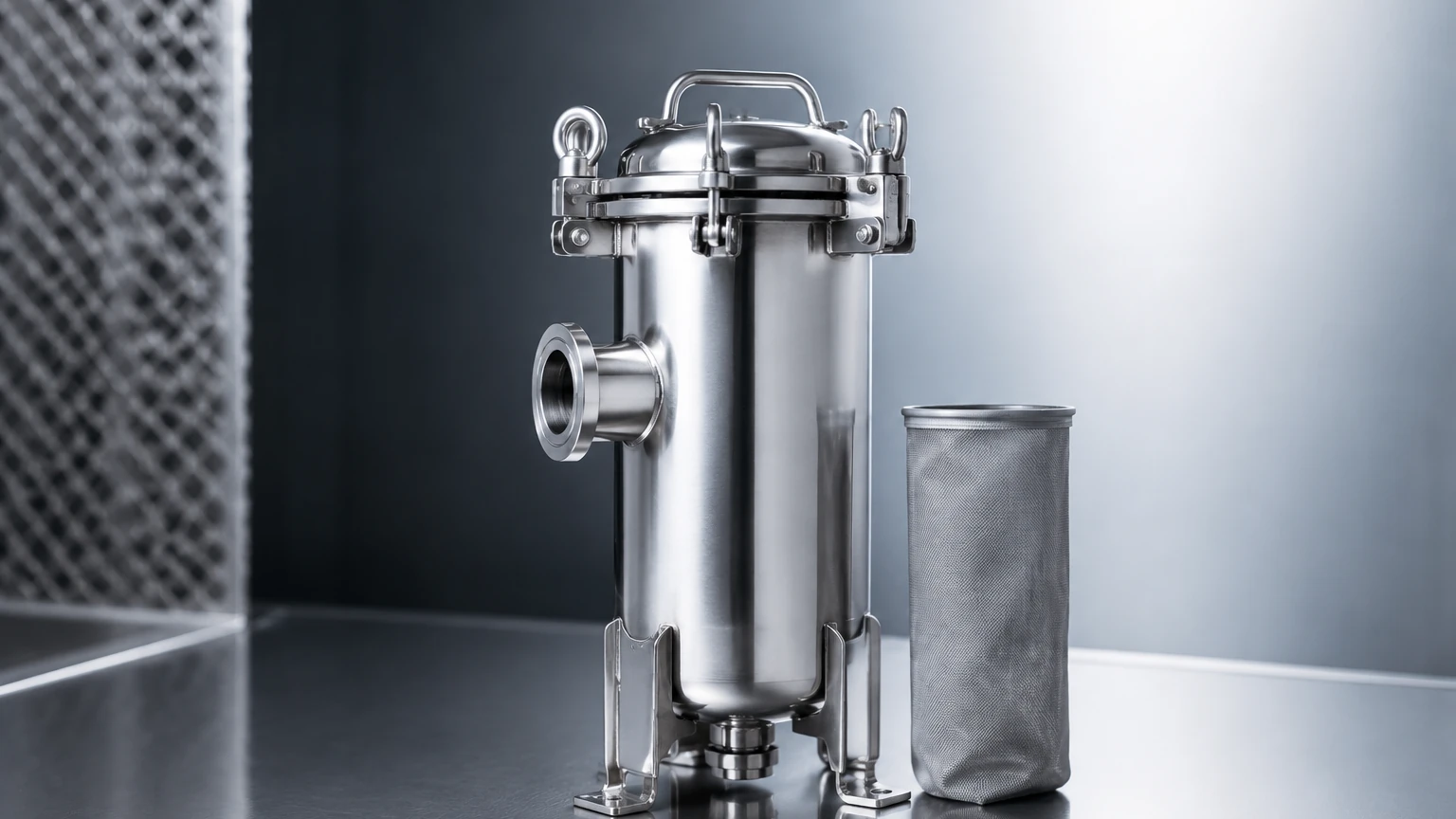
In industrial liquid processing, the stainless steel single bag filter housing serves as a critical component for removing particulate matter from process streams. This pressure vessel is designed to hold a single filter bag, providing a versatile and cost-effective solution for batch processing or low-to-medium flow applications. Engineers and procurement teams must evaluate these housings based on material integrity, seal reliability, and hydraulic efficiency to ensure long-term operational stability.
As a specialized manufacturer, Kaifil provides precision-engineered filtration components that address the rigorous demands of chemical, pharmaceutical, and food processing environments. Understanding the technical nuances of a stainless steel single bag filter housing is essential for optimizing filtration performance and minimizing downtime during maintenance cycles.
Engineering Fundamentals of Bag Filter Housings
A bag filter housing operates on the principle of pressure-driven filtration. Liquid enters the housing through an inlet, passes through the filter bag supported by an internal basket, and exits through an outlet. The solids are retained within the bag, which allows for easy disposal and prevents contamination of the downstream equipment.
The choice of stainless steel—typically Grade 304 or 316L—is dictated by the chemical nature of the fluid and the environmental conditions of the facility. While SS304 is suitable for general water treatment and non-corrosive industrial fluids, SS316L is preferred for applications involving high chlorides, acids, or sanitary requirements found in the pharmaceutical industry. The structural integrity of the housing must comply with specific pressure ratings, often ranging from 100 PSI to 300 PSI, depending on the wall thickness and closure design.
Key Components and Design Variations
To select the appropriate stainless steel single bag filter housing, engineers must consider the mechanical design of the vessel. Each component plays a role in the overall efficiency and safety of the system.
1. The Support Basket
The internal support basket is the backbone of the bag filter system. Because filter bags are made of flexible materials like needle felt or mesh, they cannot withstand high differential pressures without mechanical support. These baskets are typically constructed from perforated stainless steel or heavy-duty wire mesh. A high-quality basket ensures that the bag remains fully distended, maximizing the available surface area and preventing premature bag failure.
2. Closure Mechanisms
The method used to seal the housing lid significantly impacts both safety and ease of maintenance. Common designs include:
* Swing Bolt Closures: These are preferred for high-pressure applications. The robust nature of swing bolts allows for a secure, even seal around the perimeter of the lid, making them ideal for heavy-duty industrial use.
* V-Clamp Closures: Often used in lower-pressure systems, V-clamps offer quicker access for bag changes. However, they must be monitored for wear to ensure the clamp maintains its tension over time.
* Threaded Lids: Found primarily in smaller, compact housings, these are suitable for low-flow rates where space is at a premium.
3. Inlet and Outlet Configurations
The orientation of the piping connections—side-in, bottom-out, or side-in, side-out—affects the footprint of the installation and the ease of draining the unit. A "top-in" design is often favored because it allows the liquid to enter directly over the bag, reducing turbulence and ensuring that the bag is seated properly by the flow itself.
Performance Evaluation Criteria
When integrating a stainless steel single bag filter housing into a process line, several performance metrics must be calculated to ensure the system meets the required filtration efficiency without causing excessive energy loss.
Flow Rate and Viscosity
The flow capacity of a single bag housing is determined by the size of the bag (typically Size 01 or Size 02) and the viscosity of the fluid. Higher viscosity fluids require a larger surface area or a lower flow rate to prevent an immediate spike in differential pressure. Engineers should consult flow charts that account for the pressure drop across both the clean housing and the clean filter media.
Differential Pressure ($ΔP$)
Monitoring the pressure difference between the inlet and outlet is the primary method for determining when a filter bag is spent. Most stainless steel housings are equipped with gauge ports for this purpose. A typical change-out point is between 15 and 25 PSI. Operating beyond this limit risks "blow-through," where particles are forced through the media, or mechanical failure of the bag or support basket.
Sealing Integrity and Bypass Prevention
One of the most common failures in bag filtration is bypass, where unfiltered liquid escapes around the top of the bag. To prevent this, the housing must feature a positive seal mechanism. This may involve a compression ring, a spring-loaded hold-down device, or a precision-machined seat that matches the flange of the filter bag. High-performance housings often utilize O-rings made of Viton, EPDM, or Silicone to ensure a leak-proof seal between the lid and the vessel body.
Applications Across Key Industries
The versatility of the stainless steel single bag filter housing makes it a staple in numerous sectors. Each industry has specific requirements for surface finish and material certification.
* Chemical Processing: Used for the filtration of solvents, resins, and cooling water. The primary concern here is chemical compatibility and the ability of the housing to withstand aggressive cleaning agents.
* Food and Beverage: In these applications, the housing must meet sanitary standards. This involves internal polishing (often to a Ra < 0.8 µm) and the absence of "dead legs" where bacteria could proliferate. Applications include filtering bottled water, juices, and edible oils.
* Pharmaceuticals: Housings used in pharmaceutical manufacturing often require electropolishing and full traceability of materials (MTRs). They are used for pre-filtration of deionized water and the removal of carbon or catalysts from active ingredients.
* Water Treatment: From municipal pre-filtration to industrial wastewater recovery, these housings remove sand, scale, and organic debris to protect downstream membranes and sensitive equipment.
Installation and Maintenance Best Practices
To maximize the lifespan of a stainless steel single bag filter housing, proper installation and routine maintenance are mandatory.
Installation Considerations
The housing should be installed in an upright position with sufficient overhead clearance to allow for the removal of the internal basket and the filter bag. It is recommended to install isolation valves on both the inlet and outlet sides to facilitate bag changes without draining the entire piping system. Additionally, a bypass line can be installed to allow the process to continue during maintenance, provided that unfiltered fluid is acceptable for a short duration.
Maintenance Protocols
Before opening the housing, the system must be depressurized. Most professional-grade housings include a vent valve on the lid to safely release trapped air or gas. After the lid is opened, the spent bag should be removed carefully to avoid dropping contaminants into the clean side of the housing. The internal surfaces and the O-ring should be inspected for signs of wear or chemical degradation at every bag change. Replacing O-rings periodically is a low-cost way to prevent unexpected leaks.
Total Cost of Ownership (TCO)
While the initial purchase price of a stainless steel single bag filter housing is an important factor, the total cost of ownership includes maintenance labor, replacement bags, and the energy costs associated with pressure drop. Investing in a high-quality housing with a precision-machined seal can reduce the frequency of bag failures and prevent costly downstream contamination. Furthermore, a well-designed housing that allows for rapid bag changes reduces labor costs and minimizes process downtime.
Kaifil's manufacturing expertise ensures that every housing is built to withstand the rigors of industrial use, providing a reliable foundation for your filtration process. For more information on specific models and customization options, you can Review product options and application support on our Main Page.
Conclusion
The stainless steel single bag filter housing remains a fundamental tool for industrial liquid separation. By focusing on material quality, closure security, and proper sizing, engineers can implement a filtration solution that is both effective and durable. Whether managing a simple water filtration task or a complex chemical process, selecting a housing that aligns with the technical requirements of the application is the first step toward achieving consistent product quality and operational efficiency. Through careful consideration of the factors outlined in this guide, purchasing teams and engineers can ensure they invest in equipment that provides long-term value and reliable performance in demanding environments.
