


Fine Mesh Filter Micron
In the field of industrial filtration, the term "micron" serves as the fundamental unit of measurement for determining the efficiency and precision of a filter medium. A micron, or micrometer (µm), is equivalent to one-millionth of a meter. For engineers and procurement specialists, selecting the correct fine mesh filter micron rating is a critical decision that directly impacts the purity of the end product, the longevity of downstream equipment, and the overall operational efficiency of a processing system.
Fine mesh filters, typically constructed from stainless steel wire cloth, are engineered to remove particulate matter from liquids and gases with high levels of accuracy. Understanding the nuances of micron ratings, weave structures, and material properties is essential for optimizing filtration performance in demanding environments such as chemical processing, pharmaceutical manufacturing, and hydraulic systems.
Defining Micron Ratings in Industrial Filtration
When evaluating a fine mesh filter micron specification, it is necessary to distinguish between nominal and absolute ratings. These terms describe how a filter performs under standardized testing conditions and determine the level of confidence an engineer can have in the filter's ability to capture specific particle sizes.
Nominal Micron Rating
A nominal rating is an indicative measure of the filter's ability to retain a percentage of solids of a specific micron size. For instance, a 10-micron nominal filter might capture approximately 60% to 80% of particles that are 10 microns or larger. Because nominal ratings are not standardized across the industry, they are often used for primary or coarse filtration where total particle removal is not the primary objective. In these scenarios, the goal is often to reduce the load on finer, more expensive secondary filters.
Absolute Micron Rating
An absolute rating refers to the diameter of the largest hard spherical particle that will pass through the filter under specified laboratory conditions. This represents the pore size of the mesh. For critical applications—such as the protection of high-pressure fuel injectors or the sterilization of pharmaceutical fluids—an absolute fine mesh filter micron rating is mandatory. It ensures that no particles larger than the specified size can bypass the filter medium, providing a consistent and predictable level of mechanical separation.
The Impact of Weave Patterns on Fine Mesh Filter Micron Precision
The physical geometry of the wire mesh determines its micron rating. Stainless steel wire mesh is produced through various weaving techniques, each offering different advantages in terms of strength, flow capacity, and filtration fineness.
Plain Weave and Twill Weave
Plain weave is the most common and straightforward pattern, where each warp wire crosses over and under each shute wire. While durable and easy to clean, plain weave is generally limited in how fine it can go while maintaining structural integrity. Twill weave, where wires cross over two and under two, allows for heavier wires to be used in a fine mesh, providing greater strength for applications that require a fine micron rating under higher pressure.
Dutch Weave Variations
For the finest filtration requirements, engineers often turn to Dutch weaves. Unlike plain or twill weaves, Dutch weaves utilize different diameters for the warp and shute wires.
* Plain Dutch Weave: This produces a dense mesh with a high filtration accuracy and relatively low pressure drop.
* Twill Dutch Weave: This pattern allows for the highest density of wires, resulting in the smallest possible pore sizes. Twill Dutch weave can achieve a fine mesh filter micron rating as low as 1 to 5 microns, making it ideal for high-precision liquid and gas filtration.
Selecting the weave is not just about the micron size; it is about balancing the mechanical strength of the mesh with the required open area for fluid passage.
Material Selection for High-Performance Fine Mesh Filters
The effectiveness of a fine mesh filter is not solely dependent on its micron rating; the material of construction must also be compatible with the operating environment. Stainless steel is the industry standard due to its mechanical strength and resistance to temperature and corrosion.
Stainless Steel 304 and 316
Type 304 stainless steel is suitable for many general industrial applications. However, for environments involving corrosive chemicals, salts, or acids, Type 316 or 316L is preferred. The addition of molybdenum in 316 stainless steel significantly enhances its resistance to pitting and crevice corrosion. In the food and beverage and pharmaceutical industries, 316L (low carbon) is often specified to prevent carbide precipitation during welding, ensuring the filter remains hygienic and structurally sound.
Specialized Alloys
In extreme cases, such as highly acidic chemical processing or high-temperature aerospace applications, specialized alloys like Inconel, Monel, or Hastelloy may be required. These materials maintain their micron precision and structural integrity under conditions where standard stainless steel would fail. For most industrial filtration needs, custom stainless steel solutions provide the best balance of cost and performance. Engineers looking for specific material advice can consult the Main Page to review product options and application support.
Engineering Considerations: Flow Rate, Pressure Drop, and Micron Efficiency
One of the most common challenges in filter selection is the trade-off between filtration fineness and system throughput. As the fine mesh filter micron rating decreases (becoming finer), the open area of the mesh typically decreases as well. This leads to two primary engineering concerns: pressure drop and flow rate.
Managing Pressure Drop (ΔP)
Pressure drop is the difference in total pressure between the upstream and downstream sides of the filter. A very fine micron filter will offer more resistance to flow, leading to a higher initial pressure drop. If the pressure drop is too high, it can lead to pump strain, reduced flow, or even the collapse of the filter element. Engineers must calculate the "clean pressure drop" and ensure the system has enough head pressure to accommodate the filter as it begins to load with contaminants.
Effective Filtration Area (EFA)
To compensate for the restricted flow of fine micron mesh, manufacturers often increase the Effective Filtration Area. This is frequently achieved through pleating the mesh. Pleated filter cartridges provide significantly more surface area within the same footprint as a cylindrical filter, allowing for a finer micron rating without a prohibitive increase in pressure drop. This design also extends the service life of the filter, as there is more space for particles to accumulate before the terminal pressure drop is reached.
Industrial Applications for Fine Micron Filtration
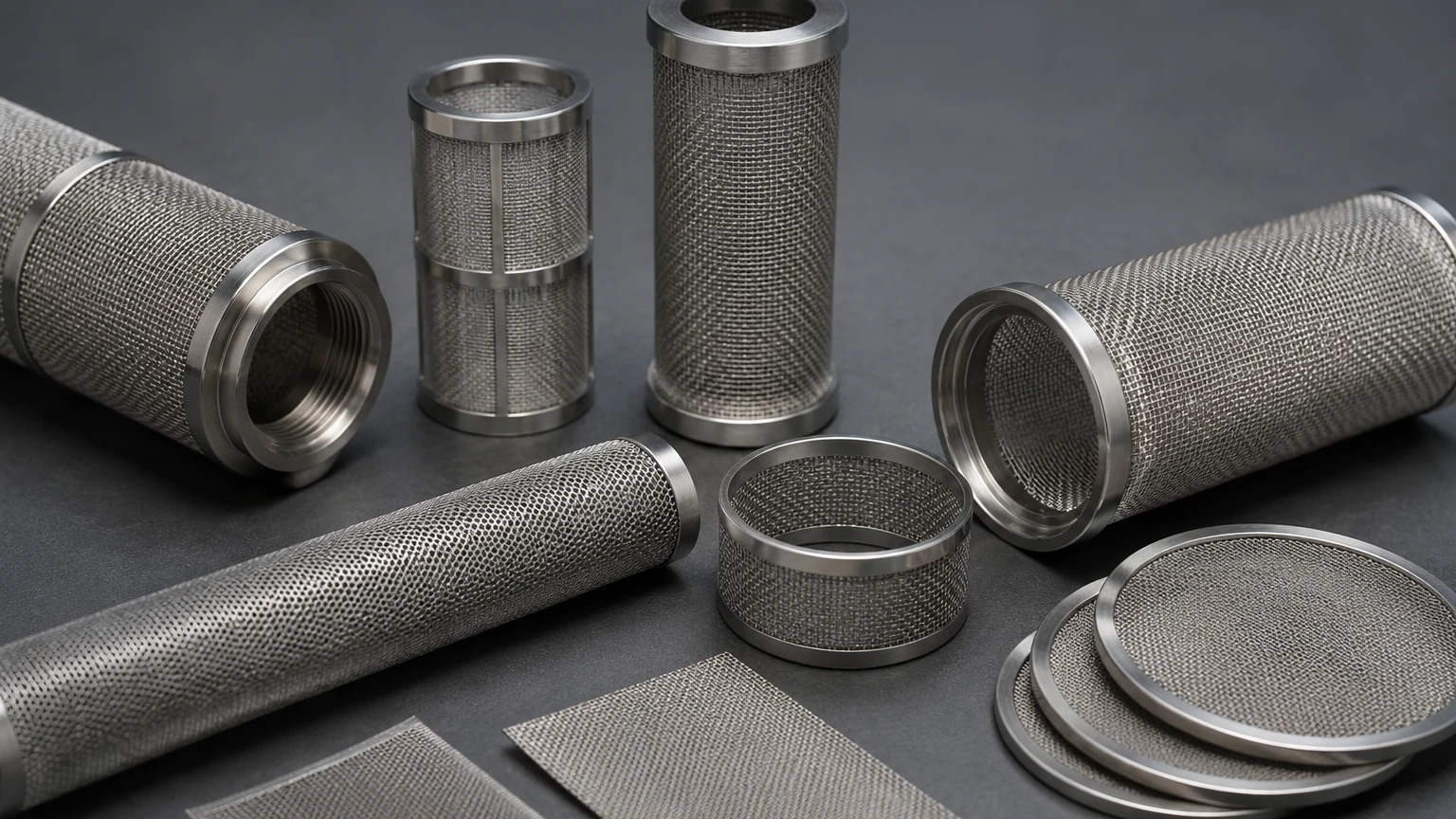
The requirement for a specific fine mesh filter micron rating varies significantly across different sectors. Precision metal filter components are utilized where reliability is non-negotiable.
* Chemical Processing: Fine mesh filters protect sensitive catalysts and prevent particulate contamination in high-purity chemical production. The filters must withstand aggressive solvents and varying thermal loads.
* Food and Beverage: In this sector, filtration is used for clarifying liquids, such as juices or syrups, and for removing potential contaminants from steam used in sterilization. Fine micron ratings ensure product clarity and safety.
* Pharmaceuticals: This industry requires the highest levels of precision. Fine mesh filters are used in the recovery of expensive active pharmaceutical ingredients (APIs) and in the final filtration of injectable fluids.
* Hydraulics and Lubrication: Fine mesh filter micron ratings are essential for protecting precision-machined valves and actuators from wear-inducing particles. Even microscopic debris can cause catastrophic failure in high-pressure hydraulic circuits.
Technical Specifications and Customization for OEM Solutions
Standard off-the-shelf filters often fall short in specialized industrial equipment. Customization is frequently required to meet specific housing dimensions, flow requirements, or unique environmental stressors. When specifying a custom filter, engineers should confirm several key parameters with the manufacturer:
1. Operating Temperature: High temperatures can affect the tensile strength of the wire and the integrity of the filter seals.
2. Chemical Compatibility: Ensure the mesh, support structures, and end caps are resistant to the process fluid.
3. Cleaning Requirements: Fine mesh filters are often an investment. Knowing whether the mesh can be cleaned via ultrasonic baths, backwashing, or chemical cleaning is vital for calculating the total cost of ownership.
4. Mechanical Loading: The filter must be able to withstand the maximum expected differential pressure without deforming.
Kaifil specializes in manufacturing these high-performance components, providing OEM and customized filtration solutions that adhere to strict technical tolerances. By working closely with a manufacturer that understands the relationship between wire diameter, weave density, and micron retention, purchasing teams can ensure they receive a product that performs as intended.
Conclusion
Selecting the appropriate fine mesh filter micron rating is a technical process that requires a thorough understanding of the application's physical and chemical demands. By distinguishing between nominal and absolute ratings, choosing the correct weave and material, and accounting for flow dynamics, engineers can optimize their filtration systems for both performance and durability. For those seeking professional guidance on custom stainless steel filtration components, visiting the Main Page provides access to technical resources and product configurations tailored for industrial excellence.
