


Fine Screening
In industrial processing, the efficiency of separation and filtration stages often dictates the quality of the final product and the longevity of downstream equipment. Fine screening, the process of separating particles based on size—typically within the range of 20 micrometers to 2 millimeters—is a critical operation across the chemical, pharmaceutical, food and beverage, and water treatment sectors. Unlike coarse scalping or bulk separation, fine screening requires a high degree of precision, mechanical integrity, and material compatibility to ensure consistent performance under varying pressure and temperature conditions.
For engineers and procurement professionals, selecting the appropriate media for fine screening involves more than simply matching a micron rating. It requires a deep understanding of the interaction between the process fluid, the particle morphology, and the structural characteristics of the filter media. As a specialized manufacturer of stainless steel filtration solutions, Kaifil provides the technical expertise and manufacturing precision necessary to optimize these complex separation processes.
The Engineering Principles of Fine Screening
At its core, fine screening relies on a physical barrier—most commonly a woven wire mesh or a perforated metal sheet—to allow the passage of undersized particles (the permeate) while retaining oversized particles (the retentate). However, the physics of this process are influenced by several variables that engineers must calculate during the design phase.
Micron Rating vs. Mesh Count
One of the primary points of confusion in fine screening specification is the difference between mesh count and micron rating. Mesh count refers to the number of openings per linear inch. While this provides a general idea of the weave density, it does not account for the wire diameter. The micron rating, or the actual aperture size, is the critical metric for fine screening.
In high-precision applications, engineers must distinguish between nominal and absolute micron ratings. A nominal rating indicates the ability of the screen to retain a majority of particles of a specific size, whereas an absolute rating signifies the size of the largest spherical particle that can pass through the mesh under laboratory conditions. For critical pharmaceutical or chemical processes, absolute ratings are often required to ensure zero bypass of contaminants.
Open Area and Flow Velocity
The "open area" of a screen is the percentage of the total surface area that consists of openings. This is a vital calculation because it directly impacts the flow velocity and the pressure drop across the media. A higher open area typically allows for higher throughput but may compromise the mechanical strength of the screen if the wire diameter is too thin. Conversely, increasing the wire diameter for durability reduces the open area, which can lead to premature blinding or the need for larger filtration vessels to maintain the required flow rate.
Material Selection for Industrial Environments
Fine screening often takes place in demanding environments involving corrosive chemicals, high temperatures, or strict hygienic requirements. Stainless steel is the industry standard for these applications due to its exceptional mechanical properties and chemical resistance.
Grade 304 vs. 316L Stainless Steel
* Grade 304: This is the most common stainless steel used for general industrial fine screening. It offers good corrosion resistance and is cost-effective for applications involving water, mild chemicals, and dry food products.
* Grade 316L: For applications involving chlorides, acids, or high-salinity environments, Grade 316L is preferred. The addition of molybdenum provides superior resistance to pitting and crevice corrosion. In the pharmaceutical and biotechnology sectors, 316L is the standard due to its ability to withstand rigorous Clean-in-Place (CIP) and sterilization protocols.
Specialized Alloys
In extreme cases where standard stainless steels fail—such as highly acidic chemical processing or high-temperature gas filtration—specialized alloys like Monel, Inconel, or Hastelloy may be utilized. These materials maintain their structural integrity and resistance to oxidation at temperatures far exceeding the limits of 300-series stainless steels.
Weave Patterns and Their Impact on Performance
The method by which the wires are woven significantly influences the performance of the fine screening media. Different weaves offer varying levels of stability, flow characteristics, and cleaning ease.
1. Plain Weave: The most straightforward pattern where each warp wire crosses over and under each shute wire. It provides the most accurate aperture sizes and is ideal for high-precision fine screening where flow resistance must be minimized.
2. Twill Weave: In this pattern, each wire passes over two and under two wires. This allows for the use of heavier wires in a given mesh count, providing greater strength for high-pressure applications without significantly sacrificing the micron rating.
3. Dutch Weave (Plain and Twill): These weaves utilize different wire diameters for the warp and shute. This creates a dense, multi-layered structure that offers excellent strength and a very fine filtration threshold. Dutch weaves are commonly used in high-pressure hydraulic filters and fuel filtration where mechanical durability is as important as screening precision.
Common Challenges in Fine Screening Operations
Engineers must anticipate and mitigate several operational risks to ensure the longevity of their screening equipment. Failure to account for these factors can lead to process downtime and increased maintenance costs.
Blinding and Pegging
Blinding occurs when the screen openings become coated with fats, oils, or fine particles, effectively sealing off the flow. Pegging occurs when near-size particles become wedged in the apertures. Both issues lead to a rapid increase in differential pressure. To combat this, engineers may specify specialized surface treatments, such as electropolishing, which reduces surface friction and makes it harder for particles to adhere to the wire. Additionally, the selection of the correct weave pattern can facilitate better "release" of particles during cleaning cycles.
Mechanical Fatigue and Tensioning
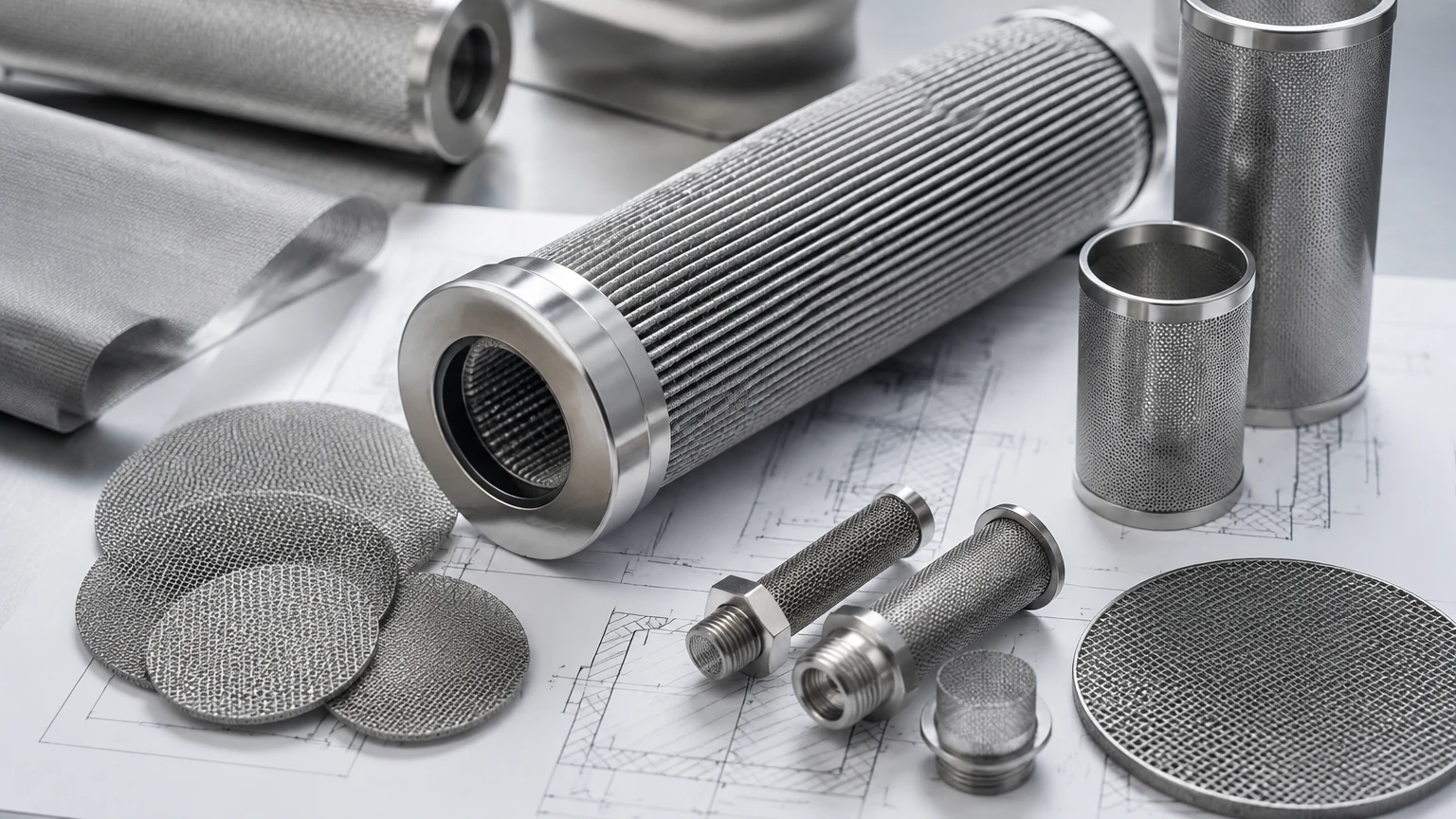
In vibrating screens or high-pressure filtration systems, the mesh is subjected to constant mechanical stress. If the mesh is not properly tensioned or supported by a perforated metal core, it can suffer from metal fatigue, leading to cracks or wire displacement. Kaifil addresses this by engineering custom filter cartridges that incorporate internal support structures designed to withstand specific operational pressures.
Applications of Fine Screening
Fine screening is an essential component of modern manufacturing, ensuring that products meet strict safety and quality standards.
* Chemical Processing: Used for catalyst recovery, ensuring that expensive catalytic materials are retained while the processed fluid passes through. It is also used for the removal of impurities in polymer production.
* Food and Beverage: Critical for the clarification of juices, syrups, and oils. Fine screening removes pulp, seeds, or foreign contaminants, ensuring a clear and safe final product.
* Pharmaceuticals: In API (Active Pharmaceutical Ingredient) manufacturing, fine screening is used for solvent recovery and the separation of crystalline structures. The equipment must meet stringent FDA and cGMP standards for cleanliness.
* Water Treatment: Micro-screening is used in the pre-treatment phase of desalination and wastewater recycling to protect sensitive reverse osmosis (RO) membranes from particulate damage.
Optimizing the Total Cost of Ownership
When evaluating fine screening solutions, the initial purchase price is only one component of the total cost of ownership (TCO). Engineers should also consider:
* Replacement Frequency: High-quality stainless steel mesh from a reliable manufacturer like Kaifil typically offers a longer service life than lower-grade alternatives, reducing the frequency of costly shutdowns.
* Cleaning Efficiency: Screens that are easy to clean (manually or via backwashing) reduce labor costs and chemical usage.
* Process Yield: Precise screening ensures that less product is lost as waste (oversize) and that the final product meets specifications on the first pass, reducing the need for reprocessing.
Customization and Engineering Support
Every industrial process has unique requirements that off-the-shelf products may not fully address. Customization is often necessary to achieve the optimal balance of filtration accuracy, flow rate, and durability. Whether it is a specific cartridge geometry, a unique flange fitting, or a specialized multi-layer mesh laminate, custom engineering ensures that the filtration component integrates seamlessly into the existing system.
Before finalizing a specification, engineers should confirm the exact chemical composition of the process fluid, the maximum and operating temperatures, the expected solids loading, and the target particle size for retention. This data allows for the selection of a screening solution that is technically sound and economically viable.
For more information on industrial filtration components and to explore our range of custom stainless steel solutions, visit our Main Page.
Conclusion
Fine screening is a sophisticated engineering discipline that requires a balance of material science and fluid dynamics. By understanding the nuances of mesh selection, weave patterns, and material grades, industrial professionals can significantly improve their process efficiency and product quality. Partnering with a manufacturer that understands these technical requirements is essential for developing filtration systems that perform reliably in the most demanding environments. At Kaifil, we remain committed to providing the precision-engineered components that drive industrial innovation.
