


Filtre F7
In the landscape of industrial air and liquid filtration, the classification of filter media is critical for ensuring process integrity, equipment longevity, and environmental safety. The term "filtre f7" refers to a specific class of fine filters historically defined by the EN 779:2012 standard. While the industry has transitioned toward the ISO 16890 standard, the F7 designation remains a common benchmark for engineers and procurement specialists when specifying filtration requirements for HVAC systems, cleanrooms, and sensitive industrial processes.
Understanding the technical nuances of F7 filtration is essential for selecting the right components. For many high-demand industrial applications, standard synthetic media may not suffice, necessitating the use of robust materials like stainless steel. As a specialist in custom filtration, Kaifil provides the engineering expertise required to bridge the gap between standard filter classifications and high-performance industrial needs. To explore specific product capabilities, you can visit the Main Page for a comprehensive overview of customized filtration solutions.
Technical Specifications and Performance Standards
The F7 filter class is categorized as a "fine filter." Under the older EN 779 standard, an F7 filter was required to have an average efficiency of 80% to 90% for 0.4 μm particles. In the current ISO 16890 framework, which replaced EN 779, these filters generally fall into the ePM1 50–65% or ePM2.5 65–95% categories. This means the filter is capable of capturing a significant portion of particulate matter smaller than 1 micron, which is often invisible to the naked eye but detrimental to industrial machinery and product purity.
Key performance indicators for a filtre f7 include:
* Initial Pressure Drop: The resistance to airflow when the filter is clean. Low initial pressure drop is vital for reducing energy consumption in ventilation systems.
* Dust Holding Capacity (DHC): The amount of synthetic dust the filter can retain before reaching its final pressure drop. A higher DHC usually correlates with a longer service life.
* Filtration Efficiency: The percentage of particles captured. For F7, the focus is on fine atmospheric dust and microorganisms.
In industrial settings, the choice of filter often depends on the specific particle size distribution of the contaminant. Engineers must evaluate whether the F7 rating provides sufficient protection for downstream components, such as HEPA filters or precision turbines.
Applications of F7 Filtration in Industrial Environments
The versatility of the filtre f7 makes it a staple in various sectors. Its primary role is often as a secondary filtration stage, protecting more expensive high-efficiency filters or sensitive equipment from premature clogging.
HVAC and Building Ventilation
In commercial and industrial buildings, F7 filters are used to maintain high indoor air quality (IAQ). They effectively remove pollen, spores, and fine combustion particles, which is critical in urban environments or facilities located near heavy industrial zones.
Food and Beverage Processing
In the food industry, maintaining a sterile environment is paramount. F7 filters are frequently used in the air intake systems of production areas to prevent airborne contaminants from compromising food safety. When dealing with liquid filtration in these environments, stainless steel mesh filters with equivalent micron ratings are often preferred due to their ability to be cleaned and sterilized.
Pharmaceutical and Chemical Manufacturing
Chemical processing often involves volatile or corrosive environments where standard synthetic F7 filters might degrade. In these cases, the filtration system must utilize materials that can withstand chemical exposure while maintaining the fine filtration efficiency associated with the F7 class. Pre-filtration for cleanrooms also relies heavily on F7 stages to extend the life of terminal HEPA filters.
Comparing Synthetic Media and Stainless Steel Solutions
While traditional F7 filters are often constructed from glass fiber or synthetic melt-blown media, many industrial applications demand the durability of metal. This is where the distinction between standard commercial filters and specialized industrial components becomes clear.
Durability and Reusability
Synthetic filters are typically disposable. Once they reach their final pressure drop, they must be replaced and discarded. In contrast, stainless steel wire mesh filters, such as those manufactured by Kaifil, offer a permanent solution. These metal components can be cleaned via ultrasonic baths or backwashing, making them more cost-effective over the long term in heavy-duty industrial cycles.
Temperature and Pressure Resistance
Standard F7 filters have strict temperature limits, often failing above 70°C or 80°C. In contrast, stainless steel filtration components can operate at temperatures exceeding 500°C. Furthermore, metal filters can handle significantly higher differential pressures without the risk of media migration or structural collapse, which is a common failure mode for synthetic pleated filters in high-velocity streams.
Chemical Compatibility
In the chemical and petrochemical industries, the presence of solvents, acids, or bases can quickly dissolve the binders used in synthetic filter media. Stainless steel (304, 316L, or specialty alloys) provides the necessary corrosion resistance to maintain filtration efficiency in aggressive environments.
Engineering Considerations for Filter Selection
When specifying a filtre f7 or an equivalent metal filtration solution, engineers must look beyond the basic efficiency rating. A holistic approach to selection ensures that the filtration system performs optimally within the specific constraints of the application.
1. Face Velocity: The speed at which the fluid or air passes through the filter media. If the velocity is too high, it can lead to particle re-entrainment or excessive pressure drop. Conversely, if it is too low, the filter may not utilize its full depth, leading to uneven loading.
2. Housing and Seal Integrity: Even the highest quality F7 media will fail if there is bypass. The filter housing must provide a tight seal to ensure all fluid passes through the media. For industrial liquid filtration, this often involves precision-machined stainless steel housings.
3. Total Cost of Ownership (TCO): While a synthetic F7 filter may have a lower upfront cost, the TCO includes replacement labor, disposal fees, and energy costs associated with pressure drop. For many B2B operations, investing in a custom stainless steel solution reduces the frequency of maintenance shutdowns and eliminates the waste stream of disposable filters.
Customization and OEM Solutions
Every industrial process has unique requirements that off-the-shelf filters cannot always meet. Customization is often necessary to optimize filtration performance for specific flow rates, space constraints, or contaminant types.
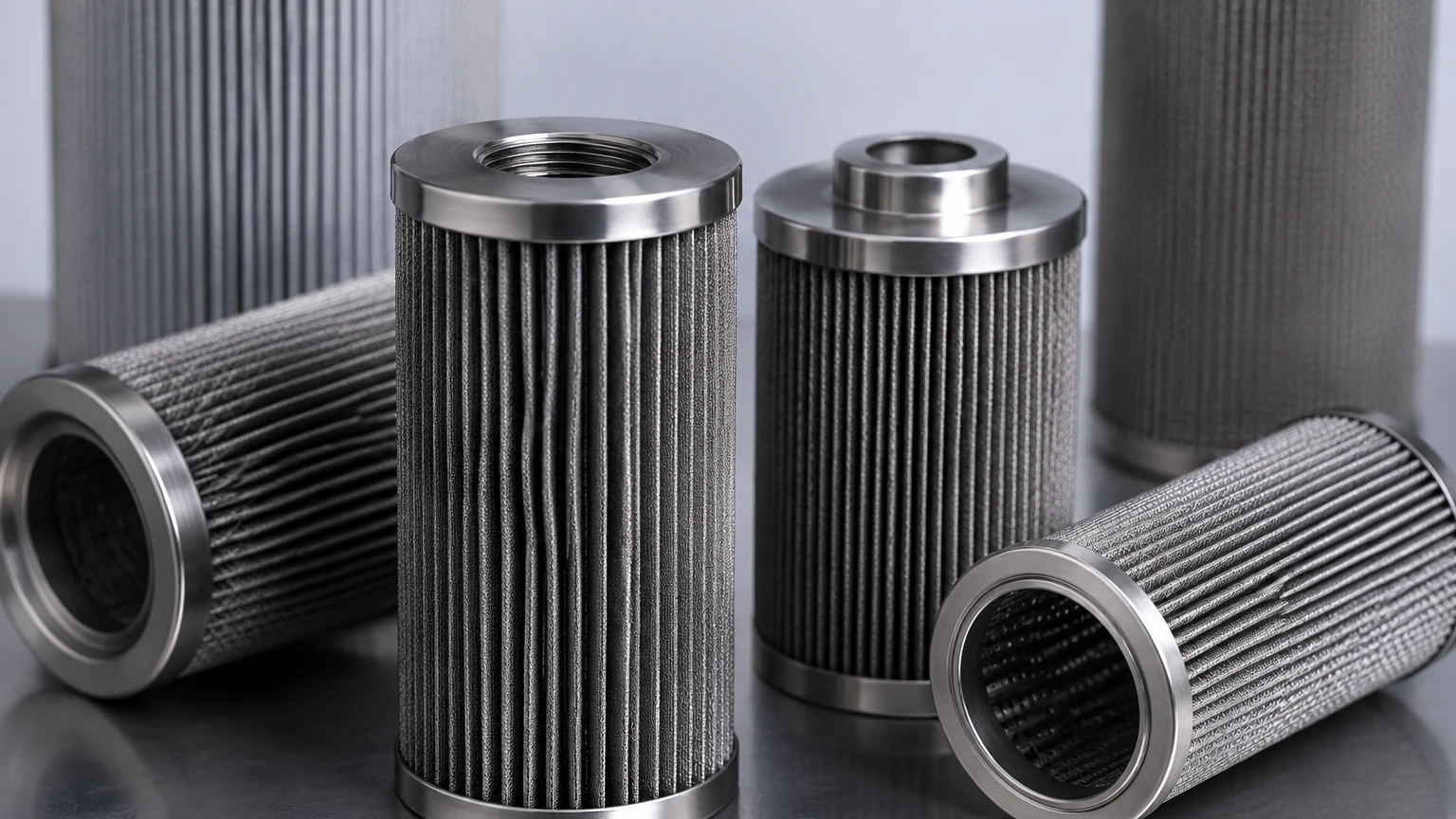
Kaifil specializes in the design and manufacture of custom stainless steel filtration solutions that can be engineered to meet the performance characteristics of the filtre f7 class while offering the mechanical advantages of metal. This includes:
* Custom Micron Ratings: Tailoring the weave of the stainless steel mesh to capture specific particle sizes.
* Pleated Metal Cartridges: Increasing the surface area within a standard footprint to lower pressure drop and extend cleaning intervals.
* Reinforced Structures: Adding support cores or outer shrouds to withstand high-pressure pulsations in hydraulic or steam systems.
For purchasing teams and engineers, working with an OEM manufacturer allows for the development of proprietary filtration components that are perfectly integrated into their machinery. This collaboration ensures that the filtration system is not an afterthought but a core component of the industrial process.
Maintenance and Monitoring for Optimal Performance
To ensure a filtre f7 continues to operate within its design parameters, a robust maintenance schedule is required. The most effective way to monitor filter health is through differential pressure (DP) sensors.
* Baseline Pressure: Record the DP when the filter is first installed.
* Alarm Thresholds: Set alerts for when the DP reaches a level that indicates the filter is nearing capacity. For F7 filters in air systems, this is often between 250 and 450 Pa, depending on the fan capacity.
* Inspection for Damage: Particularly in high-vibration environments, filters should be inspected for frame bypass or media tears.
In the case of cleanable stainless steel filters, the maintenance cycle involves a cleaning protocol that restores the DP to near-original levels. This process must be validated to ensure that the cleaning method (such as chemical cleaning or high-pressure steaming) does not damage the fine mesh structure.
Conclusion
The filtre f7 serves as a vital component in the hierarchy of industrial filtration. Whether used for air purification in a manufacturing plant or as a pre-filter in a complex chemical process, its ability to capture fine particulates is essential for operational efficiency. However, the standard synthetic F7 filter is not a universal solution. In demanding environments characterized by high temperatures, corrosive chemicals, or high pressures, the engineering advantages of custom stainless steel filtration become indispensable.
By understanding the technical standards and evaluating the specific needs of the application, engineers can choose between disposable media and permanent, high-performance metal solutions. For those seeking durable, precision-engineered filtration components tailored to their specific industrial requirements, reviewing the options available on the Main Page is the first step toward optimizing filtration performance and reducing long-term operational costs.
