


Flame Retardant Filter Media
In industrial filtration, the selection of media is often dictated by the chemical composition of the fluid or the required micron rating. However, in high-risk environments—such as chemical processing, oil and gas, and pharmaceutical manufacturing—thermal safety becomes a primary engineering constraint. Flame retardant filter media are essential components in systems where the presence of combustible dust, flammable vapors, or high-temperature gases creates a risk of ignition.
For engineers and procurement teams, understanding the distinction between surface-treated flame retardant materials and inherently non-combustible media is critical for ensuring both process efficiency and facility safety. This guide explores the technical considerations, material properties, and selection criteria for flame retardant filtration solutions, with a focus on the performance of stainless steel and metal-based components.
The Engineering Necessity of Flame Retardancy in Filtration
Filtration systems often act as the "lungs" of an industrial process. When these systems handle air or fluids containing fine particulates, they can inadvertently become a site for dust explosions or fire propagation. Traditional synthetic filter media, such as polyester or polypropylene, are naturally combustible. While these can be treated with chemical flame retardants, such treatments may degrade over time due to heat exposure, chemical cleaning, or mechanical wear.
Flame retardant filter media are designed to either resist ignition or, in the case of metal-based media, remain completely non-combustible. The primary goal is to prevent the filter from becoming fuel for a fire. In applications involving spark-generating processes (like grinding or welding) or volatile organic compounds (VOCs), the filter media must maintain its structural integrity even when subjected to localized heat flux or direct flame contact.
Inherently Non-Combustible vs. Treated Media
When specifying flame retardant filter media, engineers typically choose between two categories:
1. Treated Synthetic Media: These are standard polymer fibers coated or impregnated with flame-retardant chemicals (such as brominated compounds or phosphorus-based additives). These are cost-effective for low-temperature applications but have a limited lifespan and can release toxic fumes if they eventually succumb to high heat.
2. Inherently Non-Combustible Media: This category includes stainless steel wire mesh, sintered metal fibers, and ceramic filters. These materials do not require chemical additives to resist fire; their atomic structure is naturally stable at high temperatures.
For demanding industrial environments, stainless steel is often the preferred choice. As a leading manufacturer of custom stainless steel filtration solutions, Kaifil emphasizes the use of metal media for applications where fire safety and durability are non-negotiable. You can explore these technical options further on the Main Page to understand how different mesh configurations support safety requirements.
Technical Evaluation Criteria for Flame Retardant Media
Selecting the right media requires a deep dive into several performance metrics that go beyond simple fire ratings. Engineers must evaluate how the media performs under the specific stressors of their application.
Thermal Stability and Operating Temperature
While a material might be "flame retardant," it may still lose mechanical strength at elevated temperatures. Stainless steel 304 can withstand continuous service temperatures up to approximately 800°C (1472°F) in oxidizing atmospheres, while 316L offers similar thermal performance with enhanced corrosion resistance. When evaluating flame retardant filter media, it is vital to confirm the "continuous operating temperature" versus the "peak excursion temperature."
Flame Quenching Capabilities
In some specialized applications, the filter media serves a dual purpose as a flame arrestor. Precision-engineered wire mesh can act as a heat sink. When a flame front hits a dense, multi-layered stainless steel mesh, the metal absorbs and dissipates the thermal energy so rapidly that the temperature of the gas on the other side falls below its ignition point. This quenching effect is a critical safety feature in vent filters for storage tanks containing flammable liquids.
Structural Integrity Under Heat Flux
Fire-retardant synthetic filters often shrink or deform when exposed to heat, which can lead to "bypass"—where unfiltered, potentially hot air escapes around the edges of the filter element. Metal filter cartridges, however, maintain their geometric stability. This ensures that the filtration efficiency remains constant even during a thermal event, preventing the spread of hot embers or sparks further downstream into the system.
Material Selection: Stainless Steel Alloys
The efficacy of metal-based flame retardant filter media depends heavily on the alloy selected. The chemical environment is just as important as the thermal environment.
* Stainless Steel 304: The standard choice for general industrial applications. It provides excellent flame resistance and good mechanical strength at a reasonable cost.
* Stainless Steel 316L: Preferred for pharmaceutical and food-grade applications, or environments with high chloride content. The addition of molybdenum improves resistance to pitting and crevice corrosion, which is vital because a corroded filter is a structurally compromised filter.
* High-Nickel Alloys (Inconel, Monel): For extreme environments where temperatures exceed the limits of standard stainless steel or where highly corrosive gases are present. These alloys maintain their flame-retardant properties in the most demanding chemical processing stages.
Design Considerations for High-Risk Applications
Engineers must look at the physical construction of the filter element to maximize the benefits of flame retardant filter media. The structure of the media affects how it handles heat and pressure.
Woven Wire Mesh vs. Sintered Metal
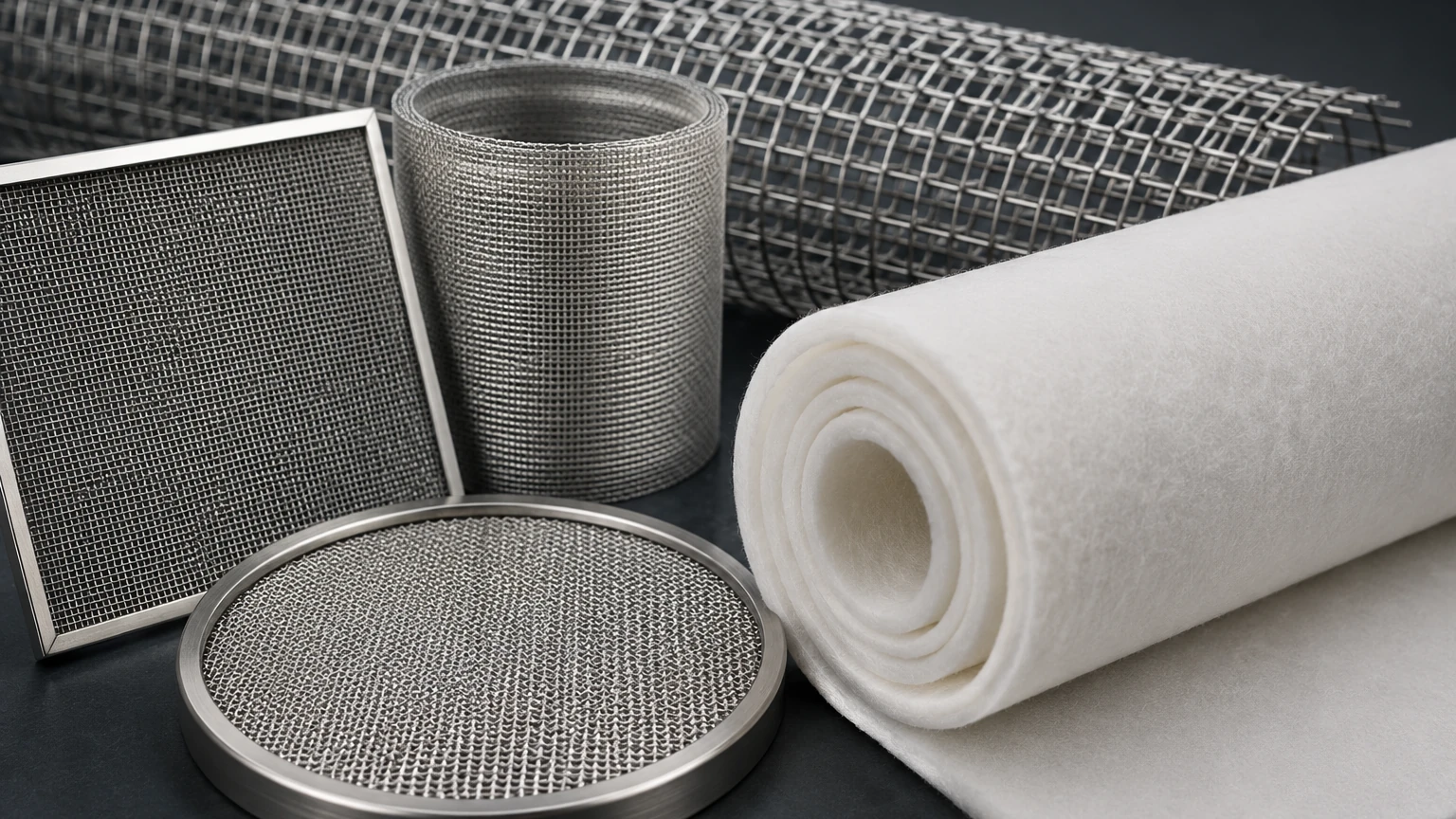
* Woven Wire Mesh: Provides a precise pore size and is excellent for surface filtration. It is easy to clean and offers high permeability. In terms of flame retardancy, it provides a clear path for heat dissipation through the wire strands.
* Sintered Metal Fiber: Created by compressing and bonding metal fibers together. This creates a depth filtration medium with high porosity and extremely high dirt-holding capacity. Sintered media are exceptionally robust and can withstand significant pressure pulses, making them ideal for high-pressure gas filtration where fire risk is present.
Multi-Layer Laminates
Often, a single layer of mesh is insufficient for both filtration efficiency and mechanical support. Custom filtration solutions frequently utilize multi-layer sintered mesh, where different grades of wire cloth are bonded together. This creates a composite material that is flame retardant, highly permeable, and structurally self-supporting, eliminating the need for internal perforated cores in some designs.
Risk Management and Compliance Standards
In many regions, the use of flame retardant filter media is mandated by safety regulations, particularly those governing explosive atmospheres (such as ATEX in Europe or NFPA standards in the United States).
When sourcing filters, purchasing teams should confirm:
* ATEX Compliance: Does the filter assembly prevent electrostatic discharge (ESD)? Metal filters are naturally conductive and can be easily grounded, unlike many synthetic media that require specialized conductive fibers to prevent static buildup—a common ignition source.
* UL Ratings: For air filtration, UL 900 or similar standards classify filters based on their flammability and the amount of smoke generated when burned.
* ISO 16890 / EN 779: While these focus on filtration efficiency, they are often paired with fire safety requirements in HVAC and industrial ventilation specifications.
Maintenance and Life Cycle Costs
A critical advantage of metal-based flame retardant filter media is the total cost of ownership (TCO). While the initial capital expenditure for a stainless steel filter cartridge is higher than a disposable synthetic filter, the long-term savings are significant.
1. Cleanability: Stainless steel filters can be cleaned using ultrasonic baths, back-pulsing, or chemical solvents. This allows the media to be reused hundreds of times, whereas synthetic flame-retardant filters must be disposed of once loaded.
2. Durability: Metal media are not susceptible to "media migration," where fibers break off and contaminate the downstream process. They also resist the brittle failure that can occur in some polymers after prolonged exposure to UV light or thermal cycling.
3. Safety Assurance: Because the flame-retardant property is inherent to the metal, there is no risk of the "safety feature" wearing off. This provides peace of mind for safety officers and reduces the frequency of rigorous fire-safety re-validations for the filter elements.
Customization and OEM Solutions
Every industrial process has unique requirements. A "one-size-fits-all" approach rarely works when balancing filtration precision with fire safety. Customization allows engineers to specify the exact wire diameter, weave pattern, and alloy to match their specific flow rates and thermal profiles.
Kaifil works closely with global partners to develop these specialized components. Whether it is a unique pleated cartridge for a chemical reactor or a custom-shaped wire mesh screen for a hydraulic system, the focus remains on delivering a product that meets technical performance boundaries. For those looking to integrate these solutions into their equipment, reviewing the available configurations on the Main Page is a recommended starting point for technical consultation.
Conclusion: Confirming Technical Requirements
Before finalizing a purchase of flame retardant filter media, technical professionals should confirm the following data points with their manufacturer:
* Maximum Differential Pressure (ΔP): Ensure the media can withstand the system pressure at the maximum operating temperature.
* Chemical Compatibility: Verify that the chosen alloy will not undergo accelerated oxidation or corrosion in the presence of process chemicals.
* Cleaning Protocols: Establish a clear maintenance schedule to ensure that the accumulation of flammable dust on the filter surface does not negate the flame-retardant properties of the media itself.
* Grounding Requirements: For metal filters in explosive zones, ensure the housing and element design allow for a continuous electrical path to ground.
By focusing on inherently non-combustible materials like stainless steel, industries can significantly reduce their fire risk while maintaining high-efficiency filtration. The transition to robust, metal-based flame retardant filter media is an investment in both process reliability and personnel safety.
