


Fluid Filter
In industrial processing and mechanical systems, the integrity of the fluid medium—whether liquid or gas—directly dictates the longevity of equipment and the quality of the final product. A fluid filter is an engineered component designed to remove solid contaminants from a fluid stream, protecting sensitive downstream components such as pumps, valves, and precision nozzles. For engineers and technical procurement teams, selecting the correct filtration solution requires a deep understanding of fluid dynamics, material compatibility, and the specific requirements of the application environment.
Industrial fluid filtration is not a one-size-fits-all discipline. The transition from a standard off-the-shelf component to a customized stainless steel solution often marks the difference between frequent system downtime and a streamlined, high-efficiency operation. This guide examines the technical parameters, engineering considerations, and selection criteria essential for implementing effective fluid filtration systems.
Fundamentals of Industrial Fluid Filtration Mechanisms
To select an appropriate fluid filter, one must first understand how particles are captured within the filter media. In industrial applications, filtration typically occurs through three primary mechanisms: physical sieving, inertial impaction, and diffusion.
Surface vs. Depth Filtration
Surface filtration occurs when particles larger than the pore size of the media are trapped on the upstream side of the filter. Stainless steel wire mesh is a classic example of surface media, providing a precise and consistent pore structure. This is ideal for applications where the contaminant size is relatively uniform and where the filter must be cleaned and reused.
Depth filtration, conversely, utilizes a thicker medium—such as sintered metal powder or multi-layered mesh—to trap particles throughout the thickness of the material. This method offers a higher dirt-holding capacity, making it suitable for fluids with a wide range of particle sizes or higher concentrations of contaminants.
The Role of Stainless Steel in Fluid Filtration
While polymer-based filters are common in light-duty applications, industrial environments often demand the mechanical strength and thermal stability of stainless steel. Stainless steel fluid filters can withstand high differential pressures without collapsing and remain chemically inert when exposed to aggressive solvents, acids, or high-temperature steam. For more information on specialized metal filtration components, engineers can visit the Main Page to review product options and application support.
Key Engineering Criteria for Filter Selection
When specifying a fluid filter, engineers must move beyond basic dimensions and focus on performance metrics that impact the total system efficiency. The following four criteria are foundational to any technical specification.
1. Micron Rating: Absolute vs. Nominal
The micron rating defines the size of particles the filter is intended to remove. However, the distinction between "nominal" and "absolute" is critical. A nominal rating is an indicative value, often representing the size of particles that the filter can capture with 60% to 90% efficiency. An absolute rating, typically verified through glass bead testing, ensures that 99.9% of particles above the specified size are retained. In high-precision industries like pharmaceuticals or semiconductor manufacturing, absolute-rated filters are mandatory to prevent catastrophic system failure.
2. Flow Rate and Pressure Drop (Delta P)
Every fluid filter introduces a degree of resistance to the flow, known as pressure drop. An oversized filter may be unnecessarily expensive, while an undersized filter will create a high initial pressure drop, reducing the available service life before the filter reaches its terminal pressure limit. Engineers must calculate the "clean pressure drop" based on the fluid's viscosity, the flow rate, and the effective filtration area of the media.
3. Chemical and Thermal Compatibility
The housing and the filter element must be compatible with the fluid being processed. Stainless steel 304 is suitable for many general-purpose applications, but 316L is often required for its superior resistance to pitting and crevice corrosion in the presence of chlorides or acidic solutions. Furthermore, the operating temperature must be considered; high-temperature applications may require specialized welding or sealing techniques to ensure structural integrity.
4. Viscosity Considerations
Fluid viscosity significantly impacts filtration performance. High-viscosity fluids, such as heavy oils or polymers, require larger filtration areas and more robust structural support to prevent media deformation under the increased pressure required to force the fluid through the pores.
Advanced Materials and Construction Techniques
The construction of a fluid filter determines its durability and cleanability. In the realm of stainless steel filtration, several advanced techniques are employed to meet specific industrial needs.
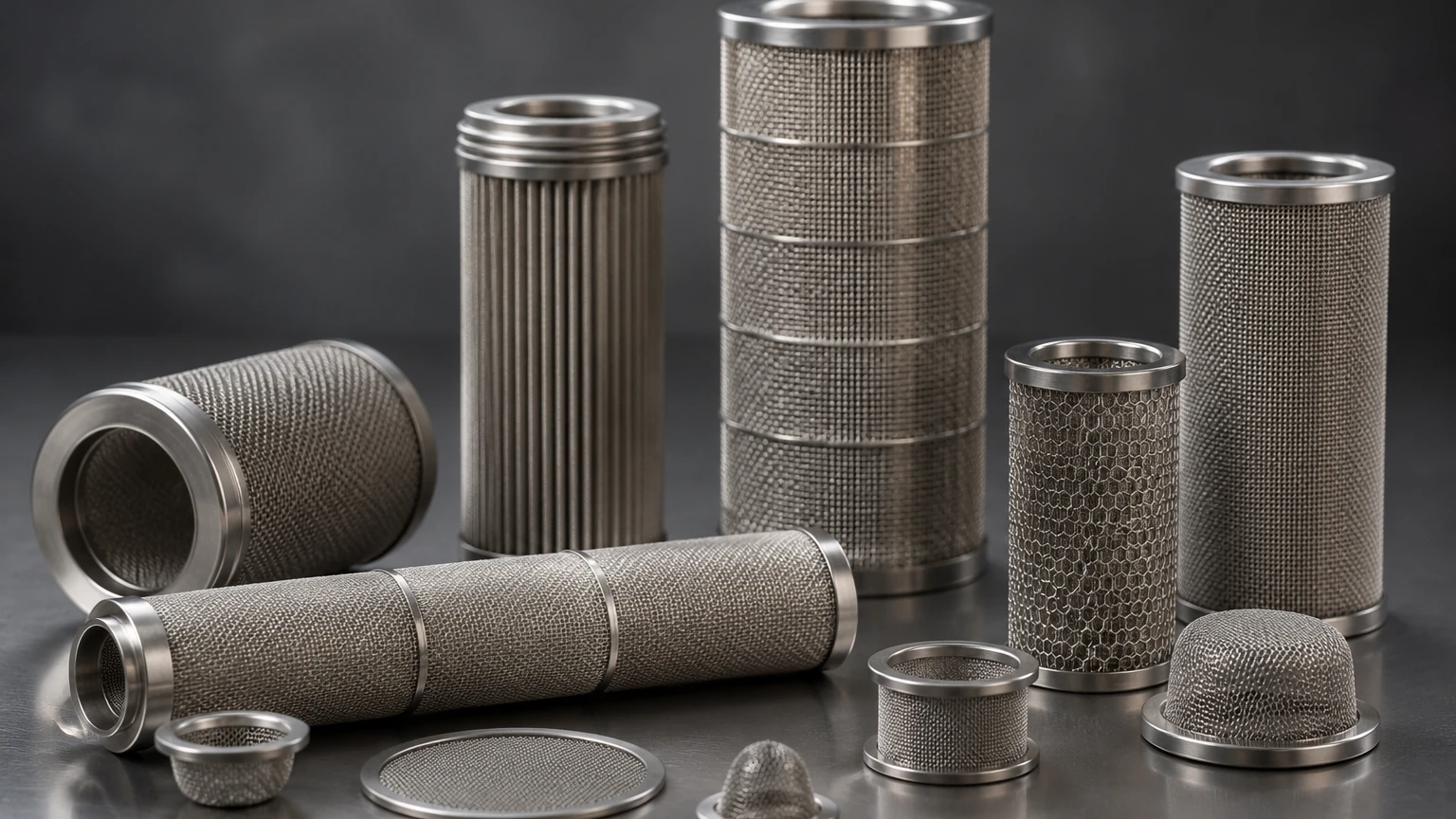
Woven Wire Mesh
Woven mesh filters offer a precise, two-dimensional pore structure. They are highly predictable and easy to clean via backwashing or ultrasonic baths. By varying the weave pattern—such as plain, twill, or Dutch weave—manufacturers can balance flow capacity with filtration fineness.
Sintered Metal Media
Sintering involves bonding multiple layers of wire mesh or metal fibers together using heat and pressure without melting the material. This process creates a porous structure that is exceptionally strong and resistant to migration (the shedding of filter media into the fluid stream). Sintered filters are preferred in high-pressure hydraulic systems and high-temperature gas filtration where structural rigidity is paramount.
Pleated vs. Cylindrical Designs
To increase the effective filtration area within a compact housing, filter elements are often pleated. Pleating can increase the surface area by several times compared to a simple cylindrical element, which directly translates to a lower clean pressure drop and a longer service life. However, cylindrical designs are sometimes preferred in high-viscosity applications where pleats might collapse or trap stagnant fluid.
Performance Evaluation and Maintenance Cycles
A fluid filter is a consumable or maintainable asset, and its performance must be monitored to ensure system safety. The primary indicator of filter health is the differential pressure (the difference between the inlet and outlet pressure).
Monitoring Differential Pressure
As the filter captures contaminants, the pores become restricted, and the differential pressure increases. Most industrial systems utilize differential pressure gauges or transmitters to alert operators when a filter change-out or cleaning cycle is required. Operating a filter beyond its recommended terminal pressure drop can lead to "media migration," where the pressure forces contaminants through the media, or "bypass," where a relief valve opens to protect the pump, allowing unfiltered fluid to reach downstream components.
Cleaning and Regeneration Protocols
One of the primary advantages of stainless steel fluid filters is their ability to be cleaned and reused. Depending on the contaminant, cleaning methods may include:
* Backwashing: Reversing the flow of fluid to dislodge particles from the surface.
* Ultrasonic Cleaning: Using high-frequency sound waves in a solvent bath to remove fine particles from deep within the media pores.
* Chemical Cleaning: Using acids or alkalis to dissolve organic or inorganic scaling.
* Burn-off/Pyrolysis: Heating the filter to high temperatures to carbonize and remove organic polymers.
Industry-Specific Applications for Fluid Filters
The requirements for a fluid filter vary significantly across different industrial sectors. Understanding these nuances is essential for effective integration.
Chemical and Petrochemical Processing
In these industries, filters must handle aggressive chemicals and high temperatures. Stainless steel filters are used to protect catalysts, remove coke particles from oil streams, and clarify final chemical products. The focus here is on corrosion resistance and the ability to withstand volatile environments.
Food and Beverage Production
Filtration in the food industry requires adherence to strict sanitary standards. Filters must be designed with "clean-in-place" (CIP) capabilities, ensuring no stagnant zones where bacteria can grow. Stainless steel 316L is the standard here, used for filtering everything from frying oils to bottled water and carbonated beverages.
Hydraulic and Lubrication Systems
Hydraulic fluid filters are critical for protecting precision servos and valves from wear-inducing particles. These systems often operate at extremely high pressures, requiring sintered metal elements that can maintain their shape and filtration efficiency under pulsing flow conditions.
Pharmaceutical and Biotechnology
In pharmaceutical manufacturing, filtration is often a sterile process. Fluid filters are used to remove pyrogens, bacteria, and particulate matter from injectable liquids and process gases. These filters must often be validated for specific retention levels and must be capable of being sterilized via autoclave or in-situ steam.
Total Cost of Ownership (TCO) in Filtration
When evaluating a fluid filter, the initial purchase price is only one component of the total cost. Technical professionals must consider the following factors to determine the true economic impact of a filtration solution:
1. Service Life: How long does the filter last before it needs cleaning or replacement? A more expensive filter with a higher dirt-holding capacity may be more cost-effective over time.
2. Downtime Costs: What is the cost of stopping production to change a filter? High-capacity or duplex filter systems (which allow for switching between two filters without stopping flow) can mitigate these costs.
3. Disposal and Cleaning Costs: Disposable polymer filters create waste streams and recurring procurement costs. Permanent stainless steel filters require an investment in cleaning equipment but eliminate the ongoing cost of replacement elements.
4. Energy Consumption: A filter with a high pressure drop requires the pump to work harder, increasing energy costs over the life of the system.
Conclusion: Confirming Specifications Before Procurement
Before finalizing the design or purchase of a fluid filter, engineers should confirm several key data points with the manufacturer. These include the precise chemical composition of the fluid, the maximum and normal operating temperatures, the expected particle load, and the required cleanliness level (ISO 4406 or similar standards).
Customization is often the most effective route for complex industrial systems. By working with a manufacturer that understands the nuances of wire mesh and sintered metal fabrication, engineering teams can develop filtration components that are perfectly matched to their specific flow rates and housing constraints. This proactive approach ensures that the fluid filter serves as a reliable safeguard for the entire industrial process, rather than a point of failure.
