


Fluidized Bed Reactor
In the landscape of modern chemical engineering and industrial processing, the fluidized bed reactor (FBR) stands as a cornerstone technology for achieving high-efficiency heat and mass transfer. By suspending solid particles in a moving fluid—typically a gas or liquid—the FBR creates a state where the solid phase behaves like a fluid. This dynamic environment is essential for a wide range of applications, from catalytic cracking and pharmaceutical granulation to wastewater treatment and specialized chemical synthesis.
For engineers and procurement teams, understanding the mechanical nuances of a fluidized bed reactor is only the first step. Ensuring the longevity and efficiency of these systems requires a deep dive into the filtration components that maintain bed stability, protect downstream equipment, and facilitate catalyst recovery. As a manufacturer of precision metal filtration components, Kaifil provides the technical insights necessary to optimize these demanding systems.
The Fundamental Mechanics of Fluidization
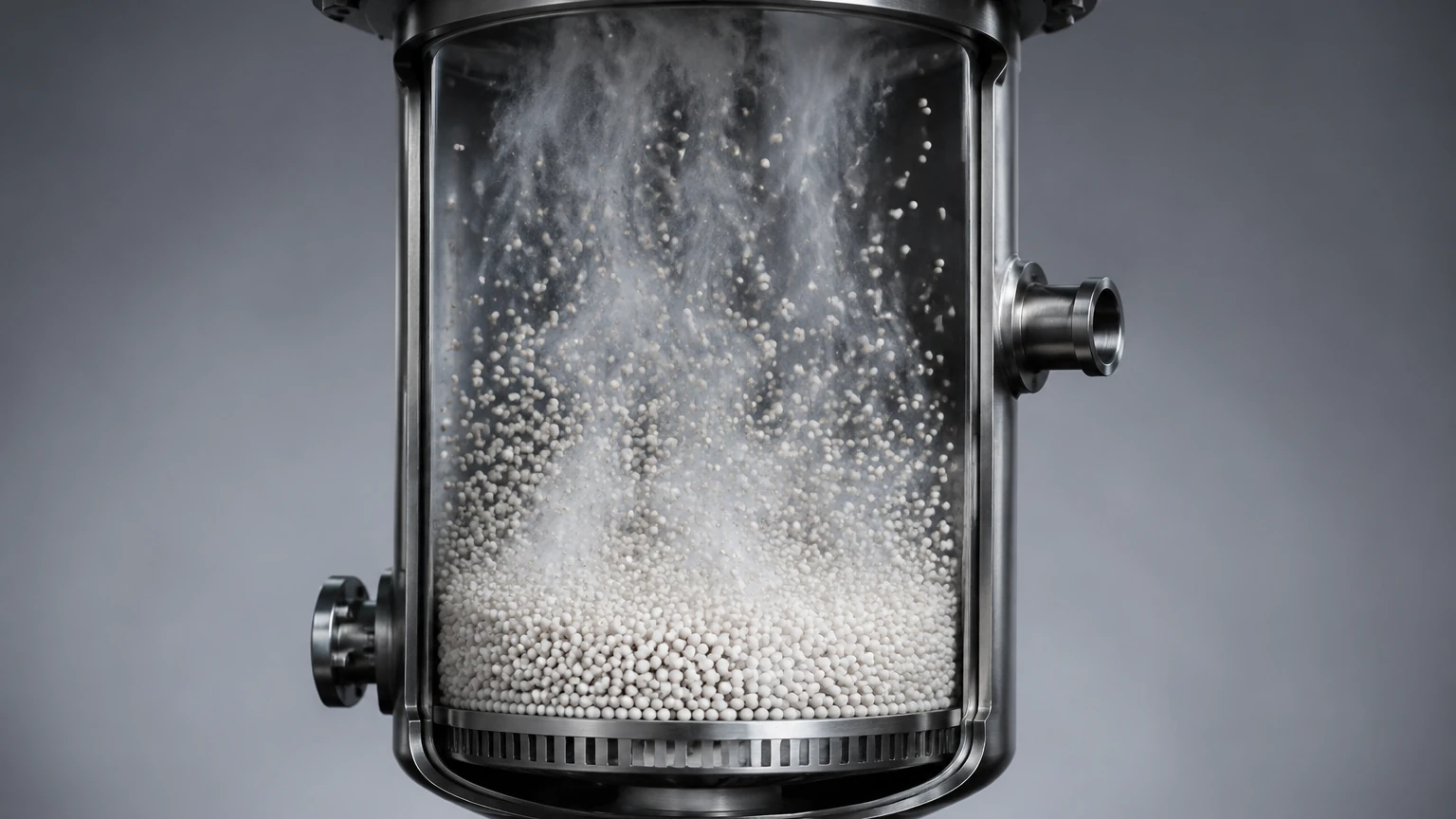
A fluidized bed reactor operates on the principle of fluidization, which occurs when a fluid is passed upward through a bed of solid particles at a velocity sufficient to overcome the weight of the particles. At low velocities, the bed remains stationary (a fixed bed). However, as the velocity increases, the pressure drop across the bed increases until it equals the weight of the particles per unit area. At this "minimum fluidization velocity," the particles begin to lift and move.
In a fully fluidized state, the bed expands and exhibits fluid-like properties: it exerts pressure on the walls of the vessel, maintains a horizontal surface, and allows objects of lower density to float. This state provides an exceptionally high surface area for contact between the fluid and the solid, which is the primary driver for the FBR’s superior heat and mass transfer rates compared to fixed-bed reactors.
Types of Fluidization States
Depending on the fluid velocity and the properties of the solids, several regimes can exist:
1. Particulate Fluidization: Common in liquid-solid systems where the bed expands uniformly.
2. Bubbling Fluidization: Common in gas-solid systems where gas bubbles rise through the bed, promoting intense mixing.
3. Circulating Fluidized Bed (CFB): High-velocity systems where particles are entrained in the fluid and must be captured and returned to the reactor via a cyclone or filter system.
Engineering Considerations for Reactor Design
Designing a fluidized bed reactor involves balancing complex hydrodynamic variables. One of the most critical components is the gas distributor plate, often referred to as the "grid." The distributor’s primary function is to ensure that the fluid enters the bed uniformly across its entire cross-section.
If the distribution is uneven, "channeling" occurs, where the fluid bypasses large portions of the solid bed, leading to dead zones and inefficient reactions. To prevent this, engineers often specify precision-engineered porous metal plates or wire mesh laminates. These components must provide enough resistance to ensure uniform flow while remaining robust enough to support the weight of the bed during shutdown periods.
Another major consideration is particle attrition. The constant movement and collision of particles within the reactor can lead to the breakdown of solids into smaller fragments, known as "fines." These fines can be carried out of the reactor by the fluid stream, leading to product loss or damage to downstream machinery. Effective filtration at the outlet is therefore a non-negotiable requirement for operational stability.
The Role of Stainless Steel Filtration in FBR Systems
In the harsh environments of a fluidized bed reactor, standard filtration materials often fail due to high temperatures, corrosive chemical environments, and the abrasive nature of moving solids. Stainless steel, particularly grades like 304, 316L, and specialized alloys, is the material of choice for FBR filtration for several technical reasons:
Thermal and Chemical Resistance
Many chemical reactions in an FBR occur at temperatures exceeding 500°C. Stainless steel filter cartridges and wire mesh components maintain their structural integrity and oxidation resistance at these levels. Furthermore, in pharmaceutical or food-grade applications, the non-reactive nature of stainless steel prevents contamination and ensures compliance with strict hygienic standards.
Mechanical Durability
The constant bombardment of particles in a fluidized bed can quickly erode softer materials. Sintered wire mesh and perforated metal supports provide the mechanical strength required to withstand high-pressure differentials and physical wear. This durability directly translates to longer service lives and reduced downtime for filter replacements.
Precision Pore Structure
Filtration in an FBR is not just about stopping particles; it is about controlling the pressure drop. Custom-woven wire mesh allows for precise control over pore size and permeability. This ensures that the filter can capture fines down to specific micron ratings while maintaining the flow rates necessary to keep the bed in a fluidized state.
Common Risks and Performance Challenges
Operating a fluidized bed reactor without optimized filtration leads to several systemic risks that can impact the total cost of ownership (TCO).
1. Catalyst Loss: In many catalytic processes, the solid particles are expensive catalysts. If the outlet filters are bypassed or fail, the loss of catalyst can cost thousands of dollars per hour. High-efficiency stainless steel cartridges are essential for capturing and reclaiming these materials.
2. Filter Blinding: If the filtration media is not correctly matched to the particle size distribution of the fines, the pores can become permanently blocked (blinded). This increases the pressure drop, requiring higher energy input for the blowers and eventually forcing a system shutdown.
3. Erosion of Internals: Fine particles that escape filtration can act as an abrasive grit, wearing down valves, heat exchangers, and compressors downstream.
4. Backpulsing Failures: Many FBR filters use a backpulse or back-flush system to clear the filter cake. If the filter structure is not designed to handle the reverse pressure of these pulses, the media can deform or rupture.
Selection and Customization of Filtration Components
When selecting filtration components for a fluidized bed reactor, engineers must move beyond off-the-shelf solutions. Customization is key to matching the filter to the specific kinetics of the reactor. At Kaifil, we emphasize the following selection criteria during the OEM design phase:
* Micron Rating vs. Permeability: There is always a trade-off between how small a particle a filter can catch and how easily fluid can pass through it. We utilize multi-layer sintered mesh to provide a fine filtration layer supported by coarser, high-strength layers to balance these needs.
* Alloy Selection: For highly corrosive environments, such as those involving chlorides or acidic vapors, we may recommend high-nickel alloys or specialized stainless steels to prevent stress corrosion cracking.
* Structural Configuration: Depending on the reactor size, filters may be configured as large-diameter cartridges, flat distributor plates, or pleated elements to maximize surface area within a limited footprint.
For those seeking detailed specifications on material compatibility and custom designs, you can Review product options and application support to see how specific filtration geometries align with different reactor scales.
Maintenance and Total Cost Considerations
The long-term viability of a fluidized bed reactor is often dictated by its maintenance cycle. While stainless steel filters have a higher initial purchase price than disposable alternatives, their ability to be cleaned and reused significantly lowers the TCO.
Cleaning Methods:
Industrial stainless steel filters can be cleaned using several methods, including:
* Ultrasonic Cleaning: Using high-frequency sound waves in a solvent bath to dislodge deeply embedded particles.
* Chemical Cleaning: Using specific acids or alkalis to dissolve organic or inorganic deposits without damaging the metal substrate.
* Burn-off/Pyrolysis: For filters used in polymer or hydrocarbon processing, controlled heating can remove organic contaminants.
By implementing a structured maintenance program and using high-quality metal filters, facilities can extend the interval between major turnarounds. Engineers should confirm the expected pressure drop limits and the mechanical limits of the filter housing before finalizing their maintenance protocols.
Conclusion
The fluidized bed reactor remains one of the most effective tools for industrial processing, provided its complex fluid dynamics are properly managed. The integrity of the filtration system—from the distributor plate at the bottom to the fines recovery filters at the top—is the primary safeguard against process inefficiency and equipment failure.
Choosing the right filtration partner is essential for navigating the challenges of high-temperature, high-abrasion environments. With a focus on precision engineering and durable materials, Kaifil supports global industries in achieving optimized FBR performance. For more information on our custom stainless steel filtration solutions and technical support, visit our Main Page.
