


Foam Air Cleaner Material
In the landscape of industrial filtration, selecting the appropriate media is a critical decision that impacts equipment longevity, operational efficiency, and maintenance costs. Foam air cleaner material, specifically reticulated polyurethane foam, represents a versatile solution for air intake and gas filtration applications. While often perceived as a simple component, the engineering behind foam filtration involves complex considerations of pore structure, chemical resistance, and fluid dynamics. For technical professionals and procurement teams, understanding the nuances of these materials is essential for optimizing system performance.
This guide explores the technical properties of foam air cleaner materials, their application in demanding industrial environments, and how they compare to high-performance alternatives like stainless steel wire mesh. For those seeking advanced filtration components beyond polymer-based solutions, exploring the Main Page of specialized manufacturers like Kaifil provides insight into precision-engineered metal alternatives.
1. The Science of Reticulated Foam Structure
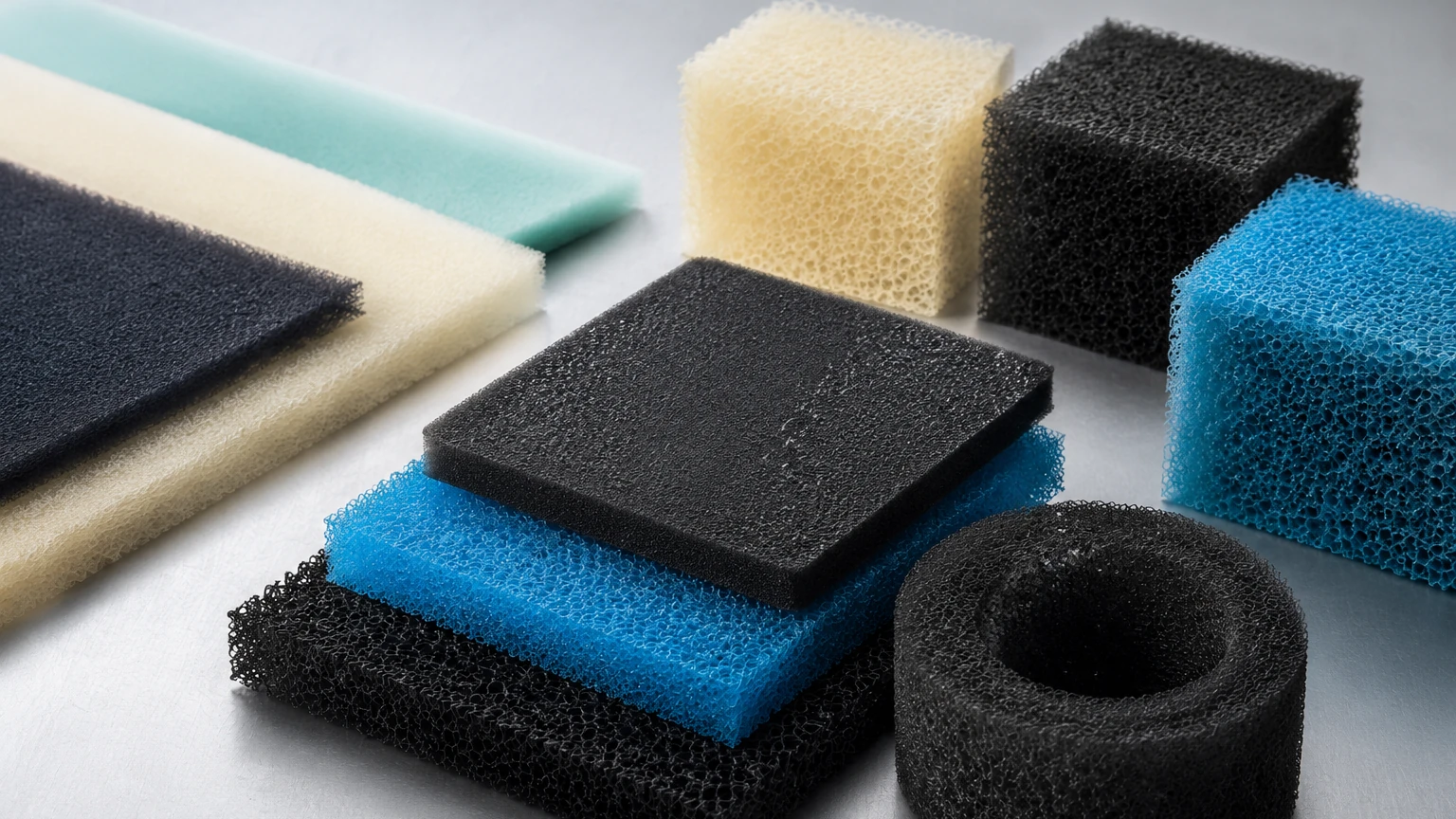
Foam air cleaner material is primarily characterized by its "reticulated" structure. Unlike standard sponge foam, which may have closed or partially open cells, reticulated foam undergoes a specialized manufacturing process—typically thermal or chemical quenching—that removes the cell windows (membranes). This leaves only the skeletal strands of the polymer, resulting in a 97% to 98% void volume.
Pores Per Inch (PPI) and Filtration Grading
The most critical metric for foam air cleaner material is Pores Per Inch (PPI). This measurement defines the coarseness or fineness of the media and directly correlates to filtration efficiency and pressure drop.
* 10 to 30 PPI: Coarse foam used for pre-filtration, large particulate capture, and high-airflow applications where minimal resistance is required.
* 45 to 60 PPI: Medium-grade foam suitable for standard engine intakes and general industrial air cleaning.
* 80 to 100+ PPI: Fine foam used for high-efficiency filtration, often in multi-stage systems where smaller micron particles must be intercepted.
Engineers must balance PPI with the required airflow. Higher PPI ratings provide better filtration efficiency but increase the initial pressure drop across the filter, which can lead to reduced system performance if not properly accounted for in the blower or engine specifications.
2. Material Composition and Chemical Compatibility
Most industrial foam air cleaner materials are made from either polyester-based or polyether-based polyurethane. Choosing between these two depends heavily on the operating environment.
Polyester Polyurethane Foam
Polyester-based foams are generally preferred for air filtration because they offer superior resistance to hydrocarbons, oils, and fuels. They possess high tensile strength and tear resistance, making them durable during cleaning cycles. However, they are susceptible to hydrolysis (degradation in high-humidity or steam environments).
Polyether Polyurethane Foam
Polyether-based foams are more resistant to moisture and microbial growth. They are the material of choice for applications involving high humidity or water contact. While they have slightly lower physical strength than polyester foams, their stability in wet conditions makes them indispensable for specific outdoor or process-heavy industrial settings.
Additives and Treatments
To meet industrial safety standards, foam air cleaner materials are often treated with additives. These can include:
* Flame Retardants: Essential for filters used near heat sources or in electronic enclosures.
* UV Stabilizers: Necessary for equipment exposed to direct sunlight to prevent polymer embrittlement.
* Anti-Microbial Agents: Used in HVAC and food processing environments to prevent the growth of mold and bacteria within the filter media.
3. Engineering Performance Metrics
When evaluating foam air cleaner material for an OEM project or a maintenance upgrade, several technical parameters must be analyzed to ensure the material meets the application's demands.
Dust Holding Capacity (DHC)
The open-cell structure of reticulated foam allows for "depth filtration." Unlike surface filters that clog once the face is covered, foam captures particles throughout its entire thickness. This results in a high Dust Holding Capacity, allowing the filter to operate longer before reaching its terminal pressure drop. For industrial machinery, this translates to longer service intervals and reduced downtime.
Face Velocity and Pressure Drop
Engineers use the face velocity (the speed of air as it hits the filter surface) to calculate the expected pressure drop. Foam is favored in many designs because its high void volume ensures a very low initial pressure drop compared to paper or felt media. Maintaining a low pressure drop is vital for energy efficiency in large-scale ventilation and compressor systems.
Filtration Mechanism
Foam air cleaner material operates through three primary mechanisms:
1. Inertial Impaction: Larger particles unable to follow the air streamlines around the foam strands collide with and stick to the fibers.
2. Interception: Medium-sized particles that follow the air path but come close enough to a strand to be captured.
3. Diffusion: Very small particles (sub-micron) that move randomly due to Brownian motion and eventually contact the filter media.
In many engine applications, the foam is "wetted" with a specialized filter oil. This oil increases the tackiness of the strands, significantly improving the capture rate of fine dust and preventing particles from vibrating through the media.
4. Limitations and Risks of Foam Media
Despite its advantages, foam air cleaner material has inherent limitations that may necessitate a move toward more robust materials like stainless steel.
Thermal Degradation
Polyurethane foams typically have a maximum continuous operating temperature of approximately 90°C to 120°C (194°F to 248°F). Exposure to temperatures exceeding these limits causes the polymer to soften, lose its structure, and eventually melt or char. In high-temperature exhaust or industrial process streams, foam is unsuitable.
Mechanical Fatigue and "Crumbling"
Over time, environmental factors such as ozone exposure, UV radiation, and chemical vapors cause the foam strands to become brittle. This leads to a phenomenon known as "dusting" or crumbling, where pieces of the filter media break off and enter the downstream airflow. In precision machinery or pharmaceutical environments, this contamination is unacceptable.
Cleaning Challenges
While foam is often marketed as washable, the cleaning process can be inconsistent. Residual oils, trapped fine particulates, and harsh cleaning solvents can degrade the foam's integrity. If not dried completely, polyether foams may still harbor moisture that leads to downstream corrosion or mold issues.
5. Transitioning to Stainless Steel Filtration Solutions
For applications where foam air cleaner material fails to meet durability or purity requirements, stainless steel filtration components offer a superior alternative. Manufacturers like Kaifil specialize in these precision metal solutions.
Why Engineers Choose Stainless Steel Over Foam
1. Temperature Resistance: Stainless steel wire mesh and sintered filters can withstand temperatures exceeding 500°C, far beyond the capabilities of any polymer foam.
2. Chemical Inertness: In the presence of aggressive solvents, acids, or bases common in chemical processing, stainless steel remains stable where foam would dissolve or swell.
3. Structural Integrity: Metal filters do not shed fibers or particles. They provide a rigid, fixed pore structure that ensures consistent filtration performance over thousands of hours.
4. Permanent Service Life: Unlike foam, which must eventually be replaced due to degradation, stainless steel filters can be cleaned (via ultrasonic baths or back-pulsing) and reused indefinitely, lowering the total cost of ownership.
For technical specifications on how metal mesh can replace or augment foam systems, the Main Page provides detailed data on micron ratings and alloy selections suitable for harsh industrial environments.
6. Procurement and Sourcing Checklist
When sourcing foam air cleaner material or its metal counterparts, purchasing teams should confirm the following technical details with their supplier:
* Micron Rating vs. PPI: Ensure the PPI rating translates to the specific micron retention required for the downstream equipment.
* Material Certification: Request data sheets confirming the base polymer (Polyester vs. Polyether) and any flame-retardant certifications (e.g., UL94 HF-1).
* Dimensional Tolerances: Foam is flexible, but for a proper seal in a filter housing, precise cutting (die-cutting or CNC waterjet) is necessary to prevent air bypass.
* Compatibility Testing: If the filter will be exposed to specific chemicals or oils, request compatibility testing results to prevent premature failure.
* Lifecycle Analysis: Evaluate whether a low-cost foam filter is more expensive in the long run than a durable stainless steel component when considering replacement labor and disposal costs.
7. Conclusion
Foam air cleaner material remains a staple in industrial filtration due to its cost-effectiveness, high void volume, and excellent dust-holding capacity. However, as industrial processes become more demanding—requiring higher temperatures, better chemical resistance, and absolute particle retention—the limitations of polymer foams become more apparent.
By understanding the PPI, material composition, and environmental constraints of foam, engineers can make informed decisions. In cases where foam is insufficient, transitioning to custom stainless steel filtration solutions ensures the highest level of protection for critical machinery. For more information on high-performance industrial filters and custom manufacturing capabilities, visit the Main Page to explore professional filtration options tailored to your specific application needs.
