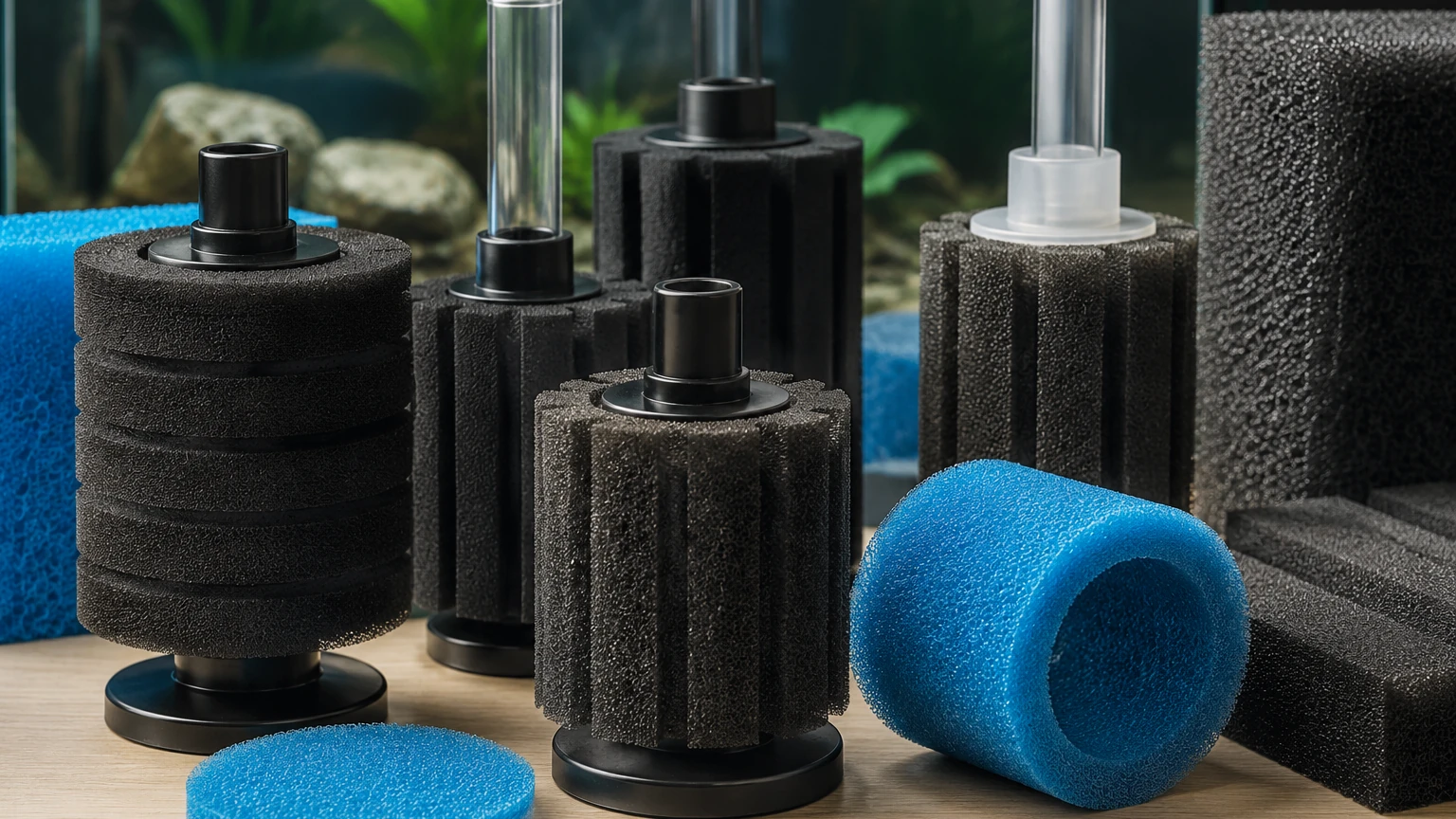
Foam Aquarium Filter
In the realm of aquatic life support systems and industrial water treatment, the foam aquarium filter remains a fundamental component for both mechanical and biological filtration. While often associated with hobbyist setups, the principles of foam filtration are frequently scaled for professional aquaculture, public aquaria, and specialized industrial processes requiring the removal of organic particulates and the management of nitrogenous waste. For engineers and facility managers, understanding the technical specifications, material limitations, and performance metrics of foam media is essential for optimizing system health and operational efficiency.
Understanding the Mechanics of Foam Filtration
Foam filtration operates through two primary mechanisms: mechanical straining and biological conversion. Unlike high-precision metal filters used in chemical processing, foam is a depth-loading medium. This means that particles are trapped not just on the surface, but within the complex, tortuous paths of the open-cell structure.
Mechanical filtration occurs as water passes through the porous matrix. Larger suspended solids are intercepted by the foam strands. The efficiency of this process is largely determined by the pore density, typically measured in Pores Per Inch (PPI). A lower PPI indicates larger pores, which allow for higher flow rates and lower pressure drops but provide less efficient mechanical trapping. Conversely, a higher PPI offers finer filtration but is prone to rapid clogging, which can lead to channeling—a phenomenon where water bypasses the clogged sections, rendering the filter ineffective.
Biological filtration is perhaps the most critical function of a foam aquarium filter in a B2B or industrial context. The internal surface area of the foam provides a substrate for nitrifying bacteria, such as *Nitrosomonas* and *Nitrobacter*. These microorganisms convert toxic ammonia into nitrite and subsequently into less harmful nitrate. In large-scale systems, the Specific Surface Area (SSA) of the foam is a key engineering metric used to calculate the biological loading capacity of the filtration system.
Material Science: Polyurethane vs. Polyether Foam
From an engineering perspective, not all foams are suitable for long-term industrial aquatic use. The chemical composition of the foam determines its durability and resistance to degradation in various water chemistries.
1. Polyurethane (PU) Foam: Often used in lower-cost applications, PU foam is susceptible to hydrolysis—a process where the polymer chains break down in the presence of water over time. This can lead to the foam becoming brittle or "crumbling," which introduces micro-debris into the water column and necessitates frequent replacement.
2. Polyether Foam: This is the preferred material for professional and industrial foam filters. Polyether foams are highly resistant to water, heat, and chemical additives. They maintain their structural integrity for significantly longer periods, even in high-flow or high-temperature environments. For engineers designing long-term life support systems, specifying polyether foam is a standard requirement to ensure system reliability.
When evaluating foam media, it is also vital to ensure the material is "reticulated." Reticulation is a manufacturing process that removes the thin membranes between the foam cells, leaving only the skeletal structure. This creates a truly open-cell foam that maximizes flow-through and available surface area for bacterial colonization.
Performance Metrics and Engineering Calculations
When integrating a foam aquarium filter into a larger industrial loop, several performance metrics must be quantified to ensure the system meets its design parameters.
* Pore Size (PPI) Selection: For pre-filtration stages, 10 to 20 PPI is common to capture coarse debris without immediate clogging. For fine mechanical filtration or dedicated biological stages, 30 to 45 PPI is standard. In specialized applications like fry rearing or shrimp farming, even finer foams may be used to prevent the intake of small organisms.
* Flow Velocity: The velocity of water through the foam must be carefully managed. If the velocity is too high, the shear forces can strip the biofilm (the layer of beneficial bacteria) from the foam strands. Ideally, the face velocity should be kept low to maximize contact time, a concept known as Hydraulic Retention Time (HRT).
* Pressure Drop (Head Loss): As the foam traps particulates, the resistance to flow increases. Engineers must account for this variable head loss when selecting pumps. In industrial setups, differential pressure sensors are often installed to monitor the state of the foam and trigger maintenance cycles.
Limitations of Foam in Industrial Environments
While foam is versatile, it has distinct limitations compared to more robust filtration technologies. In demanding industrial environments, such as chemical processing or high-pressure hydraulic systems, foam is rarely sufficient. Its primary weaknesses include:
* Structural Integrity: Foam cannot withstand high differential pressures. Under significant load, the foam matrix will compress, leading to a total collapse of the pore structure and a complete blockage of flow.
* Cleaning and Sterilization: Foam is notoriously difficult to sterilize. While it can be rinsed, the internal pores often harbor deep-seated organic matter that can lead to anaerobic pockets or pathogen reservoirs. In industries like pharmaceuticals or food and beverage, where CIP (Clean-In-Place) protocols are required, foam is generally replaced by stainless steel components.
* Chemical Resistance: While polyether foam is resilient, it cannot match the broad chemical compatibility of stainless steel. Exposure to certain solvents or extreme pH levels will cause foam to dissolve or leach chemicals into the process stream.
Comparing Foam with Stainless Steel Filtration
For facilities transitioning from small-scale aquatic management to industrial-scale water treatment, the shift from foam to metal filtration is a common evolution. Manufacturers like Kaifil specialize in these high-performance transitions. While a foam aquarium filter is excellent for biological surface area, stainless steel wire mesh filters offer precision and durability that foam cannot achieve.
Stainless steel filters provide a fixed, non-deformable pore size, ensuring consistent mechanical filtration efficiency regardless of pressure fluctuations. Furthermore, stainless steel is infinitely cleanable and can be sterilized using heat or aggressive chemicals. For professionals looking to upgrade their filtration infrastructure, reviewing the Main Page of a specialized manufacturer like Kaifil can provide a clearer understanding of how custom stainless steel cartridges and mesh components can replace or augment foam-based systems in demanding applications.
Selection Criteria for Industrial Aquatic Filtration
When purchasing or specifying foam filtration components for a B2B project, technical buyers should confirm the following details with their suppliers:
1. Reticulation Verification: Confirm the foam is 100% reticulated to ensure maximum flow and surface area.
2. Material Grade: Specify polyether-based foam for any application involving continuous immersion to prevent premature degradation.
3. PPI Accuracy: Ensure the PPI rating is consistent across the batch, as variations can lead to uneven flow distribution in large filter banks.
4. Dimensions and Tolerances: In industrial housings, a tight fit is required to prevent "bypass" (water flowing around the filter rather than through it). Precision cutting of the foam is essential.
Maintenance and Replacement Cycles
In a professional setting, the maintenance of a foam aquarium filter is a scheduled operational task. Unlike hobbyist setups where maintenance might be reactive, industrial systems rely on proactive cycles.
Mechanical foam stages should be cleaned or replaced based on differential pressure readings. Biological foam stages, however, require a more delicate approach. Cleaning these stages too aggressively can kill the nitrifying bacteria, leading to an "ammonia spike" that can be catastrophic for aquatic life. Typically, biological foam is rinsed in system water (not chlorinated tap water) to remove excess sludge while preserving the biofilm.
Over time, even the best polyether foam will lose its elasticity and surface characteristics. A typical replacement cycle in an industrial aquaculture facility might range from 12 to 24 months, depending on the organic load and cleaning frequency. Monitoring the physical integrity of the foam is a standard part of any facility's SOP (Standard Operating Procedure).
Conclusion
The foam aquarium filter is a versatile and cost-effective solution for mechanical and biological filtration in aquatic systems. However, its application in industrial and B2B environments requires a deep understanding of material science and fluid dynamics. By selecting the correct PPI, ensuring the use of high-grade polyether materials, and understanding the transition point where stainless steel alternatives become necessary, engineers can design robust and efficient water treatment loops. For those requiring the highest levels of durability and filtration precision, consulting with experts in metal filtration ensures that the chosen solution meets the rigorous demands of industrial processing.