


High Flow Water Filter Cartridge
In industrial water treatment and process fluid management, the demand for higher throughput and reduced downtime has led to the widespread adoption of high flow filtration systems. A high flow water filter cartridge is specifically engineered to handle significantly larger volumes of fluid compared to standard 2.5-inch or 4.5-inch diameter cartridges. By utilizing a larger diameter—typically 6 inches (152mm)—and specialized pleating geometries, these components allow for flow rates that can exceed 500 gallons per minute (GPM) per single element.
For engineers and procurement professionals, selecting the right high flow water filter cartridge involves more than just matching dimensions. It requires a deep understanding of fluid dynamics, material compatibility, and the total cost of ownership (TCO). This guide explores the technical foundations of high flow filtration and the critical factors that determine performance in demanding industrial environments.
Understanding High Flow Filtration Technology
The fundamental advantage of a high flow water filter cartridge lies in its geometry. Standard cartridges often require complex multi-round housings to achieve high flow rates, which increases the footprint of the system and the time required for maintenance. In contrast, a high flow system uses fewer, larger elements to achieve the same or better results.
Surface Area and Pleat Design
High flow cartridges typically employ a pleated media design. Pleating increases the available surface area within a fixed volume, which directly correlates to the dirt-holding capacity and the service life of the filter. Advanced manufacturing techniques allow for uniform pleat spacing, ensuring that fluid flows evenly across the entire surface of the media, preventing premature clogging in specific zones.
Inside-to-Outside Flow Direction
Most high flow cartridges are designed with an inside-to-outside flow pattern. This configuration is intentional: as the fluid moves from the center of the cartridge toward the outer shell, contaminants are trapped within the interior of the element. This design simplifies the change-out process, as the debris is contained within the cartridge and does not fall back into the filter housing during removal, ensuring a cleaner system and reducing the risk of downstream contamination.
Key Performance Metrics for Industrial Applications
When evaluating a high flow water filter cartridge, technical specifications must be aligned with the specific requirements of the process. The following metrics are essential for performance validation:
Micron Rating and Filtration Efficiency
Filtration accuracy is defined by the micron rating, which indicates the size of particles the media can effectively capture. It is important to distinguish between nominal and absolute ratings. Nominal ratings refer to an approximate efficiency (e.g., 90%), while absolute ratings indicate a much higher efficiency (typically 99.9% or Beta 5000) for a specific particle size. For critical applications like reverse osmosis (RO) pre-filtration, absolute-rated cartridges are often required to protect sensitive membranes.
Differential Pressure (Delta P)
Differential pressure is the difference between the pressure at the inlet and the outlet of the filter housing. A high flow water filter cartridge is designed to operate with a low initial clean pressure drop. As the filter captures contaminants, the pressure drop increases. Engineers must monitor the terminal pressure drop—the point at which the filter is considered fully loaded and must be replaced. Operating beyond the recommended terminal pressure drop can lead to media migration or structural failure.
Dirt-Holding Capacity
The dirt-holding capacity refers to the total mass of contaminants a cartridge can retain before reaching its terminal pressure drop. High flow elements, due to their massive surface area, offer significantly higher dirt-holding capacities than standard filters. This leads to longer intervals between change-outs, directly impacting operational efficiency.
Material Considerations: Stainless Steel vs. Synthetic Media
While many high flow cartridges utilize polypropylene or glass fiber media, industrial applications involving high temperatures, aggressive chemicals, or high pressures often require more robust materials. This is where stainless steel filtration solutions become indispensable.
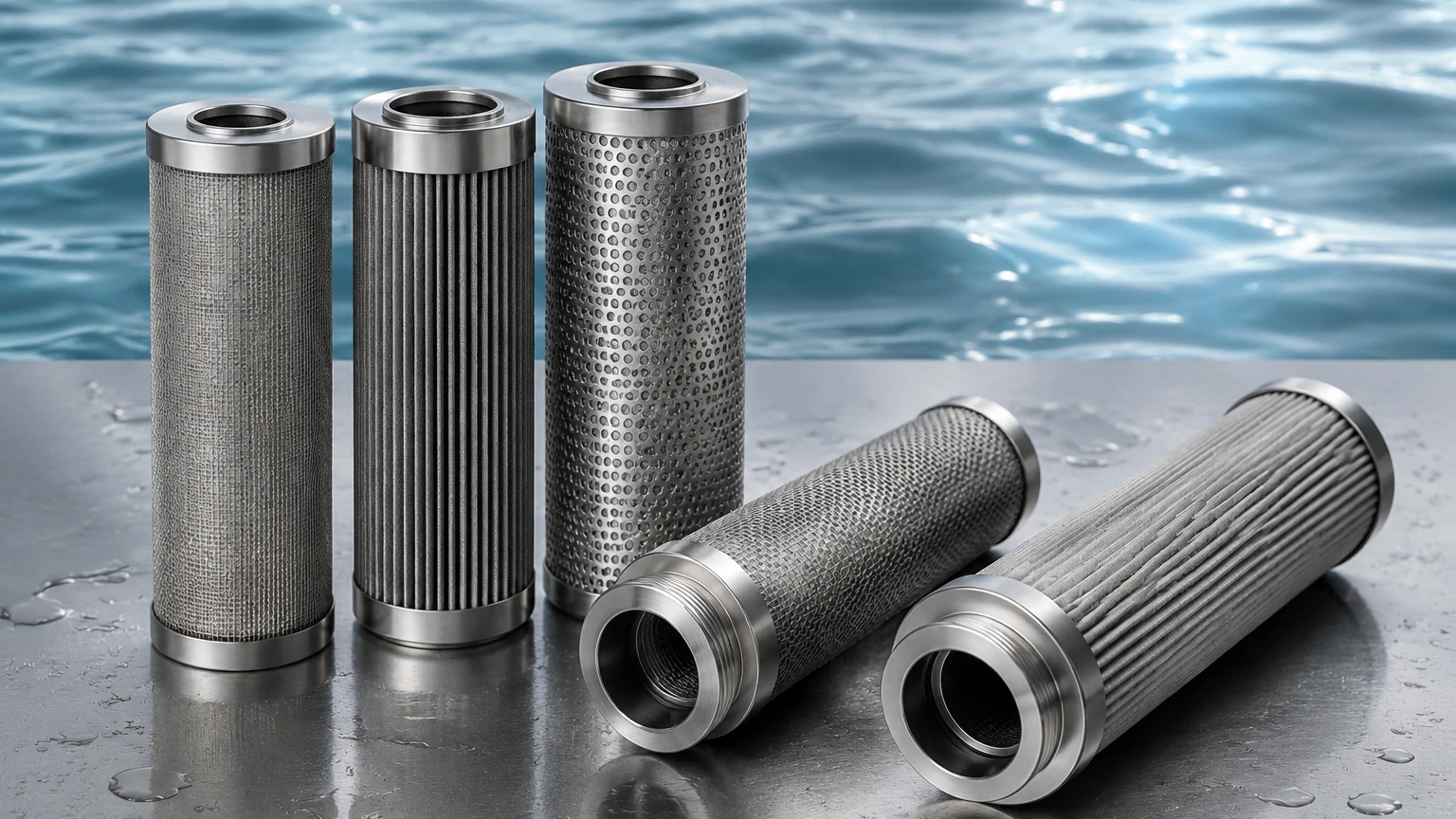
Stainless Steel Wire Mesh
For high-temperature applications or processes involving caustic fluids, stainless steel wire mesh filters provide exceptional durability. Unlike synthetic fibers, stainless steel does not shed particles and maintains its structural integrity under extreme thermal stress. These filters are often used in steam filtration, chemical processing, and hydraulic systems where reliability is paramount.
Chemical Compatibility
Selecting the correct elastomer for the O-rings and seals is as critical as the filter media itself. Common materials include EPDM, Nitrile (Buna-N), Viton, and Silicone. The choice depends on the chemical composition of the fluid and the operating temperature. Failure to match the seal material to the process fluid can lead to bypass, where unfiltered liquid leaks past the cartridge seals.
Advantages of High Flow Systems in Large-Scale Water Treatment
The transition to high flow technology offers several tangible benefits for industrial facilities, particularly in sectors like power generation, desalination, and large-scale manufacturing.
1. Reduced Footprint: Because one high flow cartridge can replace up to 20 standard 10-inch cartridges, the size of the filter housing is greatly reduced. This is critical in facilities where floor space is limited.
2. Lower Labor Costs: Replacing dozens of small cartridges is a labor-intensive process that requires significant downtime. A high flow system allows for rapid change-outs, often requiring only a few minutes to replace a single large element.
3. Environmental Impact: Using fewer filter elements results in less waste generation. High flow cartridges reduce the volume of spent filter media that must be disposed of, contributing to more sustainable industrial operations.
4. Capital Expenditure (CAPEX) Savings: While individual high flow cartridges may have a higher unit price, the overall cost of the housing and piping is lower due to the reduced system size.
Engineering Selection Guide: Sizing and Compatibility
Properly sizing a high flow water filter cartridge system requires a calculated approach. Over-sizing leads to unnecessary capital costs, while under-sizing results in frequent filter changes and potential system bottlenecks.
Calculating Flow Velocity
The velocity of the fluid through the filter media affects filtration efficiency. If the velocity is too high, particles may be forced through the media (breakthrough), or the pressure drop may rise too quickly. Designers must ensure the flow rate per cartridge remains within the manufacturer’s recommended limits for the specific micron rating being used.
Viscosity and Temperature Adjustments
The viscosity of the fluid significantly impacts the pressure drop. Water at room temperature has a viscosity of 1 centipoise (cP). If the fluid is more viscous, such as oil or a concentrated chemical solution, the flow rate per cartridge must be de-rated to maintain an acceptable pressure drop. Similarly, temperature affects both the viscosity and the mechanical strength of the filter media.
Housing Design and Connection Types
The filter housing must be compatible with the cartridge’s end-cap configuration. Common high flow designs include a handle for easy extraction and a secure O-ring seal to prevent bypass. For comprehensive technical specifications and to explore custom filtration components, engineers can visit the Main Page of Kaifil’s industrial catalog.
Critical Questions for Purchasing and OEM Specifications
Before finalizing a purchase or specifying a high flow water filter cartridge for an OEM project, technical teams should confirm the following details with the manufacturer:
* What is the specific Beta rating for the target micron size? Do not rely solely on nominal ratings if the application requires precision.
* What is the maximum allowable differential pressure? Ensure the cartridge can withstand the system's maximum pump pressure in the event of a total blockage.
* Are there custom length or diameter requirements? While 20, 40, and 60-inch lengths are standard, some specialized systems may require custom dimensions.
* Is the media compatible with the cleaning agents used in the system? If the system undergoes Clean-in-Place (CIP) cycles, the filter media and seals must withstand the chemicals and temperatures involved.
Maintenance and Total Cost of Ownership (TCO)
The true cost of a high flow water filter cartridge is not its purchase price, but the cost per gallon of filtered fluid. A high-quality cartridge that lasts twice as long as a cheaper alternative will often result in lower TCO due to reduced labor, fewer shipping costs, and less downtime.
Regular monitoring of the pressure gauges is the most effective way to manage maintenance. Implementing an automated alert system when the differential pressure reaches a pre-set limit ensures that filters are changed exactly when needed, preventing both premature replacement and system over-pressurization.
In specialized industrial sectors, Kaifil provides tailored stainless steel filtration solutions that address the limitations of standard polymer filters. By focusing on precision engineering and durable materials, these solutions ensure that high flow systems operate at peak efficiency even in the most demanding environments. Whether for chemical processing, food and beverage production, or hydraulic applications, the integration of a well-specified high flow water filter cartridge is a cornerstone of modern industrial fluid management.
