


Foam Polyester
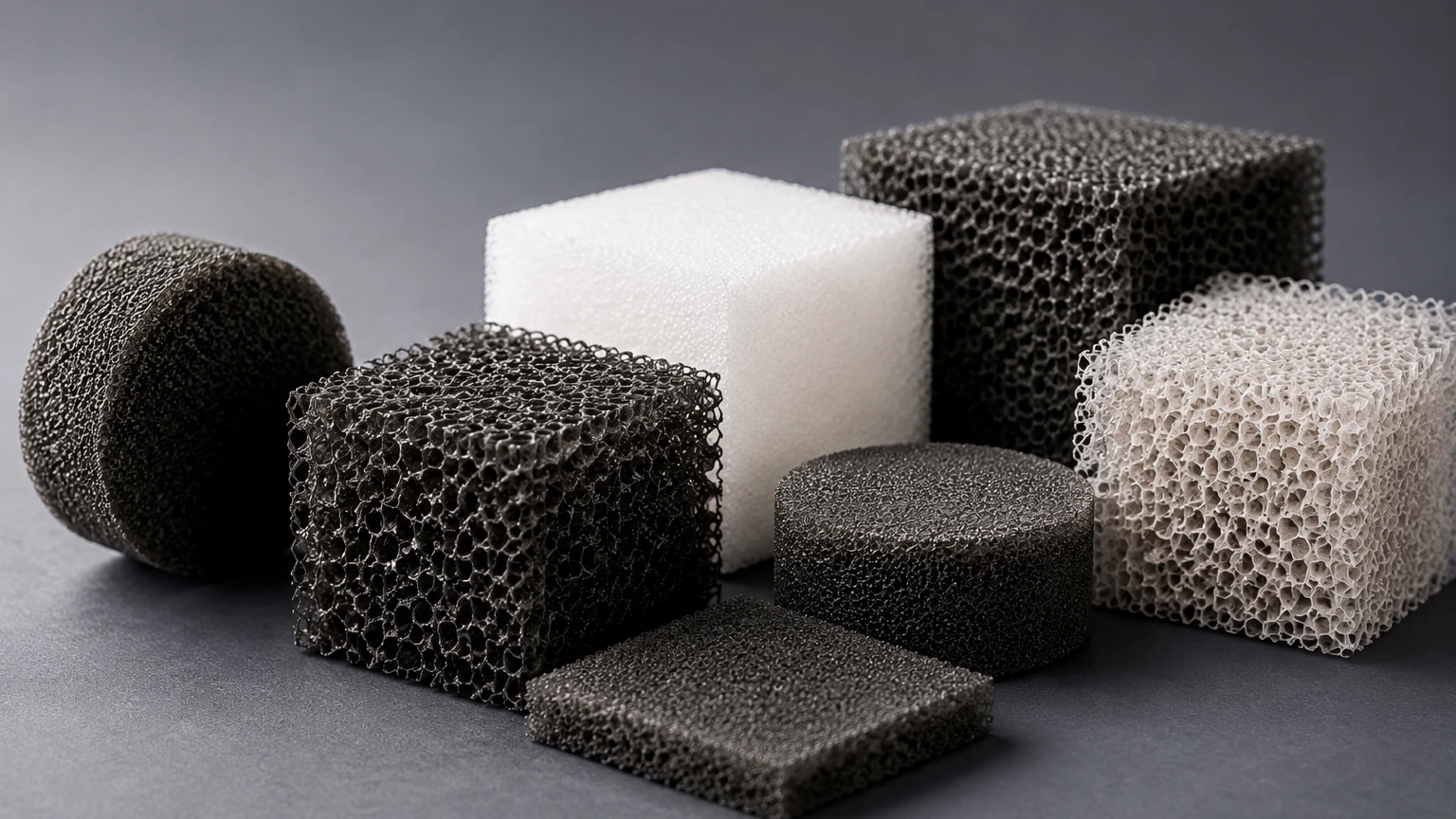
In the landscape of industrial filtration, foam polyester—specifically reticulated polyester polyurethane foam—serves as a critical component for air and liquid processing. Unlike standard cushioning foams, reticulated foam polyester undergoes a specialized manufacturing process that removes the cell windows (membranes), leaving behind a three-dimensional skeletal structure. This open-cell architecture is what makes it an effective medium for depth filtration, moisture management, and acoustic dampening in demanding B2B environments.
For engineers and procurement specialists, understanding the technical nuances of foam polyester is essential for optimizing filtration systems. While synthetic foams offer cost-effective pre-filtration, they are often used in conjunction with high-precision components. To explore how these materials integrate into comprehensive industrial systems, technical teams often refer to the Main Page of specialized manufacturers to evaluate the synergy between synthetic media and stainless steel hardware.
The Reticulation Process and Structural Integrity
The defining characteristic of foam polyester is its reticulated structure. The process of reticulation is typically achieved through either chemical or thermal means. Thermal reticulation, often referred to as "zapping," involves placing a block of foam in a vacuum pressure vessel filled with an explosive gas mixture. Upon ignition, a controlled flame front travels through the foam, instantly melting and removing the thin cell membranes while leaving the thicker skeletal strands intact.
This results in a material with a high void volume—often exceeding 95%—which translates to exceptionally low resistance to air and fluid flow. From an engineering perspective, this low pressure drop (Delta P) is the primary reason foam polyester is selected for high-velocity HVAC systems, air compressors, and small engine intakes.
Polyester vs. Polyether Foams
In the industrial sector, foam is generally divided into polyester and polyether categories. Foam polyester is favored for filtration because of its superior tensile strength, elongation, and tear resistance. It also exhibits high resistance to hydrocarbons, oils, and common industrial solvents. However, it is susceptible to hydrolysis (breakdown in the presence of moisture and heat), which is a critical consideration for applications involving steam or long-term water immersion.
Key Evaluation Criteria: PPI and Pore Geometry
When specifying foam polyester, the most critical metric is Pores Per Inch (PPI). This measurement defines the coarseness or fineness of the foam and directly dictates its filtration efficiency and dust-holding capacity.
* 10 to 30 PPI (Coarse): These grades are primarily used for large-particle removal, such as pre-filters for heavy machinery or primary stages in wastewater treatment. They offer the lowest pressure drop and are easily cleaned and reused.
* 45 to 70 PPI (Medium): This range is standard for general industrial air filtration, electronics cooling, and as a substrate for ceramic foam filters used in metal casting.
* 80 to 100 PPI (Fine): Fine-pore foams are utilized for high-efficiency filtration where capturing smaller particulates is necessary. These grades provide a larger surface area for impingement but require more frequent monitoring of pressure drop to prevent system strain.
Engineers must balance the PPI with the required flow rate. A higher PPI increases the "tortuous path" that a particle must travel, improving the probability of capture through interception and diffusion, but it also increases the energy required to move the fluid through the medium.
Performance in Industrial Environments
Foam polyester is engineered to withstand specific environmental stressors, but its limitations must be respected to avoid premature system failure.
Chemical Compatibility
Polyester-based foams are highly resilient when exposed to petroleum-based products. This makes them ideal for oil-mist elimination and fuel system filtration. However, they should be avoided in environments with strong acids or bases. If the application involves constant exposure to water at temperatures exceeding 50°C (122°F), the ester linkages in the polymer chain will eventually break down, leading to a loss of structural integrity and particulate shedding.
Temperature Stability
Most industrial foam polyester grades maintain their physical properties within a temperature range of -40°C to 120°C (-40°F to 248°F). While the material does not melt until it reaches much higher temperatures, it can become brittle at the lower end or lose its elastomeric properties at the higher end of this spectrum. For applications exceeding these limits, engineers typically transition to metallic filtration solutions, such as those found on the Main Page of stainless steel filter manufacturers.
Foam Polyester as a Pre-filtration Medium
In many high-precision industrial processes, foam polyester is not the final filtration stage but rather a "sacrificial" pre-filter. Its role is to capture the bulk of large contaminants, thereby extending the service life of more expensive secondary filters, such as pleated stainless steel cartridges or HEPA filters.
Protecting Precision Metal Filters
Stainless steel wire mesh filters are valued for their extreme durability and precise micron ratings. However, they can become blinded quickly if subjected to a high load of large, fibrous debris. By placing a 20 or 30 PPI foam polyester sleeve upstream, the larger particles are trapped within the depth of the foam. Because foam polyester is relatively inexpensive and often washable, this configuration significantly reduces the Total Cost of Ownership (TCO) for the filtration system.
Depth Loading vs. Surface Loading
Foam polyester operates on the principle of depth filtration. Unlike a screen that stops particles at the surface, the three-dimensional matrix of the foam allows particles to penetrate and become trapped throughout the thickness of the material. This provides a much higher dust-holding capacity (DHC) than surface-loading media of the same area. When the foam eventually reaches its saturation point, the resulting increase in pressure drop signals the need for maintenance.
Common Risks and Failure Modes
Failure to properly specify or maintain foam polyester can lead to operational risks that affect the entire production line.
1. Hydrolytic Degradation: As mentioned, moisture and heat can cause the foam to crumble. In a filtration system, this is catastrophic, as the foam itself becomes a source of contamination (particulate shedding) that can clog downstream components or contaminate the end product.
2. UV Exposure: Polyester foams are sensitive to ultraviolet light. Long-term exposure to sunlight or high-intensity UV lamps used in sterilization can cause discoloration and surface embrittlement. For outdoor applications, UV-stabilized grades or protective housings are mandatory.
3. Compression Set: If the foam is used as a gasket or seal within a filter housing, it may experience "compression set," where it fails to return to its original thickness after being compressed. This can lead to bypass—where unfiltered fluid leaks around the edges of the filter element.
4. Chemical Swelling: While resistant to many oils, certain aggressive solvents can cause the foam to swell, significantly reducing the pore size and causing an unexpected spike in pressure drop.
Integration and Customization for OEM Applications
For Original Equipment Manufacturers (OEMs), foam polyester offers significant versatility in terms of physical form. It can be die-cut, CNC-profiled, or thermally bonded to other materials.
Custom Geometries
Unlike rigid metal filters, foam can be compressed into irregular cavities, providing a snug fit that prevents bypass. It is frequently used in "wrap-around" applications where it is secured over a perforated metal core or a stainless steel mesh support. This hybrid approach combines the structural rigidity of metal with the high-capacity depth filtration of foam.
Technical Support and Procurement
When sourcing foam polyester for industrial use, it is vital to confirm the specific PPI, density, and chemical resistance with the supplier. Engineers should request technical data sheets that detail the air permeability (measured in cubic feet per minute per square foot at a specific pressure drop) to ensure the material meets the system's flow requirements.
For those designing complete filtration assemblies, the Main Page of a professional manufacturer provides the necessary context for how custom metal components—such as support cages, end caps, and housings—can be tailored to house synthetic media effectively.
Conclusion: Selection Checklist for Engineers
Before finalizing a design that incorporates foam polyester, technical teams should confirm the following parameters:
* Fluid Compatibility: Is the medium compatible with the process fluid and any cleaning agents used in the system?
* Operating Temperature: Will the system remain within the -40°C to 120°C range, accounting for potential process upsets?
* Moisture Levels: Is there a risk of hydrolysis? If so, should a polyether foam or a stainless steel mesh be considered instead?
* Target Particle Size: Does the PPI rating align with the required filtration efficiency?
* Maintenance Cycle: Is the foam intended to be cleaned and reused, or is it a disposable component? If cleaning is required, the mechanical strength of polyester foam makes it the preferred choice over more fragile synthetics.
By carefully evaluating these factors, industrial professionals can leverage the unique properties of foam polyester to create efficient, durable, and cost-effective filtration solutions that protect critical equipment and ensure product purity.
