


Food Grade Belt Press
In the industrial food processing sector, the separation of solids and liquids is a fundamental stage for product quality, yield optimization, and waste management. A food grade belt press serves as a primary mechanical dewatering solution, utilizing a continuous filtration process to extract liquids from organic materials. Unlike batch-style filtration, the belt press operates on a continuous flow basis, making it essential for high-volume applications such as fruit juice extraction, vegetable processing, and the dewatering of spent grains in brewery operations.
For engineers and procurement professionals, selecting or maintaining a food grade belt press requires a deep understanding of material science, mechanical tension, and sanitary design. Because these machines are in direct contact with consumable products, every component—from the structural frame to the precision stainless steel mesh—must adhere to strict regulatory standards. As a professional manufacturer of custom stainless steel filtration solutions, Kaifil provides the technical components necessary to ensure these systems maintain high filtration accuracy and structural integrity in demanding environments.
Engineering Standards for Food Grade Belt Press Systems
The primary distinction of a food grade belt press compared to industrial or municipal sludge variants is the requirement for sanitary engineering. In food processing, the risk of microbial growth and cross-contamination is a critical failure point. Therefore, the design must prioritize "cleanability" and material inertness.
Material Selection: 304 vs. 316L Stainless Steel
Most food grade belt presses are constructed primarily from stainless steel to resist the corrosive effects of organic acids and high-pressure wash-down cycles. While Grade 304 is often sufficient for standard vegetable dewatering, applications involving high acidity—such as citrus or tomato processing—typically require Grade 316L. The addition of molybdenum in 316L provides superior resistance to pitting and crevice corrosion, which is essential for maintaining a sterile environment over long production cycles.
Regulatory Compliance
Any component within the food grade belt press that contacts the product must comply with FDA (Food and Drug Administration) or EHEDG (European Hygienic Engineering & Design Group) guidelines. This extends beyond the metal surfaces to include the polymers used in seals, scrapers, and the synthetic fibers often used in the base belt mesh. Ensuring that all materials are non-toxic and non-absorbent is a non-negotiable requirement for food safety audits.
The Role of Precision Filtration in Belt Press Performance
The efficiency of a food grade belt press is largely determined by the interaction between the product slurry and the filtration media. The "belt" in the press is essentially a moving filter screen. As the slurry is fed onto the belt, gravity drainage removes the initial volume of liquid. Subsequently, the material is compressed between two belts as they pass over a series of rollers with decreasing diameters, increasing the mechanical pressure.
Mesh Weave and Filtration Accuracy
Selecting the correct weave for the filtration belt is a complex engineering decision. The mesh must be open enough to allow rapid liquid discharge but tight enough to retain fine solids. In fruit juice applications, for example, a mesh that is too coarse will result in high turbidity (cloudiness) in the final product, while a mesh that is too fine may lead to blinding (clogging), reducing the throughput of the machine.
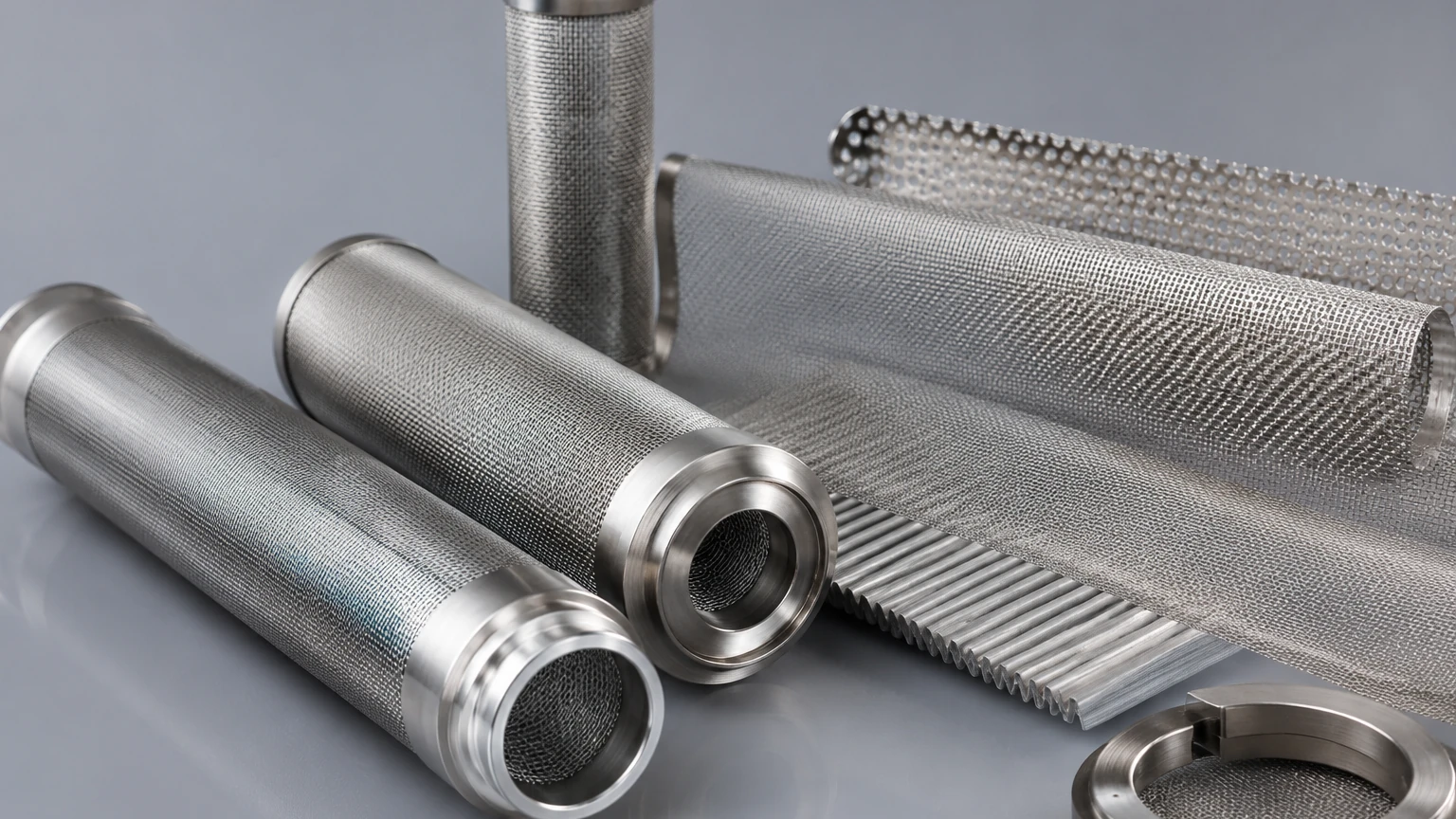
Kaifil specializes in providing the precision metal filter components that support these high-accuracy requirements. By utilizing advanced manufacturing capabilities, we ensure that the filtration media provides consistent pore distribution, which is vital for maintaining predictable cake dryness and liquid clarity.
Performance Metrics: Throughput and Cake Dryness
When evaluating a food grade belt press for a specific facility, engineers focus on two primary performance indicators: throughput (the volume of material processed per hour) and cake dryness (the percentage of solids remaining in the waste material).
1. Throughput: This is influenced by the width of the belt and the speed of the drive system. However, increasing speed often reduces the "dwell time" under pressure, which can negatively impact liquid extraction.
2. Cake Dryness: In applications like starch production or oilseed extraction, maximizing liquid recovery is the goal. Higher cake dryness indicates a more efficient extraction process, which directly impacts the return on investment (ROI) by increasing product yield and reducing the weight—and thus the cost—of waste disposal.
To optimize these metrics, the tensioning system of the belt press must be finely tuned. Excessive tension can cause premature wear on the stainless steel mesh or the rollers, while insufficient tension allows the product to slip, leading to uneven dewatering.
Maintenance and CIP (Clean-In-Place) Integration
In the food industry, downtime for cleaning is a significant operational cost. Modern food grade belt press designs integrate sophisticated Clean-In-Place (CIP) systems. These systems use high-pressure spray bars to continuously clean the belt as it returns to the feed zone.
Managing Filter Blinding
One of the most common challenges in belt press operation is blinding, where fats, proteins, or fine fibers become trapped within the mesh structure. If the CIP system is inefficient, or if the mesh surface is too rough, the filtration capacity will degrade rapidly. This is why the surface finish of the stainless steel components is critical; a smoother, electro-polished surface is less likely to harbor residues, making the cleaning cycle more effective.
Wear and Replacement Cycles
Despite their durability, the filtration belts in a food grade belt press are wear items. The constant mechanical stress of tensioning and the abrasion from the product eventually necessitate replacement. Engineers should monitor the integrity of the belt edges and the tracking alignment to prevent catastrophic failure. Working with a manufacturer like Kaifil allows for the development of customized filtration components that are specifically engineered to withstand these mechanical stresses, extending the interval between replacement cycles.
Customization and OEM Solutions in Food Filtration
No two food processing applications are identical. The viscosity of apple mash differs significantly from the fibrous nature of spent brewery grains. Consequently, a "one-size-fits-all" approach to belt press components often leads to sub-optimal performance.
Customization options often include:
* Variable Weave Patterns: Tailoring the mesh to the specific particle size distribution of the product.
* Reinforced Edges: Enhancing the lateral stability of the belt to prevent fraying during high-tension operations.
* Specialized Alloys: Utilizing high-nickel alloys for environments with extreme chemical exposure.
By collaborating with a professional manufacturer during the design or refurbishment phase, purchasing teams can ensure that the filtration components are optimized for their specific process. This technical alignment reduces the total cost of ownership by minimizing energy consumption and maximizing the lifespan of the filtration media.
Total Cost Considerations for Purchasing Teams
When procuring a food grade belt press or its replacement components, the initial purchase price is only one factor. A comprehensive evaluation must include:
* Operational Efficiency: How much liquid is recovered versus lost in the cake?
* Consumable Longevity: How often do the belts and scrapers need replacement?
* Sanitation Costs: How much water and chemical cleaning agent is required for each CIP cycle?
* Maintenance Labor: Is the machine designed for easy access and rapid component changes?
High-quality stainless steel filtration components may have a higher upfront cost but often provide significant savings through reduced downtime and improved product yield. For organizations looking to optimize their filtration processes, reviewing technical specifications and material certifications is a critical step in the procurement path.
Conclusion
The food grade belt press remains a cornerstone of industrial dewatering, balancing the need for high throughput with the stringent requirements of food safety. Success in these applications depends on the synergy between robust mechanical design and precision filtration media. By focusing on material compliance, engineering accuracy, and ease of maintenance, food processors can achieve reliable and cost-effective separation results.
As a dedicated manufacturer of industrial filtration solutions, Kaifil supports global customers with high-performance stainless steel filter cartridges, wire mesh filters, and custom components designed for demanding environments. To explore how our engineering expertise can support your specific filtration requirements and to Review product options and application support, we invite you to visit our Main Page for detailed technical resources and product information.
