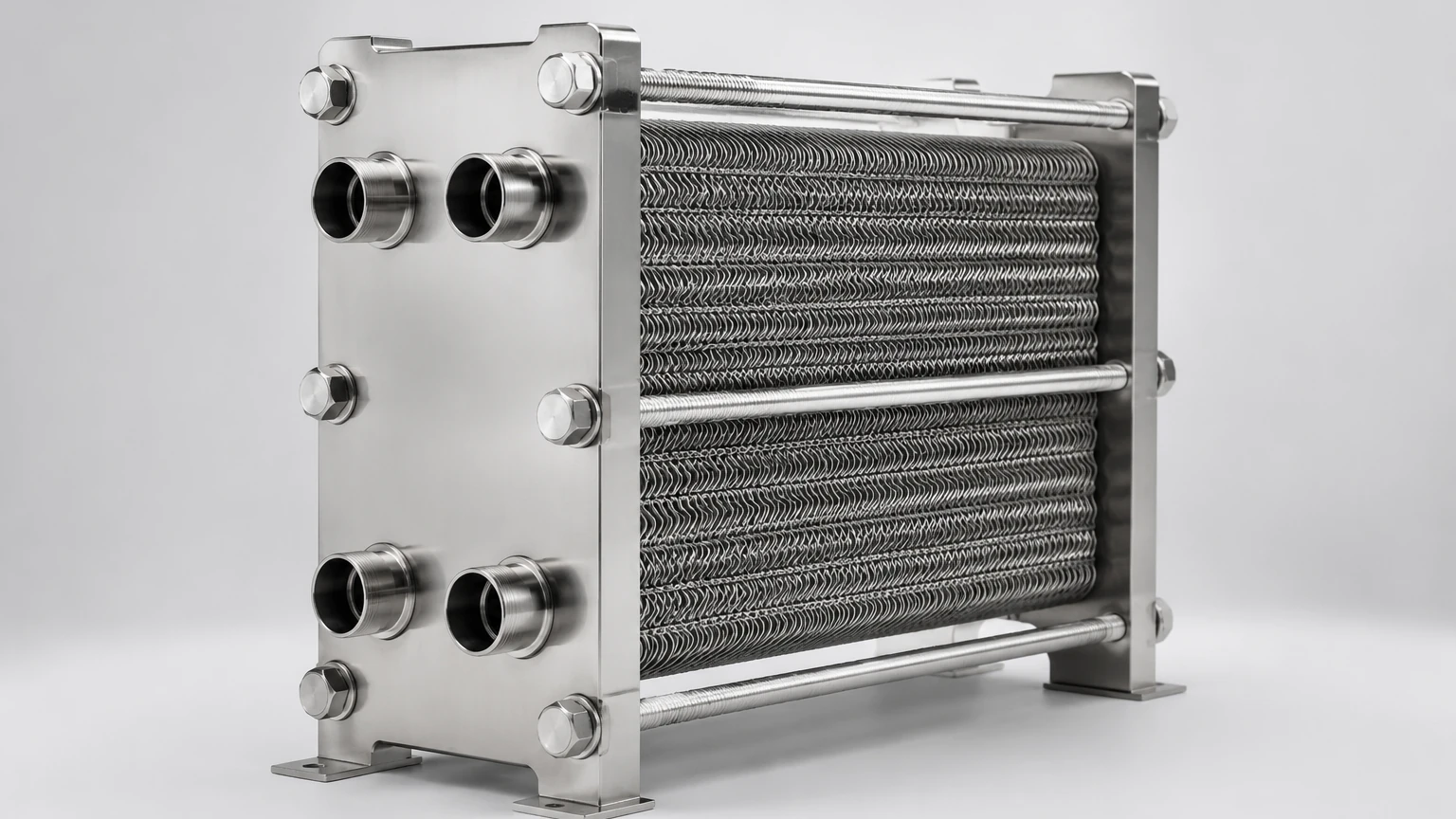
Titanium Plate Heat Exchanger
In demanding industrial environments where corrosive fluids and extreme temperatures are the norm, the titanium plate heat exchanger stands as a critical component for efficient thermal management. While stainless steel is a standard for many applications, titanium becomes indispensable in sectors such as marine engineering, chemical processing, and power generation due to its exceptional resistance to chloride-induced corrosion and high strength-to-weight ratio. For engineers and procurement specialists, understanding the technical nuances of these systems—and the filtration infrastructure required to protect them—is essential for ensuring long-term operational reliability and cost-effectiveness.
The Role of Titanium in High-Performance Heat Transfer
Titanium is categorized primarily into commercially pure grades (Grades 1 through 4) and various alloys. In the context of plate heat exchangers, Grade 1 and Grade 2 titanium are most frequently utilized due to their superior ductility and excellent corrosion resistance. The material naturally forms a stable, protective oxide film when exposed to oxygen, which allows it to withstand aggressive media that would rapidly degrade traditional alloys.
One of the primary drivers for selecting a titanium plate heat exchanger is its performance in seawater applications. Unlike 316L stainless steel, which can suffer from pitting and crevice corrosion in high-salinity environments, titanium remains virtually immune to these failure modes. This makes it the preferred choice for offshore oil and gas platforms, coastal power plants, and desalination facilities. Beyond corrosion resistance, titanium’s thermal conductivity, while lower than copper, is compensated for by the ability to use thinner plates. Thinner plates reduce the thermal path and overall weight of the unit, allowing for a more compact footprint without sacrificing heat transfer coefficients.
Engineering Considerations for Titanium Plate Heat Exchangers
The design of a titanium plate heat exchanger involves a complex balance of fluid dynamics, thermal requirements, and mechanical constraints. Because titanium is a premium material, optimizing the plate geometry is vital to minimize material costs while maximizing turbulence. High turbulence within the plate channels promotes efficient heat transfer and helps mitigate the risk of scaling and fouling.
Engineers must evaluate several key parameters during the selection process:
1. Pressure Drop Constraints: Higher turbulence increases heat transfer but also leads to a higher pressure drop. The system must be designed to stay within the pumping capacity of the facility.
2. Gasket Compatibility: Since titanium plates are often used with aggressive chemicals, the gaskets (typically EPDM, Nitrile, or Viton) must be carefully selected to match the chemical profile and temperature of the working fluids.
3. Flow Distribution: Proper distribution of the fluid across the plate surface prevents "dead zones" where sediment can accumulate and localized overheating can occur.
For those looking to integrate these systems into a broader industrial process, technical resources and component specifications can be found on the Main Page of the manufacturer’s site, which provides a foundation for understanding how various filtration and fluid management components interact.
Protecting Heat Exchanger Efficiency with Precision Filtration
A titanium plate heat exchanger is only as effective as the fluid passing through it. The narrow channels between plates—often ranging from 2mm to 5mm—are highly susceptible to clogging from suspended solids, biological growth, or process debris. When particulates enter the exchanger, they settle in low-velocity areas, creating insulating layers that significantly reduce thermal efficiency and increase the pressure drop.
This is where precision filtration becomes a non-negotiable requirement. Utilizing high-quality stainless steel wire mesh filters or custom filter cartridges upstream of the heat exchanger ensures that the titanium plates remain clean. Industrial filtration solutions serve as the first line of defense, capturing contaminants before they can reach the delicate plate surfaces. For systems handling seawater or industrial wastewater, self-cleaning filters or multi-stage filtration systems are often employed to maintain continuous operation without frequent manual intervention.
By implementing robust filtration, operators can extend the intervals between "Clean-in-Place" (CIP) cycles. This not only reduces maintenance labor costs but also minimizes the wear and tear on the titanium plates and gaskets that occurs during disassembly and manual cleaning.
Selection Criteria for Industrial Filtration in Heat Exchange Systems
When selecting filtration components to support a titanium plate heat exchanger, engineers must consider the specific needs of the application. The goal is to remove particles that are large enough to lodge in the plate corrugations while maintaining a manageable maintenance schedule for the filters themselves.
* Micron Rating: Typically, filtration for plate heat exchangers should be rated at least 20% to 50% finer than the narrowest gap in the exchanger. For example, if the plate gap is 3mm, a filter with a 500-micron to 1000-micron rating is often a safe starting point, though finer filtration may be required for high-purity processes.
* Material Compatibility: While the heat exchanger plates are titanium, the filter housing and mesh are often constructed from high-grade stainless steel (such as 304 or 316L). In highly corrosive environments, specialized coatings or higher alloys may be necessary for the filter components to match the longevity of the titanium exchanger.
* Flow Rate and Velocity: The filtration system must handle the full flow rate of the heat exchanger without causing an excessive initial pressure drop. Oversizing the filter area can lead to longer service life and reduced energy consumption for the pumps.
Common Challenges and Maintenance in Titanium Heat Exchange
Despite the durability of titanium, these systems are not "install and forget." One of the most common challenges is biological fouling in marine applications. Even though the titanium itself does not corrode, marine organisms can still attach to the plate surfaces, creating a biofilm that impedes heat transfer. Regular chlorination or the use of specialized filtration systems designed to remove organic matter can mitigate this issue.
Another challenge is the risk of mechanical damage during maintenance. Titanium is sensitive to scratching; deep gouges can compromise the integrity of the plate or create sites for future fouling. When performing maintenance, it is essential to use non-metallic tools and specialized cleaning agents that do not contain hydrofluoric acid, which is one of the few chemicals that can aggressively attack titanium.
Monitoring the "approach temperature"—the difference between the exit temperature of the cold fluid and the inlet temperature of the hot fluid—is an effective way to track the health of the heat exchanger. An increasing approach temperature usually indicates that fouling is occurring and that the upstream filtration system may need adjustment or the plates require cleaning.
Customization and OEM Solutions for Integrated Systems
In many industrial setups, a standard off-the-shelf solution is insufficient. Customization plays a vital role in ensuring that the filtration and heat exchange components work in harmony. Manufacturers like Kaifil specialize in providing the precision metal filter components necessary to protect high-value assets like titanium plate heat exchangers. Through OEM capabilities, engineers can specify exact dimensions, material grades, and filtration accuracies to meet the unique demands of their specific process.
Whether it is a custom wire mesh sleeve for a raw water intake or a high-pressure stainless steel filter cartridge for a chemical loop, these components are engineered to withstand the same harsh conditions as the heat exchangers they protect. The integration of high-performance filtration directly into the system design phase allows for a more compact and efficient installation, reducing the total cost of ownership over the equipment's lifecycle.
Conclusion: Ensuring Long-Term System Integrity
The decision to invest in a titanium plate heat exchanger is a decision to prioritize durability and efficiency in the face of corrosive environments. However, the success of that investment depends heavily on the supporting infrastructure. By pairing titanium’s superior material properties with precision filtration solutions, industrial operators can achieve optimized thermal performance and minimize downtime.
For technical professionals seeking to source reliable filtration components or looking for guidance on material selection for demanding industrial applications, reviewing the available engineering resources is a logical next step. You can explore a wide range of custom filtration solutions and technical specifications by visiting the Main Page to review product options and application support. Ensuring that every component in the fluid path—from the filter mesh to the titanium plate—is matched to the application’s rigors is the hallmark of a well-engineered industrial system.