


Fuel Coalescer
In industrial fuel management, the presence of water and particulate contaminants is a primary cause of equipment failure, reduced combustion efficiency, and accelerated wear on high-precision components. A fuel coalescer is a specialized filtration component designed to remove both solid particles and emulsified or free water from hydrocarbon fuels, such as diesel, jet fuel, and marine gas oil. Unlike standard particulate filters that only capture solids, a coalescer utilizes the physical properties of fluid dynamics and surface tension to merge small water droplets into larger ones, allowing them to be separated from the fuel stream by gravity.
For engineers and procurement teams, selecting the right fuel coalescer involves understanding the specific demands of the application, the chemical compatibility of the materials, and the required filtration efficiency to meet international cleanliness standards. As a manufacturer of precision stainless steel filtration solutions, Kaifil emphasizes the importance of technical specification in ensuring the longevity and reliability of these systems.
Understanding the Role of a Fuel Coalescer in Industrial Systems
Fuel quality is non-negotiable in sectors such as aviation, marine transport, and power generation. Modern high-pressure common rail (HPCR) diesel engines, for instance, operate at extremely tight tolerances. Even microscopic amounts of water can lead to cavitation in fuel injectors, corrosion of internal surfaces, and the promotion of microbial growth (commonly referred to as "fuel bugs").
A fuel coalescer serves as the critical line of defense. Its primary function is twofold: it removes solid contaminants that could clog injectors or abrade surfaces, and it de-waters the fuel to prevent chemical degradation and mechanical damage. In many industrial setups, the coalescing system is the final stage of filtration before the fuel reaches the engine or the storage tank, ensuring that the fluid meets ISO 4406 cleanliness codes.
The Mechanics of Coalescence: How Water is Separated from Fuel
The process inside a fuel coalescer is typically a multi-stage operation. Understanding these stages is essential for engineers evaluating different filter designs.
Stage 1: Particulate Filtration and Initial Coalescence
As fuel enters the coalescer element, it first passes through a layer of media designed to trap solid particulates. This is crucial because solids can interfere with the coalescing process by coating the fibers of the media. Once the fuel is clear of solids, it passes through the coalescing media—often a dense arrangement of borosilicate glass fibers or specialized stainless steel wire mesh. As the fuel flows through this media, tiny, emulsified water droplets are forced into contact with the fibers. Due to the hydrophilic nature of the media, these micro-droplets attach to the fibers and merge with other droplets, growing in size as they move toward the outer surface of the element.
Stage 2: Gravity Separation
By the time the water reaches the outer edge of the coalescer element, the droplets have become large enough that their density is significantly higher than that of the fuel. Under the influence of gravity, these large droplets fall out of the fuel stream and settle into a collection sump at the bottom of the filter housing.
Stage 3: The Separator Element
In many high-performance systems, a second stage—the separator—is used. The separator element is typically made of a hydrophobic material, such as Teflon-coated stainless steel mesh. This media allows the fuel to pass through easily but acts as a physical barrier to any remaining water droplets that did not settle by gravity. This ensures that only dry, clean fuel exits the system.
Design and Engineering Considerations for High-Performance Coalescers
When specifying a fuel coalescer for an industrial application, several engineering metrics must be analyzed to ensure the component performs as expected under operational stresses.
Flow Rate and Velocity
The efficiency of a coalescer is highly dependent on the velocity of the fuel passing through the media. If the flow rate is too high, the internal velocity can "shear" the water droplets, breaking them back down into smaller emulsions before they can coalesce. Conversely, if the flow is too low, the system may not be cost-effective for the volume of fuel required. Engineers must balance the surface area of the filter media with the required throughput to maintain an optimal velocity.
Differential Pressure (ΔP)
As a filter captures contaminants, the resistance to flow increases, leading to a rise in differential pressure. A well-designed fuel coalescer should offer low initial pressure drop to minimize the load on fuel pumps. Monitoring ΔP is the standard method for determining when a filter element has reached the end of its service life. In critical applications, coalescers are often equipped with differential pressure gauges or sensors that trigger alarms when a specific threshold is reached.
Filtration Efficiency and Beta Ratios
Filtration performance is often quantified using the Beta Ratio (β), which compares the number of particles of a given size upstream of the filter to the number downstream. For a fuel coalescer, both the particulate removal efficiency (e.g., β10 = 1000) and the water removal efficiency (measured in parts per million, or PPM) are vital. High-quality coalescers can often reduce water content from several thousand PPM down to less than 10 PPM.
Material Selection: The Advantage of Stainless Steel and Precision Mesh
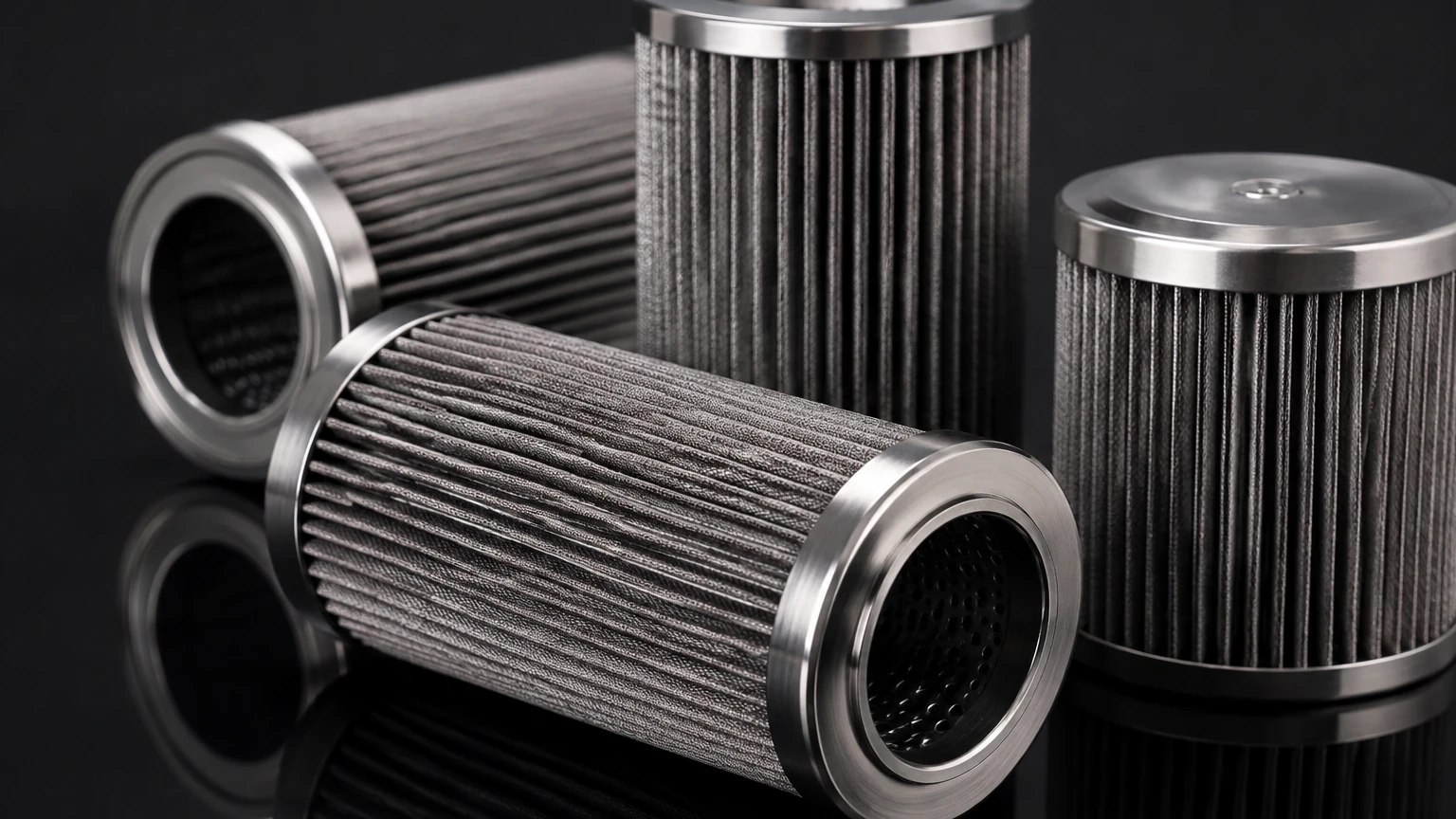
While many commercial fuel coalescers use synthetic or cellulose-based media, industrial-grade applications often require the durability of metal. Kaifil specializes in stainless steel filtration solutions, which offer distinct advantages in demanding environments.
1. Chemical Compatibility: Stainless steel (specifically 304 and 316L grades) is highly resistant to the chemical additives found in modern fuels and the corrosive nature of salt water in marine applications.
2. Temperature and Pressure Resistance: In heavy industrial or aerospace applications, fuel systems may operate at elevated temperatures or under high pressure. Metal mesh and sintered metal elements maintain their structural integrity where synthetic fibers might collapse or degrade.
3. Cleanability and Reusability: Unlike disposable cellulose filters, certain stainless steel wire mesh elements can be cleaned and returned to service, reducing the long-term total cost of ownership and minimizing environmental waste.
4. Structural Rigidity: Precision-engineered stainless steel supports prevent the media from bypassing or channeling, even during pressure surges within the fuel line.
For more information on customized metal filtration components, you can visit the Main Page to explore technical specifications and material options.
Common Challenges and Risks in Fuel Filtration
Engineers must be aware of several factors that can compromise the performance of a fuel coalescer.
* Surfactants: Surface-active agents (surfactants) are often found in fuel additives or can be picked up during transport. Surfactants lower the interfacial tension between water and fuel, making it much harder for droplets to coalesce. In the presence of high surfactant levels, standard coalescers may fail to remove water effectively, requiring specialized "anti-surfactant" media or additional pre-treatment.
* Microbial Contamination: If water is allowed to sit in a fuel tank, bacteria and fungi can grow at the fuel-water interface. These microbes produce a slimy byproduct that can rapidly blind a coalescer element, leading to sudden pressure spikes and the need for frequent replacements.
* Incompatible Materials: Using a coalescer with seals or media that are not compatible with the specific fuel type (e.g., high-sulfur diesel vs. bio-diesel blends) can lead to material swelling, degradation, and eventual system bypass.
Maintenance, Monitoring, and Life Cycle Management
A fuel coalescer is not a "set and forget" component. Effective life cycle management is required to ensure continuous protection of the downstream equipment.
Regular Draining
The water collection sump must be drained regularly. Many modern systems include automated water sensors that trigger a drain valve when the water level reaches a certain point. If the sump is allowed to overfill, the captured water can be re-entrained into the fuel stream, defeating the purpose of the coalescer.
Element Replacement Cycles
Replacement cycles are typically determined by differential pressure or a set time interval (e.g., every 500 operating hours). However, in environments with highly contaminated fuel, elements may need to be replaced more frequently. It is advisable to keep a log of ΔP readings to identify trends; a sudden drop in pressure might indicate a ruptured element, while a rapid increase suggests a batch of highly contaminated fuel.
OEM and Customization Options
In many industrial OEM projects, standard off-the-shelf coalescers do not meet the specific spatial or performance requirements of the machine. Custom-designed filter cartridges allow engineers to specify the exact dimensions, micron ratings, and connection types needed for their system. Customization also allows for the integration of specialized reinforcement layers to handle high-vibration environments, such as those found in mining or heavy construction equipment.
Conclusion: Selecting the Right Solution
Choosing an effective fuel coalescer is a balance of science and engineering. By focusing on the physics of coalescence, the durability of materials like stainless steel, and the specific contaminants present in the operating environment, technical professionals can significantly improve the reliability of their fuel systems. Whether the application involves protecting a backup generator at a data center or ensuring the purity of fuel on a transoceanic vessel, the quality of the filtration component is the determining factor in system uptime.
For those seeking reliable, high-performance industrial filtration components, working with a manufacturer that understands the nuances of metal mesh and custom engineering is essential. To review product options and application support, visit the Kaifil Main Page for detailed technical resources on stainless steel filtration solutions.
