


Gas Cooler Heat Exchanger
In industrial thermal management, the gas cooler heat exchanger serves as a critical component for regulating the temperature of compressed gases, process vapors, and exhaust streams. Unlike standard liquid-to-liquid exchangers, gas coolers must account for the lower thermal conductivity and density of gaseous media, requiring specific engineering considerations to ensure efficient heat transfer. For technical professionals and engineers, selecting and maintaining a gas cooler heat exchanger involves a deep understanding of fluid dynamics, material compatibility, and the integration of protective filtration systems to prevent performance degradation.
Efficient gas cooling is essential in applications ranging from multi-stage air compressors and refrigeration cycles to chemical synthesis and power generation. Without precise temperature control, downstream equipment may suffer from thermal stress, reduced efficiency, or catastrophic failure. This guide examines the technical architecture of gas coolers, the engineering variables that dictate their performance, and the role of high-quality components in extending their operational lifespan.
Technical Principles of Gas Cooling
A gas cooler heat exchanger operates on the principle of heat conduction and convection, transferring thermal energy from a high-temperature gas stream to a cooling medium, typically water, glycol, or ambient air. Because gases have significantly lower heat transfer coefficients than liquids, the design of these exchangers often focuses on maximizing the surface area-to-volume ratio.
In most industrial settings, the process involves sensible heat removal—lowering the temperature of the gas without a phase change. However, in some systems, such as compressed air cooling, the temperature reduction may cross the dew point of the gas, leading to moisture condensation. This necessitates the inclusion of moisture separators and specific drainage designs within the exchanger assembly. Engineers must calculate the Log Mean Temperature Difference (LMTD) to determine the effective driving force for heat transfer, ensuring that the exchanger is sized correctly for the specific mass flow rate and required temperature drop.
Common Configurations in Industrial Applications
The selection of a gas cooler heat exchanger configuration depends largely on the operating pressure, the allowable pressure drop, and the nature of the gas being processed. Several primary designs dominate the industrial landscape:
Shell and Tube Gas Coolers
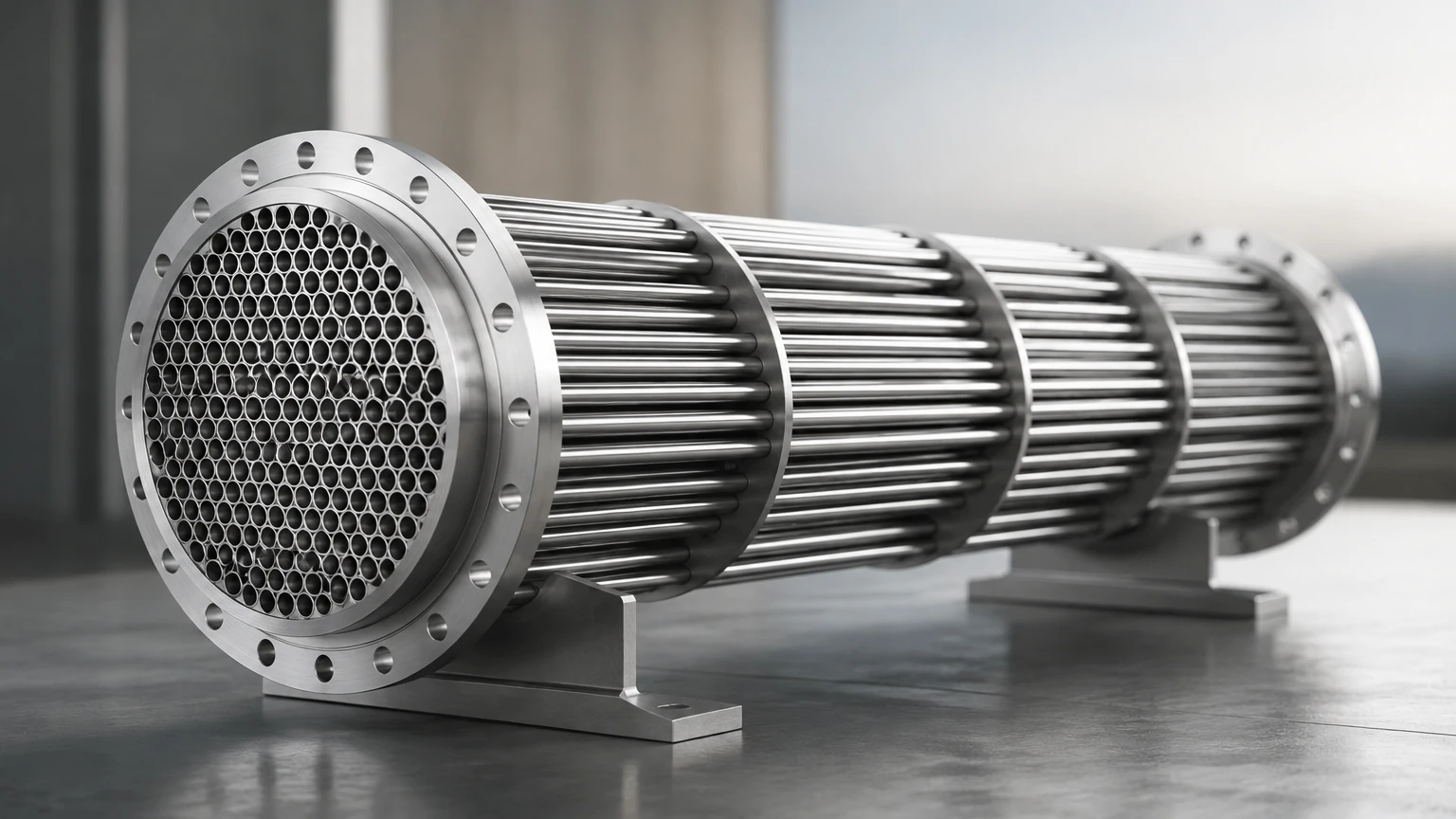
Shell and tube designs are the workhorses of high-pressure gas cooling. In this configuration, the gas typically flows through the tubes while the cooling liquid circulates through the shell. This setup is preferred for its robustness and ability to handle significant pressure differentials. To compensate for the gas's lower heat transfer rate, tubes are often fitted with internal or external fins to increase the available surface area.
Plate and Frame Heat Exchangers
For applications where space is limited and high thermal efficiency is required, plate heat exchangers are often utilized. These consist of a series of corrugated metal plates that create turbulent flow, significantly enhancing the heat transfer coefficient. While highly efficient, plate exchangers are more sensitive to fouling and particulates, making high-precision filtration a mandatory requirement for their operation.
Finned-Tube Air-Cooled Exchangers
In environments where cooling water is scarce or expensive, air-cooled gas coolers are employed. These use large fans to force ambient air over a bundle of finned tubes. While they eliminate the need for a liquid coolant circuit, they are subject to ambient temperature fluctuations and require larger footprints to achieve the same cooling capacity as liquid-cooled units.
The Role of Stainless Steel in Gas Cooler Construction
Material selection is a primary engineering decision that impacts both the durability and the thermal performance of a gas cooler heat exchanger. Stainless steel, particularly grades 304 and 316L, is often the material of choice for demanding industrial environments.
Stainless steel offers superior corrosion resistance, which is vital when cooling gases that contain moisture, acidic components, or industrial contaminants. In chemical processing and pharmaceutical applications, the use of 316L stainless steel ensures that the process gas remains uncontaminated by rust or metallic degradation. Furthermore, stainless steel's mechanical strength allows for thinner tube walls or plate thicknesses, which can partially offset its lower thermal conductivity compared to copper or aluminum, while providing much higher pressure ratings and longer service intervals.
To ensure the longevity of these systems, many engineers consult the Main Page of specialized manufacturers to source custom filtration components that protect the heat exchanger's internal surfaces from erosion and corrosion caused by particulate bypass.
Addressing Fouling and the Importance of Filtration
Fouling is the accumulation of unwanted material on the heat transfer surfaces of a gas cooler heat exchanger. In gas systems, fouling can occur due to oil carryover from compressors, soot, dust, or chemical byproducts. This layer of material acts as an insulator, drastically reducing the heat transfer coefficient and forcing the system to work harder to maintain the target temperature.
There are several types of fouling relevant to gas coolers:
1. Particulate Fouling: The accumulation of solid particles from the gas stream.
2. Chemical Fouling: Scaling or chemical deposits forming on the cooling water side.
3. Corrosion Fouling: The buildup of oxidation products on the metal surfaces.
To mitigate these risks, upstream filtration is essential. High-performance stainless steel wire mesh filters and filter cartridges are used to capture particulates before they enter the exchanger. By maintaining a clean gas stream, operators can ensure that the gas cooler heat exchanger operates at peak efficiency, reducing energy consumption and extending the time between manual cleanings. Custom filtration solutions, such as those provided by Kaifil, allow for precise control over the micron rating and flow capacity, tailored to the specific needs of the gas cooling circuit.
Engineering Considerations for Selection and Sizing
When specifying a gas cooler heat exchanger, engineers must balance several competing factors to achieve an optimal design. The following parameters are critical for a successful installation:
Pressure Drop ($ΔP$)
Every heat exchanger introduces a resistance to flow. In gas systems, where pressure is a valuable energy commodity, minimizing the pressure drop is crucial. A high pressure drop across the cooler increases the load on the compressor, leading to higher operational costs. Designers must optimize tube diameter, plate spacing, and baffle arrangements to achieve the required cooling with minimal $ΔP$.
Thermal Stress and Expansion
Gas coolers often handle significant temperature gradients. The difference in temperature between the hot gas inlet and the cold coolant inlet can cause thermal expansion of the metal components. If not properly accounted for—through the use of floating tube sheets or expansion bellows—this can lead to mechanical fatigue and leakage at the tube-to-tube-sheet joints.
Gas Velocity and Vibration
High gas velocities are often used to improve heat transfer, but they can also induce tube vibration. If the frequency of the gas flow matches the natural frequency of the tubes, it can lead to catastrophic failure. Engineering software is typically used to perform vibration analysis during the design phase to ensure the baffle spacing prevents these resonances.
Maintenance and Operational Longevity
The total cost of ownership for a gas cooler heat exchanger is heavily influenced by its maintenance requirements. A well-designed system should include provisions for easy inspection and cleaning. For shell and tube exchangers, this may include removable tube bundles. For plate exchangers, the ability to disassemble the plate pack for manual cleaning is a significant advantage.
However, the most effective strategy for longevity is preventative maintenance through filtration. Utilizing durable, cleanable stainless steel filter elements allows for consistent protection without the recurring cost of disposable filters. These elements can be backwashed or ultrasonically cleaned, providing a sustainable solution for industrial gas cooling systems. Regular monitoring of the temperature differential and pressure drop across the exchanger will provide early warning signs of fouling, allowing for scheduled maintenance before a performance drop affects the entire production line.
Customization and OEM Solutions
Standard off-the-shelf gas coolers often fail to meet the specific requirements of unique industrial processes. Customization allows for the optimization of material grades, connection types, and internal geometries. Whether it is a specialized gas cooler heat exchanger for a hydrogen fuel cell application or a heavy-duty intercooler for a mining compressor, working with a manufacturer that understands both filtration and thermal management is vital.
Customized filtration components, such as precision-engineered wire mesh screens and custom-sized cartridges, ensure that the protective measures are perfectly integrated into the heat exchanger housing. This holistic approach to system design reduces the risk of bypass and ensures that even the most sensitive heat transfer surfaces remain pristine under continuous operation.
Pre-Purchase Confirmation Checklist
Before finalizing the procurement of a gas cooler heat exchanger, engineering and purchasing teams should confirm the following data points with their supplier:
* Gas Composition: Are there corrosive elements, moisture, or condensable vapors present?
* Operating Pressures: What are the maximum and minimum operating pressures, and what is the design pressure?
* Temperature Profile: What is the required inlet and outlet temperature for both the gas and the coolant?
* Allowable Pressure Drop: What is the maximum permissible $ΔP$ for the gas side?
* Filtration Requirements: What is the particulate size limit for the heat exchanger, and what upstream filtration is currently in place?
* Material Compatibility: Is the selected stainless steel grade appropriate for the chemical environment?
* Certification Standards: Does the unit need to comply with ASME, PED, or other regional pressure vessel codes?
By addressing these technical details early in the design and selection process, industrial operators can ensure that their gas cooler heat exchanger provides reliable, efficient, and long-term service in even the most demanding applications.
