


Gas Filter Element
In industrial environments, the integrity of gas streams is critical to the longevity of equipment and the quality of the final product. A gas filter element serves as the primary barrier against particulate matter, aerosols, and moisture that can compromise pneumatic systems, chemical reactions, and sensitive instrumentation. Unlike liquid filtration, gas filtration involves unique physical dynamics, including gas compressibility and high velocities, which necessitate specific engineering considerations regarding material selection and structural design.
For engineers and procurement professionals, selecting the appropriate gas filter element requires a deep understanding of the operating environment. Whether the application involves compressed air, natural gas, or high-purity process gases like nitrogen and oxygen, the filter must provide consistent efficiency without causing excessive pressure drops. This guide examines the technical specifications, material advantages, and selection criteria essential for optimizing industrial gas filtration systems.
Technical Principles of Gas Filtration
The performance of a gas filter element is governed by several physical mechanisms that determine how particles are captured within the filter media. Understanding these principles helps engineers predict how a filter will behave under different flow conditions.
1. Inertial Impaction: This occurs with larger particles that have too much momentum to follow the gas streamlines around the filter fibers. Instead, they strike the fibers directly and become trapped. This mechanism is most effective at higher gas velocities.
2. Interception: Smaller particles that follow the gas streamlines may still come into contact with a fiber if they pass within a distance equal to their radius. Interception is a primary mechanism for mid-sized particulates.
3. Diffusion (Brownian Motion): For extremely fine particles (typically sub-micron), the random motion caused by collisions with gas molecules increases the likelihood that the particles will hit a filter fiber. Diffusion is most effective at lower gas velocities.
Because of these mechanisms, a gas filter element often exhibits a "Most Penetrating Particle Size" (MPPS), where filtration efficiency is at its lowest. High-performance elements are designed to maximize capture across all three mechanisms to ensure the highest possible purity levels.
Materials and Construction of Metal Gas Filter Elements
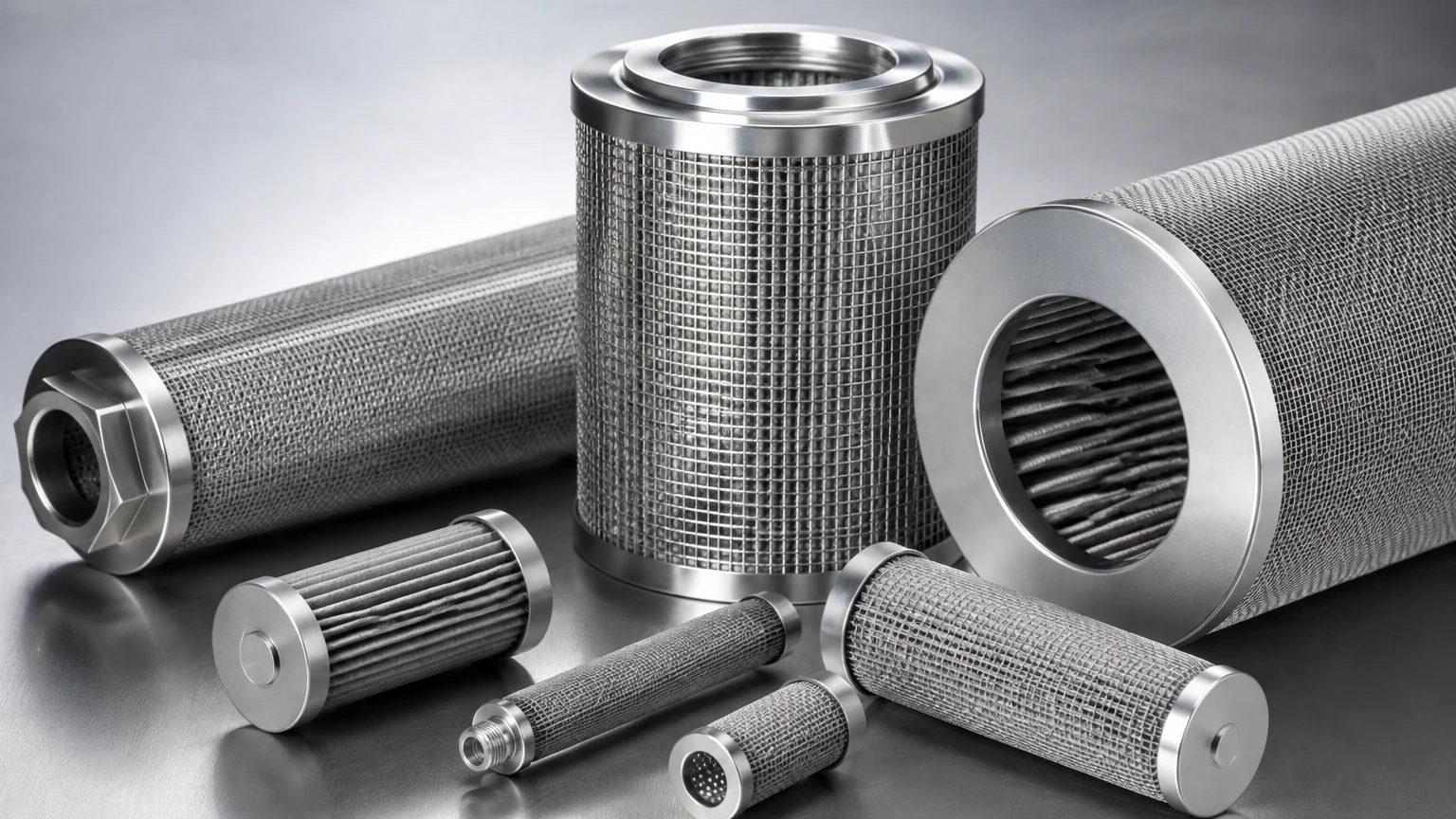
While polymer-based filters are common in light-duty applications, industrial processes often demand the durability of metal. Stainless steel gas filter elements, such as those manufactured by Kaifil, offer significant advantages in demanding environments.
Stainless Steel Wire Mesh
Precision-woven wire mesh provides a controlled pore size and excellent surface filtration capabilities. It is particularly useful for removing solid particulates from high-temperature gas streams. The mechanical strength of stainless steel prevents media migration, ensuring that the filter itself does not become a source of contamination.
Sintered Metal Media
Sintered metal elements are created by fusing metal powders or multiple layers of wire mesh under high heat and pressure. This results in a robust, porous structure that offers exceptional depth filtration. Sintered elements are preferred for high-pressure applications where the filter must withstand significant differential pressure without collapsing.
Material Grades and Compatibility
* 304 Stainless Steel: Suitable for general industrial use and non-corrosive gas streams.
* 316L Stainless Steel: Contains molybdenum, providing superior resistance to corrosion, especially in the presence of chlorides or acidic gases. This is the standard for chemical processing and marine environments.
* Specialty Alloys: For extreme temperatures or highly aggressive chemical environments, alloys like Hastelloy or Inconel may be utilized.
Engineering Considerations: Pressure Drop and Efficiency
One of the most critical factors in gas filter element selection is the balance between filtration efficiency and pressure drop (Delta P). A filter with a very fine micron rating will provide high purity but may cause a significant drop in pressure, which increases energy costs for compressors and reduces the efficiency of downstream equipment.
Flow Rate and Velocity
Gas velocity significantly impacts the lifespan of the element. High velocities can lead to "channeling," where the gas forces its way through the media, reducing contact time and efficiency. Engineers must size the filter housing and the element to ensure that the face velocity remains within the manufacturer’s recommended limits for the specific gas density and pressure.
Micron Ratings: Absolute vs. Nominal
When evaluating a gas filter element, it is vital to distinguish between absolute and nominal ratings. An absolute rating indicates that 99.9% (or higher) of particles at that size will be captured. A nominal rating is an average and may allow a percentage of particles at the rated size to pass through. For critical applications, such as protecting gas turbines or sensitive analytical sensors, absolute-rated elements are usually required.
Applications Across Industrial Sectors
Gas filter elements are utilized across a broad spectrum of industries, each with unique requirements for purity and durability.
Chemical and Petrochemical Processing
In these sectors, filters are used to protect compressors and valves from pipe scale and catalyst fines. They also ensure that process gases used in chemical synthesis are free of contaminants that could poison expensive catalysts. The ability of stainless steel elements to withstand high temperatures and aggressive chemicals is paramount here.
Food and Beverage
Compressed air and CO2 used in the food industry must be free of oil, moisture, and bacteria. Sintered stainless steel elements are often used as sterile air filters because they can be steam-sterilized (SIP – Sterilization in Place) repeatedly without losing structural integrity.
Pharmaceutical Manufacturing
Pharmaceutical processes require high-purity nitrogen for blanketing and sterile air for fermentation. Gas filter elements in these applications must meet stringent regulatory standards for cleanliness and often require high-efficiency particulate air (HEPA) or ultra-low penetration air (ULPA) performance levels.
Power Generation
Natural gas used in turbines must be filtered to remove liquids (aerosols) and solids. Even minor contamination can cause catastrophic erosion of turbine blades. High-capacity gas filter elements are designed to handle the high flow rates and pressures typical of power plants.
Customization and OEM Solutions
Standard off-the-shelf filters do not always meet the specific needs of complex industrial systems. Customization is often necessary to ensure a perfect fit within existing housings or to meet unique performance specifications. As a specialized manufacturer, Kaifil provides tailored filtration solutions that address specific engineering challenges.
Dimensional Customization
Custom lengths, diameters, and end-cap configurations (such as 222, 226, or threaded connections) allow for the seamless integration of new elements into legacy hardware. This is particularly important for maintenance teams looking to upgrade filtration performance without replacing entire housing units.
Structural Reinforcement
For applications involving rapid pressure surges or high-viscosity gas streams, internal support cores or external cages can be added to the gas filter element. This reinforcement prevents the media from deforming or rupturing under stress.
Sealing Options
The choice of gasket or O-ring material is as important as the filter media itself. Depending on the chemical composition and temperature of the gas, seals may be made from Viton, EPDM, PTFE, or Silicone to ensure a leak-proof fit.
Maintenance and Total Cost of Ownership (TCO)
While the initial purchase price of a gas filter element is a consideration, the total cost of ownership (TCO) is a more accurate measure of value. This includes the cost of energy lost to pressure drop, the cost of downtime for replacements, and the cost of cleaning.
Monitoring Differential Pressure
Most industrial filtration systems are equipped with differential pressure gauges. A common industry standard is to replace or clean the element when the pressure drop reaches a specific threshold (e.g., 10-15 psi over the clean pressure drop). Operating beyond this point significantly increases energy consumption and risks element failure.
Cleanability of Stainless Steel Elements
One of the primary benefits of stainless steel gas filter elements is that they are often cleanable. Methods such as ultrasonic cleaning, backwashing, or chemical cleaning can remove accumulated particulates, restoring the element to near-original performance. This longevity makes metal filters more cost-effective over time compared to disposable polymer or paper filters.
Replacement Cycles
Even with cleaning, all filter elements eventually reach the end of their service life. Factors such as material fatigue from thermal cycling or irreversible clogging of the pore structure will necessitate a full replacement. Establishing a predictable maintenance schedule based on historical pressure drop data is essential for avoiding unplanned outages.
Conclusion for Technical Decision Makers
Selecting the right gas filter element is a technical decision that impacts the reliability and efficiency of the entire industrial process. By focusing on material integrity, precise micron ratings, and the physical requirements of the gas stream, engineers can ensure optimal performance. For those seeking expert guidance or custom-engineered filtration components, reviewing specialized resources is the next logical step. To explore specific product capabilities and technical support for your filtration needs, visit the Main Page.
In summary, whether the goal is protecting downstream equipment, ensuring product purity, or reducing operational costs, a well-specified gas filter element is a critical investment. By partnering with manufacturers who understand the nuances of stainless steel and precision metal filtration, industrial facilities can achieve durable and efficient filtration outcomes in even the most demanding environments.
