


Cartridge Filter Dust Collector
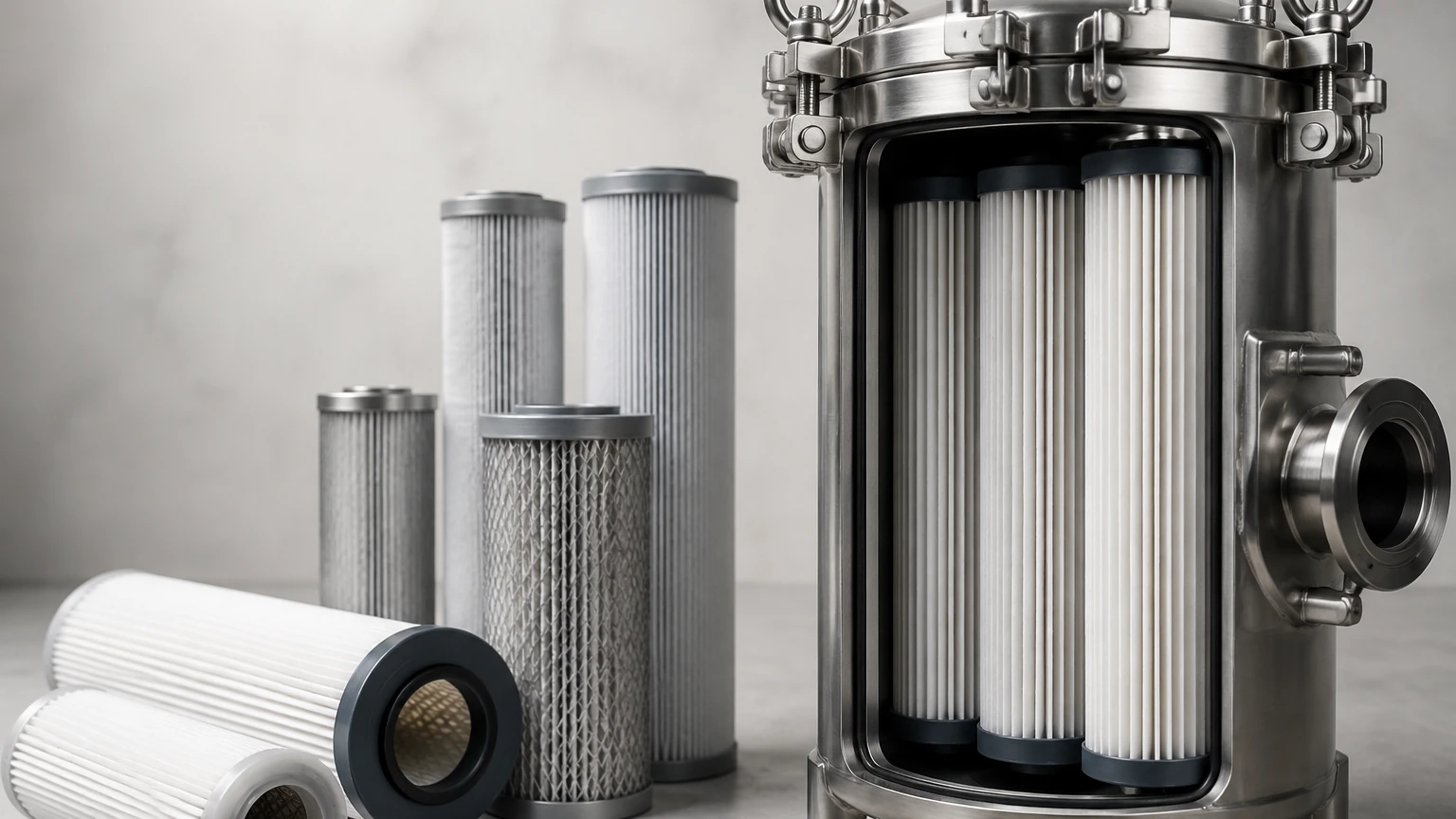
In modern industrial environments, air quality management and particulate recovery are critical components of operational safety, environmental compliance, and process efficiency. A cartridge filter dust collector is a specialized filtration system designed to capture fine dust, fumes, and smoke from industrial air streams. Unlike traditional baghouse systems that utilize long fabric bags, cartridge collectors use pleated filter media to provide a significantly higher surface area within a more compact footprint.
For engineers and procurement teams, selecting the right cartridge filter dust collector involves more than just matching airflow requirements. It requires a deep understanding of the particulate characteristics, the chemical nature of the gas stream, and the structural integrity of the filter media. In demanding applications such as chemical processing, pharmaceutical manufacturing, and high-temperature metalworking, the choice of filtration component—often involving custom stainless steel solutions—is the determining factor in system longevity and filtration accuracy.
Engineering Principles of Cartridge Filtration
The fundamental advantage of a cartridge filter dust collector lies in its pleated design. By folding the filter media into a series of pleats, manufacturers can pack a large amount of filtration surface area into a relatively small cylindrical or conical cartridge. This high surface-to-volume ratio allows for lower "can velocities" (the speed of the air moving through the collector housing) and lower air-to-cloth ratios, which generally results in higher collection efficiency for sub-micron particles.
Most industrial cartridge collectors operate using a pulse-jet cleaning mechanism. As dust accumulates on the exterior of the cartridge, it forms a "dust cake" that initially improves filtration efficiency but eventually increases the pressure drop across the media. To maintain continuous operation, a blast of compressed air is periodically injected into the center of the cartridge. This rapid pulse creates a shockwave that flexes the media and dislodges the dust cake, which then falls into a collection hopper below.
From an engineering perspective, the effectiveness of this cleaning cycle depends on the rigidity of the filter pleats. If the pleats collapse or "blind" due to moisture or excessive dust loading, the pulse-jet system cannot effectively clear the media, leading to a permanent increase in differential pressure and reduced system performance.
Material Selection and Media Compatibility
While many standard cartridge filters utilize cellulose or spun-bond polyester, these materials often fail in harsh industrial environments. For applications involving high temperatures, corrosive chemicals, or abrasive particulates, stainless steel filtration components are essential.
Kaifil specializes in custom stainless steel filtration solutions that address these specific challenges. When designing a cartridge for a dust collector, material selection typically centers on 304 or 316L stainless steel wire mesh.
1. Chemical Resistance: In chemical processing and pharmaceutical applications, the air stream may contain solvent vapors or acidic/alkaline particulates. Stainless steel 316L offers superior resistance to pitting and crevice corrosion compared to standard polymers.
2. Temperature Stability: Standard polyester cartridges are typically limited to operating temperatures below 250°F (121°C). In contrast, stainless steel wire mesh cartridges can withstand significantly higher temperatures, making them suitable for kiln exhausts, smelting operations, and high-heat catalyst recovery.
3. Mechanical Strength: Metal cartridges maintain their structural integrity under high vacuum or pressure conditions. This prevents pleat collapse and ensures that the filtration gap remains consistent throughout the service life of the component.
For engineers evaluating options, it is important to consider the weave type of the wire mesh. Options such as plain Dutch weave or twill Dutch weave provide different levels of mechanical strength and filtration precision, allowing for tailored solutions based on the specific particle size distribution of the dust being collected.
Critical Evaluation Criteria: Air-to-Cloth Ratio and Efficiency
When specifying a cartridge filter dust collector, the Air-to-Cloth (ATC) ratio—also known as the filtration velocity—is the most critical metric. It is defined as the volume of air (CFM) passing through one square foot of filter media.
* Low ATC Ratios: Generally lead to longer filter life, lower pressure drops, and better pulse-cleaning performance. For fine metallurgical fumes, an ATC ratio of 1.5:1 or 2:1 might be required.
* High ATC Ratios: Can lead to "dust embedding," where particles are driven deep into the media fibers (or mesh openings), making them impossible to remove via pulse cleaning. This results in rapid pressure drop increases and frequent filter replacements.
Furthermore, filtration efficiency is often categorized by MERV (Minimum Efficiency Reporting Value) ratings or micron ratings. In the context of industrial metal filtration, precision is measured by the absolute vs. nominal micron rating. For critical processes, engineers should confirm that the cartridge can maintain its rated efficiency even after multiple cleaning cycles. Custom metal cartridges are often preferred here because their pore structure does not stretch or degrade over time as fabric or paper might.
Customization for Specific Industrial Applications
A standard off-the-shelf cartridge filter dust collector may not meet the stringent requirements of specialized industries. Customization is often necessary to optimize performance and ensure compliance with safety standards such as ATEX (for explosive dusts) or FDA (for food and pharmaceutical contact).
Pharmaceutical and Food Processing
In these sectors, cleanability and the prevention of cross-contamination are paramount. Stainless steel filter cartridges are often designed with "hygienic" features, such as smooth welds and specialized end-cap gaskets, to ensure that no material is trapped in dead zones. These filters can often be cleaned in place (CIP) or removed for ultrasonic cleaning, providing a sustainable alternative to disposable cartridges.
Chemical and Petrochemical
Corrosive environments require filtration components that can withstand aggressive cleaning agents and harsh process gases. Custom metal filter components can be engineered with specific alloys (such as Hastelloy or Monel) if standard stainless steel is insufficient for the chemical load.
To explore the full range of custom engineering capabilities and material options, technical teams can visit the Main Page for detailed specifications and application support.
Maintenance, Replacement Cycles, and Total Cost of Ownership
While the initial capital expenditure for a cartridge filter dust collector is an important factor, the Total Cost of Ownership (TCO) is driven by energy consumption, maintenance labor, and replacement frequency.
1. Differential Pressure Monitoring: A steady rise in baseline differential pressure (the pressure drop measured immediately after a cleaning pulse) indicates that the filters are reaching the end of their functional life. Monitoring this trend allows for predictive maintenance rather than reactive downtime.
2. Compressed Air Usage: Pulse-jet cleaning consumes significant amounts of compressed air. Filters that clean more efficiently (due to better media release properties) reduce the frequency of pulses, thereby lowering energy costs.
3. Durability of Metal Media: One of the primary advantages of stainless steel wire mesh cartridges in a dust collector is their durability. Unlike synthetic media that may tear or develop pinhole leaks, metal mesh is robust. In many cases, these cartridges can be refurbished or professionally cleaned, extending their service life to several years, whereas disposable filters might need replacement every few months.
When calculating TCO, engineers should factor in the cost of production downtime associated with filter changes. In high-volume manufacturing, the ability to use a long-lasting, washable stainless steel cartridge can result in significant annual savings despite a higher upfront cost per unit.
Technical Confirmation Before Purchase
Before finalizing the design of a cartridge filter dust collector or ordering replacement cartridges, procurement and engineering teams should confirm the following technical details with their manufacturer:
* Particle Characterization: Is the dust abrasive, hygroscopic (moisture-absorbing), or electrostatic? This determines if specialized coatings or specific mesh weaves are required.
* Housing Compatibility: Ensure that the cartridge end-cap configuration (e.g., double open end, code 7, or flange mount) matches the existing collector's tube sheet to prevent bypass leakage.
* Gasket Material: The seal between the cartridge and the collector is a common failure point. Ensure the gasket material (EPDM, Silicone, Viton) is compatible with the process temperature and chemical exposure.
* Flow Dynamics: Verify that the internal support core of the cartridge is designed to handle the outward pressure of the pulse-jet without deforming.
By focusing on these technical parameters, industrial facilities can ensure they implement a filtration solution that provides consistent performance, meets environmental regulations, and optimizes the lifecycle of the equipment. For those seeking specialized guidance on integrating metal filtration components into their air quality systems, reviewing professional product options on the Main Page provides a foundation for informed decision-making.
