


Gas Purfier
In modern industrial processing, the purity of gases is not merely a preference but a critical requirement for operational integrity, product quality, and equipment longevity. Whether in chemical synthesis, pharmaceutical manufacturing, or high-precision semiconductor fabrication, the presence of contaminants—ranging from microscopic particulates to moisture and oil aerosols—can lead to catastrophic system failures or compromised end products. A high-performance gas purfier serves as the primary line of defense, utilizing advanced filtration media to isolate and remove these unwanted elements from the process stream.
Selecting the appropriate gas purification technology requires a deep understanding of the physical and chemical properties of the gas being treated, as well as the specific environmental conditions of the application. For engineers and procurement specialists, evaluating a gas purfier involves more than just checking a micron rating; it requires a comprehensive assessment of material compatibility, pressure dynamics, and the total cost of ownership over the filter's service life.
Understanding the Fundamentals of Industrial Gas Purification
Gas purification is the process of removing impurities from a gas stream to achieve a specific level of cleanliness. These impurities are generally categorized into three types: solid particulates, liquid aerosols, and gaseous contaminants. In the context of mechanical filtration, which is the specialty of manufacturers like Kaifil, the focus is primarily on the removal of solids and coalescing liquids.
Industrial gases such as nitrogen, oxygen, argon, and compressed air often carry debris from piping, compressor wear, or atmospheric intake. Without a robust gas purfier, these particles can erode valve seats, clog precision orifices, and contaminate sensitive chemical reactions. The mechanism of filtration typically involves a combination of inertial impaction, interception, and diffusion, depending on the particle size and the velocity of the gas stream.
For technical professionals, the goal is to balance filtration efficiency with system throughput. A filter that is too restrictive will cause a significant pressure drop, increasing energy costs and potentially starving downstream equipment. Conversely, a filter that is too coarse will fail to protect the system. Achieving the "sweet spot" requires precise engineering of the filter media, often utilizing stainless steel wire mesh or sintered metal components to ensure structural stability under high-flow conditions.
Material Selection: The Case for Stainless Steel in a Gas Purfier
When designing or specifying a gas purfier for demanding industrial environments, material selection is the most critical decision. While polymer-based filters are common in low-temperature, non-corrosive applications, stainless steel remains the industry standard for high-performance gas filtration. Typically, 304 or 316L stainless steel is utilized due to its exceptional mechanical and chemical properties.
Corrosion Resistance
In industries like chemical processing or wastewater treatment, gases may contain corrosive elements such as hydrogen sulfide or acidic vapors. 316L stainless steel, with its higher molybdenum content, provides superior resistance to pitting and crevice corrosion, ensuring that the gas purfier does not become a source of contamination itself due to material degradation.
Thermal Stability
Many industrial gas processes operate at elevated temperatures that would melt or deform synthetic filter media. Stainless steel filters can maintain their structural integrity at temperatures exceeding 500°C (depending on the alloy and seal type), making them indispensable for hot gas filtration in power generation and petrochemical refining.
Pressure Retention
Gas streams are frequently pressurized to optimize transport or facilitate reactions. A stainless steel gas purfier can withstand high differential pressures without the risk of media migration—a common failure mode in fiber-based filters where the filter material itself sheds particles into the clean stream. The rigidity of metal mesh ensures that the pore structure remains consistent even under fluctuating pressure loads.
Technical Specifications and Performance Metrics
To accurately evaluate a gas purfier, engineers must look beyond marketing claims and focus on quantifiable performance metrics. These specifications define how the filter will behave within a specific process loop.
Micron Rating: Absolute vs. Nominal
A common point of confusion in filtration is the difference between nominal and absolute micron ratings. A nominal rating refers to a filter's ability to retain a major percentage (usually 60% to 90%) of particles of a certain size. In contrast, an absolute rating implies that 99.9% or more of particles above that size will be captured. For critical gas purification, absolute-rated stainless steel mesh is often preferred to ensure predictable performance.
Pressure Drop (Delta P)
The initial pressure drop is the resistance the gas encounters as it passes through a clean filter. As the gas purfier captures contaminants, the pressure drop increases. Engineers must calculate the maximum allowable Delta P before the filter requires cleaning or replacement. High-quality pleated stainless steel cartridges increase the surface area, which significantly lowers the initial pressure drop and extends the service interval.
Flow Velocity and Capacity
The volume of gas passing through the filter per unit of time (SCFM or Nm³/h) dictates the size of the filter housing and the density of the media. If the velocity is too high, it can lead to "breakthrough," where particles are forced through the media, or it can cause excessive noise and vibration within the piping system.
Addressing Common Contaminants in Industrial Gas Streams
A gas purfier must be engineered to handle the specific contaminants prevalent in the target industry. Not all gas streams are the same, and the filtration strategy must reflect this diversity.
1. Solid Particulates: These include scale from older piping, dust, and metallic shavings. Sintered wire mesh is particularly effective here, as it provides a tortuous path that traps solids throughout the depth of the media.
2. Oil and Water Aerosols: In compressed air systems, oil carryover from compressors is a major concern. Coalescing gas purifiers use specialized media to force small liquid droplets to collide and form larger drops, which then drain away from the gas stream.
3. Microbial Contaminants: In the food and beverage and pharmaceutical sectors, gas purity is a matter of consumer safety. Stainless steel filters that can be steam-sterilized in place (SIP) are required to ensure that the gas stream remains sterile.
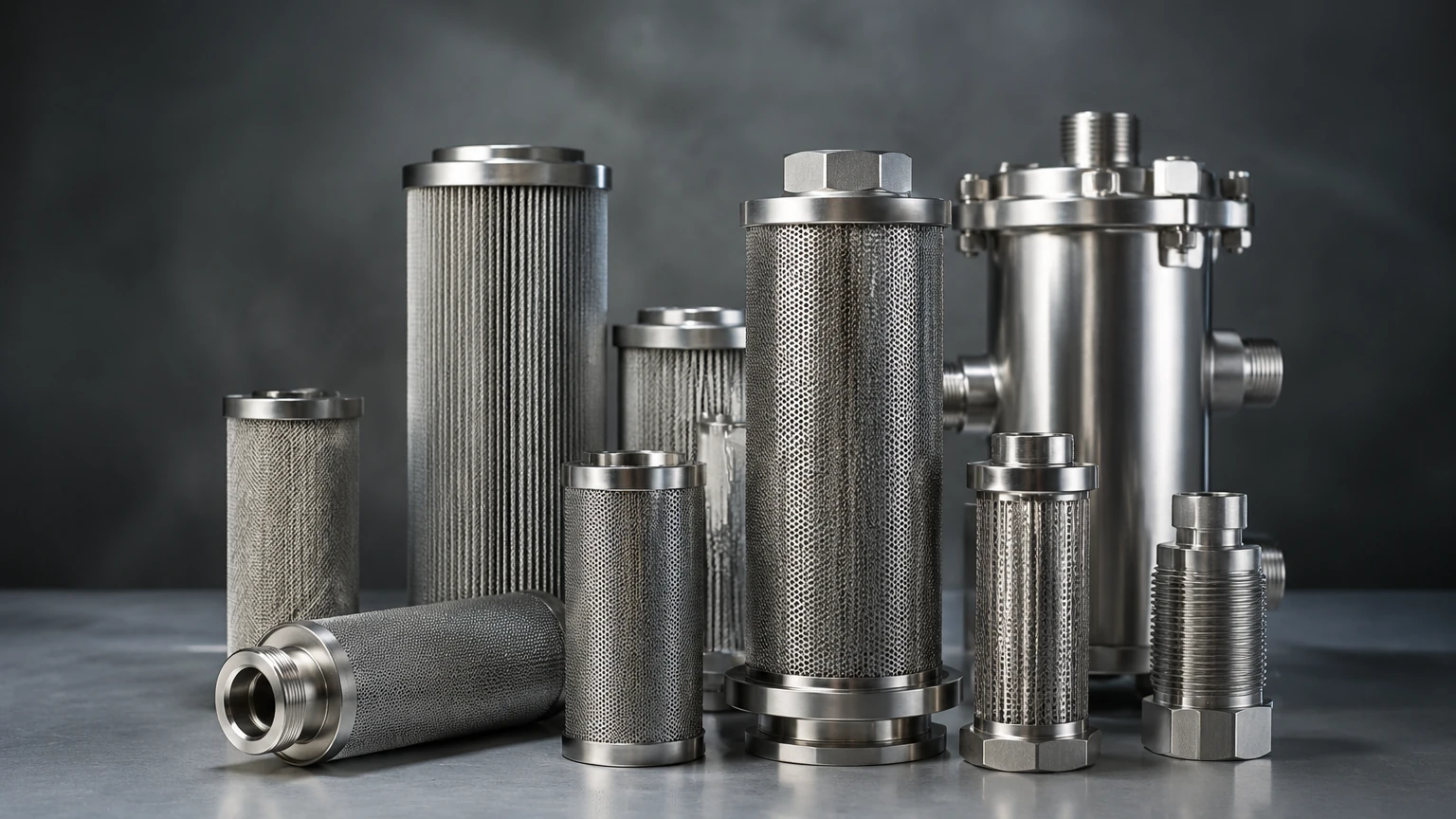
By understanding the nature of these contaminants, Kaifil provides customized filtration solutions that target the specific needs of the application, ensuring that the Main Page of their product catalog offers options for every industrial challenge.
Engineering Considerations for System Integration
Integrating a gas purfier into an existing industrial system requires careful attention to mechanical interfaces and operational constraints. It is not a "one size fits all" component.
Connection Types and Standards
Depending on the regional standards and the pressure rating of the system, the gas purfier may require NPT threaded connections, flanged connections (ANSI or DIN), or sanitary tri-clamp fittings for pharmaceutical applications. Ensuring a leak-proof seal is paramount, especially when dealing with hazardous or expensive gases like hydrogen or helium.
Housing Design and Material
The housing that contains the filter element must be as robust as the element itself. For high-pressure gas applications, the housing is often a coded pressure vessel. It must feature easy access for element replacement, such as a swing-bolt closure or a threaded cap, to minimize downtime during maintenance.
Seal and Gasket Compatibility
While the filter media may be stainless steel, the seals (O-rings or gaskets) must be compatible with the gas and the operating temperature. Common materials include Viton (FKM), EPDM, and PTFE. A failure in a $5 O-ring can bypass the entire $1,000 gas purfier, making seal selection a critical engineering detail.
Maintenance Protocols and Service Life Optimization
One of the primary advantages of using a stainless steel gas purfier from a manufacturer like Kaifil is the ability to clean and reuse the filter element. Unlike disposable glass fiber or paper cartridges, metal filters represent a long-term asset.
Cleaning Methods
When the differential pressure reaches a predetermined limit, the filter element can be removed and cleaned. Common methods include:
* Ultrasonic Cleaning: Using high-frequency sound waves in a cleaning solution to dislodge fine particles from deep within the mesh.
* Backwashing: Reversing the flow of a clean fluid or gas through the filter to push contaminants out of the pores.
* Chemical Cleaning: Using mild acids or solvents to dissolve organic or mineral deposits, provided the chemical is compatible with the stainless steel grade.
Monitoring Performance
Installing differential pressure gauges upstream and downstream of the gas purfier is the most effective way to monitor its condition. Automated systems can trigger an alarm when the filter is nearing capacity, allowing for scheduled maintenance rather than emergency shutdowns.
Custom OEM Solutions for Specialized Gas Filtration
In many high-stakes industrial applications, standard off-the-shelf filters are insufficient. This is where the value of a specialized manufacturer becomes apparent. Customization allows for the optimization of the gas purfier to fit specific spatial constraints or unique flow characteristics.
Kaifil works closely with global customers to develop OEM filtration components. This might involve designing a filter with a specific length-to-diameter ratio to fit inside a compact machine or developing a multi-stage filtration system that combines a coarse pre-filter with a fine polisher in a single housing. By focusing on the specific engineering requirements of the client, custom solutions provide higher reliability and better performance than generic alternatives.
When sourcing a gas purfier, engineers should confirm the manufacturer’s capabilities in material sourcing, precision welding, and quality control. Certifications and adherence to international standards ensure that the filtration component will perform as expected in the field.
Conclusion: Selecting the Right Partner for Gas Purification
The selection of a gas purfier is a technical decision that impacts the efficiency and safety of the entire industrial process. By prioritizing high-quality materials like stainless steel, understanding the nuances of micron ratings and pressure drops, and planning for long-term maintenance, organizations can significantly reduce their operational risks.
As a professional manufacturer specializing in custom stainless steel filtration, Kaifil provides the expertise and manufacturing precision required to meet the most demanding gas purification challenges. Whether you are looking for standard wire mesh filters or complex, customized filter cartridges, selecting a partner with a proven track record in industrial filtration is essential. For more information on our full range of products and technical capabilities, please visit our Main Page to review product options and application support.
