


Gas Purifier Filter
In industrial environments, the purity of process gases is a critical factor that directly influences product quality, equipment longevity, and operational safety. A gas purifier filter serves as a high-precision mechanical barrier designed to remove solid particulates, moisture, oil mists, and other contaminants from gas streams. Unlike standard liquid filters, gas filtration requires specialized engineering to account for the compressibility of the medium, high flow velocities, and the potential for rapid pressure fluctuations.
For engineers and procurement specialists, selecting the correct gas purifier filter involves a deep understanding of material science, fluid dynamics, and the specific requirements of the application. Whether the gas is compressed air, nitrogen, argon, or a highly corrosive chemical byproduct, the filtration component must maintain structural integrity while providing consistent micron-rated performance. For more information on specialized filtration components, professionals can visit the Main Page to review technical specifications and product ranges.
Core Technologies in Gas Purifier Filter Construction
The efficiency of a gas purifier filter is largely determined by its media and construction method. Industrial applications typically demand robust materials that can withstand high temperatures and chemical exposure. Stainless steel is the industry standard for these demanding environments due to its exceptional durability and resistance to oxidation.
Sintered Metal Fiber and Mesh
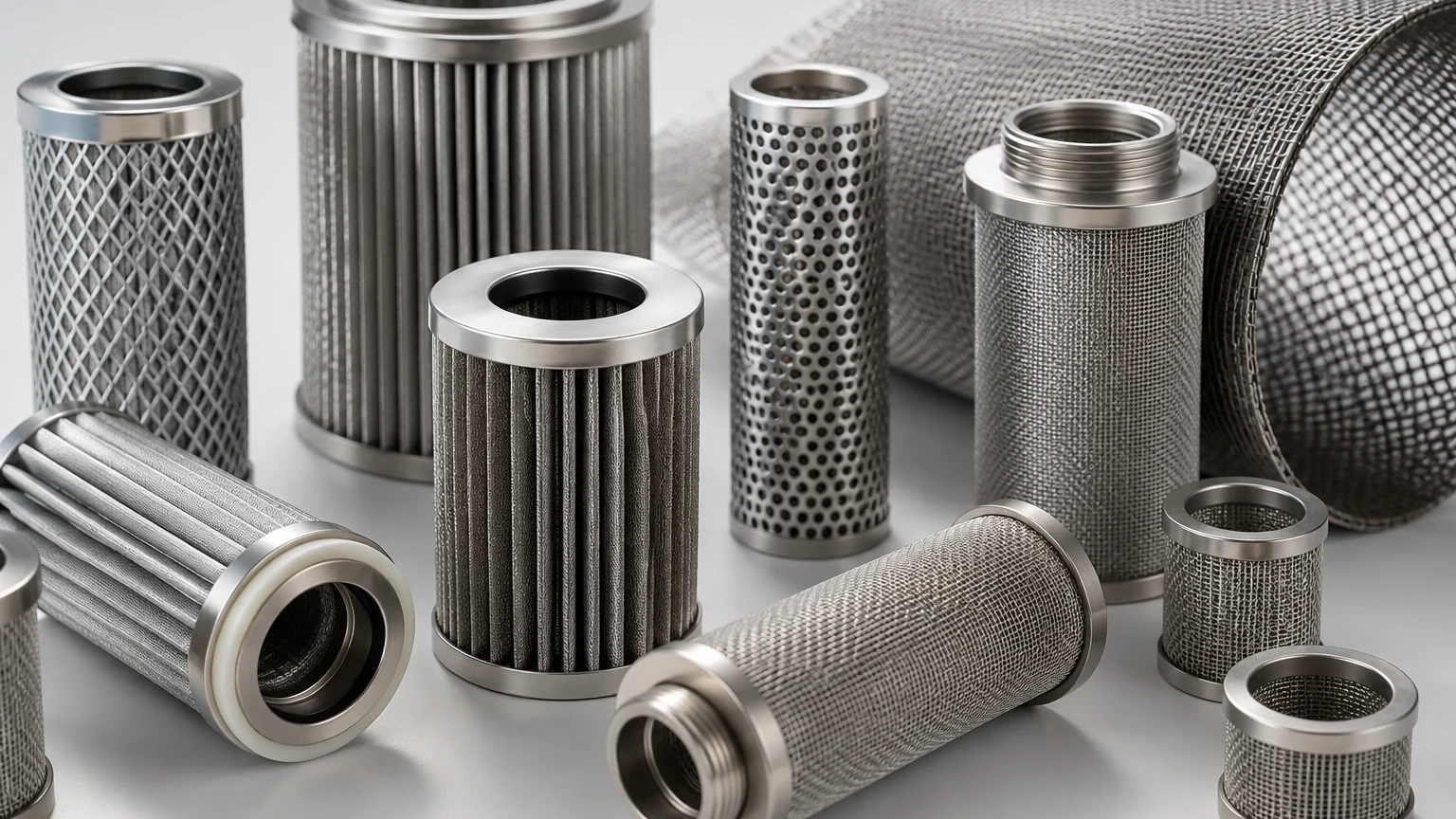
Sintered metal filters are created by bonding multiple layers of stainless steel wire mesh or metal fibers through a high-temperature vacuum sintering process. This creates a permanent, integrated structure where the wires are fused at every contact point. In gas purification, sintered media offer a stable pore structure that does not shift under high pressure, preventing "media migration"—a common failure in fabric or paper filters where filter fibers break off and contaminate the downstream gas.
Pleated Stainless Steel Cartridges
To maximize the filtration surface area within a compact housing, many gas purifier filters utilize a pleated design. By folding the stainless steel wire mesh, manufacturers can significantly increase the effective filtration area. This results in a lower initial pressure drop and a higher dirt-holding capacity, which extends the service life of the filter between maintenance cycles. Pleated designs are particularly effective for high-flow gas applications where minimizing resistance is essential for energy efficiency.
Precision Porous Metal Components
For ultra-high purity (UHP) gas applications, such as those found in semiconductor manufacturing, porous metal components provide filtration at the sub-micron level. These components are engineered with controlled porosity to ensure that even the smallest particulates are captured through a combination of diffusion and inertial impaction.
Engineering Principles of Gas Phase Filtration
Filtration in a gas stream differs significantly from liquid filtration due to the physical properties of gases. Engineers must consider several mechanical phenomena when specifying a gas purifier filter:
1. Inertial Impaction: This occurs when a particle is too large to follow the streamlines of the gas flow around a filter fiber and instead strikes the fiber directly. This is the primary mechanism for capturing larger particles at high velocities.
2. Interception: Smaller particles that follow the gas streamlines may still come into contact with a fiber if they pass within one particle radius of it.
3. Diffusion (Brownian Motion): Very small particles (typically sub-micron) move erratically due to collisions with gas molecules. This erratic movement increases the likelihood that they will hit a filter fiber, making gas filters highly efficient at capturing extremely fine dust.
Understanding these principles allows engineers to select a micron rating that balances filtration efficiency with the allowable pressure drop. A filter that is too fine will clog prematurely, while one that is too coarse will fail to protect downstream equipment.
Critical Selection Criteria for Industrial Applications
When evaluating a gas purifier filter for a specific project, technical teams should confirm several performance parameters to ensure the component is fit for purpose.
Chemical Compatibility
The filter housing and media must be compatible with the gas being processed. For example, while 304 stainless steel is suitable for many dry gases, 316L stainless steel is often required for corrosive environments or gases containing moisture and acidic compounds. In extreme cases, specialized alloys like Hastelloy or Monel may be necessary to prevent stress corrosion cracking.
Temperature and Pressure Ratings
Industrial gas processes often operate at elevated temperatures or high pressures. A high-quality gas purifier filter must maintain its micron rating and structural shape under these conditions. Sintered metal filters are particularly advantageous here, as they can operate at temperatures exceeding 500°C (depending on the alloy) and withstand high differential pressures without collapsing.
Filtration Accuracy (Micron Rating)
Filtration accuracy is defined as either nominal or absolute. For critical gas purification, an absolute rating is preferred, as it guarantees that 99.9% of particles above a certain size will be captured. In applications like protecting sensitive analytical instruments or pneumatic valves, even a small amount of bypass can lead to catastrophic failure.
Flow Rate and Pressure Drop
The "clean pressure drop" is the resistance the filter offers to the gas flow when it is new. Engineers must ensure that the gas purifier filter can handle the required flow rate without causing an excessive drop in pressure, which would force the system's compressors to work harder and increase energy costs.
Applications Across Key Industrial Sectors
Gas purifier filters are utilized across a broad spectrum of industries, each with unique challenges and standards.
* Chemical and Petrochemical: Filters are used to remove catalysts, scale, and particulates from process gases. The ability to withstand aggressive chemical environments is the primary requirement here.
* Food and Beverage: In this sector, gases like CO2 (for carbonation) or nitrogen (for packaging) must be free of oil, moisture, and bacteria. Filters must often meet sanitary design standards to prevent microbial growth.
* Pharmaceutical: High-purity air and nitrogen are used in cleanrooms and for blanketing sensitive ingredients. Gas purifier filters ensure that these gases do not introduce contaminants into the production line.
* Power Generation: In gas turbines, filtration of the intake and fuel gas is essential to prevent erosion of the turbine blades. Precision metal filters provide the necessary durability for continuous operation.
* Semiconductor Manufacturing: This industry requires the highest levels of gas purity. Filters must remove particles down to the nanometer scale to prevent defects in microchip fabrication.
Maintenance, Cleaning, and Total Cost of Ownership
One of the primary advantages of stainless steel gas purifier filters is their cleanability. Unlike disposable polymer or paper filters, metal filters can often be restored to near-original performance through various cleaning methods:
* Ultrasonic Cleaning: Uses high-frequency sound waves in a cleaning solution to dislodge particles from deep within the pore structure.
* Backwashing/Backpulsing: Involves reversing the gas flow to blow trapped particles off the surface of the filter media.
* Chemical Cleaning: Uses specific solvents or acids to dissolve accumulated contaminants that cannot be removed mechanically.
While the initial investment in a stainless steel gas purifier filter is higher than that of a disposable alternative, the total cost of ownership (TCO) is often lower. The extended service life, reduced waste, and lower frequency of replacement make metal filtration a more sustainable and cost-effective choice for long-term industrial operations.
Customization and OEM Integration
Every industrial system has unique spatial and performance constraints. Standard off-the-shelf filters may not always meet the specific requirements of a complex gas handling system. This is where custom engineering and OEM (Original Equipment Manufacturer) capabilities become vital.
Customization options for a gas purifier filter include:
* Custom Dimensions: Tailoring the length, diameter, and fitting types (e.g., NPT, flange, or quick-connect) to fit existing housings.
* Specific Micron Ratings: Engineering the pore size distribution to target specific contaminant profiles.
* Reinforced Structures: Adding internal supports or external cages to handle extreme pressure spikes or mechanical vibrations.
By working closely with a manufacturer that understands the nuances of metal filtration, engineers can develop solutions that optimize gas purity while maintaining system efficiency. For a deeper dive into the customization process and to see how these components are integrated into larger systems, refer to the Main Page for technical guidance.
Conclusion
The selection of a gas purifier filter is a technical decision that impacts the entire production chain. By focusing on high-quality materials like stainless steel and understanding the specific mechanical requirements of the gas stream, industrial professionals can ensure reliable performance and protect their critical infrastructure. As industries move toward more precise and efficient manufacturing processes, the role of high-performance gas filtration will only continue to grow in importance.
