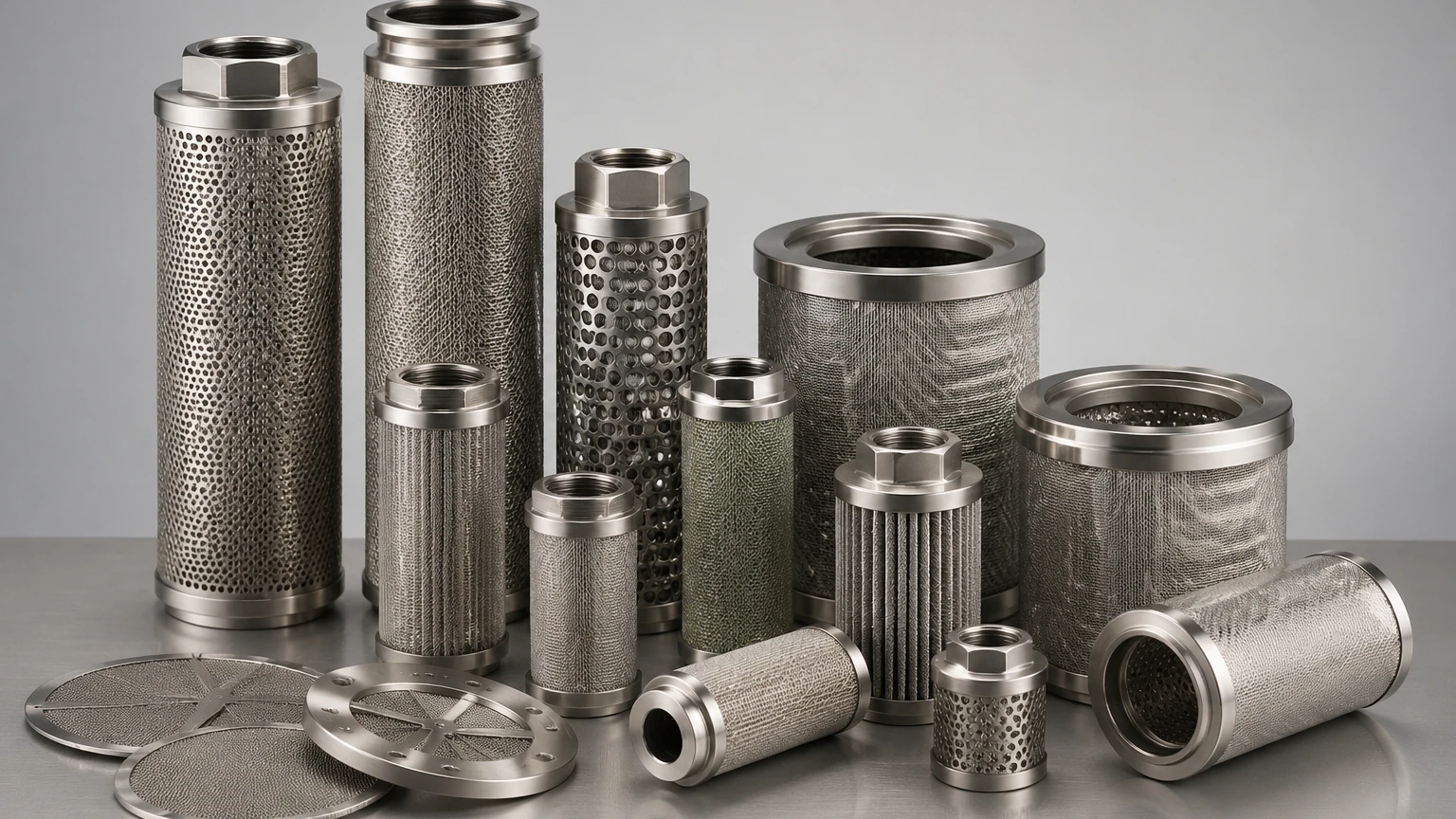
Gas Purifier
In industrial environments, the integrity of process gases is a critical factor in determining the quality of the final product and the longevity of downstream equipment. A gas purifier is a specialized system or component designed to remove contaminants—such as particulates, moisture, oxygen, and hydrocarbons—from a gas stream. While the term covers a broad range of technologies, from chemical adsorption to cryogenic separation, mechanical filtration using high-precision stainless steel components remains the foundational layer for protecting sensitive processes. For engineers and technical procurement teams, selecting the right filtration media within a gas purification assembly is essential for maintaining high-purity standards in sectors ranging from semiconductor manufacturing to chemical processing.
The Role of Stainless Steel in Gas Purifier Systems
The effectiveness of a gas purifier often depends on its ability to withstand the physical and chemical demands of the process environment. Stainless steel, particularly grades 304 and 316L, is the preferred material for gas purification components due to its inherent durability and resistance to corrosion. Unlike polymer-based filters, stainless steel components do not outgas, which is a vital requirement for high-purity gas applications where even trace amounts of volatile organic compounds (VOCs) can compromise the system.
Sintered metal and wire mesh filters provide the structural integrity required for high-pressure gas streams. In a gas purifier, these components serve as the primary barrier against particulate matter. Sintered stainless steel, created by bonding metal powders or multiple layers of wire mesh under heat and pressure without melting the material, creates a porous structure with precisely controlled pore sizes. This allows for deep filtration and high dirt-holding capacity, ensuring that the gas stream remains free of metallic fragments, dust, or catalyst fines that may be present in the supply line.
Key Engineering Specifications for Industrial Gas Purification
When evaluating components for a gas purifier, engineers must look beyond simple micron ratings. Several technical parameters dictate how a filter will perform under operational stress:
1. Filtration Accuracy and Micron Rating
Filtration accuracy is defined by the size of the particles the media can effectively trap. In gas purification, this often ranges from sub-micron levels to 100 microns, depending on the application. It is important to distinguish between nominal and absolute micron ratings. An absolute rating ensures that 99.9% of particles above a certain size are captured, which is the standard typically required for high-purity gas purifiers.
2. Pressure Drop (Differential Pressure)
Every filter media introduces a degree of resistance to the gas flow, known as pressure drop. A well-designed gas purifier component must balance high filtration efficiency with a low initial pressure drop to minimize energy consumption and maintain consistent flow rates. As the filter accumulates contaminants, the differential pressure increases. Engineers must specify the maximum allowable pressure drop before the system requires maintenance or component replacement.
3. Flow Rate and Velocity
Gas velocity through the filter media affects both the efficiency of particle capture and the mechanical wear on the mesh. High-velocity streams can cause "particle shedding" if the filter media is not properly sintered or secured. Calculating the effective filtration area is necessary to ensure that the gas purifier can handle the required volume without exceeding the structural limits of the stainless steel mesh.
Design and Customization of Gas Purifier Components
Standard off-the-shelf filters often fail to meet the unique spatial or performance constraints of specialized industrial gas purifiers. Customization is frequently required to optimize the filtration process. This involves selecting specific weave patterns for wire mesh or varying the density of sintered metal cartridges.
* Plain Weave vs. Dutch Weave: Plain weave mesh offers high transparency and low resistance, suitable for high-flow gas purifiers where large particles are the main concern. In contrast, Twilled Dutch Weave provides a denser structure with smaller openings, ideal for fine particulate removal in high-pressure environments.
* Pleated vs. Cylindrical Designs: To increase the surface area without expanding the footprint of the gas purifier, pleated filter cartridges are often used. Pleating can increase the filtration area by several times compared to a standard cylindrical element, significantly extending the service life and reducing the frequency of maintenance shutdowns.
* End Fittings and Sealing: The method of integration into the gas purifier housing is critical. Custom-machined end caps, threaded connections, or flange interfaces must ensure a leak-proof seal. In high-purity gas applications, metal-to-metal seals or specialized O-rings (such as Viton or PTFE) are used to prevent bypass and external contamination.
Applications Across Critical Industries
Gas purifiers are integrated into various industrial workflows where gas purity is non-negotiable. The specific requirements for the filtration components vary based on the industry:
Chemical and Petrochemical Processing
In chemical synthesis, gases often serve as reactants or catalysts. A gas purifier prevents impurities from poisoning catalysts, which could lead to expensive downtime and lost batches. Stainless steel filters are essential here because they can handle aggressive chemical environments and high operating temperatures that would degrade other materials.
Pharmaceutical and Biotechnology
Sterile gas is required for fermentation, aeration, and packaging. Gas purifiers in this sector must not only remove particulates but also be capable of withstanding sterilization processes, such as Autoclaving or Steam-in-Place (SIP). The smooth surface finish of stainless steel components prevents microbial growth and allows for thorough cleaning.
Semiconductor Manufacturing
The production of integrated circuits requires gases with purity levels exceeding 99.9999% (6N). Any particulate larger than a few nanometers can destroy a wafer. In these systems, the gas purifier utilizes multi-stage filtration, often starting with a stainless steel pre-filter to protect the ultra-fine purification media downstream.
Food and Beverage
Nitrogen and carbon dioxide are used for blanketing and carbonation. A gas purifier ensures that these gases are free of oil aerosols from compressors and scale from piping. Using food-grade stainless steel ensures compliance with safety regulations while providing a durable solution for high-volume production lines.
Performance Evaluation and Maintenance
To ensure the long-term reliability of a gas purifier, a structured maintenance and evaluation protocol is necessary. Unlike disposable plastic filters, stainless steel filtration components offer the advantage of being cleanable and reusable in many applications.
* Cleaning Methods: Depending on the contaminant, stainless steel filter elements can be cleaned using ultrasonic baths, chemical solvents, or back-pulsing with high-pressure gas. This significantly reduces the total cost of ownership by extending the lifespan of the component.
* Integrity Testing: For critical applications, the performance of the gas purifier components should be verified through bubble point testing or pressure decay tests. These methods confirm that the pore size remains within the specified range and that no structural breaches have occurred during operation.
* Monitoring Differential Pressure: Installing DP gauges across the gas purifier allows operators to monitor the loading of the filter in real-time. A sudden drop in differential pressure might indicate a media breach, while a rapid increase suggests an upstream process upset or heavy contamination.
Selecting a Partner for Custom Gas Purification Solutions
Choosing a manufacturer for gas purifier components requires an assessment of their engineering depth and manufacturing precision. A reliable partner should provide more than just a product; they should offer technical guidance on material compatibility, structural design, and filtration efficiency.
For those seeking comprehensive information on custom filtration capabilities, visiting the Main Page of a specialized manufacturer can provide insights into the range of available stainless steel solutions. Key factors to confirm with a supplier include:
1. Material Certification: Ensure that the stainless steel used is traceable and meets the required industrial standards (e.g., ASTM).
2. OEM Capabilities: The ability to produce components according to specific drawings or to reverse-engineer existing parts is vital for maintaining older gas purifier systems.
3. Quality Control: Inquire about the testing procedures used to verify micron ratings and structural integrity.
Conclusion
The industrial gas purifier is a vital component in modern manufacturing, serving as a guardian of process purity and equipment safety. By utilizing high-quality stainless steel wire mesh and sintered metal components, engineers can achieve a balance of precision, durability, and cost-effectiveness. Whether the application involves the extreme purity requirements of the semiconductor industry or the rugged demands of chemical processing, the selection of the correct filtration media is the first step toward optimized gas system performance. Understanding the technical nuances of micron ratings, pressure drops, and material properties allows for the development of purification solutions that meet the rigorous standards of today’s industrial landscape.