


Getting Food Processing Equipment with 3-a Sanitary Compliance
In the food, beverage, and dairy industries, the integrity of processing equipment is the primary defense against microbial contamination and product spoilage. For engineers and procurement professionals, getting food processing equipment with 3-a sanitary compliance is not merely a regulatory checkbox; it is a critical engineering requirement that ensures equipment can be effectively cleaned and sanitized. 3-A Sanitary Standards, Inc. (3-A SSI) provides the framework for designing equipment that protects public health by focusing on the "cleanability" of food contact surfaces.
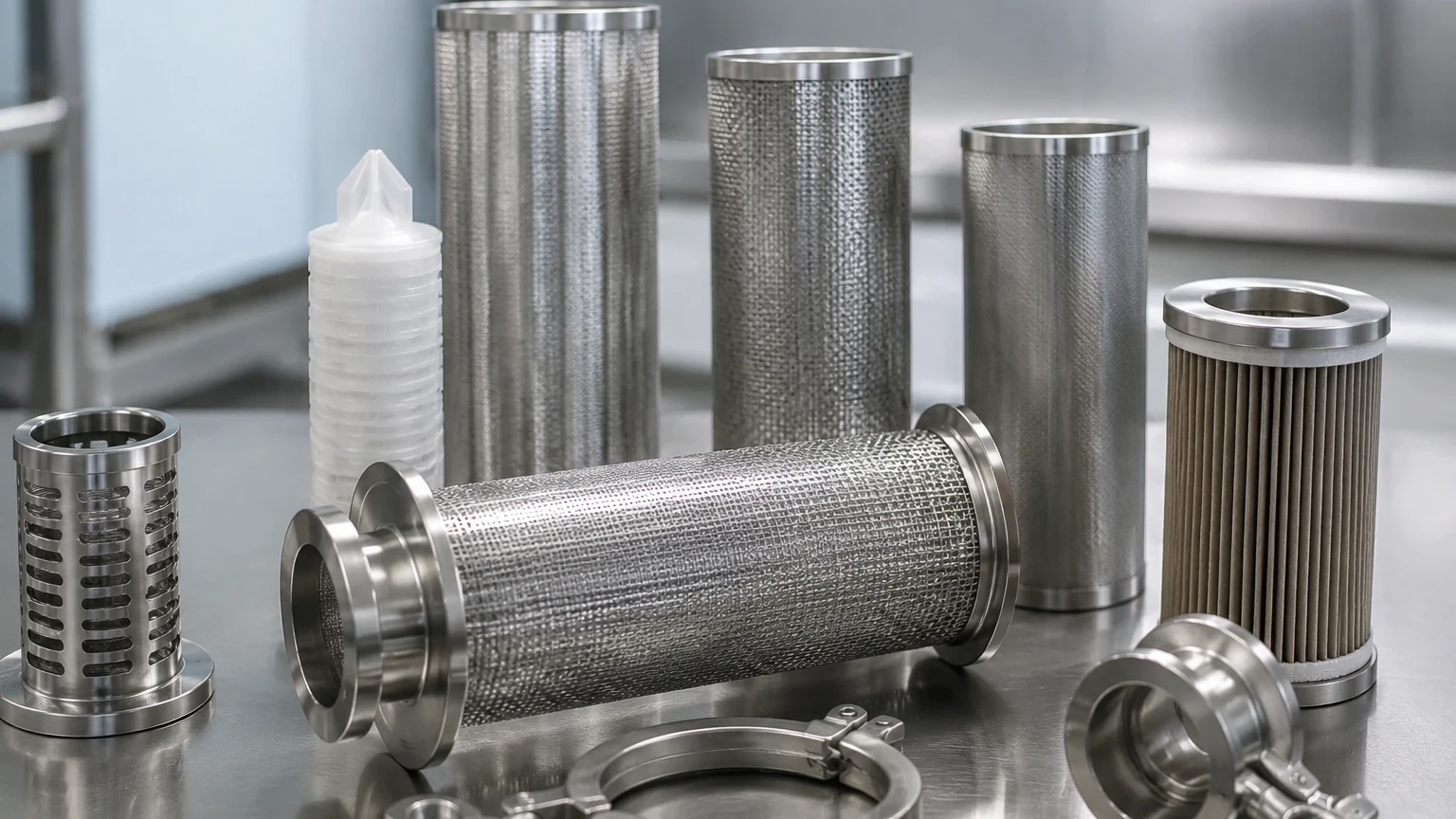
When sourcing filtration components, such as stainless steel wire mesh filters or filter cartridges, understanding the nuances of these standards is essential. This guide examines the technical requirements, material specifications, and design principles necessary for achieving and maintaining 3-A compliance in industrial filtration applications.
The Role of 3-A Sanitary Standards in Modern Food Processing
3-A Sanitary Standards were originally developed in the 1920s through a collaborative effort between the dairy industry and regulatory agencies. Today, they represent the gold standard for hygienic design across the broader food processing spectrum. The core objective of getting food processing equipment with 3-a sanitary compliance is to ensure that all surfaces in contact with the product can be mechanically cleaned or easily dismantled for manual cleaning.
For filtration systems, this means the filter media, housings, and support structures must be designed to prevent the accumulation of organic matter. Bacteria, such as *Listeria* or *Salmonella*, can thrive in "dead zones"—areas where fluid flow is stagnant or where surface irregularities provide a foothold for biofilm formation. By adhering to 3-A standards, manufacturers like Kaifil ensure that filtration components minimize these risks through superior surface finishes and optimized geometry.
Material Requirements for 3-A Compliant Filtration Systems
Material selection is the foundation of sanitary compliance. In food processing, equipment is subjected to aggressive cleaning chemicals, high temperatures, and corrosive food ingredients (such as brines or acidic juices).
Stainless Steel Selection
Under 3-A standards, the preferred materials for food-contact surfaces are 300-series stainless steels. Specifically, AISI 304 and 316/316L are the industry benchmarks. 316L stainless steel is often preferred for filtration components due to its lower carbon content and the addition of molybdenum, which enhances resistance to pitting and crevice corrosion. This is particularly important in wire mesh filters where the complex geometry of the weave can otherwise be susceptible to localized corrosion.
Surface Finish and Ra Values
A defining technical requirement for 3-A compliance is the surface roughness. All food-contact surfaces must have a finish that is at least as smooth as a No. 4 ground finish. Quantitatively, this is expressed as a Roughness Average (Ra) of 0.8 micrometers (32 micro-inches) or less.
Achieving this finish on a flat sheet is straightforward, but for custom stainless steel filtration solutions, it requires precision. For wire mesh filters, the wires themselves must be drawn to specific tolerances, and the resulting mesh must be free of burrs, pits, or folds. When Kaifil manufactures precision metal filter components, advanced polishing techniques—including electropolishing—are often employed to reach these Ra targets, ensuring that the surface is microscopically smooth and easy to sanitize.
Engineering Design: Eliminating Contamination Risks
Beyond materials, the physical design of the equipment determines its sanitary status. When getting food processing equipment with 3-a sanitary compliance, engineers must evaluate several design factors:
Radii and Corners
All internal corners on food-contact surfaces must have a minimum radius. 3-A standards typically require a radius of 3.2 mm (1/8 inch) or greater. Sharp 90-degree angles are prohibited because they are nearly impossible to clean thoroughly, even with high-pressure Clean-in-Place (CIP) systems. In filter housings and cartridge end-caps, these generous radii ensure that cleaning fluids can reach every millimeter of the surface.
Weld Integrity
Welding is a critical area of concern. For 3-A compliance, all welds in the product zone must be continuous, ground smooth, and flush with the surrounding metal. There can be no porosity, inclusions, or cracks. Gas Tungsten Arc Welding (TIG) is the standard process used for these components, as it provides the control necessary to produce high-quality, sanitary-grade joints.
Dead Legs and Drainage
A "dead leg" is an area in a piping or filtration system where the product can stagnate. 3-A design principles dictate that equipment must be self-draining. Filter housings must be oriented or designed with pitched surfaces so that no liquid remains trapped after a cleaning cycle. This prevents the growth of thermophilic bacteria during downtime.
Verification and Documentation: Ensuring Compliance
Procuring compliant equipment requires more than a verbal assurance from a supplier. Rigorous documentation is necessary to satisfy internal quality audits and external regulatory inspections. When evaluating a manufacturer for 3-A compliant components, the following should be confirmed:
1. 3-A Symbol Authorization: Check if the manufacturer holds a current authorization to use the 3-A Symbol for the specific equipment category. This involves a Third-Party Verification (TPV) audit.
2. Material Certifications: Request Mill Test Reports (MTRs) to verify the chemical composition of the stainless steel used in the filters.
3. Surface Roughness Documentation: For critical applications, manufacturers can provide profilometer readings or certifications of the Ra finish.
4. Elastomer Compliance: Ensure that any gaskets or O-rings used in the filter assembly are made from FDA-compliant materials (such as EPDM, Silicone, or Viton) that meet 3-A Standard 18-03 for multiple-use rubber materials.
By visiting the Main Page of a professional manufacturer, engineers can often find detailed technical specifications and the scope of custom capabilities available for sanitary-grade projects.
Maintenance and Cleaning: Preserving Sanitary Integrity
Getting food processing equipment with 3-a sanitary compliance is only the first step. Maintaining that compliance requires a robust maintenance and cleaning protocol. Filtration components are unique because they are designed to trap particles, which inherently makes them a collection point for potential contaminants.
Clean-in-Place (CIP) vs. Clean-out-of-Place (COP)
Many modern food processing lines utilize CIP systems, where cleaning solutions are circulated through the equipment at high velocities. For a filter to be CIP-compatible, it must be able to withstand the pressure and chemical concentration of the cleaning cycle without bypass or structural failure.
In cases where the filter media is too fine or the debris too tenacious (such as high-viscosity syrups or fats), COP is required. This involves dismantling the filter housing and cleaning the stainless steel cartridges or mesh screens manually or in an ultrasonic bath. 3-A compliant designs facilitate this by using sanitary clamps (Tri-Clamp) and wing-nut closures that allow for tool-free disassembly.
Inspection Cycles
Stainless steel filters should be inspected regularly for signs of mechanical wear or "blinding" (permanent clogging). Even 316L stainless steel can suffer from fatigue if subjected to constant pressure pulsations. Any scratch or dent on a sanitary surface can compromise its 3-A status, as it creates a new site for bacterial attachment.
Strategic Procurement: Selecting the Right Filtration Partner
For B2B buyers, the total cost of ownership (TCO) of a filtration system is heavily influenced by its sanitary design. While a non-compliant filter might have a lower initial purchase price, the risks of product recalls, extended cleaning times, and shorter equipment lifespans far outweigh the savings.
Working with a manufacturer that specializes in custom stainless steel filtration solutions allows for the integration of 3-A principles into the specific needs of a production line. For example, a custom-designed wire mesh filter can be engineered with specific flow characteristics that optimize CIP efficiency, reducing the volume of water and chemicals required for sanitation.
When discussing a project with a supplier, engineers should ask:
* How do you ensure weld integrity in complex mesh structures?
* What methods are used to verify the Ra finish on internal surfaces?
* Can you provide customized end-cap configurations to match existing sanitary piping?
Conclusion
Getting food processing equipment with 3-a sanitary compliance is a fundamental requirement for any facility prioritizing food safety and operational efficiency. By focusing on high-grade materials like 316L stainless steel, demanding precise surface finishes, and adhering to hygienic design principles, manufacturers provide the tools necessary to maintain a sterile processing environment.
As a specialist in industrial filtration, Kaifil understands the technical rigors of the food and beverage industry. From material selection to the final polish, every step of the manufacturing process is geared toward delivering reliable, durable, and compliant filtration components. For those seeking to optimize their filtration processes while adhering to the highest sanitary standards, reviewing technical options on the Main Page is the first step toward a high-performance solution.
Download Getting Food Processing Equipment with 3-a Sanitary Compliance as a PDF
