


Getting Hot Water Sets That Comply with Asme Bpe Standards
In the realm of biopharmaceutical manufacturing, food processing, and high-purity chemical production, the integrity of utility systems is just as critical as the primary process equipment. Hot water sets, often used for Water for Injection (WFI) heating, Clean-in-Place (CIP) solution preparation, and temperature control loops, must adhere to stringent regulatory and engineering benchmarks. Specifically, getting hot water sets that comply with ASME BPE standards is a prerequisite for facilities aiming to maintain sterile conditions and ensure product safety.
The ASME Bioprocessing Equipment (BPE) standard provides the industry with a comprehensive framework for the design, materials, construction, and inspection of equipment used in high-purity applications. For engineers and procurement teams, understanding the nuances of these standards is essential to avoid system failures, contamination risks, and regulatory non-compliance.
The Significance of ASME BPE in Industrial Hot Water Systems
ASME BPE standards were developed to address the unique challenges of the bioprocessing industry, where the prevention of microbial growth and the ability to effectively clean and sterilize equipment are paramount. When getting hot water sets that comply with ASME BPE standards, the focus shifts from standard industrial plumbing to high-purity engineering.
Unlike standard hot water systems, BPE-compliant sets are designed to eliminate "dead legs"—areas where water can stagnate and bacteria can proliferate. They also prioritize materials that are resistant to the corrosive effects of high-temperature purified water and aggressive cleaning agents. Compliance ensures that the system can withstand repeated Steam-in-Place (SIP) cycles and maintain its integrity over a long operational lifespan. This level of engineering is vital for maintaining the "validated state" of a pharmaceutical facility.
Material Integrity and Surface Finish Specifications
One of the cornerstones of ASME BPE compliance is material selection. The standard typically mandates the use of low-carbon stainless steel, such as 316L, which offers superior corrosion resistance and weldability. The sulfur content of the steel is also tightly controlled (usually between 0.005% and 0.017%) to ensure consistent, high-quality orbital welds.
Surface finish is another critical factor. ASME BPE defines several Surface Finish (SF) designations, ranging from SF1 to SF6. For hot water sets used in bioprocessing, internal surfaces must be polished to a specific Ra (Roughness average) value.
* Mechanical Polishing: Typically achieves an Ra of < 20 μ-in (0.5 μ-m).
* Electropolishing: This electrochemical process removes microscopic peaks and valleys, creating a mirror-like finish that is even more resistant to bacterial adhesion and easier to clean.
When evaluating a hot water set, engineers must verify that all wetted parts, including heat exchanger tubes, pump internals, and filter housings, meet these surface finish requirements. Any deviation can lead to biofilm formation, which is notoriously difficult to eradicate once established.
Critical Design Principles for Hygienic Hot Water Sets
Design for cleanability is a primary focus of the ASME BPE standard. When getting hot water sets that comply with ASME BPE standards, several design principles must be strictly followed:
The 2:1 Dead Leg Rule
Historically, the industry followed a 6:1 ratio for dead legs, but the modern ASME BPE standard has tightened this to a 2:1 ratio (where the length of the branch is no more than twice the diameter of the main pipe). This ensures that the flow of water in the main line creates enough turbulence to effectively flush the branch, preventing stagnation.
Drainability
Every component in the hot water set must be designed for full drainability. This means horizontal lines must have a minimum slope (often 1/8 inch per foot or 1% slope), and valves must be installed at specific angles to ensure no liquid remains trapped after a cycle. Trapped water is a primary source of microbial contamination and can lead to "rouging" (a form of iron oxide corrosion) in high-purity systems.
Seal and Gasket Compatibility
All seals, O-rings, and gaskets used in the system must be USP Class VI compliant. They must be able to withstand the thermal expansion and contraction cycles inherent in hot water systems without leaching chemicals or degrading. Common materials include EPDM, PTFE, and silicone, each selected based on the specific temperature and chemical profile of the application.
Integrating High-Performance Filtration Solutions
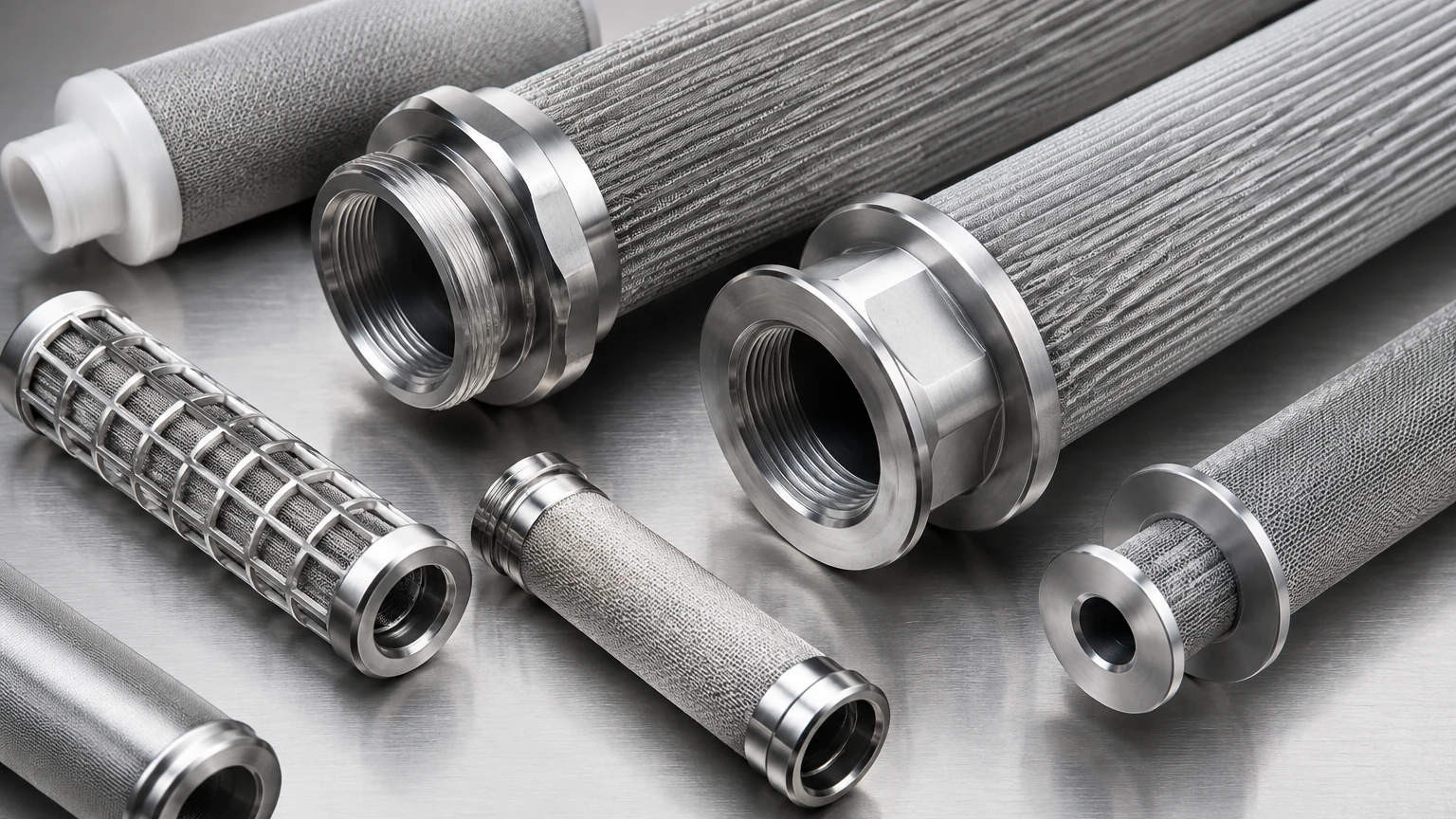
Filtration plays a pivotal role in maintaining the quality of water within a hot water set. Even in closed-loop systems, particulate matter, pipe scale, or degraded seal materials can enter the stream. High-purity stainless steel filters are often integrated into these sets to protect sensitive downstream equipment like spray balls or heat exchangers.
For these applications, sintered metal fiber or multi-layer wire mesh filters are preferred. These components must also adhere to BPE principles, featuring hygienic housings with tri-clamp connections and the same high-level surface finishes as the rest of the system. For engineers looking to understand the technical specifications of these filtration components, visiting the Main Page of a specialized manufacturer like Kaifil provides a foundation for selecting elements that balance filtration accuracy with the flow requirements of a hot water loop.
Custom stainless steel filter cartridges are particularly effective in hot water sets because they do not shed fibers, can be cleaned and reused, and maintain structural integrity at temperatures exceeding 100°C. When sourcing these filters, it is essential to confirm that the manufacturing process—including welding and finishing—aligns with the broader system's BPE compliance goals.
Documentation, Traceability, and Validation Requirements
In a regulated B2B environment, a piece of equipment is only as good as its documentation. Getting hot water sets that comply with ASME BPE standards requires a comprehensive turnover package (TOP). This documentation is the evidence required by quality assurance teams and regulatory inspectors (such as the FDA or EMA) to prove the system was built as specified.
Key documentation requirements include:
* Mill Test Reports (MTRs): These documents provide the chemical composition and heat number of every piece of stainless steel used in the system, ensuring traceability back to the original melt.
* Weld Logs and Maps: A detailed record of every weld, including the operator's ID, the date, the weld parameters, and the results of visual or borescope inspections.
* Passivation Reports: After fabrication, the system must be passivated with a mild acid solution to restore the protective chromium oxide layer on the stainless steel. The report must detail the chemicals used, the temperature, and the duration of the process.
* Surface Finish Certifications: Documentation verifying the Ra values of internal surfaces, often supported by profilometer readings.
Without this documentation, a hot water set cannot be validated for use in a pharmaceutical or high-purity food environment, regardless of how well it is built.
Selecting a Manufacturing Partner for Custom Components
Building a compliant hot water set is a collaborative effort between the system integrator and component manufacturers. Because these sets often require custom configurations to fit into existing facility footprints, the ability to produce bespoke filtration and piping components is invaluable.
When selecting a partner for these components, engineers should evaluate the manufacturer's expertise in:
1. Precision Welding: The use of orbital welding for tubing and advanced TIG welding for filter housings is essential for achieving the smooth, crevice-free joints required by ASME BPE.
2. Custom Engineering: The ability to modify filter micron ratings, housing sizes, and connection types (such as ASME BPE-compliant hygienic flanges) ensures the component fits the specific thermal and hydraulic needs of the hot water set.
3. Quality Control: A robust QC process that includes pressure testing, leak testing, and material verification is non-negotiable.
Manufacturers like Kaifil specialize in these types of high-performance, custom stainless steel solutions. By focusing on the technical requirements of industrial filtration and precision metal components, they support the broader goal of system compliance. For more information on how custom filtration fits into high-purity system design, reviewing the technical resources on their Main Page can help procurement teams make more informed decisions.
Conclusion: The Path to Reliable Compliance
Getting hot water sets that comply with ASME BPE standards is a complex but necessary undertaking for any facility operating in a high-purity sector. It requires a holistic approach that begins with the selection of 316L stainless steel and extends through meticulous hygienic design, precision manufacturing, and exhaustive documentation.
By focusing on the details—such as surface roughness, dead leg ratios, and the integration of high-quality stainless steel filtration—engineers can ensure that their hot water systems provide reliable, sterile service for years to come. In an industry where a single contamination event can cost millions in lost product and regulatory fines, the investment in ASME BPE compliance is not just a regulatory requirement; it is a fundamental pillar of operational excellence and consumer safety.
Download Getting Hot Water Sets That Comply with Asme Bpe Standards as a PDF
