


Self Cleaning Filters Manufacturers
In the landscape of industrial fluid processing, the transition from manual batch filtration to continuous, automated systems represents a significant leap in operational efficiency. For engineers and facility managers, the search for reliable self cleaning filters manufacturers is often driven by the need to minimize downtime, reduce labor costs, and protect downstream equipment from particulate contamination. Unlike traditional bag or cartridge filters that require frequent manual intervention, self-cleaning systems utilize mechanical or hydraulic mechanisms to remove accumulated solids while the process remains online.
Selecting the right manufacturer requires a deep understanding of filtration mechanics, material science, and the specific demands of the application environment. This guide explores the technical considerations, engineering criteria, and procurement strategies essential for evaluating manufacturers in this specialized sector.
Technical Principles of Automated Filtration Systems
Before engaging with self cleaning filters manufacturers, it is critical to understand the two primary categories of self-cleaning technology: mechanical cleaning and backwash cleaning. Each serves distinct fluid profiles and contaminant loads.
Mechanical Scraper Systems
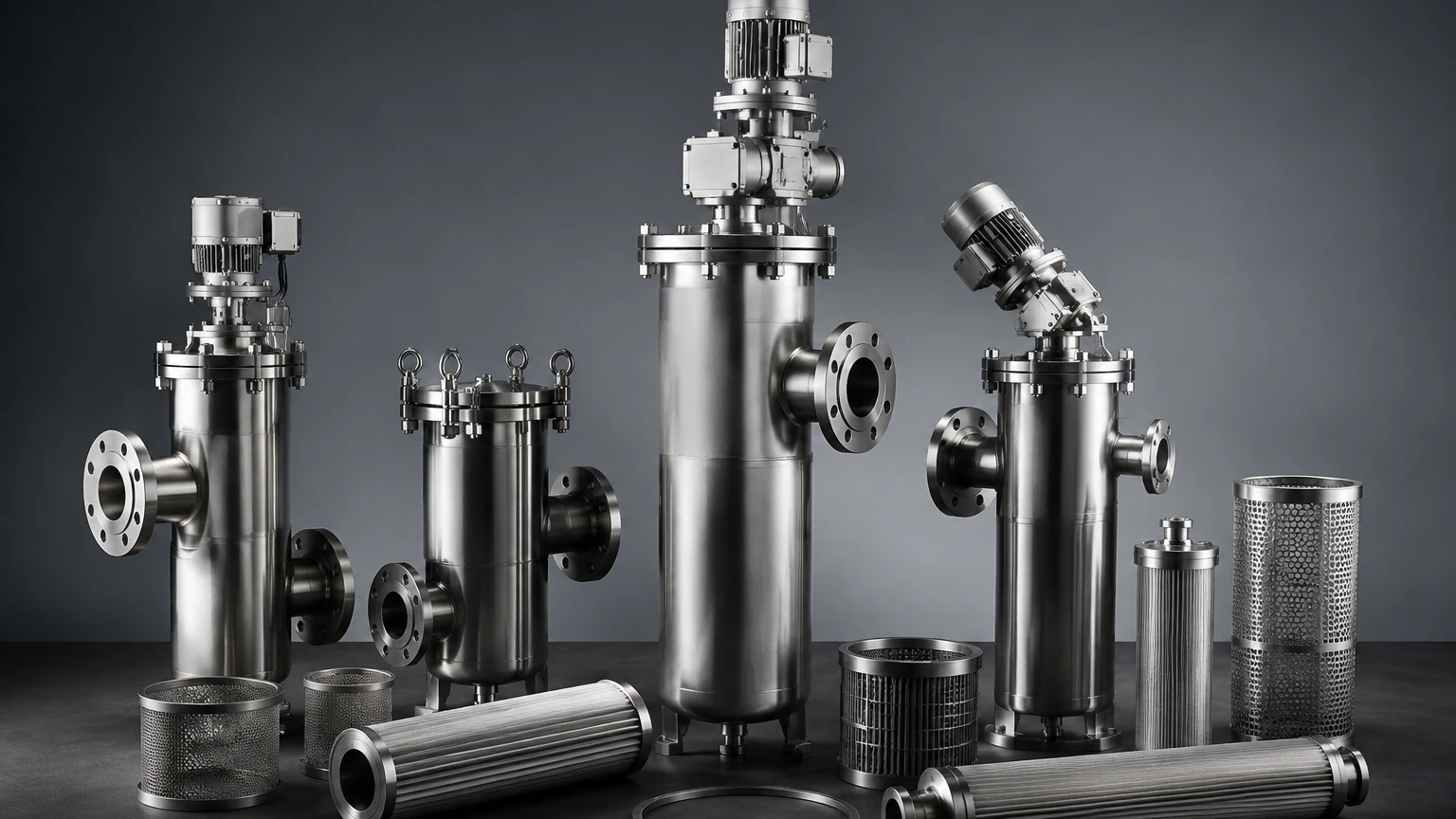
Mechanical cleaning systems typically employ a scraper—either a blade or a brush—that moves across the surface of a cylindrical filter element. This element is often constructed from wedge wire or perforated stainless steel. As the scraper traverses the internal or external surface, it dislodges the filter cake, which then settles into a collection chamber at the bottom of the housing. This method is particularly effective for high-viscosity fluids, such as resins, adhesives, and food products (like chocolate or syrups), where hydraulic backwashing would be inefficient.
Backwash Filtration
Backwash systems utilize a portion of the filtered fluid (or an external clean fluid source) to flush the filter element in reverse. When the differential pressure (dP) reaches a predetermined set point, a valve opens, and the pressure drop forces fluid back through the media, lifting contaminants off the surface and out through a waste port. These systems are ideal for low-viscosity applications like cooling water, process water, and thin chemicals where solids are non-sticky and easily displaced.
Engineering Criteria for Manufacturer Evaluation
When reviewing the capabilities of various self cleaning filters manufacturers, engineers must look beyond basic flow rates. High-performance filtration is a result of precise engineering and material selection tailored to the fluid’s chemical and physical properties.
Filtration Media Integrity
The core of any self-cleaning filter is the media. Manufacturers specializing in stainless steel solutions, such as those found on the Main Page of technical providers, offer elements ranging from wedge wire to multi-layer sintered mesh. Wedge wire is favored for its non-plugging characteristics and high mechanical strength, while sintered mesh provides finer filtration ratings (down to 1 micron) with excellent permeability. A manufacturer should be able to justify the selection of one media type over another based on the particle size distribution (PSD) of your specific process.
Material Compatibility and Durability
Industrial environments often involve corrosive fluids or extreme temperatures. Leading manufacturers provide a range of alloys, including 304 and 316L stainless steel, and even exotic alloys like Duplex or Hastelloy for highly aggressive environments. Furthermore, the seals and gaskets (EPDM, Viton, PTFE) must be compatible with the process fluid to prevent premature failure. Engineers should request material traceability reports and ensure that the manufacturer follows international standards such as ASME or PED for pressure vessel construction.
The Importance of Customization and OEM Capabilities
Standard off-the-shelf filtration units rarely meet the nuanced requirements of complex industrial systems. This is where the distinction between a simple distributor and specialized self cleaning filters manufacturers becomes apparent. Customization is often necessary to integrate a filter into an existing footprint or to handle unique flow dynamics.
Tailored Housing and Connection Designs
Manufacturers with robust engineering departments can modify inlet/outlet configurations (flanged, NPT, or sanitary connections) to match existing piping. They can also design multi-unit skids for high-flow applications, allowing for redundant filtration where one unit remains in service while another undergoes a deep-clean cycle or maintenance.
Automation and Control Integration
A self-cleaning filter is only as effective as its control system. Manufacturers should offer PLC-based control panels that allow for customization of cleaning triggers. While differential pressure is the standard trigger, time-based or manual overrides are often required for comprehensive process control. Compatibility with plant-wide SCADA systems for remote monitoring and data logging is a key feature for modern industrial operations.
Common Risks in Procurement and How to Mitigate Them
Procuring industrial filtration equipment involves significant capital expenditure. Understanding common pitfalls can help engineers avoid costly mistakes during the selection process.
1. Undersizing the System: To lower the initial quote, some manufacturers may suggest a smaller unit that operates at the upper limit of its flow capacity. This leads to frequent cleaning cycles, increased wear on moving parts, and higher fluid loss during backwashing. Always specify a "safety factor" in flow rate calculations.
2. Ignoring Solids Loading: A filter rated for 1,000 GPM of clean water may fail if the solids loading increases by even 1%. Manufacturers must be provided with the maximum expected suspended solids (TSS) to ensure the cleaning mechanism can keep up with the accumulation rate.
3. Neglecting Spare Parts Availability: Self-cleaning filters have moving parts—actuators, scrapers, and valves. Choosing a manufacturer with a limited global presence or proprietary parts that are difficult to source can lead to extended downtime during a component failure.
Total Cost of Ownership (TCO) Considerations
While the initial purchase price is a primary concern for procurement teams, engineers must emphasize the Total Cost of Ownership. Self-cleaning filters are designed to provide long-term savings that offset their higher initial cost compared to manual filters.
* Reduced Labor Costs: Eliminating the need for technicians to manually open housings and replace bags or cartridges saves hundreds of man-hours annually.
* Minimized Product Loss: Efficient backwash or scraper systems are designed to concentrate waste, ensuring that the maximum amount of valuable process fluid remains in the system.
* Lower Disposal Costs: By using permanent stainless steel elements, plants eliminate the recurring cost of purchasing and disposing of contaminated filter bags or cartridges, which is also a significant environmental benefit.
* Energy Efficiency: A clean filter element maintains a lower differential pressure, reducing the load on pumps and lowering overall energy consumption.
Application-Specific Requirements
Different industries impose unique constraints on self cleaning filters manufacturers. Identifying these constraints early in the consultation phase is vital.
Food and Beverage
In this sector, sanitary design is paramount. Filters must be constructed with smooth internal surfaces (low Ra finish) to prevent bacterial growth and must be compatible with Clean-in-Place (CIP) procedures. Manufacturers should provide FDA-compliant materials and ensure there are no "dead legs" in the housing where fluid can stagnate.
Chemical and Petrochemical
These applications often involve high pressures and hazardous fluids. Manufacturers must provide explosion-proof (ATEX/Ex) rated electrical components and robust mechanical seals that prevent any leakage of toxic or flammable materials into the environment.
Water Treatment and Desalination
For large-scale water intake or cooling towers, the focus is on handling high volumes of debris, such as sand, algae, and shells. Manufacturers in this space focus on high-capacity backwash systems with corrosion-resistant coatings or high-grade alloys to withstand brackish or seawater conditions.
Conclusion: Taking the Next Step with Manufacturers
Selecting from the available self cleaning filters manufacturers is a process that balances technical performance with long-term reliability. Engineers should begin by defining the precise parameters of their process: fluid viscosity, flow rate, temperature, pressure, and the nature of the contaminants.
When contacting a manufacturer, ask for case studies or references from similar applications. A reputable manufacturer will not just sell a product but will act as a technical partner, providing engineering drawings, performance guarantees, and comprehensive support for installation and commissioning. By focusing on the quality of the filtration media, the robustness of the cleaning mechanism, and the flexibility of the control system, industrial operators can ensure they implement a filtration solution that enhances productivity and protects their infrastructure for years to come.
For those seeking specialized stainless steel components and custom filtration engineering, exploring the capabilities of dedicated manufacturers via their Main Page is the most effective way to begin the specification process.
