


Heavy Fuel Oil Purifier
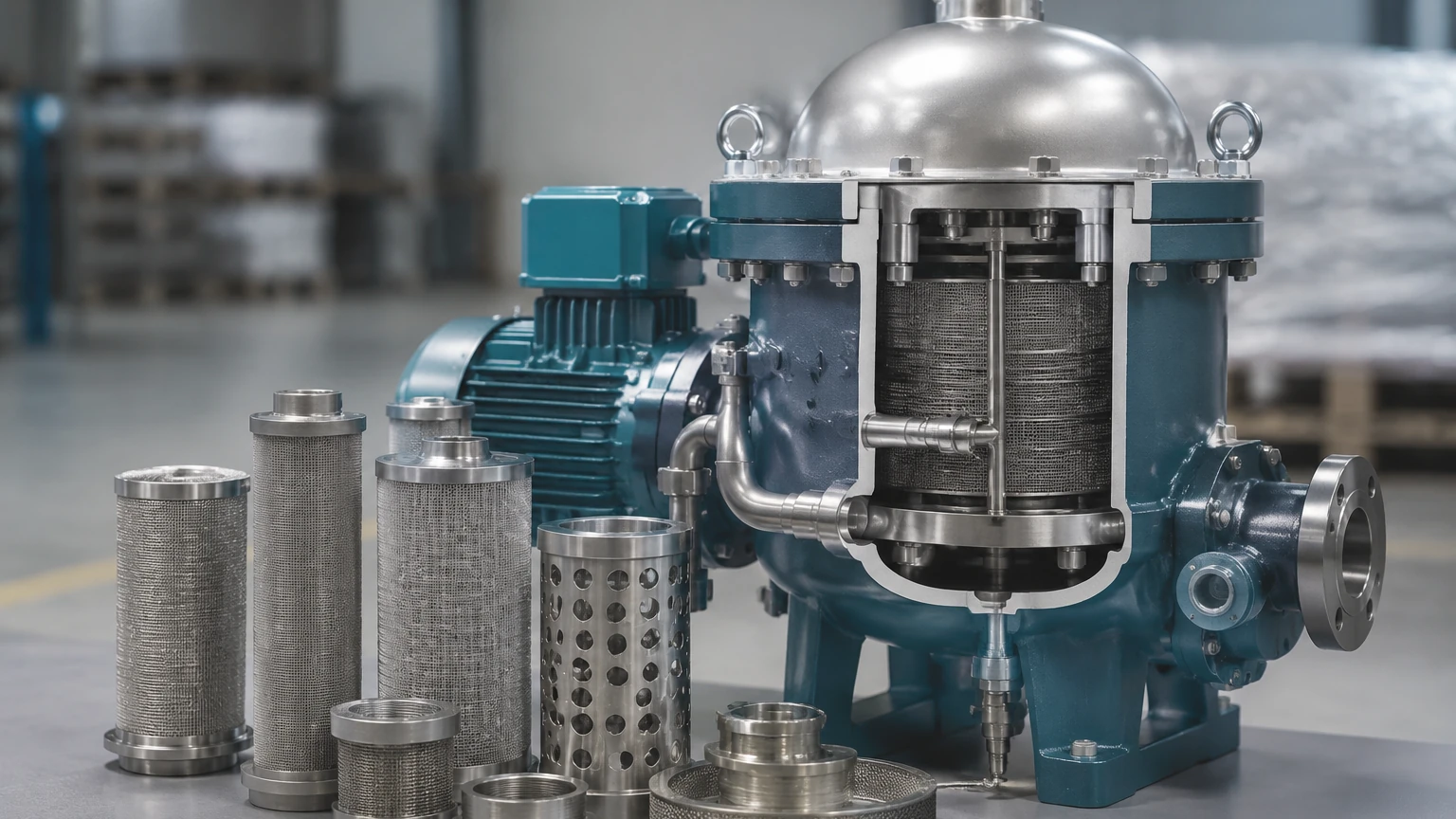
In the maritime and power generation sectors, the quality of fuel is a critical factor in engine longevity and operational efficiency. Heavy Fuel Oil (HFO), while cost-effective, is a residual product of the crude oil refining process and contains significant levels of contaminants, including water, sludge, and highly abrasive catalytic fines (cat fines). A heavy fuel oil purifier system is essential for removing these impurities before the fuel reaches the engine's high-pressure injection system.
Effective purification relies on a combination of centrifugal separation and precision filtration. While centrifugal purifiers remove the bulk of water and heavy solids, the final stage of filtration ensures that even the smallest particles, which can cause catastrophic engine wear, are eliminated. Engineering these systems requires a deep understanding of fluid dynamics, material science, and the specific challenges posed by high-viscosity fluids.
Understanding Contaminants in Heavy Fuel Oil
Heavy Fuel Oil is characterized by its high density and viscosity. Because it is essentially the "bottom of the barrel" in refining, it concentrates various impurities that are harmful to internal combustion engines. The primary contaminants addressed by a heavy fuel oil purifier include:
1. Catalytic Fines (Aluminium and Silicon Oxides): These are small, extremely hard particles used as catalysts in the refinery cracking process. If not removed, they act as an abrasive paste, causing rapid wear on cylinder liners and piston rings.
2. Water: Both fresh and salt water can lead to corrosion, microbial growth, and poor combustion. Saltwater is particularly dangerous as it introduces sodium, which contributes to high-temperature corrosion on exhaust valves.
3. Asphaltenes and Sludge: These are heavy hydrocarbon molecules that can precipitate out of the oil, clogging filters and injectors.
4. Metallic Impurities: Elements like vanadium and sodium can form low-melting-point compounds during combustion, leading to "hot corrosion" of engine components.
To manage these risks, engineers must design filtration solutions that can withstand the harsh chemical and thermal environment of HFO processing. For detailed specifications on filtration components, technical teams can refer to the Main Page for material compatibility and design options.
The Role of Precision Filtration in the Purification Circuit
The purification of HFO is rarely a single-step process. It typically involves a settling tank, followed by a centrifugal heavy fuel oil purifier, and finally, a series of fine filters. The centrifugal stage utilizes the difference in density between the oil, water, and solids. However, the efficiency of a centrifuge decreases as the particle size drops below 10 microns, or when the density of the particles is close to that of the oil.
This is where precision stainless steel wire mesh filters and cartridges become indispensable. These components serve as the "safety net" or the final polishing stage. Unlike disposable cellulose filters, stainless steel elements offer the structural integrity required to handle the high pressures and temperatures necessary to make HFO flow. In many modern systems, these filters are equipped with automatic backwashing capabilities, allowing for continuous operation without manual intervention.
Engineering Considerations: Viscosity and Temperature
One of the most significant challenges in designing a heavy fuel oil purifier system is the fluid's viscosity. At room temperature, HFO is often semi-solid. To be effectively filtered and purified, it must be heated to reduce its viscosity to a range suitable for separation (typically 10–15 cSt at the point of injection).
Thermal Stress and Material Selection
Filtration elements must operate at temperatures ranging from 90°C to 150°C. This thermal load requires materials with low thermal expansion coefficients and high resistance to oxidation. 316L stainless steel is the industry standard due to its excellent corrosion resistance and ability to maintain structural rigidity at elevated temperatures.
Pressure Drop (ΔP) Management
Because HFO is thick, the pressure drop across a filter medium is significantly higher than that of light distillates. Engineers must balance filtration fineness (micron rating) with the available surface area. Increasing the surface area through pleated designs or multi-layered wire mesh structures allows for higher flow rates while keeping the differential pressure within safe operational limits. If the pressure drop becomes too high, it can lead to filter collapse or bypass valve activation, allowing contaminated fuel to reach the engine.
Selecting Filter Media for HFO Applications
When specifying components for a heavy fuel oil purifier, the choice of filter media determines the system's overall reliability. There are several types of metal filter media commonly used:
* Plain Weave Wire Mesh: Used for coarse filtration or as a support layer. It provides a straight-through flow path and is easy to clean.
* Dutch Weave Wire Mesh: Offers a more complex flow path and higher filtration precision. It is ideal for capturing irregular particles like cat fines.
* Sintered Metal Fiber: Created by bonding stainless steel fibers together through a high-temperature sintering process. This media offers high porosity and excellent dirt-holding capacity, which is vital for HFO that may contain high levels of sludge.
* Sintered Mesh Laminates: Multiple layers of wire mesh are sintered together to create a single, robust structure. This provides the best combination of mechanical strength and filtration accuracy.
For engineers evaluating these options, the Main Page provides comprehensive data on the mechanical properties and filtration efficiencies of various stainless steel configurations.
Addressing the Threat of Catalytic Fines
ISO 8217 standards set limits on the concentration of cat fines in delivered fuel, but even fuel that meets these standards can be damaging if the heavy fuel oil purifier is not operating at peak efficiency. Cat fines are often smaller than 10 microns. If a centrifuge is overloaded or if the fuel density is too high, these fines will pass through to the engine.
Fine filtration systems are typically rated at 10μm or 15μm absolute to capture these particles. The design of the filter element must ensure that "media migration" does not occur—meaning the filter itself must not shed any fibers or particles into the clean fuel stream. Precision-welded stainless steel cartridges are preferred over bonded or crimped alternatives to ensure total integrity under the pulsing pressures of a marine fuel system.
Maintenance and Total Cost of Ownership (TCO)
In B2B industrial environments, the initial purchase price of a filter is often secondary to the total cost of ownership. For HFO applications, the longevity of the filter element is paramount.
Cleanability and Reuse
Unlike synthetic or paper filters, stainless steel wire mesh filters are cleanable. In a heavy fuel oil purifier system, these elements can be cleaned using ultrasonic baths or chemical solvents to remove baked-on carbon and sludge. This repeatability significantly reduces the cost of consumables and the environmental impact of waste disposal.
Replacement Cycles
The replacement cycle of a high-quality stainless steel filter is determined by the accumulation of non-cleanable contaminants and the mechanical wear caused by repeated backwashing cycles. Engineers should monitor the time it takes for the differential pressure to rise after a cleaning cycle; a rapid return to high ΔP indicates that the media is reaching the end of its effective life.
Customization for OEM Systems
Many industrial engines and vessels use proprietary housing designs for their fuel treatment blocks. Customization is a key part of the procurement process. Factors that must be confirmed before ordering include:
* End Cap Configuration: Threaded, flanged, or O-ring seals to ensure a bypass-free fit.
* Internal Support Cores: Necessary to prevent the mesh from collapsing under high-pressure spikes.
* Pleat Geometry: Optimized for the specific flow rate and contaminant load of the application.
Conclusion for Technical Procurement
Selecting components for a heavy fuel oil purifier is a technical decision that impacts the entire lifecycle of an industrial engine. By focusing on high-grade stainless steel materials, precise micron ratings, and robust structural designs, operators can significantly reduce the risk of engine failure and maintenance downtime.
When sourcing these critical components, it is essential to work with manufacturers who understand the nuances of HFO filtration. For more information on custom stainless steel filtration solutions and to review technical product options, visit the Main Page. Technical teams should verify the specific viscosity and flow requirements of their system to ensure the selected filter media provides the optimal balance of protection and performance.
