


Hex Drum Filter
In the landscape of industrial liquid-solid separation, the hex drum filter represents a specialized evolution of rotary drum filtration technology. Designed to handle high-volume flow rates while maintaining precise filtration accuracy, these systems are critical components in water treatment, chemical processing, and various industrial manufacturing cycles. Unlike standard cylindrical drums, the hexagonal configuration offers distinct mechanical and hydraulic advantages, particularly concerning screen tensioning, panel modularity, and structural rigidity. For engineers and procurement teams, understanding the technical nuances of a hex drum filter is essential for optimizing filtration efficiency and ensuring long-term operational reliability.
As a manufacturer specializing in custom stainless steel filtration solutions, Kaifil provides the precision-engineered components necessary to support these complex systems. By focusing on the material science and mechanical integrity of the filtration media, industrial operators can achieve superior separation results even in the most demanding environments.
Structural Engineering of Hexagonal Drums
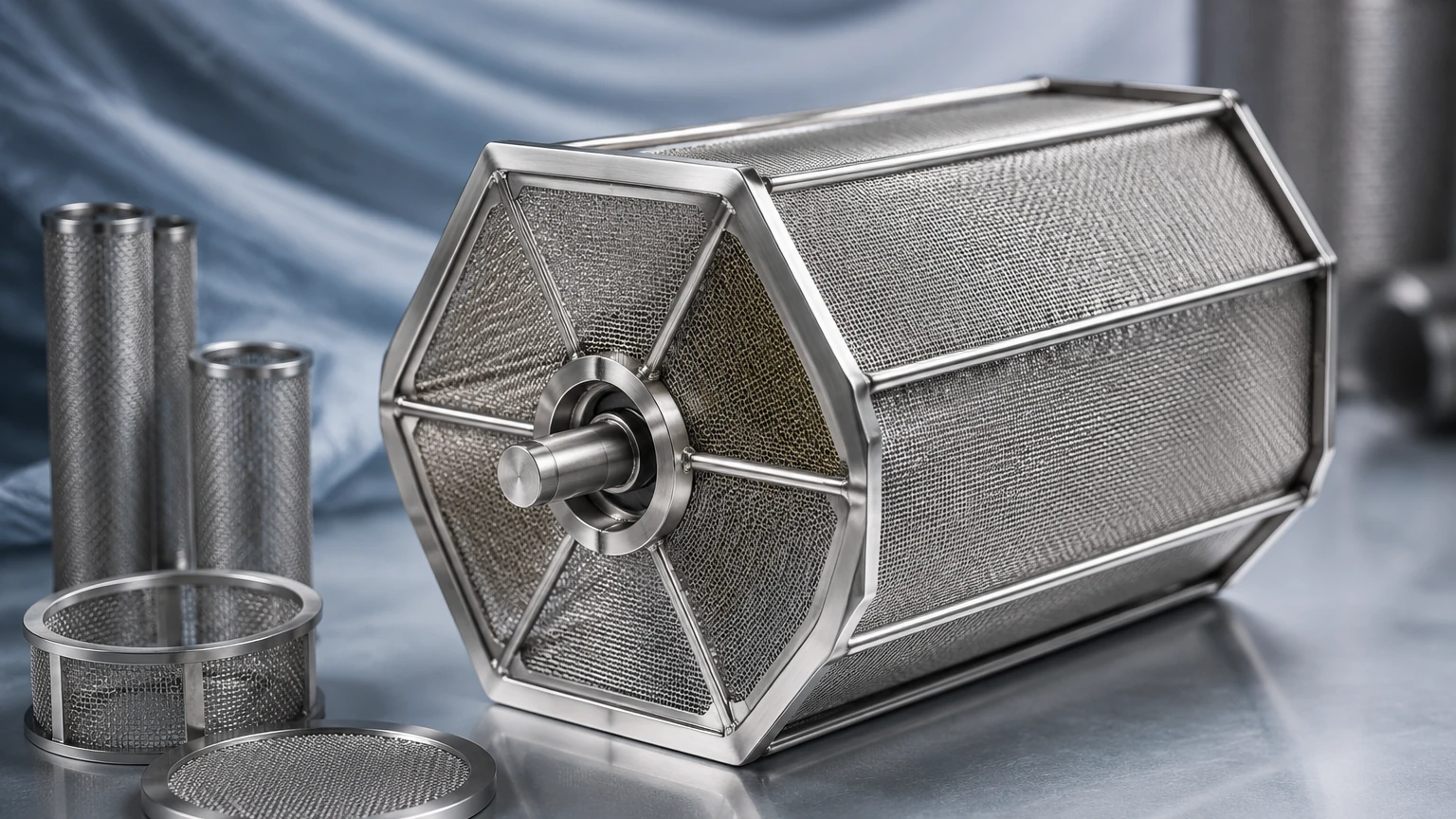
The primary distinction of a hex drum filter lies in its geometry. Traditional rotary filters utilize a continuous cylindrical surface, which can present challenges regarding mesh installation and uniform tensioning. A hexagonal drum, however, is constructed from six distinct longitudinal sections. This faceted design serves several engineering purposes:
1. Panel Modularity: The hexagonal frame allows for the use of flat or slightly curved individual screen panels. In the event of localized damage or wear, operators can replace a single panel rather than the entire drum sleeve, significantly reducing downtime and maintenance costs.
2. Structural Rigidity: The vertices of the hexagon act as natural reinforcement ribs. This provides the drum with higher torsional strength, allowing it to withstand the weight of heavy sludge cakes or high-pressure backwash cycles without deforming.
3. Improved Agitation: As the drum rotates, the internal angles of the hexagon create a natural tumbling effect for the filtered solids. This prevents the formation of a stagnant "mat" of debris, ensuring that the filtration surface remains active for longer periods before requiring a cleaning cycle.
From a manufacturing perspective, the hex drum filter requires precise alignment of the frame to ensure that the stainless steel wire mesh sits flush against the support structure. Any gaps or misalignments can lead to bypass, where unfiltered liquid escapes the system, compromising the purity of the effluent.
The Role of Stainless Steel Wire Mesh in Hex Drum Filters
The performance of any hex drum filter is ultimately dictated by its filtration media. Stainless steel wire mesh is the industry standard for these applications due to its exceptional durability and chemical resistance. At Kaifil, the focus is on providing high-quality mesh that meets specific micron ratings while maintaining the structural integrity required for rotary motion.
Material Grades
Selection of the correct stainless steel grade is the first step in engineering a durable filter.
* Grade 304: Suitable for general water treatment and less corrosive industrial applications. It offers good strength and cost-effectiveness.
* Grade 316L: The preferred choice for chemical processing, pharmaceutical, and food and beverage industries. The addition of molybdenum provides superior resistance to chlorides and organic acids, preventing pitting and stress corrosion cracking.
* Duplex Stainless Steel: For extreme environments, such as seawater filtration or highly acidic chemical streams, duplex grades offer even higher mechanical strength and corrosion resistance.
Weave Types and Micron Ratings
The weave of the mesh determines the filtration accuracy and the flow resistance. Plain square weaves are common for coarse filtration, while Dutch weaves (including reverse Dutch weave) provide high mechanical strength and the ability to filter much finer particles, often down to 10–20 microns. For a hex drum filter, the mesh must be woven with high precision to ensure uniform pore size across the entire surface area of the hexagonal panels.
Filtration Efficiency and Flow Dynamics
The efficiency of a hex drum filter is measured by its ability to remove suspended solids at a specified flow rate with minimal pressure drop. The hexagonal design influences the flow dynamics within the filter tank. As the drum rotates, the submerged panels collect solids on their outer or inner surface (depending on the flow direction design).
Effective Filtration Area
One common engineering concern is whether the hexagonal shape reduces the effective filtration area compared to a cylinder. While a cylinder has a slightly higher surface-to-volume ratio, the hexagonal drum compensates by allowing for more robust support structures. This allows the use of finer, high-open-area meshes that might otherwise fail on a standard cylindrical drum due to lack of support.
Backwash Mechanics
Backwashing is the process of cleaning the filter media while the drum is in operation. In a hex drum filter, high-pressure spray nozzles are typically positioned at the top of the rotation cycle. The flat nature of the hexagonal panels ensures that the spray hits the mesh at a more consistent angle compared to a curved surface. This perpendicular impact is more effective at dislodging trapped particles, leading to more efficient cleaning and lower water consumption during the backwash phase.
Industrial Applications and Use Cases
Hex drum filters are versatile tools used across a broad spectrum of industries. Their ability to handle varying solids loadings makes them ideal for both primary and secondary treatment processes.
* Municipal and Industrial Wastewater: Used as a tertiary treatment step to remove fine suspended solids before discharge or reuse. The hex drum's ability to handle high flow rates makes it suitable for large-scale treatment plants.
* Aquaculture: In fish farming, maintaining water clarity is vital. Hex drum filters efficiently remove fish waste and uneaten feed, protecting the health of the aquatic environment.
* Food and Beverage Processing: From vegetable washing to juice clarification, the use of food-grade 316L stainless steel mesh ensures that the filtration process meets stringent hygiene standards while providing reliable solids separation.
* Cooling Water Systems: Power plants and refineries use these filters to remove debris from intake water (from rivers or lakes) to protect heat exchangers and pumps from clogging and abrasion.
For more detailed information on specific filtration components and to Review product options and application support, engineers can consult with specialists who understand the intersection of mesh technology and drum mechanics.
Critical Selection Criteria for Engineers
When specifying a hex drum filter for a new project or as a replacement in an existing system, several technical parameters must be confirmed. Oversight in any of these areas can lead to premature failure or inefficient operation.
1. Particle Size Distribution (PSD): It is not enough to know the average particle size. Engineers must understand the full range of particles in the influent. If there are high concentrations of "near-size" particles (those just slightly larger than the mesh opening), the risk of blinding increases significantly.
2. Flow Rate and Flux: The flux (flow per unit area) must be calculated based on the maximum expected solids loading. A hex drum filter operated at too high a flux will require constant backwashing, leading to excessive wear on the drive motor and high water usage.
3. Chemical Compatibility: Beyond the stainless steel mesh, the seals, gaskets, and frame materials must be compatible with the process fluid. This includes considering the cleaning chemicals used during maintenance cycles.
4. Customization Requirements: Many industrial applications require specific drum dimensions or specialized mounting brackets. Working with an OEM provider like Kaifil allows for the integration of custom-designed stainless steel filter cartridges and mesh panels that fit perfectly into existing hex drum frames.
Maintenance, Cleaning, and Longevity
The total cost of ownership (TCO) of a hex drum filter is heavily influenced by its maintenance requirements. While the hexagonal design simplifies panel replacement, proactive maintenance is still required to maximize the lifespan of the stainless steel media.
Preventing Biofouling and Scaling
In water applications, biological growth or mineral scaling can bridge the openings in the wire mesh. Regular chemical cleaning or the integration of UV sterilization in the intake can mitigate these issues. Stainless steel is particularly advantageous here, as it can withstand aggressive chemical cleaning agents that would degrade plastic or synthetic media.
Mechanical Inspections
The drive system, including the chain or gear drive and the support bearings, should be inspected regularly. In a hex drum system, ensuring that the drum remains balanced is crucial. An unbalanced drum can lead to uneven wear on the seals, eventually causing bypass or mechanical failure of the rotation motor.
Replacement Cycles
The lifespan of the filtration panels depends on the abrasiveness of the solids and the frequency of backwashing. High-quality stainless steel mesh from a reputable manufacturer can last several years in standard conditions. However, in abrasive mining or heavy industrial applications, a regular replacement schedule should be established to prevent unexpected mesh failure.
Conclusion
The hex drum filter is a robust and efficient solution for large-scale industrial filtration. Its unique hexagonal geometry provides structural advantages and maintenance efficiencies that are highly valued in continuous-process industries. By selecting high-performance stainless steel filtration media and focusing on precise engineering specifications, operators can ensure their systems deliver consistent effluent quality and reliable performance. For those seeking to optimize their filtration processes through customized components and expert technical guidance, visiting the Kaifil Main Page provides access to a wealth of resources and specialized manufacturing capabilities.
