


High Pressure Air Filter Compressors
In industrial environments where compressed air is a primary utility, the integrity of the air stream is paramount. High pressure air filter compressors are specialized systems designed to handle the rigorous demands of air compressed to pressures significantly higher than standard plant air—often ranging from 20 bar (300 PSI) to over 400 bar (6,000 PSI). At these elevated pressures, the concentration of contaminants such as oil aerosols, water vapor, and solid particulates increases proportionally with the compression ratio. Effective filtration is not merely a matter of air quality; it is a critical requirement for equipment longevity, operational safety, and process consistency.
For engineers and procurement professionals, selecting the appropriate filtration components for high-pressure systems requires a deep understanding of fluid dynamics, material science, and the specific mechanical stresses induced by high-velocity, high-density air. This guide examines the technical considerations, material requirements, and engineering principles behind high pressure air filter compressors.
The Technical Necessity of High-Pressure Filtration
When air is compressed, its volume decreases, but the mass of contaminants remains the same. In a high-pressure system, a cubic meter of air at the outlet contains many times the amount of dust, oil, and moisture found in a cubic meter of ambient air. Without specialized filtration, these contaminants can lead to catastrophic failures in downstream components such as precision valves, actuators, and high-pressure storage cylinders.
High pressure air filter compressors must manage three primary types of contamination:
1. Solid Particulates: These include atmospheric dust, pollen, and metallic wear particles from the compressor’s internal moving parts. In high-pressure streams, these particles act like abrasive grit, eroding seals and orifices.
2. Liquid Aerosols: Oil from the compressor’s lubrication system and condensed water vapor form aerosols. At high pressures, these liquids can emulsify, creating a thick sludge that clogs downstream equipment.
3. Vapors: Hydrocarbon vapors and moisture in gaseous form can contaminate sensitive chemical processes or make breathing air unsafe for SCUBA or medical applications.
Material Engineering for High-Pressure Environments
Standard filter housings and elements used in low-pressure applications (typically 7–10 bar) are insufficient for high-pressure service. The structural integrity of the filter housing and the mechanical strength of the filter media must be engineered to withstand the hoop stress and longitudinal stress generated by the compressed air.
Stainless Steel vs. Alternative Materials
While aluminum is common in low-pressure filters due to its weight and cost, high-pressure applications often necessitate the use of stainless steel, specifically grades 304 or 316L. Stainless steel offers several advantages:
* Tensile Strength: Stainless steel maintains its structural integrity under extreme pressure cycles without the risk of fatigue cracking seen in lighter alloys.
* Corrosion Resistance: High-pressure air often contains high concentrations of moisture. Stainless steel prevents the formation of rust within the filter housing, which could otherwise become a source of particulate contamination itself.
* Chemical Compatibility: In industries like chemical processing or oil and gas, the air may be mixed with trace gases. 316L stainless steel provides superior resistance to chemical attack.
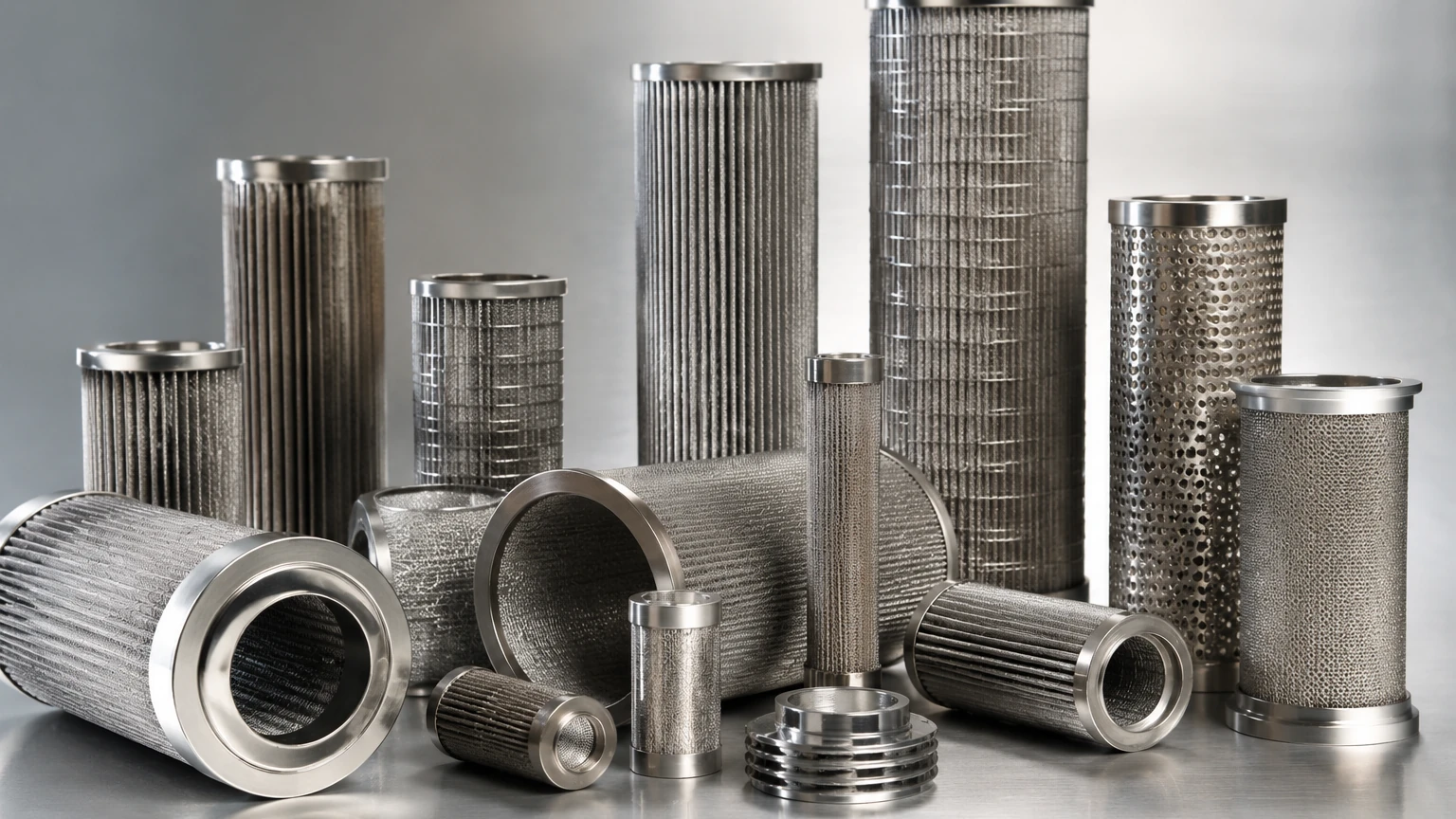
For the filter elements themselves, pleated stainless steel wire mesh or sintered metal fibers are preferred. These materials provide a high surface area for filtration while maintaining the rigidity necessary to prevent media migration—a phenomenon where pieces of the filter material break off and enter the air stream due to high differential pressure.
Key Performance Metrics for Filter Selection
When evaluating high pressure air filter compressors, engineers must look beyond simple micron ratings. Several interconnected factors determine the efficiency and cost-effectiveness of the filtration system.
Micron Rating: Absolute vs. Nominal
It is essential to distinguish between nominal and absolute micron ratings. A nominal rating indicates the filter can trap a percentage of particles of a given size, whereas an absolute rating (often defined by a Beta Ratio) indicates the filter will trap essentially all particles of that size. In high-pressure systems, absolute filtration is often required for the final stage to protect sensitive downstream components.
Pressure Drop (Delta P)
Pressure drop is the difference in pressure between the filter inlet and outlet. In high-pressure systems, a high pressure drop represents a significant energy loss. Filter elements must be designed to maximize flow while minimizing resistance. As the filter accumulates contaminants, the Delta P increases. Engineering specifications should define the maximum allowable pressure drop before the element must be replaced.
Flow Rate and Velocity
High pressure air is dense. If the filter housing is too small for the required flow rate, the air velocity through the media will be too high, leading to "stripping." This occurs when the force of the air pulls previously trapped liquid contaminants through the filter media and back into the air stream. Proper sizing ensures that the face velocity at the filter media remains within the design limits for effective coalescence and impingement.
The Multi-Stage Filtration Process
Effective filtration in high pressure air filter compressors is rarely achieved in a single step. Instead, a series of filters is used to progressively clean the air.
1. Pre-Filtration (Particulate Filter): The first stage typically uses a coarse stainless steel mesh to remove large solids (5–25 microns). This protects the more sensitive stages downstream.
2. Coalescing Filtration: This is the most critical stage for removing oil and water aerosols. Coalescing filters work by forcing small droplets to collide and form larger drops, which then gravitate to the bottom of the filter housing to be drained. In high-pressure environments, the coalescing media must be reinforced to prevent collapse.
3. Adsorption (Activated Carbon): For applications requiring the removal of oil vapors and odors (such as breathing air or food-grade air), an activated carbon stage is used. This stage does not remove particulates; it works through chemical adsorption.
4. Final Dust Filter: A high-efficiency particulate filter is often placed after the carbon stage to catch any carbon dust that may have migrated from the adsorption bed.
Customization and OEM Integration
Every industrial application has unique constraints, from spatial limitations in a portable compressor skid to specific chemical resistance requirements in an offshore oil rig. Custom filtration solutions allow engineers to specify the exact dimensions, port sizes (such as NPT, BSPP, or SAE flanges), and filtration efficiencies required for their specific high-pressure air filter compressors.
Manufacturers like Kaifil specialize in developing these custom stainless steel components. By working directly with an OEM manufacturer, purchasing teams can ensure that the filter elements are optimized for the specific flow characteristics of their compressor system, reducing the total cost of ownership through longer service intervals and lower energy consumption. For more information on custom filtration capabilities and technical specifications, you can Main Page to review product options and application support.
Operational Safety and Maintenance
Maintenance of high-pressure filters is not just a performance issue; it is a safety imperative. A clogged filter in a high-pressure system can lead to a pressure differential that exceeds the structural limits of the filter element, causing it to rupture. This can send a "slug" of contaminants and filter debris downstream at high velocity.
Differential Pressure Monitoring
High-pressure filter housings should be equipped with differential pressure gauges or electronic sensors. These tools provide real-time data on the state of the filter element. In automated systems, these sensors can trigger an alarm or shut down the compressor if the Delta P reaches a critical threshold.
Drainage Systems
Because high-pressure air yields significant amounts of condensate, the drainage system must be robust. Manual drains are common, but automatic zero-loss drains are preferred in industrial settings to ensure that liquid is removed without wasting expensive compressed air. These drains must be rated for the maximum operating pressure of the system.
Seal Integrity
At pressures of 300 bar or higher, even a microscopic leak can be dangerous and loud. High-pressure filters utilize specialized O-rings—often made of Viton or Nitrile—that are seated in precision-machined grooves to prevent extrusion under pressure. During maintenance, these seals must be inspected for signs of "explosive decompression" (small pits or cracks caused by gas expanding inside the seal material when pressure is rapidly released).
Common Risks in High-Pressure Filtration
Failure to properly specify or maintain high-pressure filters can lead to several industrial risks:
* Oxygen Hazards: In systems where high-pressure air is enriched with oxygen, the presence of even trace amounts of hydrocarbon oil can lead to spontaneous combustion or explosion. Filtration must be "oxygen clean."
* Component Erosion: High-velocity particles can erode the seats of high-pressure regulator valves, leading to "creep," where the downstream pressure rises above the set point.
* Product Contamination: In the pharmaceutical or food industries, a failure in the filtration system can result in the loss of an entire production batch if the air comes into direct contact with the product.
Conclusion
High pressure air filter compressors are essential for the safe and efficient operation of high-pressure gas systems. By prioritizing high-quality materials like stainless steel and adhering to rigorous engineering standards for flow and pressure drop, facilities can protect their capital equipment and ensure the purity of their process air. When selecting a filtration partner, it is vital to choose a manufacturer that understands the complexities of high-pressure environments and can provide the technical documentation and customization necessary to meet specific industrial demands. Proper filtration is an investment in the reliability of the entire compressed air infrastructure.
