


High Purity Filters
In industrial processing, the distinction between standard filtration and high purity filtration is defined by the tolerance for contaminants and the integrity of the filter media itself. High purity filters are engineered to meet the stringent demands of industries such as pharmaceutical manufacturing, semiconductor processing, specialty chemical production, and food and beverage processing. In these environments, the presence of trace particulates, metallic ions, or organic extractables can lead to catastrophic batch failure, equipment degradation, or compromised end-product safety.
Selecting the appropriate high purity filtration solution requires a deep understanding of material science, fluid dynamics, and manufacturing precision. For engineers and procurement professionals, the goal is to achieve a balance between filtration efficiency, flow rate, and long-term mechanical stability. This guide examines the technical specifications, material considerations, and engineering criteria essential for evaluating high purity filters in demanding industrial applications.
Engineering Requirements for High Purity Filters
The primary objective of high purity filtration is the removal of sub-micron particles while ensuring that the filter itself does not introduce new contaminants into the process stream. This necessitates a focus on several key engineering parameters:
Material Selection and Chemical Compatibility
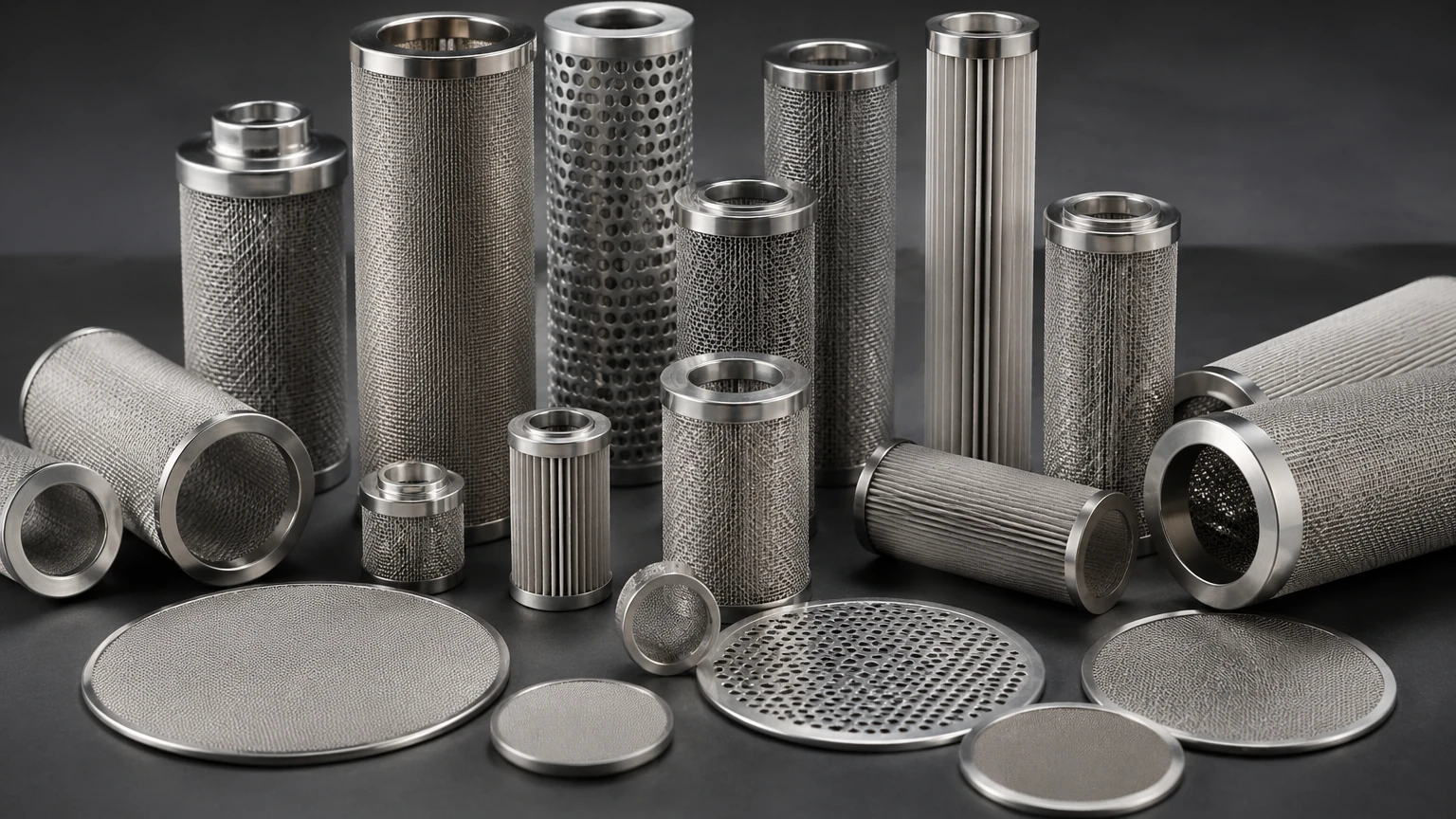
Stainless steel, particularly Grade 316L, is the industry standard for high purity filters due to its exceptional corrosion resistance and mechanical strength. Unlike polymer-based filters, stainless steel components do not suffer from outgassing or the release of plasticizers. In high-temperature or highly corrosive chemical environments, the stability of the alloy ensures that the structural integrity of the filter remains intact, preventing media migration.
Surface Finish and Passivation
For high purity applications, the internal and external surface finish of the filter housing and the media itself is critical. A high degree of smoothness, often achieved through electropolishing, reduces the surface area where bacteria can colonize or where particles can become trapped (bio-burden control). Passivation treatments are further employed to enhance the protective oxide layer of the stainless steel, ensuring the filter remains inert when exposed to aggressive solvents or high-purity water.
Pore Size Distribution and Absolute Ratings
High purity filters are typically defined by their "absolute" filtration rating. While a nominal rating indicates a general efficiency, an absolute rating signifies that the filter will retain 99.9% (or higher) of particles at a specific micron size. Engineering a filter with a narrow pore size distribution is essential to ensure consistent performance and to prevent the passage of "oversized" contaminants that could bypass a less uniform media.
Filtration Mechanisms in High Purity Media
High purity filters utilize various physical mechanisms to capture contaminants. Understanding these mechanisms helps engineers select the right media for specific fluid characteristics.
1. Sieving (Size Exclusion): The most direct method, where particles larger than the pore openings are mechanically trapped on the surface of the media. This is common in surface filtration using precision wire mesh.
2. Depth Filtration: Contaminants are trapped within the tortuous path of the filter media. Sintered metal felt and multi-layered wire mesh structures utilize this to provide high dirt-holding capacity while maintaining high purity standards.
3. Adsorption: In some specialized applications, the surface chemistry of the filter media may attract and hold particles smaller than the physical pore size through electrostatic or Van der Waals forces.
For most high purity applications, a combination of surface and depth filtration is preferred to maximize the service life of the component without sacrificing the required purity levels.
Structural Integrity and Manufacturing Standards
The method by which a filter is constructed significantly impacts its purity rating. In standard industrial filters, adhesives, resins, or binders are often used to secure the filter media to the end caps or support structures. However, in high purity applications, these materials represent a risk of leaching and chemical breakdown.
All-Welded Construction
To eliminate the risk of extractables, high-performance high purity filters utilize all-welded construction. Techniques such as TIG (Tungsten Inert Gas) welding or plasma welding create a hermetic seal between the filter media and the hardware. This ensures that the fluid path is entirely metallic, providing a robust solution for high-pressure and high-temperature cycles.
Sintering Processes
Sintering is a critical manufacturing step for metal high purity filters. By heating layers of wire mesh or metal fibers to a temperature just below their melting point under a controlled atmosphere, the contact points of the metal bond together at a molecular level. This process creates a rigid, stable structure that will not shed fibers or shift under pressure surges, which is a common failure point in non-sintered or polymeric media.
Application-Specific Considerations
Different industries prioritize different aspects of high purity filtration. Understanding these nuances is essential for proper specification.
Pharmaceutical and Biotechnology
In these sectors, the focus is on sterility and the removal of pyrogens. Filters must be capable of withstanding repeated SIP (Steam-In-Place) or CIP (Clean-In-Place) cycles without losing their integrity. Documentation regarding material traceability and compliance with USP Class VI plastics (if any seals are used) is often mandatory.
Specialty Chemicals and Petrochemicals
High purity filters in chemical processing are often used for catalyst recovery or the purification of aggressive solvents. The primary concern here is chemical compatibility and the ability to maintain high flow rates despite high fluid viscosity. Stainless steel filters are preferred for their ability to operate at extreme pH levels where synthetic fibers would dissolve.
Food and Beverage
For food-grade applications, the filter must prevent the entry of spoilage organisms and ensure the removal of sediment without altering the flavor or nutritional profile of the product. High purity filters used in steam filtration (to produce "culinary steam") are a common requirement to protect downstream equipment and ensure food safety.
Evaluating Performance and Technical Validation
Before integrating high purity filters into a production line, engineers should review technical validation data to ensure the component meets the application's specific requirements.
* Bubble Point Testing: A non-destructive test used to verify the integrity of the filter and confirm its pore size. It measures the pressure required to force air through a liquid-saturated filter.
* Differential Pressure (ΔP): Monitoring the pressure drop across the filter is essential for determining the cleaning or replacement cycle. A high-quality high purity filter should offer low initial differential pressure to maximize energy efficiency.
* Flow Fatigue Resistance: High purity systems often involve pulsating flows. The filter must be tested to ensure that the media does not crack or deform under repeated pressure cycles.
Total Cost of Ownership and Customization
While the initial acquisition cost of a high-quality stainless steel high purity filter may be higher than disposable alternatives, the Total Cost of Ownership (TCO) is often lower. Stainless steel filters are cleanable and reusable, significantly reducing the waste stream and the recurring cost of replacement cartridges.
Customization is another critical factor. Every industrial system has unique flow rates, space constraints, and connection requirements. Working with a manufacturer that can provide customized dimensions, specialized end-cap configurations (such as 222 or 226 O-ring styles), and specific alloy selections allows for a more efficient and reliable filtration system.
When evaluating potential solutions, it is beneficial to consult with experts who can provide detailed engineering support. You can Main Page to review product options and application support tailored to specific industrial needs.
Common Risks and Mitigation Strategies
Failure to properly specify high purity filters can lead to several operational risks:
1. Media Migration: If a filter is not properly sintered or welded, fragments of the filter itself can enter the process stream. This is mitigated by selecting high-quality metallic media with validated integrity.
2. Bypass: Improper sealing of the filter within its housing can allow unfiltered fluid to bypass the media. Precision-machined end caps and high-quality seals (such as Viton or PTFE) are necessary to prevent this.
3. Corrosion: In applications involving chlorides or high temperatures, standard stainless steel may suffer from pitting. In these cases, upgrading to specialized alloys like Hastelloy or utilizing specific passivation techniques is required.
Conclusion
High purity filters are more than just barriers; they are precision-engineered components that safeguard the integrity of industrial processes. By focusing on material purity, all-welded construction, and validated performance metrics, engineers can ensure that their systems operate at peak efficiency with minimal risk of contamination. Whether the application involves delicate pharmaceutical compounds or aggressive industrial chemicals, the selection of a robust, stainless steel filtration solution is a fundamental step in achieving consistent, high-quality results.
