


Gas Filtration Systems
In industrial environments, gas filtration systems are essential components designed to remove solid particulates, liquid aerosols, and gaseous contaminants from process streams. Unlike liquid filtration, gas filtration must account for the high compressibility of the fluid, varying flow velocities, and the potential for rapid pressure fluctuations. For engineers and procurement specialists, selecting the appropriate gas filtration systems involves a deep understanding of the chemical composition of the gas, the operating temperature, and the specific cleanliness levels required for downstream equipment protection or product purity.
Industrial gas streams—ranging from compressed air and nitrogen to corrosive chemical vapors and high-temperature flue gases—require robust filtration media that can withstand mechanical stress while maintaining precise pore structures. As a professional manufacturer, Kaifil provides specialized stainless steel filtration solutions tailored to these demanding applications. To explore the full range of available configurations and technical specifications, professionals can refer to the Main Page for detailed product documentation.
The Role of Gas Filtration Systems in Industrial Processes
Gas filtration systems serve several critical functions across the chemical, pharmaceutical, and power generation sectors. Their primary role is the protection of sensitive downstream components. For instance, in pneumatic systems, fine particulates can cause abrasive wear on valves and cylinders. In turbine applications, even microscopic debris can lead to catastrophic blade failure or erosion.
Beyond equipment protection, gas filtration is vital for process integrity. In the food and beverage industry, sterile gas filtration ensures that nitrogen or carbon dioxide used in packaging is free from microbial contaminants. In chemical processing, gas filtration systems are used to recover valuable catalysts from gas streams or to purify feedstock before it enters a reactor. The efficiency of these systems directly impacts the yield and quality of the final product.
Engineering Considerations for High-Performance Gas Filtration
When designing or specifying gas filtration systems, engineers must evaluate several physical phenomena that govern how particles are captured in a gaseous medium. Unlike liquid filtration, where sieving is the dominant mechanism, gas filtration relies on a combination of four primary mechanisms:
1. Inertial Impaction: Larger particles, unable to follow the gas streamlines around a filter fiber due to their inertia, strike the fiber and are captured.
2. Interception: Mid-sized particles follow the streamline but come close enough to a fiber to be captured by its surface.
3. Diffusion (Brownian Motion): Very small particles (typically sub-micron) move erratically due to molecular collisions, increasing their likelihood of contacting a filter fiber.
4. Electrostatic Attraction: In some specialized media, static charges help pull particles toward the fibers, though this is less common in permanent stainless steel systems.
Understanding these mechanisms allows engineers to select the correct micron rating. For gas filtration systems, it is common to specify both a "nominal" and an "absolute" rating. The absolute rating represents the diameter of the largest hard spherical particle that will pass through the filter under specified test conditions, providing a guarantee of performance for critical applications.
Material Selection: Why Stainless Steel Dominates Gas Filtration
While polymer-based filters are suitable for low-temperature, non-corrosive air filtration, industrial gas filtration systems often require the durability of metal. Stainless steel (specifically grades 304, 316, and 316L) is the industry standard for several reasons:
Temperature Resistance
Many industrial processes involve gases at temperatures exceeding 200°C (392°F). Polymer media would melt or degrade under these conditions. Stainless steel wire mesh and sintered metal components can operate effectively at temperatures up to 500°C or higher, depending on the alloy and structural design.
Chemical Compatibility
Gas streams in chemical plants often contain aggressive vapors, such as acidic or alkaline gases. 316L stainless steel offers superior resistance to pitting and crevice corrosion, ensuring the filter media does not leach contaminants into the stream or suffer structural failure due to chemical attack.
Structural Integrity and Reusability
Gas filtration systems often experience high differential pressures, especially during startup or if the filter becomes heavily loaded. Stainless steel media provides the mechanical strength to resist collapsing or bursting. Furthermore, unlike disposable cartridges, stainless steel filters can often be cleaned through backpulsing, ultrasonic cleaning, or chemical washing, reducing the total cost of ownership over the life of the system.
Evaluating Filtration Efficiency and Micron Ratings
In the context of gas filtration systems, efficiency is not a static number. It varies based on the flow velocity (face velocity) and the particle size distribution. Engineers must consider the "Most Penetrating Particle Size" (MPPS), which is the particle size that is most difficult for a specific filter to capture. For many high-efficiency systems, the MPPS falls between 0.1 and 0.3 microns.
When reviewing technical data on the Main Page, it is important to distinguish between particulate filtration and coalescing filtration. Particulate filters are designed to remove solid debris, while coalescing gas filtration systems are engineered to merge small liquid droplets (such as oil or water aerosols) into larger drops that can be drained away. Stainless steel wire mesh is often used as a pre-filter or a support structure for specialized coalescing stages to ensure the system can handle high flow rates without media migration.
Structural Design and Customization Options
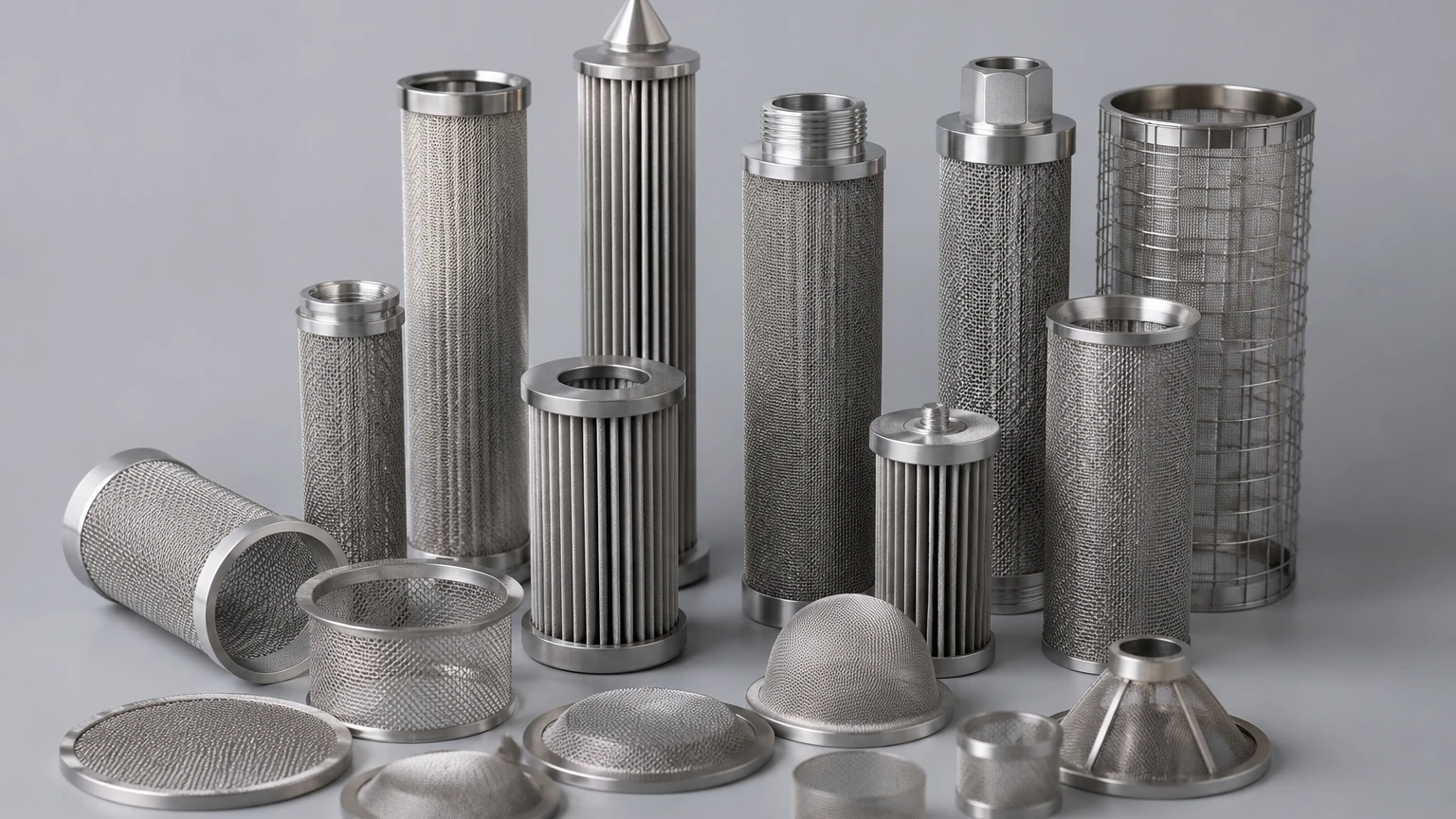
Industrial gas filtration systems are rarely "one size fits all." Customization is often necessary to fit existing housing dimensions or to meet specific flow requirements. Common structural designs include:
* Cylindrical Filter Cartridges: These provide a straightforward flow path and are easy to replace. They are often used in high-pressure gas lines.
* Pleated Wire Mesh Elements: By pleating the stainless steel mesh, manufacturers significantly increase the available surface area within the same footprint. This results in a lower initial pressure drop and a longer service life because the gas velocity through any single point of the media is reduced.
* Sintered Metal Components: For extremely fine gas filtration, sintered metal powder or sintered fiber felt provides a tortuous path that captures fine particulates with high efficiency. These are often used in semiconductor gas delivery or pharmaceutical venting.
Customization also extends to the end-cap configurations (e.g., 222, 226, or NPT threaded connections) and the inclusion of internal support cores to prevent media deformation under high-pressure differentials.
Managing Pressure Drop and Service Life
The pressure drop ($ΔP$) across gas filtration systems is a critical metric for operational efficiency. A high initial pressure drop means the system's compressor or blower must work harder, increasing energy consumption.
Engineers should monitor the differential pressure to determine the optimal replacement or cleaning cycle. In gas systems, the terminal pressure drop (the point at which the filter must be serviced) is typically determined by the structural limits of the media or the economic cost of the energy lost to the restriction. Using high-quality stainless steel mesh with high porosity ensures that the initial $ΔP$ remains low, providing more "headroom" for particulate loading before servicing is required.
Common Risks and Mitigation in Gas Filtration
One of the primary risks in gas filtration is "bypass." This occurs when gas flows around the filter media rather than through it, often due to poor sealing at the end caps or damaged gaskets. In high-pressure gas filtration systems, even a tiny leak can lead to significant downstream contamination. Utilizing precision-machined stainless steel components and high-quality O-rings (such as Viton or PTFE) is essential to mitigate this risk.
Another risk is media migration. In low-quality filters, fragments of the filter media itself can break off and enter the gas stream. This is why sintered or woven stainless steel is preferred for critical applications; the metallic bonds in sintered mesh or the tight weave of wire mesh ensure that the media remains intact even under high-velocity gas flow.
Total Cost of Ownership in Gas Filtration
When evaluating gas filtration systems, the initial purchase price is only one component of the total cost of ownership (TCO). A comprehensive TCO analysis should include:
1. Energy Costs: The cost of the electricity required to overcome the pressure drop created by the filter.
2. Maintenance Labor: The time required to change out or clean filter elements.
3. Disposal Costs: Disposable filters may incur hazardous waste disposal fees if they capture toxic materials.
4. Downtime: The lost production value when a process must be shut down for filter maintenance.
Stainless steel gas filtration systems often have a higher upfront cost than polymer alternatives but offer a lower TCO due to their longevity and cleanability. By selecting a manufacturer capable of providing custom-engineered solutions, such as Kaifil, companies can ensure that their filtration systems are optimized for their specific process parameters, further reducing operational waste.
Conclusion
Selecting the right gas filtration systems requires a balance of material science, fluid dynamics, and mechanical engineering. Whether the goal is to protect a multi-million dollar compressor or to ensure the purity of a pharmaceutical-grade gas, the choice of filter media and structural design is paramount. Stainless steel filtration components provide the necessary durability, heat resistance, and precision required for modern industrial standards. For those seeking specialized advice or custom manufacturing for industrial filtration needs, visiting the Main Page provides access to technical expertise and a broad portfolio of high-performance metal filtration solutions.
