


High Purity Heat Exchangers
In industrial processes where contamination can lead to catastrophic product failure or safety risks, the role of high purity heat exchangers is paramount. These specialized components are engineered to facilitate thermal transfer between two fluids while maintaining the highest levels of cleanliness and preventing cross-contamination. Unlike standard industrial heat exchangers, high purity models are designed with stringent material requirements, specific surface finishes, and unique structural configurations to meet the demands of the pharmaceutical, biotechnology, semiconductor, and food and beverage industries.
Selecting and maintaining high purity heat exchangers requires a deep understanding of fluid dynamics, metallurgy, and filtration. Because these systems often handle sensitive or sterile media, the presence of even microscopic particulates can compromise the entire process. Consequently, the integration of high-performance filtration solutions is not merely an accessory but a fundamental requirement for the operational integrity of high-purity thermal systems.
Defining High Purity in Thermal Management
High purity heat exchangers are defined by their ability to operate in environments governed by strict regulatory standards, such as those set by ASME BPE (Bioprocessing Equipment) or the FDA. The primary objective is to ensure that the process fluid remains uncontaminated by the utility fluid (such as chilled water or steam) or by the materials of the heat exchanger itself.
In these applications, the term "high purity" refers to several critical factors:
1. Surface Finish: To prevent bacterial growth and the accumulation of biofilms, the internal surfaces of the heat exchanger must be exceptionally smooth. This is typically measured in Ra (Roughness Average). High-purity systems often require Ra values of 0.5 μm or less, often achieved through mechanical polishing followed by electropolishing.
2. Drainability: Systems must be designed to be fully drainable to prevent stagnant fluid pockets, known as "dead legs," which can become breeding grounds for microorganisms.
3. Material Traceability: Every component in contact with the process fluid must have full material traceability (MTRs) to ensure no leaching of undesirable elements occurs.
For engineers designing these systems, reviewing technical specifications on the Main Page of a specialized component manufacturer can provide the necessary data on material compatibility and filtration grades required to protect these sensitive surfaces.
Engineering Considerations for Material Selection
The choice of material is the first line of defense in maintaining purity. While standard heat exchangers might utilize various grades of carbon steel or basic stainless steel, high purity heat exchangers almost exclusively use high-alloy materials.
316L Stainless Steel
316L is the industry standard for high-purity applications. The "L" denotes low carbon content, which is critical for preventing sensitization during welding. Sensitization can lead to intergranular corrosion, which would eventually release metallic ions into the process stream. 316L offers excellent corrosion resistance and can withstand the aggressive chemicals used in Cleaning-in-Place (CIP) cycles.
Exotic Alloys
In environments involving highly corrosive media, such as those found in certain chemical processing or specialized pharmaceutical synthesis, even 316L may be insufficient. In these cases, alloys like Hastelloy C-22 or C-276 are employed. These materials offer superior resistance to pitting and crevice corrosion, ensuring that the high purity heat exchangers remain intact over long service lives.
Surface Treatments
Electropolishing is a common requirement for high-purity components. This electrochemical process removes a microscopic layer of the metal, leveling out peaks and valleys to create a mirror-like finish. This not only improves cleanability but also enhances the passive layer of the stainless steel, providing superior corrosion resistance compared to mechanical polishing alone.
Structural Design: Shell and Tube vs. Plate
The architecture of high purity heat exchangers is dictated by the specific needs of the application, particularly regarding pressure, temperature, and the risk of cross-contamination.
Double Tube Sheet (DTS) Design
In high-purity shell and tube exchangers, the Double Tube Sheet design is a critical safety feature. By using two tube sheets at each end of the unit, a physical gap is created between the process side and the utility side. If a leak occurs at a tube-to-tube-sheet joint, the fluid leaks into the atmospheric gap rather than into the opposing fluid stream. This prevents the utility water from contaminating a high-value pharmaceutical product or vice versa.
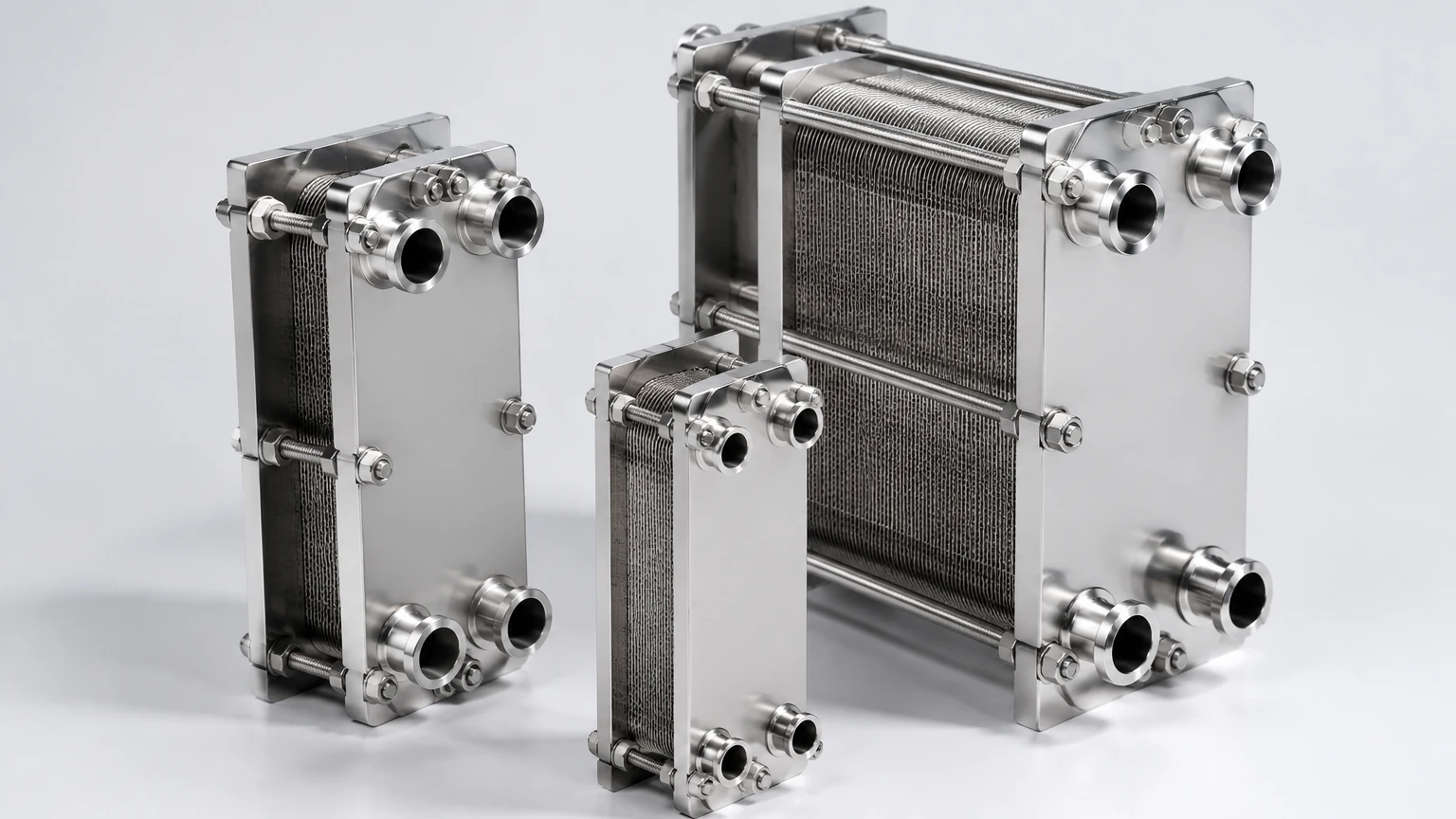
Sanitary Plate Heat Exchangers
Plate heat exchangers are valued for their high thermal efficiency and compact footprint. In high-purity settings, these must be "sanitary" models. This means they utilize specialized gaskets (often EPDM or PTFE) that are FDA-compliant and designed to avoid crevices. However, plate heat exchangers are generally more difficult to clean and may have more "dead zones" than shell and tube designs, making the latter more common in the most stringent sterile applications.
The Critical Link: Filtration and Heat Exchanger Performance
A high purity heat exchanger is only as effective as the fluid entering it. Particulate contamination is a primary threat to these systems. Even in a "clean" system, particulates can enter through makeup water, chemical additives, or mechanical wear of pumps and valves. This is where the synergy between filtration and thermal management becomes evident.
Preventing Fouling and Scaling
Fouling occurs when solids accumulate on the heat transfer surfaces. In high purity heat exchangers, even a thin layer of fouling can significantly reduce the heat transfer coefficient (U-value), forcing the system to work harder and increasing energy costs. More importantly, fouling creates a non-sterile environment. Utilizing stainless steel wire mesh filters or precision filter cartridges at the inlet of the heat exchanger ensures that particulates are captured before they can adhere to the polished internal surfaces.
Protecting Sensitive Surfaces
High-purity surfaces are susceptible to mechanical abrasion. If hard particulates are allowed to circulate at high velocities, they can scratch the electropolished finish. These micro-scratches then become sites for corrosion and bacterial colonization. By implementing robust filtration solutions, such as those provided by Kaifil, engineers can preserve the integrity of the heat exchanger’s surface finish for years of operation.
Engineering Evaluation and Selection Criteria
When specifying high purity heat exchangers, engineers must look beyond simple BTU ratings. A comprehensive evaluation involves several technical parameters:
* Heat Transfer Coefficient: This determines how efficiently the unit will perform. It is influenced by fluid velocity, viscosity, and the thermal conductivity of the materials.
* Pressure Drop (ΔP): High-purity systems often have limited pump head. Engineers must balance the need for high velocity (which improves heat transfer and reduces fouling) with the allowable pressure drop across the exchanger and its associated filters.
* Reynolds Number: Maintaining turbulent flow (typically Re > 4000) is often desired to maximize heat transfer, but in sensitive biological applications, shear stress must be monitored to prevent damage to proteins or cells.
* Approach Temperature: The difference between the exit temperature of the process fluid and the inlet temperature of the utility fluid. High-purity applications often require tight approach temperatures, necessitating larger surface areas.
Operational Maintenance: CIP and SIP Protocols
Maintenance of high purity heat exchangers is rarely done through physical disassembly. Instead, systems are cleaned and sterilized in place.
Cleaning-in-Place (CIP)
CIP involves circulating detergent solutions through the heat exchanger at specific velocities and temperatures to remove organic and inorganic residues. The design of the heat exchanger must ensure that the CIP fluid reaches every internal surface. Filtration plays a role here as well; the CIP solution itself must be filtered to ensure no new contaminants are introduced during the cleaning cycle.
Sterilization-in-Place (SIP)
In the pharmaceutical industry, SIP follows CIP. This usually involves the use of saturated steam at temperatures around 121°C to 135°C. The heat exchanger must be designed to handle the thermal expansion caused by these high temperatures without compromising the seals or tube joints.
The Role of Pre-filtration in Maintenance
Effective pre-filtration significantly extends the intervals between CIP cycles. By removing the bulk of the particulate load, the chemical demand for cleaning is reduced, which in turn reduces the chemical stress on the stainless steel components and gaskets. This contributes to a lower total cost of ownership (TCO) for the facility.
Strategic Sourcing and Customization
Standard, off-the-shelf heat exchangers rarely meet the nuanced needs of high-purity processes. Customization is often required to fit specific spatial constraints or to integrate specific connection types (such as Tri-Clamp or NA-connectors).
Furthermore, the filtration components protecting these heat exchangers must be equally customized. Whether it is a specific micron rating for a wire mesh filter or a custom-designed stainless steel cartridge housing, the filtration must be matched to the flow rates and purity requirements of the heat exchanger. Working with a manufacturer like Kaifil allows for the development of integrated solutions where the filtration and thermal management components work in harmony.
Conclusion
High purity heat exchangers are sophisticated pieces of engineering that sit at the heart of many critical industrial processes. Their success depends on a combination of superior material science, precise structural design, and rigorous maintenance protocols. However, the most common point of failure or efficiency loss in these systems is the lack of adequate particulate control.
By understanding the relationship between fluid purity and thermal efficiency, engineers can design systems that are not only effective at managing temperature but also durable and compliant with the highest industry standards. For those in the planning or procurement phase, ensuring that filtration components are sourced from experienced manufacturers is a vital step in protecting the investment made in high-purity thermal equipment. To explore high-performance filtration options that support these demanding applications, engineers should consult the technical resources available on the Main Page to find the right solutions for their specific industrial environment.
