


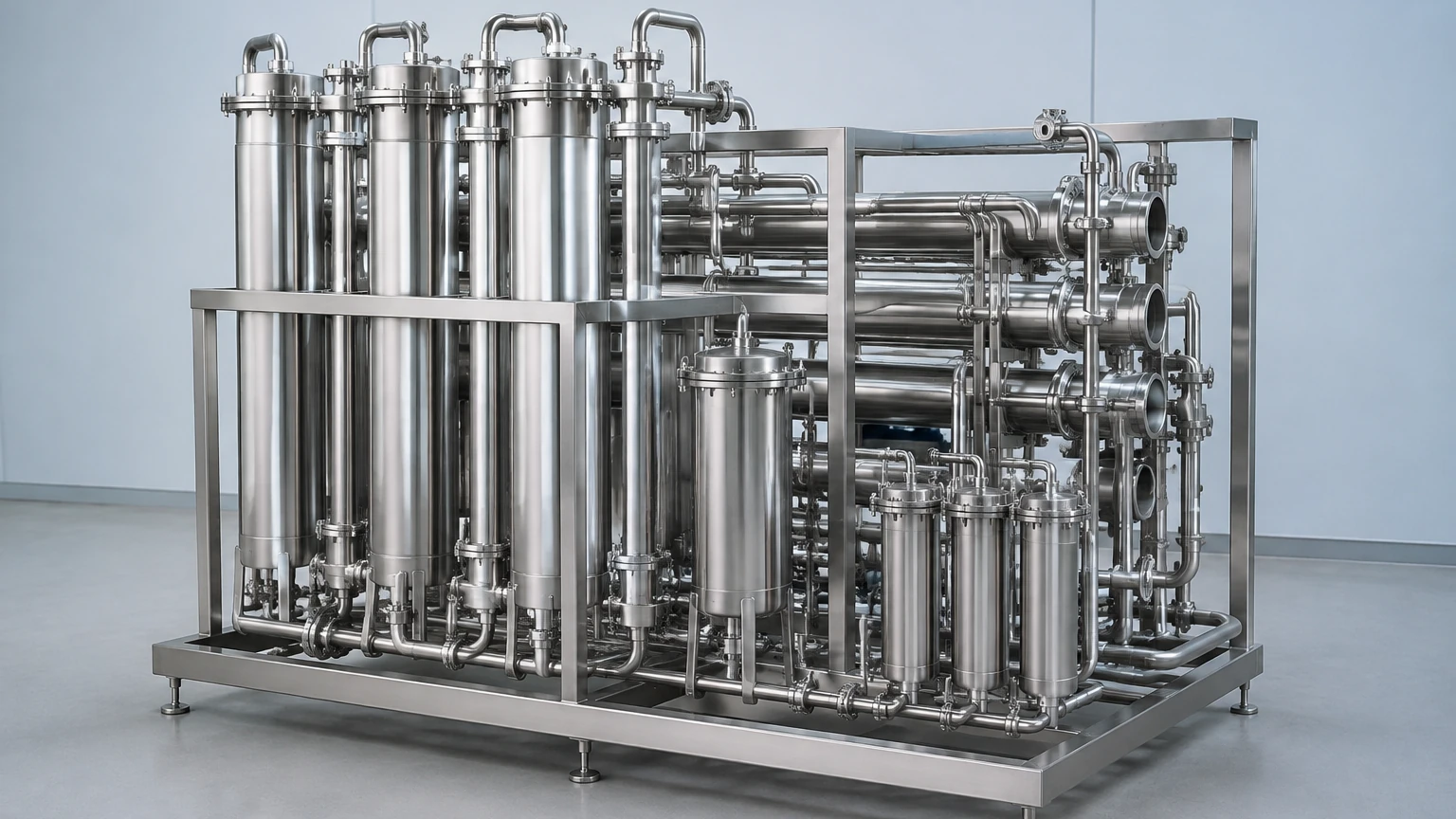
High Purity Water Process Skid
In industrial manufacturing, the demand for water that exceeds standard potable quality is constant. Whether for pharmaceutical compounding, semiconductor fabrication, or high-pressure boiler feed, the reliability of a high purity water process skid is paramount. These systems are modular, pre-engineered assemblies designed to treat water through various stages—filtration, deionization, and sterilization—to meet specific conductivity, TOC (Total Organic Carbon), and microbial limits.
For engineers and procurement teams, selecting the right components for these skids involves a deep understanding of material compatibility, filtration efficiency, and the long-term operational costs associated with maintenance and component replacement. This guide explores the technical foundations of high purity water systems and the critical role of precision-engineered metal filtration components in ensuring system integrity.
The Engineering Logic of the High Purity Water Process Skid
A high purity water process skid is more than just a collection of filters and pumps; it is a synchronized system where each stage protects the next. The "skid-mounted" design allows for factory-controlled assembly and testing, ensuring that when the unit arrives at a facility, it meets stringent performance specifications.
The primary objective of these systems is the removal of suspended solids, dissolved ions, and biological contaminants. To achieve this, the system typically employs a multi-stage approach. The initial stages focus on coarse particulate removal, often utilizing robust stainless steel wire mesh filters. These components serve as the first line of defense, protecting sensitive downstream equipment such as reverse osmosis (RO) membranes and electrodeionization (EDI) modules from mechanical damage and premature fouling.
By centralizing these processes on a single frame, engineers can optimize the footprint of the treatment plant while maintaining easy access for maintenance. However, the performance of the entire skid is only as reliable as its weakest component, which is why the selection of high-quality filtration media is a critical engineering decision.
The Critical Role of Stainless Steel Filtration
While polymer-based filters are common in many water applications, a high purity water process skid often requires the durability and precision of stainless steel. There are several reasons why technical professionals specify stainless steel filter cartridges and wire mesh components for high-purity environments:
1. Thermal and Chemical Stability
High purity systems frequently undergo sanitization cycles. Whether using hot water (often exceeding 80°C) or chemical agents like ozone or peracetic acid, the filtration components must maintain structural integrity. Stainless steel, particularly 316L grade, offers superior resistance to thermal expansion and chemical degradation compared to most plastics.
2. Zero Media Migration
In high-purity applications, the filter itself must not become a source of contamination. Fiber shedding is a common risk with depth filters made of polypropylene or glass fiber. Precision-engineered wire mesh and sintered metal filters provide a fixed pore structure, ensuring that no part of the filter media enters the downstream process fluid.
3. High Pressure Tolerance
Process skids often operate under significant pressure to drive water through membranes or across long piping runs. Stainless steel cartridges can withstand much higher differential pressures before failing, providing a safety margin that prevents catastrophic system bypass during pressure surges.
Filtration Stages within a High Purity Skid
To understand the requirements of a high purity water process skid, one must look at the typical progression of filtration. Each stage requires different filtration characteristics, often moving from surface filtration to fine polishing.
Pre-Filtration and Coarse Removal
At the entry point of the skid, raw or softened water enters. Here, wire mesh filters are used to capture sand, scale, and larger particulates. These filters are often designed to be cleanable, reducing the total cost of ownership by extending the time between replacements. The mesh count and weave type (such as plain or Dutch weave) are selected based on the anticipated particle size distribution of the source water.
Intermediate Protection
Before water reaches the RO membranes, intermediate filtration is required to remove finer silts and suspended solids. Stainless steel pleated filter cartridges are frequently used here. The pleating increases the available surface area, allowing for higher flow rates and lower clean differential pressure. This stage is vital for preventing the "plugging" of membrane spacers, which can lead to expensive downtime and membrane cleaning cycles.
Final Polishing and Point-of-Use
In the final stages of a high purity water process skid, the focus shifts to sub-micron filtration. While the skid itself may produce water of a certain grade, final polishing filters at the point of use ensure that any trace particulates or microbial fragments are captured. For these applications, the precision of the pore size is the most critical metric.
Material Science and Surface Integrity
For engineers designing systems for the pharmaceutical or biotech sectors, the surface finish of the filtration housing and the internal components is just as important as the filtration rating. In a high purity water process skid, stagnant areas or rough surfaces can become breeding grounds for biofilms.
Kaifil emphasizes the use of high-grade materials and advanced manufacturing techniques to ensure that filtration components meet these rigorous standards. For instance, 316L stainless steel is the industry standard due to its low carbon content and excellent corrosion resistance. Furthermore, components are often electropolished to achieve a specific Ra (roughness average), minimizing the surface area where bacteria can adhere.
When evaluating components, engineers should confirm:
- Material Certification: Ensuring the alloy composition matches the specification (e.g., ASTM standards).
- Welding Quality: High-purity components should feature clean, crevice-free welds (often TIG or plasma welded) to prevent bacterial niches.
- Compatibility: Ensuring seals and O-rings (EPDM, Viton, or PTFE) are compatible with both the process water and the cleaning agents used.
Performance Metrics: Micron Ratings and Flow Dynamics
Selecting a filter for a high purity water process skid requires a balance between filtration efficiency and flow dynamics. Engineers must consider two primary types of micron ratings:
1. Nominal Rating: An approximate value indicating the filter's ability to retain the majority of particles of a certain size. This is often used for pre-filtration stages.
2. Absolute Rating: A higher standard where the filter is guaranteed to retain 99.9% or more of particles at the specified micron size. This is essential for critical protection stages within the skid.
Flow rate is the other half of the equation. A filter that is too small for the required flow will create a high pressure drop, forcing the pumps to work harder and increasing energy consumption. Conversely, an oversized filter housing may lead to low-flow zones where water becomes stagnant. Professional manufacturers provide flow-versus-pressure-drop curves to help engineers size their housings and cartridges accurately.
For those looking to optimize their system design, you can Review product options and application support on our Main Page to see how different configurations impact performance.
Maintenance, Sterilization, and Longevity
The total cost of ownership (TCO) for a high purity water process skid is heavily influenced by the maintenance strategy. While disposable filters have a lower upfront cost, the labor and disposal costs associated with frequent changes can be significant.
Stainless steel filtration components offer the advantage of being "cleanable." In many industrial settings, these filters can be backwashed or cleaned using ultrasonic baths, significantly extending their service life. This is particularly beneficial in applications where the contaminant load is predictable but high.
Furthermore, the ability to withstand Clean-in-Place (CIP) and Steam-in-Place (SIP) procedures is a major advantage. A high purity water process skid designed with stainless steel internals can be sterilized without disassembling the housings, maintaining a closed system and reducing the risk of environmental contamination during maintenance.
Strategic Sourcing for Skid Components
When sourcing components for an OEM or a custom-built skid, the relationship between the designer and the manufacturer is vital. Customization is often required—whether it is a non-standard length for a filter cartridge, a specific flange connection for a housing, or a specialized mesh weave for a unique fluid chemistry.
Working with a manufacturer like Kaifil, which specializes in custom stainless steel filtration solutions, allows engineers to bypass the limitations of off-the-shelf products. Custom-engineered components ensure that the filtration system fits the skid's physical constraints while meeting the exact purity requirements of the end-user.
Before finalizing a purchase or design, engineers should confirm the following with their supplier:
- Testing Protocols: Are the filters integrity tested (e.g., bubble point test)?
- Customization Capabilities: Can the manufacturer adjust the hardware (end caps, gaskets, lengths) to fit existing skid footprints?
- Lead Times: In the B2B sector, project timelines are often tight; reliable delivery of core filtration components is essential for meeting skid assembly deadlines.
Conclusion
The high purity water process skid is a cornerstone of modern industrial utility design. By integrating advanced filtration technologies into a modular format, facilities can achieve consistent water quality with reduced operational risk. The choice of filtration media—specifically the move toward durable, high-precision stainless steel components—plays a decisive role in the system's longevity and reliability.
By focusing on material integrity, precise micron ratings, and the ability to withstand rigorous sterilization, engineers can ensure that their high-purity systems deliver the performance required for the most demanding applications. Whether you are designing a new system or optimizing an existing one, the technical details of your filtration components will ultimately determine the success of your water process strategy.
