


High Temp Hepa Filter
In industrial environments where air purity is critical, standard filtration solutions often fail when exposed to extreme thermal conditions. High-temperature processes, such as those found in pharmaceutical sterilization, semiconductor manufacturing, and specialized chemical processing, require air filtration systems that can maintain structural integrity and efficiency at temperatures exceeding 250°C (482°F). The high temp hepa filter is engineered specifically to meet these demands, utilizing specialized materials and construction techniques to ensure that particulate removal remains consistent even under intense thermal stress.
For engineers and procurement professionals, selecting the right high-temperature filtration component involves more than just checking an efficiency rating. It requires a deep understanding of material science, thermal expansion, and the mechanical stresses placed on filter media and frames during rapid temperature cycles. This guide explores the technical specifications, engineering considerations, and application-specific requirements for high-temperature HEPA filtration.
The Engineering Challenges of High-Temperature Filtration
Standard HEPA filters typically utilize wooden or galvanized steel frames and polyurethane sealants, which are rated for temperatures up to approximately 80°C (176°F). When exposed to higher temperatures, these materials can off-gas, warp, or lose their adhesive properties, leading to bypass leaks and system failure.
A high temp hepa filter must address three primary challenges: thermal expansion, media degradation, and sealant integrity.
Thermal Expansion and Contraction
In industrial ovens or depyrogenation tunnels, filters are subjected to repeated heating and cooling cycles. Different materials expand at different rates. If the filter frame expands significantly more than the filter media or the housing, it can create mechanical stress that leads to cracks in the sealant or tears in the glass fiber paper. Stainless steel is often the preferred material for frames in these applications due to its predictable thermal behavior and high corrosion resistance. Precision manufacturing ensures that tolerances are tight enough to prevent bypass while allowing for the physical shifts that occur during thermal ramps.
Media Stability
The filtration media in a high-temperature HEPA filter is almost exclusively composed of specialized borosilicate glass fibers. While glass fiber is naturally resistant to heat, the binders used to hold the fibers together must be carefully selected. In many high-temp variants, the binder is either removed through a pre-baking process or replaced with a high-temperature resistant binder that does not off-gas or become brittle at 250°C or 350°C.
Critical Components and Material Selection
The reliability of a high temp hepa filter depends on the synergy between its constituent parts. Each component must be rated for the maximum operating temperature of the system.
Stainless Steel Frames
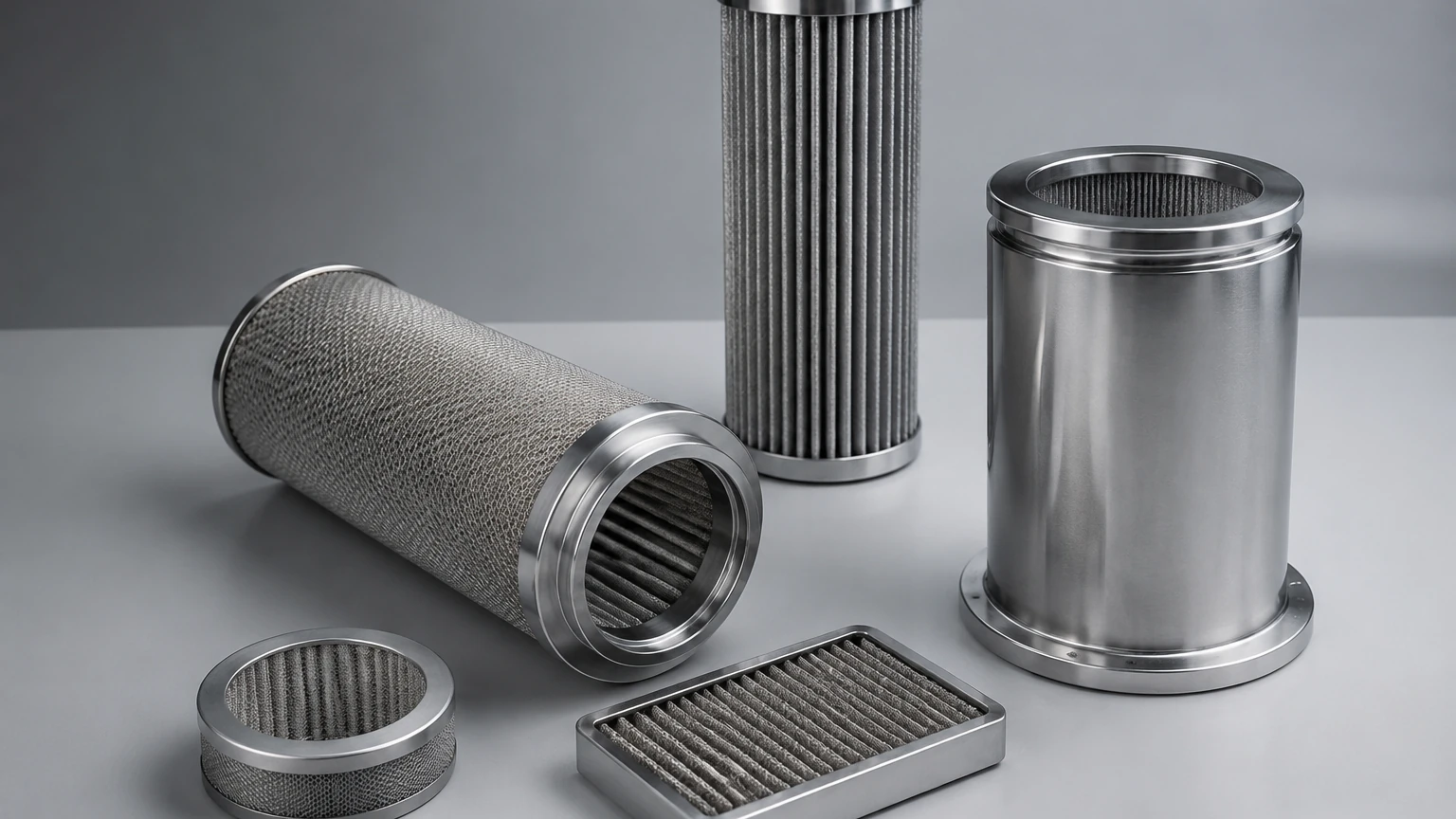
For the most demanding applications, stainless steel (typically Grade 304 or 316L) is the industry standard. Unlike aluminum, which can soften at high temperatures, or galvanized steel, which may release zinc fumes, stainless steel maintains its structural rigidity. In environments involving corrosive gases or high humidity alongside heat, 316L stainless steel provides superior resistance to pitting and stress corrosion cracking. This aligns with the expertise found at the Main Page regarding custom stainless steel filtration solutions, where material durability is paramount.
High-Temperature Sealants and Gaskets
The interface between the filter media and the frame is the most common point of failure. High-temperature HEPA filters utilize specialized sealants, often ceramic-based or high-grade silicone, to create a leak-proof bond. Ceramic sealants are preferred for temperatures reaching 350°C to 400°C because they do not smoke or out-gas during the initial heat-up. For the gasket—the seal between the filter and the housing—materials like glass fiber rope or high-temp silicone are used to ensure a tight fit that accommodates thermal expansion.
Separator Technology
To maintain airflow and structural support, HEPA filters use separators between the pleats of the media. In high-temperature models, these separators are usually made of corrugated aluminum foil. The corrugation provides the necessary spacing for uniform airflow while the aluminum provides the stiffness required to prevent pleat collapse under high pressure drops at elevated temperatures.
Performance Standards and Efficiency Ratings
By definition, a HEPA (High-Efficiency Particulate Air) filter must remove at least 99.97% of particles with a diameter of 0.3 micrometers. In high-temperature applications, maintaining this efficiency is complicated by changes in air physics.
Air Density and Viscosity
As air temperature increases, its density decreases and its dynamic viscosity increases. This change affects the Reynolds number of the airflow through the filter media. Higher viscosity can lead to an increase in the pressure drop (resistance) across the filter. Engineers must calculate the "hot pressure drop" to ensure that the system's fan capacity is sufficient to maintain the required airflow at operating temperatures.
Particle Capture Mechanisms
HEPA filters rely on three main mechanisms: interception, impaction, and diffusion. At high temperatures, the increased kinetic energy of small particles enhances the diffusion mechanism (Brownian motion), which can actually improve the capture efficiency for the smallest particles. However, the mechanical integrity of the filter must remain flawless to capitalize on these physical phenomena. Any micro-crack in the sealant due to thermal stress will immediately negate the high efficiency of the media.
Industrial Applications and Thermal Requirements
High-temperature HEPA filters are indispensable in several high-stakes industrial sectors where clean air and heat intersect.
Pharmaceutical Depyrogenation Tunnels
In pharmaceutical manufacturing, glass vials and ampoules must be sterilized and depyrogenated (removal of bacterial endotoxins) using dry heat. This process typically involves temperatures between 250°C and 350°C. The air circulated within these tunnels must be ultra-clean to prevent re-contamination of the containers. The high temp hepa filter used here must withstand rapid temperature changes and maintain ISO Class 5 air quality or better.
Semiconductor and Electronics Manufacturing
Cleanroom ovens used for curing coatings on wafers or drying electronic components require high-temperature filtration to prevent airborne particulates from settling on sensitive surfaces. Even a single sub-micron particle can cause a short circuit or a defect in a high-density microchip. These filters must be completely free of out-gassing materials to prevent chemical contamination of the silicon wafers.
Food and Beverage Sterilization
In aseptic packaging, the air used to dry or move containers after sterilization must be filtered. While the temperatures are often lower than in pharmaceutical tunnels (usually around 150°C to 200°C), the filters must still be robust enough to handle the heat and potentially high humidity without promoting microbial growth.
Selection Criteria for Engineers and Buyers
When specifying a high temp hepa filter, several technical parameters must be confirmed with the manufacturer to ensure long-term performance and safety.
1. Maximum Operating Temperature vs. Peak Temperature: There is a difference between a filter that can run at 250°C continuously and one that can handle a brief spike to 300°C. Always specify the continuous operating temperature.
2. Ramp Rate: How quickly does the system heat up? Rapid thermal expansion can cause more damage than high heat itself. Some filters are designed for slow ramps, while others are reinforced for faster cycles.
3. Initial and Final Pressure Drop: Understand the resistance of the filter when new and the point at which it must be replaced. High-temperature environments can accelerate the loading of the filter media.
4. Out-gassing Requirements: In semiconductor or optical applications, ensure the filter is certified "low out-gassing" or has been pre-baked by the manufacturer to remove any volatile organic compounds (VOCs).
5. Frame Material and Construction: Ensure the frame is compatible with the chemical environment. For example, in a sulfur-rich environment, certain grades of stainless steel may be required to prevent corrosion.
Maintenance, Monitoring, and Replacement Cycles
The lifespan of a high temp hepa filter is influenced by the cleanliness of the upstream air and the frequency of thermal cycles. Monitoring is essential for both safety and process integrity.
Differential Pressure Monitoring
Continuous monitoring of the differential pressure (dP) across the filter is the most reliable way to track its condition. A sudden drop in dP may indicate a media tear or a sealant failure (bypass), while a steady increase indicates that the filter is reaching its dust-holding capacity. In high-temperature systems, dP sensors must be rated for the environment or isolated via capillary tubes.
Visual Inspection and Integrity Testing
Regular integrity testing, such as the DOP (Dispersed Oil Particulate) test, should be performed to ensure there are no leaks. However, at high temperatures, specialized aerosol oils that do not flash or degrade must be used. Visual inspections should look for signs of frame warping, discoloration of the media, or cracking in the sealant.
Total Cost of Ownership (TCO)
While high-temperature HEPA filters have a higher upfront cost than standard filters, their TCO is lower when considering the costs of process downtime, product loss due to contamination, and the energy costs associated with inefficient filtration. Investing in a filter with a robust stainless steel frame and high-quality ceramic sealants reduces the frequency of replacements and ensures process stability.
Conclusion
Achieving reliable filtration in high-temperature environments requires a balance of precision engineering and robust material selection. The high temp hepa filter is a critical component that protects sensitive processes from contamination while enduring extreme thermal stress. By focusing on stainless steel construction, specialized glass fiber media, and high-integrity sealants, manufacturers can provide solutions that meet the rigorous standards of the pharmaceutical, semiconductor, and chemical industries.
For those seeking customized filtration components or specialized stainless steel supports for high-temperature systems, working with an experienced manufacturer is essential. Explore more technical resources and product options at the Main Page to find the right filtration solution for your specific industrial requirements. Understanding the nuances of thermal expansion and media stability will ensure that your cleanroom or process environment remains within specification, regardless of the heat.
