


How to Use Pipe Screens
In industrial fluid handling and gas processing, the term "pipe screen" refers to a broad category of wire mesh filtration components designed to remove solid contaminants from a process stream. These components, often constructed from high-grade stainless steel, are essential for protecting downstream equipment such as pumps, valves, flow meters, and nozzles from damage or clogging. Understanding how to use pipe screens effectively involves more than simple placement; it requires a technical grasp of mesh selection, installation orientation, and maintenance protocols to ensure system integrity and operational efficiency.
Industrial pipe screens, also known as line strainers or mesh inserts, are utilized across various sectors including chemical processing, water treatment, and food and beverage manufacturing. This guide provides a technical overview of how to select, install, and maintain these critical filtration elements to optimize performance and extend the service life of industrial machinery.
Technical Specifications and Material Selection
Before implementing a filtration solution, engineers must evaluate the material properties and mechanical specifications of the screen. The most common material for industrial pipe screens is stainless steel, specifically grades 304 and 316L, due to their excellent corrosion resistance and mechanical strength under high-pressure conditions.
Mesh Count and Micron Rating
The "mesh count" refers to the number of openings per linear inch. A higher mesh count indicates a finer screen. However, for engineering purposes, the micron rating (the size of the smallest particle the mesh will reliably retain) is the more critical metric. When determining how to use pipe screens in a specific application, the micron rating must be balanced against the allowable pressure drop. A screen that is too fine will capture more debris but will also increase flow resistance, potentially leading to pump cavitation or system failure.
Weave Types
- Plain Weave: The most common type, where wires cross over and under each other alternately. It offers high flow rates and is suitable for general filtration.
- Twill Weave: Used for heavier wire diameters or finer meshes where the wire is too stiff for plain weaving. It provides increased durability.
- Dutch Weave: Features a higher density of wires in one direction, creating a tortuous path for particles. This is ideal for high-pressure applications requiring precise filtration accuracy.
How to Use Pipe Screens: Installation Procedures
Proper installation is the primary factor in determining the effectiveness of a pipe screen. Incorrect placement can result in bypass—where fluid flows around the screen rather than through it—or mechanical failure of the mesh due to uneven pressure distribution.
1. Preparation and Inspection
Before installation, inspect the screen for any manufacturing defects, such as broken wires or irregular openings. Ensure the screen dimensions match the internal diameter of the pipe or the seating area of the strainer housing. Even a small gap between the screen edge and the pipe wall can allow large particles to pass through, defeating the purpose of the filtration system.
2. Orientation Relative to Flow
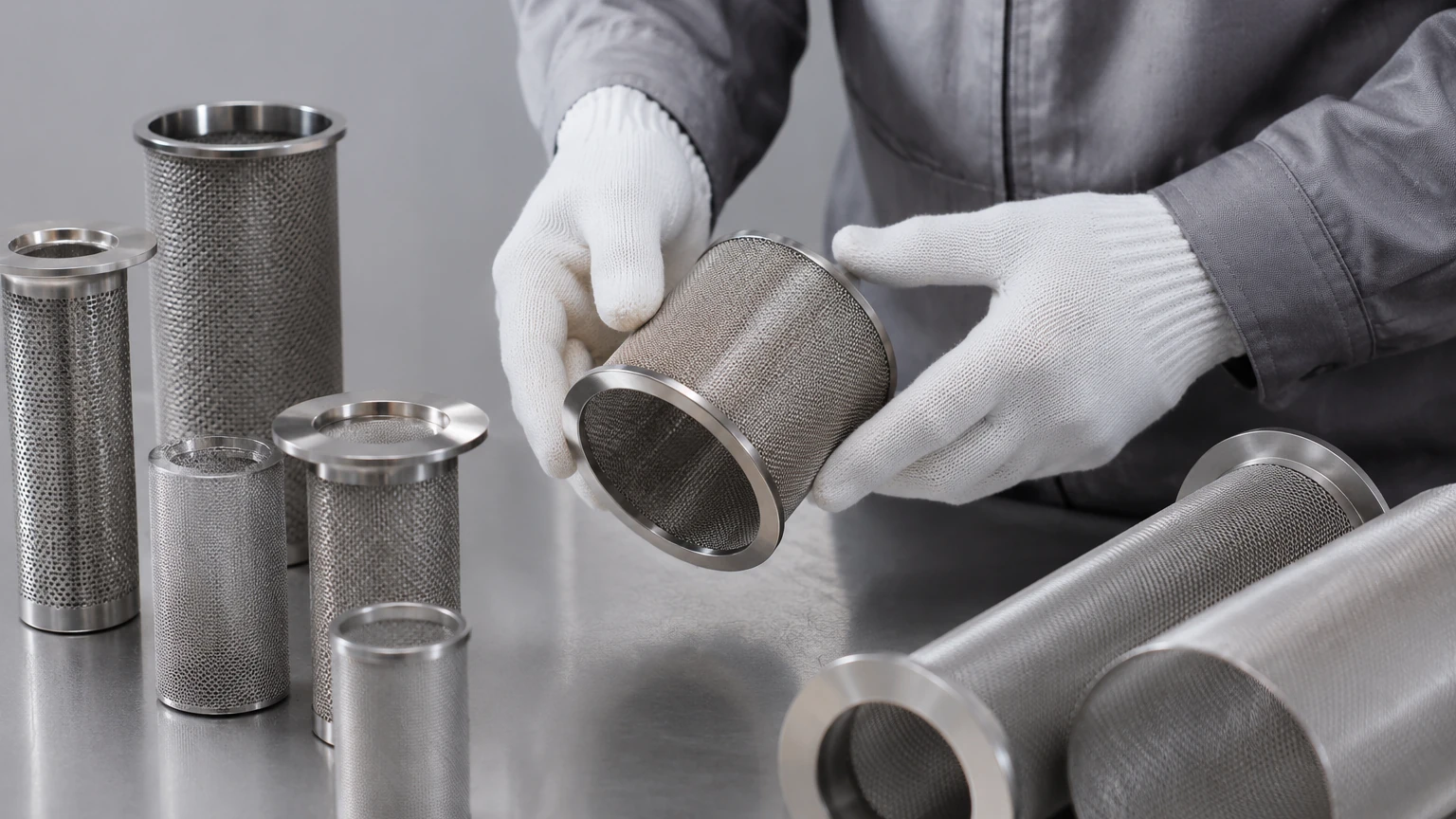
In most industrial configurations, pipe screens are shaped as discs, cylinders, or cones (witches' hats).
- Conical Screens: These should typically be installed with the point facing upstream. This configuration allows debris to accumulate around the base of the cone, maintaining a larger open area for fluid flow at the tip. However, in some high-velocity gas applications, the point may face downstream to prevent the cone from collapsing under pressure.
- Cylindrical Screens: These are often used in T-type or Y-type strainers. The fluid should enter the center of the cylinder and flow outward, or vice versa, depending on the specific housing design. It is vital to confirm the manufacturer’s flow direction markings.
3. Sealing and Securing
To prevent bypass, pipe screens must be secured with appropriate gaskets or O-rings. In flanged systems, the screen is often sandwiched between two flanges. It is critical to ensure that the gasket material is compatible with the process fluid and the operating temperature. Over-tightening can deform the mesh, while under-tightening can lead to leaks and bypass.
Engineering Considerations for Filtration Performance
When calculating the integration of a screen into a piping system, several engineering variables must be considered to ensure the system operates within its design parameters.
Open Area Ratio
The "open area" is the percentage of the total screen area that is not obstructed by wire. A higher open area results in a lower initial pressure drop. A common industry standard is to select a screen that provides an effective filtration area (EFA) at least three to four times the cross-sectional area of the pipe. This ensures that the system can handle a significant amount of particulate loading before the pressure drop becomes critical.
Pressure Drop (Delta P)
Every filter media introduces a resistance to flow, known as pressure drop. As the screen captures contaminants, the pressure drop increases. Engineers must use the Main Page resources to determine the clean pressure drop of a specific mesh and calculate the maximum allowable pressure drop before the screen must be cleaned or replaced. Exceeding this limit can cause the mesh to burst or the support structure to collapse.
Monitoring and Maintenance Cycles
Knowing how to use pipe screens effectively also involves establishing a rigorous maintenance schedule. Unlike disposable filters, many stainless steel pipe screens are designed to be cleaned and reused, providing a lower total cost of ownership.
Differential Pressure Monitoring
The most reliable way to monitor a pipe screen is by installing pressure gauges upstream and downstream of the filtration point. A differential pressure (DP) transmitter can provide real-time data to a control system. Once the DP reaches a predetermined setpoint, the system should be shut down for screen cleaning. Relying on a fixed time interval for maintenance is often inefficient, as particulate levels in the process fluid can fluctuate.
Cleaning Procedures
Stainless steel screens can be cleaned using several methods, depending on the nature of the contaminant:
- Backwashing: Reversing the flow of fluid through the screen to dislodge particles.
- Ultrasonic Cleaning: Using high-frequency sound waves in a solvent bath to remove fine particles from deep within the mesh.
- Chemical Cleaning: Using acids or alkalis to dissolve organic or mineral deposits, provided the chemical is compatible with the screen material (e.g., avoiding high concentrations of chlorides with 304 stainless steel).
- Mechanical Brushing: Using a soft-bristle brush to remove surface debris. Care must be taken not to distort the wire mesh.
Common Risks and Failure Modes
Failure to properly understand how to use pipe screens can lead to several common industrial issues:
1. Mesh Fatigue: Constant pressure fluctuations can cause the wires to work-harden and eventually snap. This is often mitigated by using a perforated metal backup tube to support the fine wire mesh.
2. Bypass: As mentioned previously, bypass occurs when the seal is compromised. This often happens if the screen is not centered correctly during installation.
3. Corrosion: Even stainless steel can corrode if exposed to incompatible chemicals or extreme temperatures. Pitting corrosion is a common risk in saline environments or with chlorinated fluids.
4. Collapse: If the pressure drop across the screen exceeds its mechanical strength, the screen will deform or collapse into the downstream piping, potentially causing catastrophic damage to pumps or turbines.
Customization and OEM Solutions
In many demanding industrial environments, standard off-the-shelf pipe screens may not meet the specific requirements for durability or filtration accuracy. Custom-engineered solutions allow for the optimization of wire diameter, weave pattern, and structural reinforcement to suit unique application needs.
For instance, in high-viscosity fluid applications, a standard mesh might blind (clog) almost instantly. A custom-designed screen with a specific Dutch weave or a pleated configuration can significantly increase the surface area, allowing for longer run times between maintenance cycles. Manufacturers like Kaifil specialize in developing these tailored solutions, ensuring that the filtration component is an asset rather than a bottleneck in the production process.
When sourcing these components, it is essential to work with a manufacturer that provides comprehensive technical documentation, including material certifications (MTRs) and pressure-flow curves. This information allows engineering teams to perform accurate system modeling and risk assessments.
Conclusion
Mastering how to use pipe screens is a fundamental requirement for maintaining the reliability of industrial piping systems. By selecting the correct material and mesh specification, following precise installation protocols, and implementing a data-driven maintenance strategy, facilities can protect their high-value equipment and ensure consistent product quality. Whether the application involves simple water straining or complex chemical filtration, the principles of effective mesh utilization remain the same: prioritize mechanical integrity, monitor pressure differentials, and ensure a perfect seal to prevent bypass. For those seeking specialized components or technical guidance on filtration design, visiting the Main Page offers access to a wealth of industrial expertise and customized manufacturing capabilities.
