


Housing Cartridge Filter
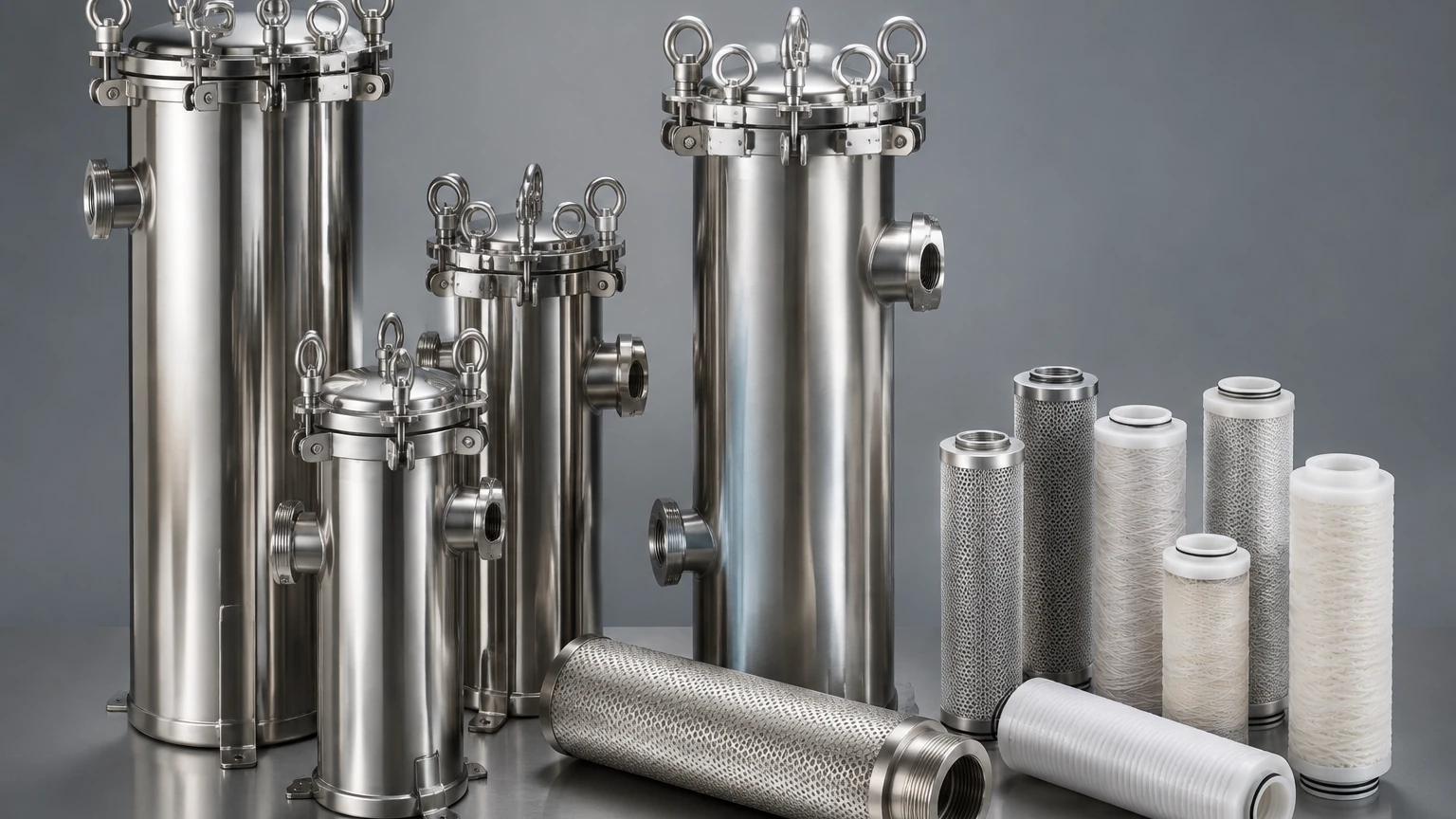
In industrial process engineering, the housing cartridge filter represents a critical assembly designed to remove contaminants from liquid or gaseous streams. This system consists of two primary components: a pressure vessel (the housing) and one or more replaceable or cleanable filter elements (the cartridges). For engineers and procurement specialists, selecting the right combination is essential to ensure process uptime, product purity, and equipment longevity.
As a specialized manufacturer of stainless steel filtration solutions, Kaifil provides high-performance components tailored for demanding environments. Understanding the technical nuances of housing and cartridge interaction is the first step in optimizing a filtration system for industrial applications ranging from chemical processing to food and beverage production.
Understanding the Housing Cartridge Filter System
The fundamental purpose of a housing cartridge filter system is to provide a secure, leak-proof environment where a fluid can be forced through a filter medium. The housing acts as the structural interface, directing the flow from the inlet, through the cartridge, and out the discharge port.
In B2B industrial settings, these systems are preferred over bag filters or sand filters when high precision, ease of maintenance, and specific chemical resistances are required. The modular nature of the cartridge allows for quick change-outs, while the robust construction of the housing ensures the system can withstand high operating pressures and temperatures.
The Role of the Housing
The housing is more than just a container. It must be engineered to handle the maximum allowable working pressure (MAWP) of the process. It also determines the flow path. Most industrial housings are designed for "out-to-in" flow, where the fluid enters the vessel, surrounds the cartridge, passes through the media to the center core, and exits through the bottom or side.
The Role of the Cartridge
The cartridge is the functional heart of the system. While many industries use disposable polymer cartridges, heavy-duty industrial applications often require stainless steel wire mesh or sintered metal cartridges. These offer superior mechanical strength and the ability to be cleaned and reused, significantly reducing the total cost of ownership (TCO) in the long run.
Key Engineering Considerations for Filter Housings
When specifying a housing cartridge filter, engineers must evaluate several structural and material factors to ensure compatibility with the process fluid and the operating environment.
Material Compatibility
Stainless steel is the industry standard for high-performance housings.
- SS304: Suitable for general industrial water filtration, hydraulic oils, and non-corrosive chemicals.
- SS316L: The preferred choice for pharmaceutical, food and beverage, and aggressive chemical applications due to its superior resistance to pitting and crevice corrosion.
Pressure and Temperature Ratings
Industrial housings must be rated according to relevant standards, such as ASME Section VIII. Temperature is a critical variable; as temperature increases, the tensile strength of the housing material may decrease, necessitating a de-rating of the maximum pressure. Furthermore, the selection of seals (O-rings and gaskets) must align with the thermal profile of the process.
Connection Types
The method of integrating the housing into the piping system affects both installation ease and seal integrity. Common options include:
- NPT/BSPT Threaded: Common for smaller, single-cartridge housings.
- Flanged (ANSI/DIN): Standard for high-pressure and large-diameter multi-round housings.
- Sanitary (Tri-Clamp): Essential for food, beverage, and pharmaceutical applications to ensure no bacteria-harboring threads are present.
Selecting the Optimal Cartridge Configuration
The efficiency of a housing cartridge filter depends heavily on the internal configuration. Depending on the flow rate requirements, engineers must choose between single-round and multi-round housings.
Single-Round vs. Multi-Round Housings
Single-round housings are used for point-of-use filtration or low-flow applications. They are compact and easy to service. Multi-round housings, which can hold anywhere from 3 to over 100 cartridges, are designed for high-volume industrial processes. The internal support plate (tubesheet) in a multi-round housing must be precision-engineered to ensure that each cartridge is seated correctly, preventing bypass.
Cartridge Sealing Methods
Bypass is the primary failure mode in filtration. The interface between the cartridge and the housing must be perfectly sealed. Common sealing styles include:
- DOE (Double Open End): Relies on compression gaskets at both ends. Requires a spring or tie-rod assembly within the housing.
- SOE (Single Open End) with 222 or 226 O-Rings: Features a locking tab or fin. This provides a more secure, high-integrity seal, often preferred in critical applications to prevent any unfiltered fluid from reaching the downstream side.
Operational Performance and Efficiency
To maintain an efficient housing cartridge filter operation, engineers must monitor two primary metrics: filtration accuracy and differential pressure.
Filtration Accuracy (Micron Rating)
Cartridges are rated by their ability to trap particles of a specific size.
- Nominal Rating: Indicates that the filter will trap a high percentage of particles of a certain size (e.g., 95%).
- Absolute Rating: Indicates that 99.9% or more of particles at that micron size are retained. Stainless steel wire mesh filters provided by Kaifil offer precise absolute ratings, which are critical for protecting sensitive downstream equipment like high-pressure pumps or spray nozzles.
Differential Pressure ($ΔP$)
Differential pressure is the difference in pressure between the inlet and the outlet of the filter. As the cartridge loads with contaminants, $ΔP$ increases.
- Clean $ΔP$: The initial pressure drop caused by the housing and a clean filter. Ideally, this should be kept low (typically under 2-5 psi) to maximize the useful life of the cartridge.
- Terminal $ΔP$: The point at which the cartridge is considered "plugged" and must be cleaned or replaced. For many industrial systems, this is between 20 and 35 psi.
Maintenance, Cleaning, and Replacement Cycles
One of the significant advantages of using a stainless steel housing cartridge filter system is the potential for sustainability through cleanable media. Unlike melt-blown or pleated paper filters that are discarded after a single cycle, stainless steel cartridges can be restored.
Cleaning Methods for Metal Cartridges
1. Backwashing: Reversing the flow of fluid to dislodge particles from the surface of the mesh.
2. Ultrasonic Cleaning: Using high-frequency sound waves in a solvent bath to remove fine particles embedded deep within the sintered layers.
3. Chemical Cleaning: Using acids or alkalis to dissolve organic or mineral scaling, provided the chemicals are compatible with the stainless steel grade.
Housing Maintenance
The housing itself requires periodic inspection. O-rings should be lubricated with process-compatible lubricants and replaced whenever the housing is opened to ensure a tight seal. Engineers should also inspect the interior walls for signs of erosion or corrosion, particularly near the inlet nozzles where fluid velocities are highest.
Custom OEM Solutions for Complex Industrial Needs
Standard off-the-shelf filters often fall short in specialized industrial environments. Factors such as non-standard piping dimensions, extreme chemical environments, or space constraints in a factory layout necessitate customized filtration solutions.
Kaifil specializes in bridging the gap between standard manufacturing and custom engineering. By focusing on the specific requirements of the application—whether it involves high-viscosity fluids in chemical processing or stringent hygienic standards in pharmaceuticals—we develop filtration components that integrate seamlessly into existing housing cartridge filter setups.
For technical teams looking to optimize their filtration processes, reviewing the full range of material options and engineering supports is essential. You can Review product options and application support on our Main Page to see how custom-engineered stainless steel components can improve your system's efficiency.
Conclusion: Making Informed Purchasing Decisions
Selecting a housing cartridge filter is a balance of initial capital expenditure and long-term operational costs. While plastic or carbon steel housings may have lower upfront costs, the durability and chemical resistance of stainless steel often provide a better return on investment in industrial B2B contexts.
When evaluating a system, engineers should confirm:
- The chemical compatibility of all wetted parts (housing, cartridge, and seals).
- The required flow rate and the resulting clean pressure drop.
- The ease of access for maintenance (e.g., quick-opening covers vs. bolted flanges).
- The availability of custom cartridges that can meet specific micron retention needs.
By focusing on these technical fundamentals, organizations can ensure they implement a filtration solution that not only meets current production goals but also scales with future industrial demands.
